

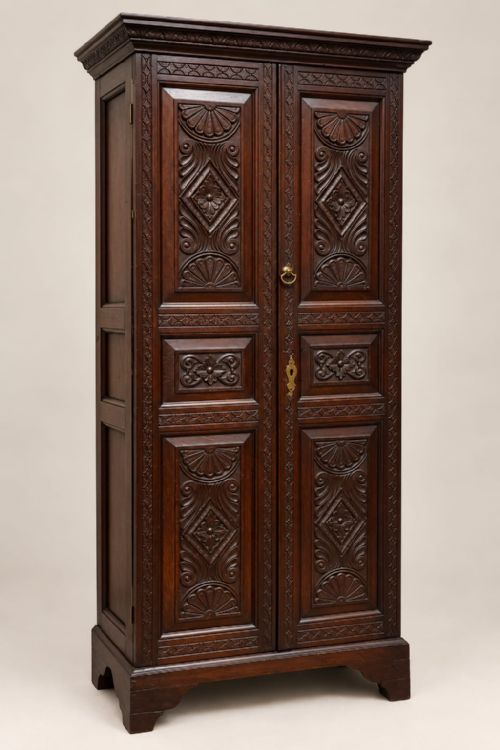
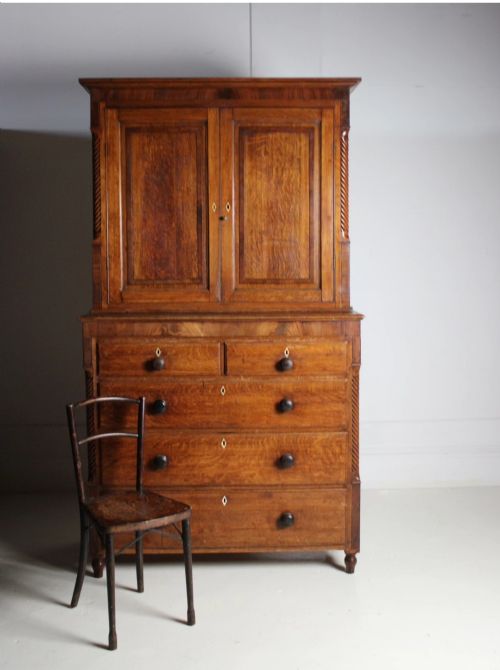
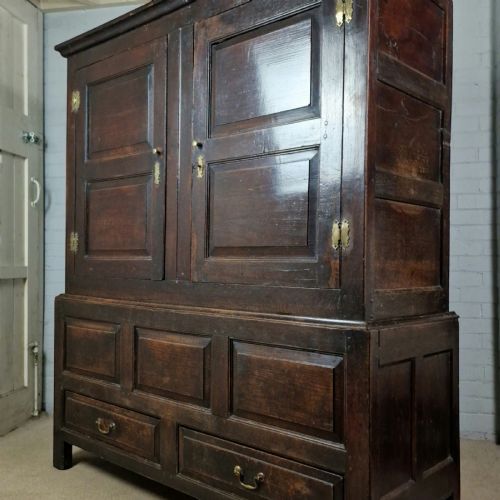
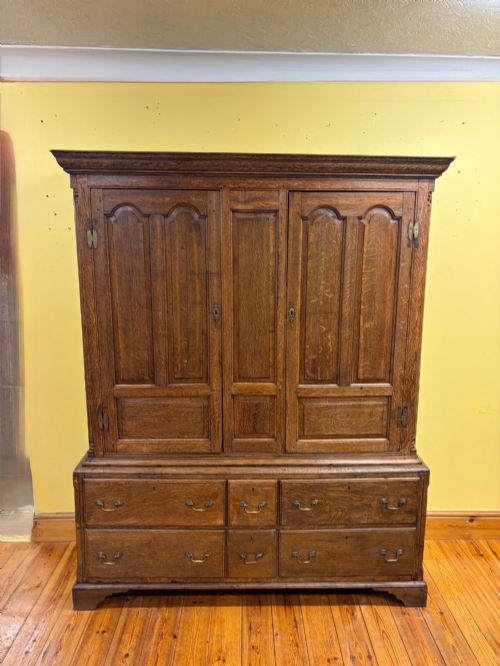
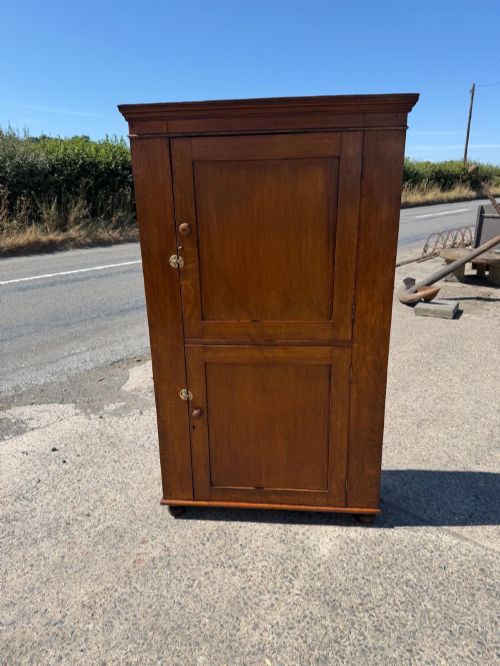
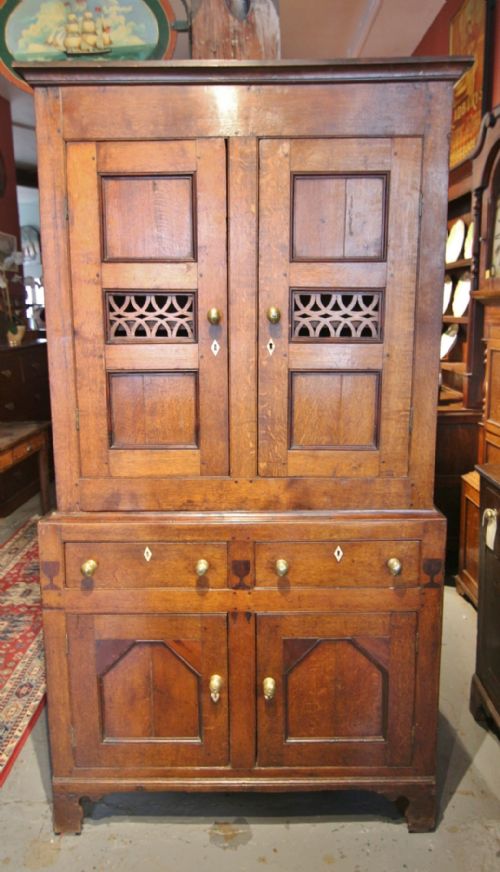
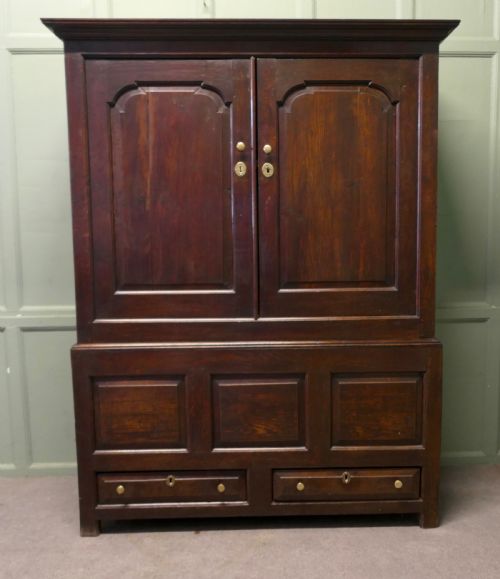
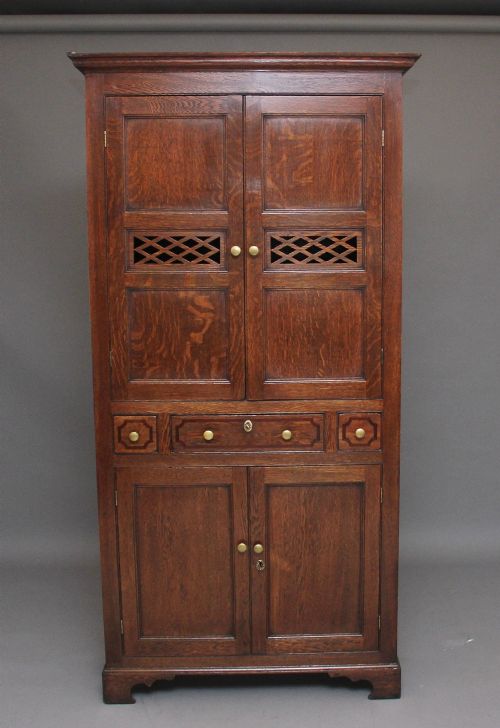


Traditional Oak Housekeeper Cupboard
A traditional oak housekeeper cupboard brings robust utility to a room, offering vast storage scaled for period houses and modern spaces alike.
Traditional Oak Housekeeper Cupboard
When you search for a traditional oak housekeeper cupboard, you encounter large utilitarian storage furniture designed to hold house linen, provisions, and domestic stores. These substantial pieces appear across Georgian, Victorian, and twentieth-century periods, manifesting as estate cupboards, linen presses, and food cupboards.
The versions most common on this page span the eighteenth and nineteenth centuries, often showing regional characteristics such as Welsh vernacular or English country styling. They typically feature deep upper sections and lower banks of drawers or panelled doors.
Forms range from tall livery cupboards and press cupboards to hanging cupboards and food safes. They serve as monumental storage centerpieces in kitchens, hallways, and living spaces.
What varies in quality
The grade of timber and the depth of the cabinetmaker's skill dictate the standing of each piece. Superior examples display dense, well-figured oak boards selected with care for the visible facade, while simpler utility pieces utilise plain or mixed timbers.
Construction integrity separates fine cabinet work from basic utilitarian joinery. Original brass hardware, uncompromised panel joints, and well-balanced door proportions elevate certain pieces above standard workshop output.
Traditional Oak Housekeeper Cupboard Retail Price Guide 2026
Typical asking prices for traditional oak housekeeper cupboard among the pieces listed under this phrase on Sellingantiques today, from the lower quarter to the upper quarter. They describe what is for sale here now, not the wider market.
Periods represented span from the eighteenth century through the Victorian era up to 1940.
The Traditional Oak Housekeeper Cupboard Glossary
- Livery Cupboard
- A traditional storage cabinet originally used for keeping food and small provisions. These pieces often feature ventilated doors or panelled construction.
- Deuddarn
- A traditional Welsh two-tier cupboard originating in the seventeenth and eighteenth centuries. This form typically incorporates enclosed upper and lower storage sections.
- Linen Press
- A tall piece of furniture designed for storing folded sheets and garments. The upper section usually contains sliding trays while the base holds drawers.
- Escutcheon
- A protective plate surrounding a keyhole. These fittings are frequently fashioned from brass or bone on period furniture.
- Bun Feet
- Rounded, slightly flattened foot supports shaped like buns. They appear beneath heavier Victorian and Georgian cabinet bases.
Traditional Oak Housekeeper Cupboard: Frequently Asked Questions
What is a traditional oak housekeeper cupboard?
A traditional oak housekeeper cupboard is a large piece of storage furniture historically used in large homes for linen, blankets, and dry goods. They combine deep upper compartments with lower drawers or smaller cupboards.
These pieces reflect regional English and Welsh cabinetmaking traditions, spanning the eighteenth and nineteenth centuries.
How were housekeeper cupboards used?
Housekeepers utilised these large cupboards to store household linens, blankets, and sometimes dry food provisions. The deep shelving accommodated folded bedding and heavy fabrics safely out of the dust.
Lower drawers provided space for smaller textiles, tableware, or domestic records kept by the head of staff.
Where can I place one at home?
These large cupboards anchor spacious kitchens, boot rooms, and wide hallways where their generous depth can be accommodated. They provide immense functional storage for everyday items or seasonal household goods.
Ensure you measure ceiling height and clearance space before positioning, as eighteenth and nineteenth-century proportions can be exceptionally tall.
How do I date an oak cupboard?
Dating relies on examining construction techniques, timber preparation marks, hardware types, and stylistic details. Hand-cut joints, forged iron hinges, and vernacular design elements point towards eighteenth-century Georgian periods.
Later Victorian and twentieth-century examples often display standardised fixings, machine-sawn backing boards, and different foot forms like bun feet.