




Antique Wooden Screw Press
An antique wooden screw press brings solid timber and industrial mechanics into the modern room.
Antique Wooden Screw Press
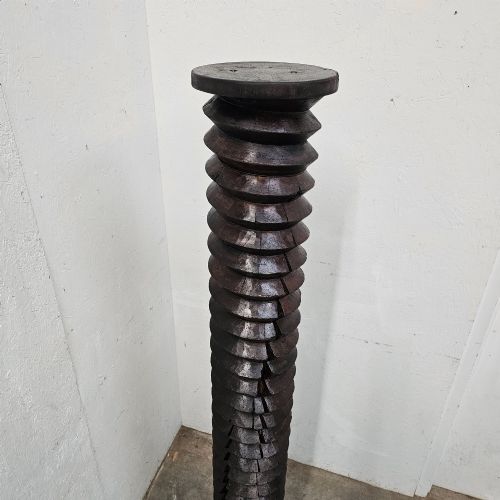
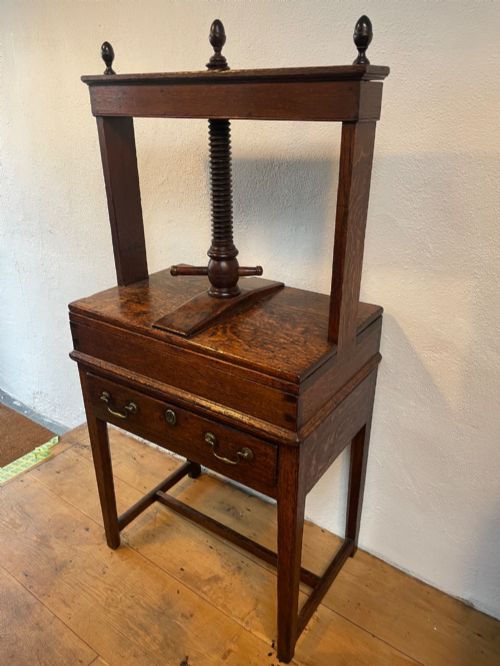
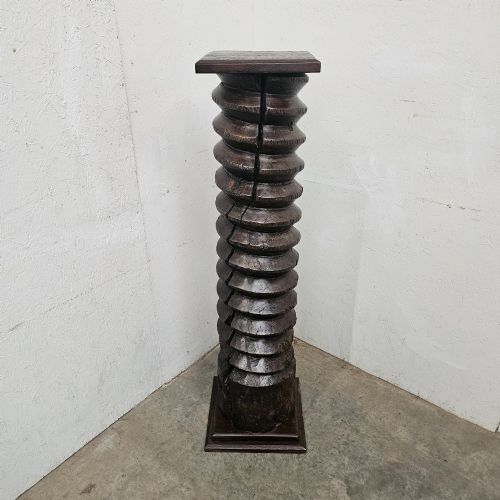
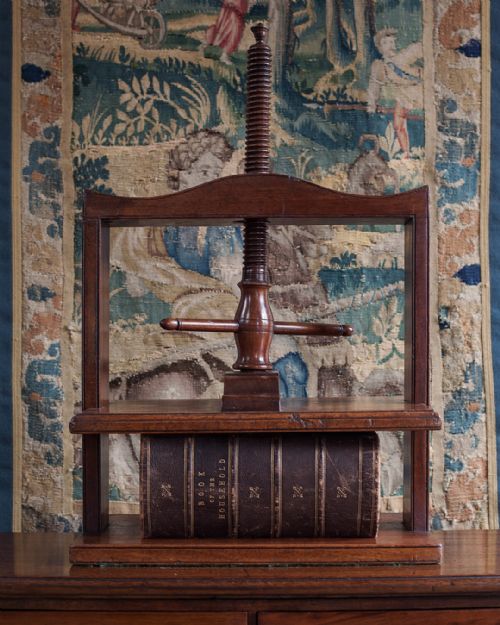
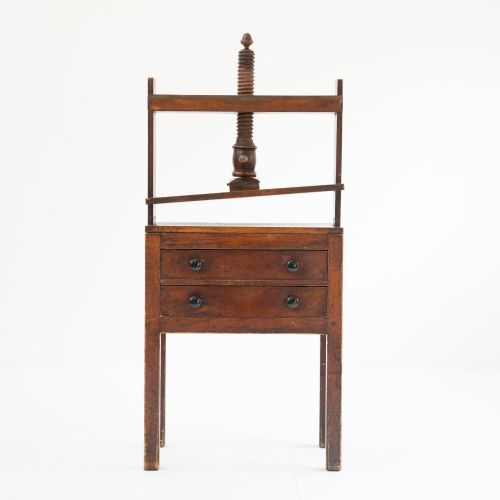
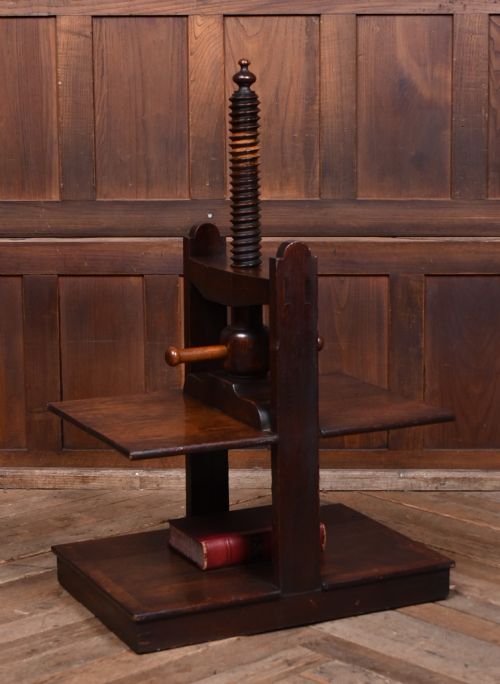
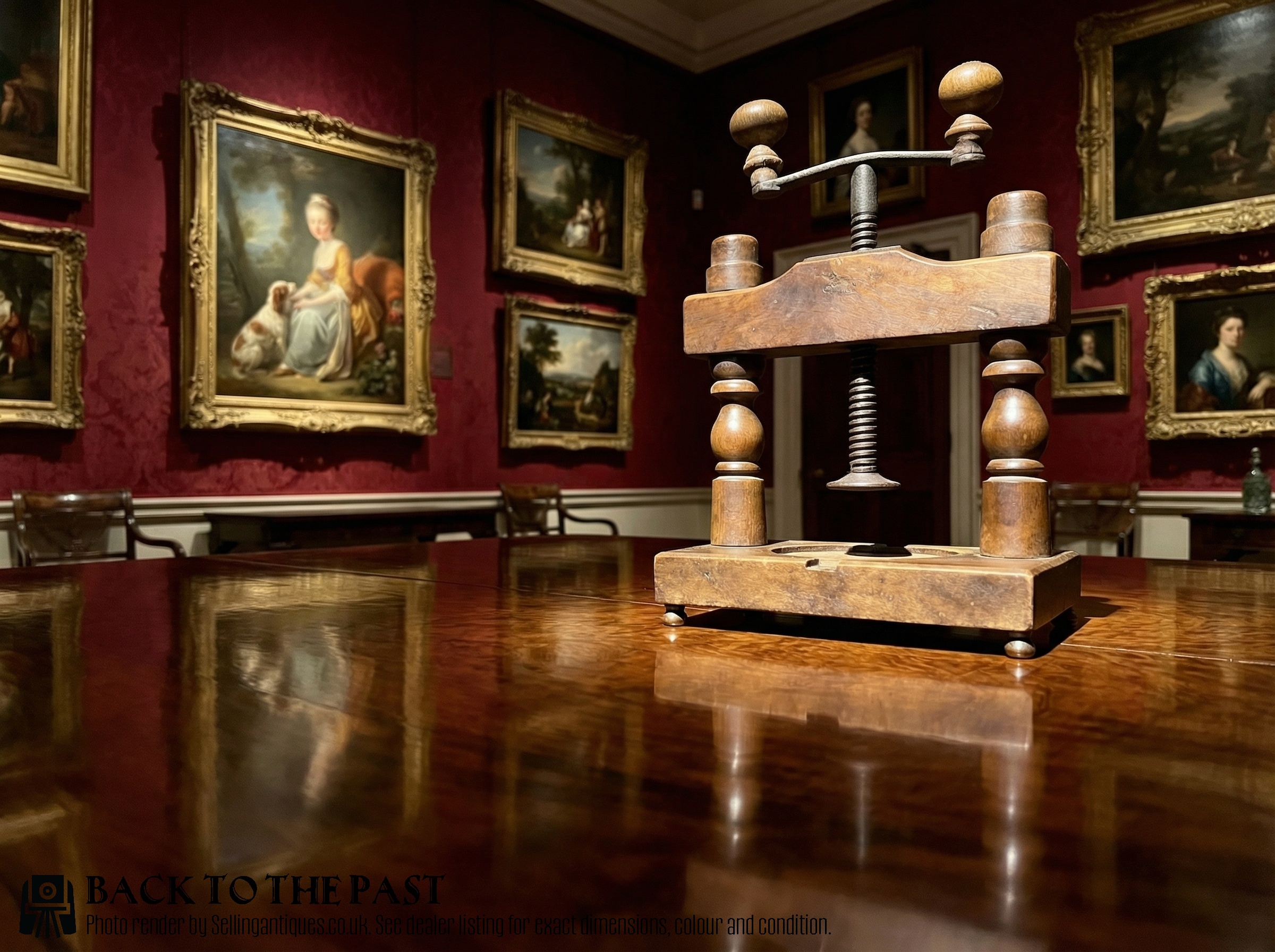
The search phrase antique wooden screw press encompasses heavy utilitarian timber mechanisms designed for flattening linen, pressing books, or squeezing dairy products. Buyers seeking an antique wooden screw press typically encounter table-top book presses or larger provincial linen presses dating from the Georgian and Victorian eras.
The forms listed range from compact mahogany and oak table-top book presses to grand country house linen presses and French dairy cheese presses. Oak and mahogany dominate the inventory, frequently paired with wooden screws, brass fittings, and iron components.
Provincial pieces show simpler construction in pine and elm, while finer Georgian and Victorian examples utilise dense hardwoods like boxwood. These functional devices bridge the gap between heavy utility and sculptural room decor.
How they were made
Cabinetmakers and joiners constructed these presses using sturdy hardwoods including oak, mahogany, elm, and boxwood, supplemented by pine for internal or secondary sections. The timber was heavily seasoned to withstand the immense downward pressure exerted by the wooden screw mechanism.
Turning and joinery techniques shaped the central screw threads and side uprights, sometimes incorporating brass and iron elements for added reinforcement. Surfaces were often left with natural waxed finishes or simple polishes suited to domestic and agricultural environments.
Antique Wooden Screw Press Retail Price Guide 2026
Typical asking prices for wooden screw press among the pieces listed under this phrase on Sellingantiques today, from the lower quarter to the upper quarter. They describe what is for sale here now, not the wider market.
Listings feature oak, mahogany, pine, and elm presses spanning the Georgian and Victorian periods.
What varies in quality
Quality separates simple utility objects from refined furniture pieces through the choice of timber and the precision of the carved screw thread. Dense woods like mahogany and boxwood indicate higher craftsmanship than softer pine or basic elm.
The smoothness of the mechanical action and the integrity of the joints dictate the standing of an individual press. Maker attribution, such as signed pieces by London workshops, elevates the status of a linen press far above anonymous provincial items.
Johnston’s of London
The Antique Wooden Screw Press Glossary
- Book press
- A mechanical device using a threaded screw to flatten paper or bind volumes. These table-top items sit on desks and feature heavy wooden platens.
- Linen press
- A large piece of furniture designed to store and flatten garments or household linens. Some examples incorporate a central wooden screw mechanism within the upper cupboard.
- Treen
- Small handmade wooden domestic objects. Items in this category include lemon squeezers and treen kitchenalia shaped on a lathe.
- Platen
- The flat heavy board in a press that distributes downward pressure evenly across the material. It moves up and down via the central screw.
- Provincial
- Description for items made in regional workshops rather than metropolitan centres. These pieces utilise local woods like elm and pine.
Antique Wooden Screw Press: Frequently Asked Questions
What is an antique wooden screw press used for?
These presses served practical domestic and agricultural tasks such as flattening pages in bookbinding, pressing freshly laundered linen, or squeezing cheese in a dairy.
Today, collectors use them as decorative display pieces or functional bookbinders in studies and living rooms.
How do I date an antique wooden press?
Dating relies on identifying timber choices, construction methods, and stylistic cues associated with the Georgian and Victorian periods. Mahogany and fine boxwood details often point toward the eighteenth or early nineteenth century, while pine combinations suggest later Victorian eras.
Examining the wear on the wooden screw threads and joints also helps determine the age of the mechanism.
Are these presses heavy to move?
Table-top book presses are manageable in weight, though constructed from dense hardwoods like oak and mahogany to handle pressure. Larger linen presses and dairy cheese presses are substantial furniture items requiring multiple people to transport safely.
The timber frames and metal or wooden screws add considerable heft to the overall structure.
What is the difference between a linen press and a book press?
A book press is typically a compact table-top device designed exclusively for flattening paper or binding books. A linen press is a much larger piece of furniture, often standing on a chest base, used for storing and pressing textiles.
While both utilise the same fundamental screw mechanism, their scale and domestic purpose differ significantly.