





Vintage Wooden Lap Desk
A vintage wooden lap desk provides a portable surface for correspondence, and this selection brings together mahogany, rosewood and walnut boxes from the Georgian and Victorian eras.
Vintage Wooden Lap Desk
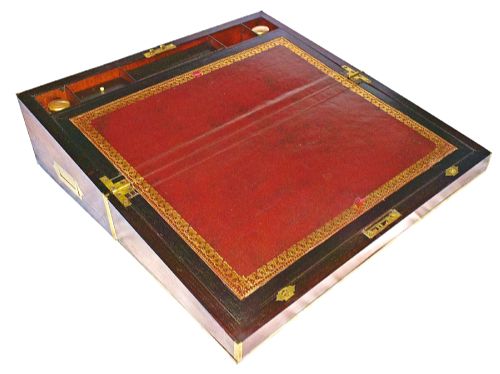
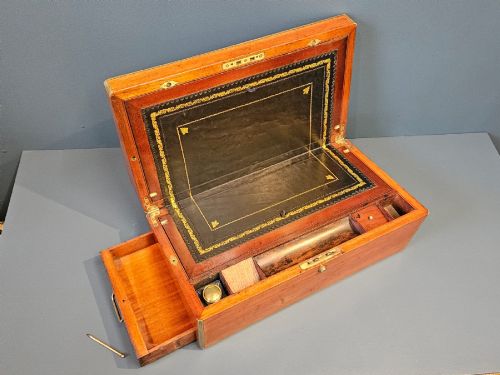
A vintage wooden lap desk usually takes the form of a writing slope or correspondence box designed to fold open and provide a sloping writing surface. When you search for a vintage wooden lap desk, you encounter portable writing furniture that officers, travellers and gentlemen carried across the nineteenth century.
The pieces appearing on this page span the Georgian, Regency and Victorian periods, with mid-nineteenth-century examples occurring most frequently. These items often incorporate fitted interiors, secret drawers and compartments for inkwells and pens.
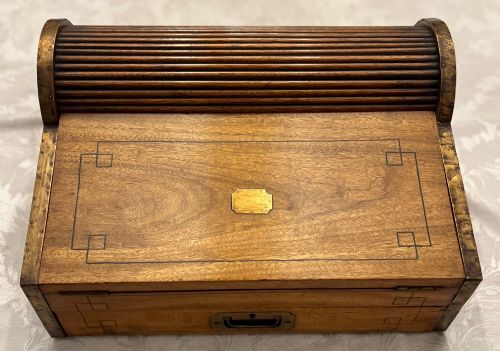
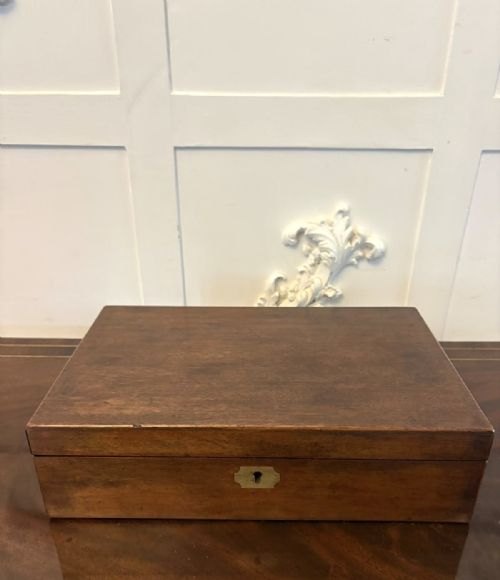
Most examples function as dual-purpose boxes, housing stationery alongside the writing slope itself. The forms range from compact rosewood document boxes to large mahogany campaign desks bound in brass.
Materials and Construction
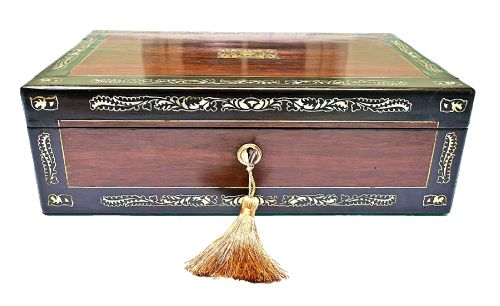
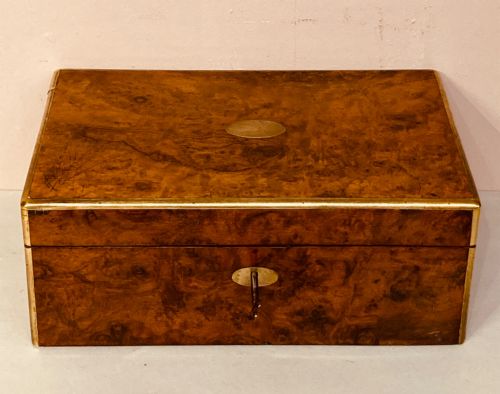
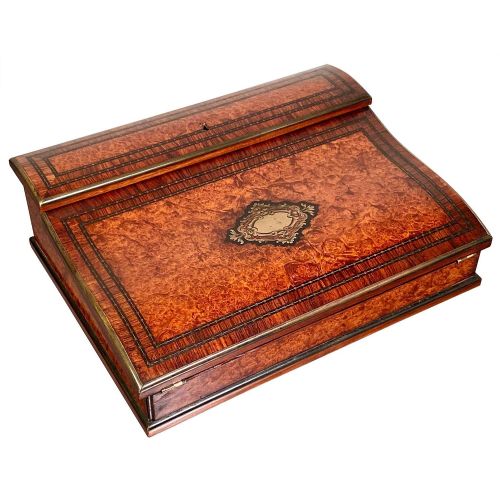
Cabinet makers utilised dense hardwoods such as mahogany, rosewood, walnut and pollard oak to withstand the rigours of travel. These timbers often display rich figuring, particularly in burr walnut and burr variants.
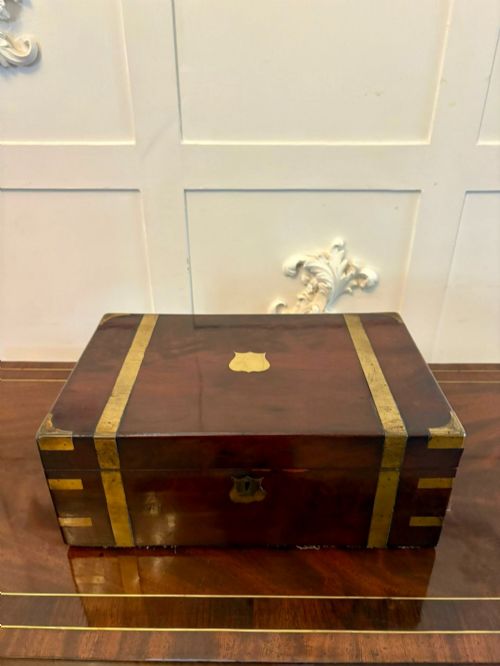
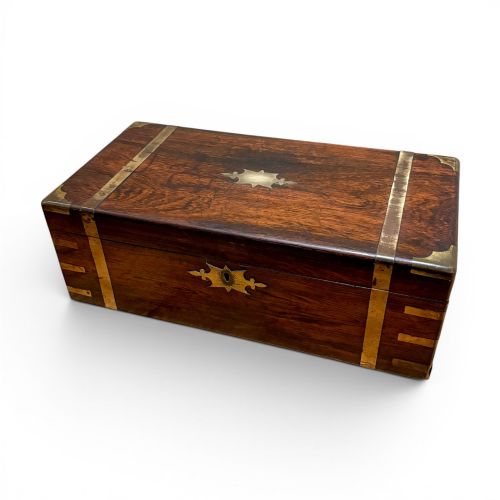
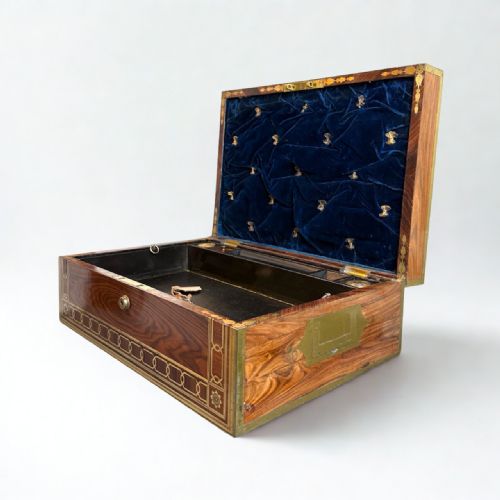
Brass banding and corner reinforcement protect the edges of campaign pieces from impact during transit. Inlays of mother-of-pearl, ebony and brass add decorative contrast to the polished wooden surfaces.
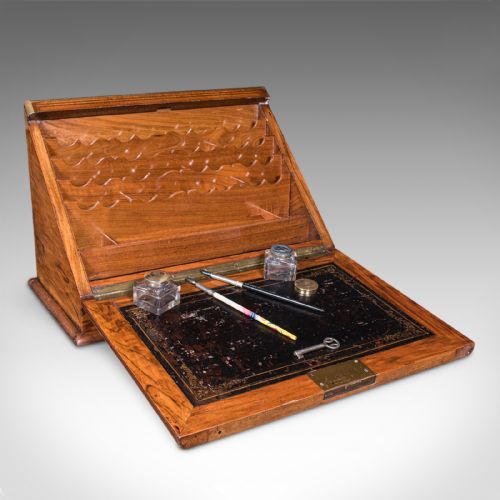
Internal components involve intricate joinery for secret compartments, pen trays and stationery slots. Hinges, locks and campaign handles are typically cast in solid brass and secured with small screws.
Vintage Wooden Lap Desk Retail Price Guide 2026
Typical asking prices for vintage wooden lap desk among the pieces listed under this phrase on Sellingantiques today, from the lower quarter to the upper quarter. They describe what is for sale here now, not the wider market.
Some nineteenth-century travellers carried portable writing desks featuring secret drawers ingenious enough to puzzle modern thieves.
Distinctions in Quality
Quality rests upon the selection of timber and the precision of the cabinet work. Pieces featuring highly figured veneers, such as burr walnut or exotic rosewood, generally represent higher tiers of craftsmanship.
The integration of brass hardware and internal secret drawers demonstrates the skill of the maker. Finer examples maintain structural integrity in their folding mechanisms and retain working locks with original keys.
William Austin·George Austin Dublin·Rodman and Co of Belfast
The Vintage Wooden Lap Desk Glossary
- Writing slope
- A box with a hinged lid that opens to form an inclined surface for writing. It typically contains compartments for paper, pens and ink.
- Campaign desk
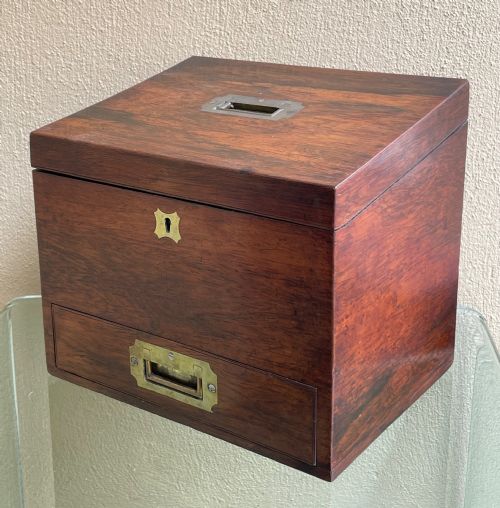
- Portable furniture built for military officers or travellers, characterised by recessed brass handles and corner brackets designed for protection during transit.
- Secret compartment
- A concealed drawer or hiding place built behind stationery dividers or beneath the writing platform, accessed by removing a false panel or pin.
- Brass bound
- Furniture edged or reinforced with strips of brass fitted flush to the timber to prevent splitting along the seams.
Vintage Wooden Lap Desk: Frequently Asked Questions
What is a vintage wooden lap desk used for today?
These boxes serve as decorative storage items for modern stationery, letters and small documents. They also function as compact writing desks when placed upon a table or lap.
Collectors utilise them to display nineteenth-century craftsmanship while keeping everyday clutter concealed within the fitted compartments.
How do I tell a Georgian lap desk from a Victorian one?
Georgian and Regency models often display simpler, cleaner exterior lines with understated mahogany or rosewood surfaces. They frequently date from the early decades of the nineteenth century or late eighteenth century.
Victorian variants tend towards heavier brass binding, more elaborate inlays such as mother-of-pearl, and highly figured burr walnut timbers.
How do secret compartments work?
Secret compartments usually require the removal of a specific small drawer, a pen tray or a false partition panel to release a hidden spring or drop-stop. Once this internal stop is shifted, a secondary drawer slides open.
Cabinet makers designed these spaces to secure private letters, currency or small valuables during travel.
Were these desks meant for travel?
Campaign and officer variants were specifically constructed for military campaigns, sea voyages and colonial travel. Their robust brass corners and secure locks protected the contents from rough handling.
Stationary domestic versions remained in homes, though their portable box format allowed owners to move them between rooms easily.