
Vintage Wooden Floor Lamp
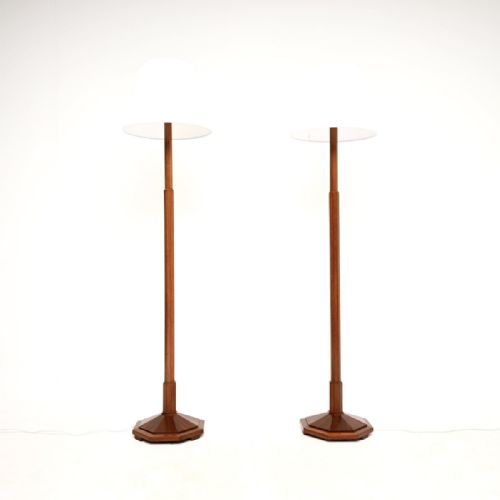
These vintage wooden floor lamps bring height and warmth to a room, spanning Edwardian, Art Deco and earlier revival styles.
Vintage Wooden Floor Lamp
A vintage wooden floor lamp provides vertical illumination and functions as a significant piece of furniture in a living space. When searching for a vintage wooden floor lamp, buyers encounter tall upright stems designed to support fabric shades and electrical wiring.
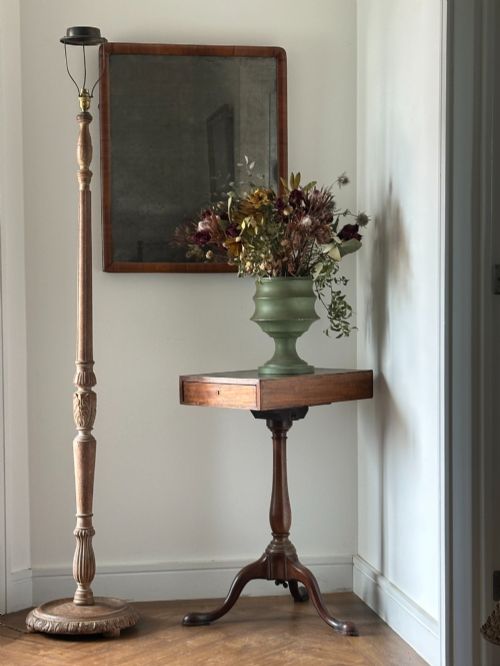
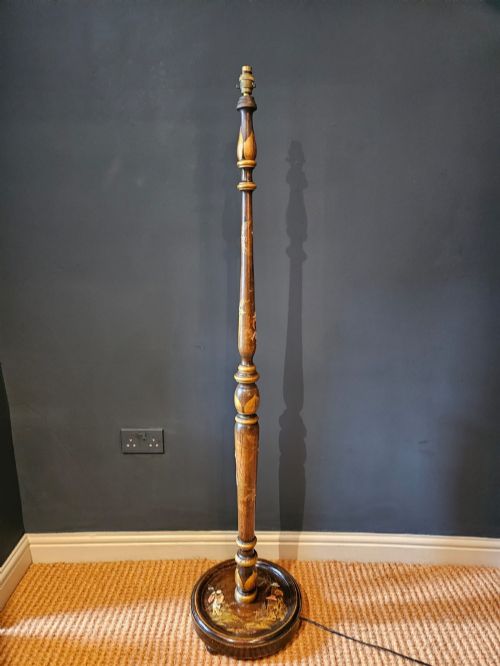
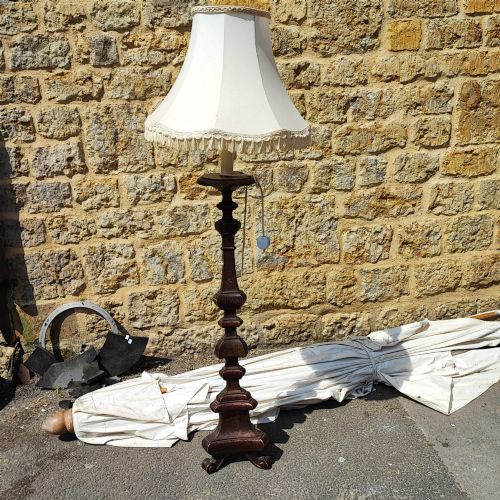
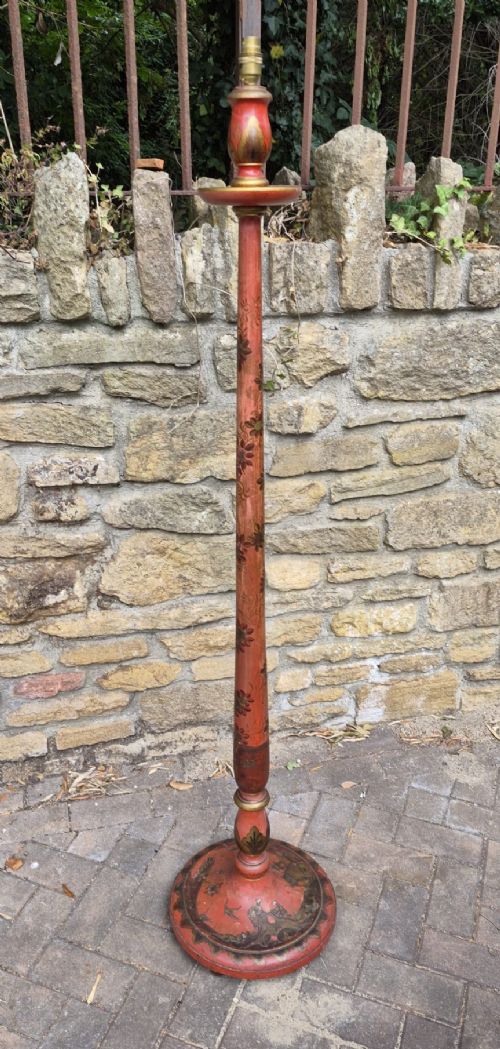
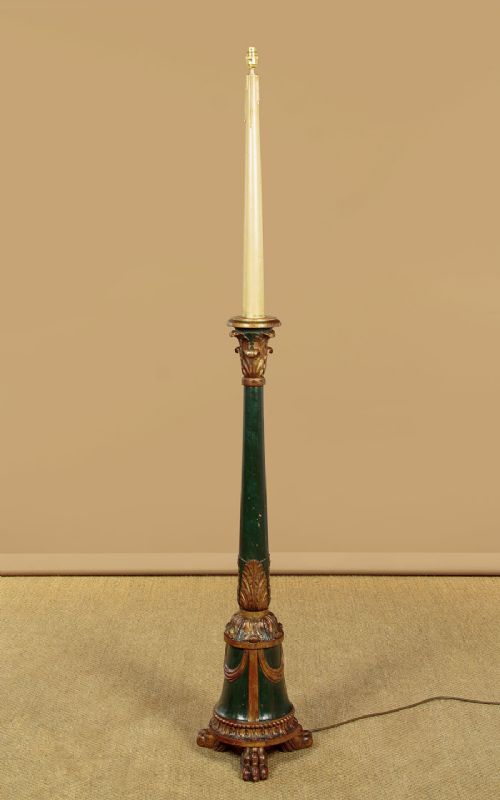
The selection ranges from simple turned oak and walnut shafts to elaborately decorated Chinoiserie and giltwood standards. Edwardian and Art Deco examples dominate the available forms alongside earlier Victorian and 19th Century revivals.
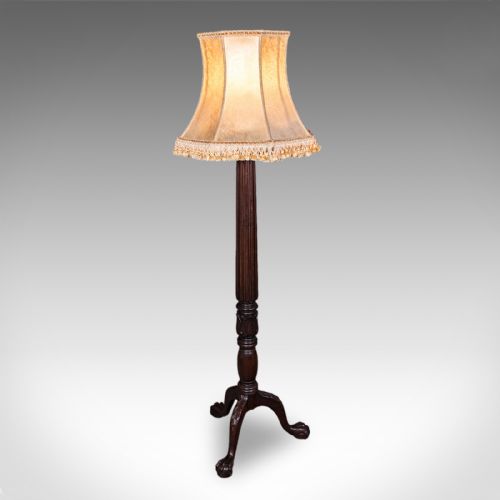
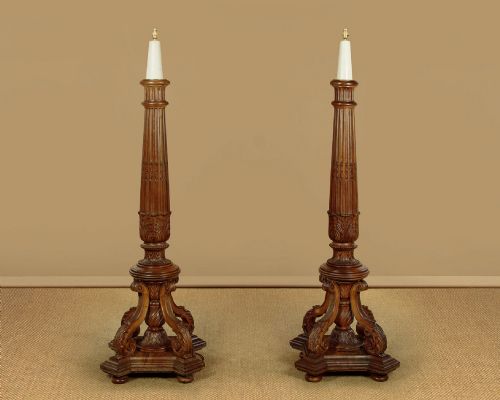
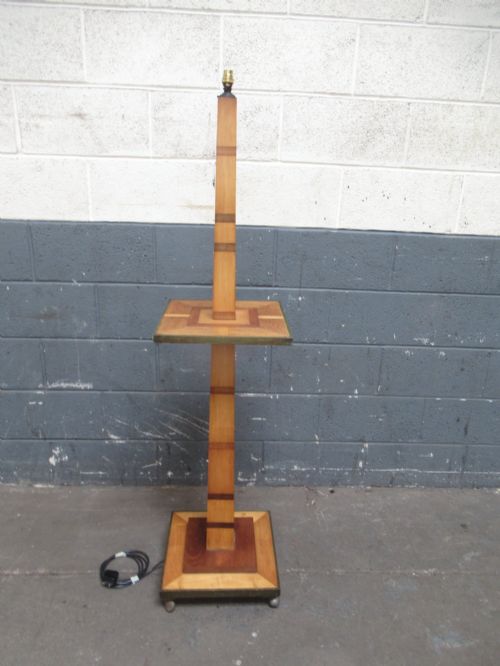
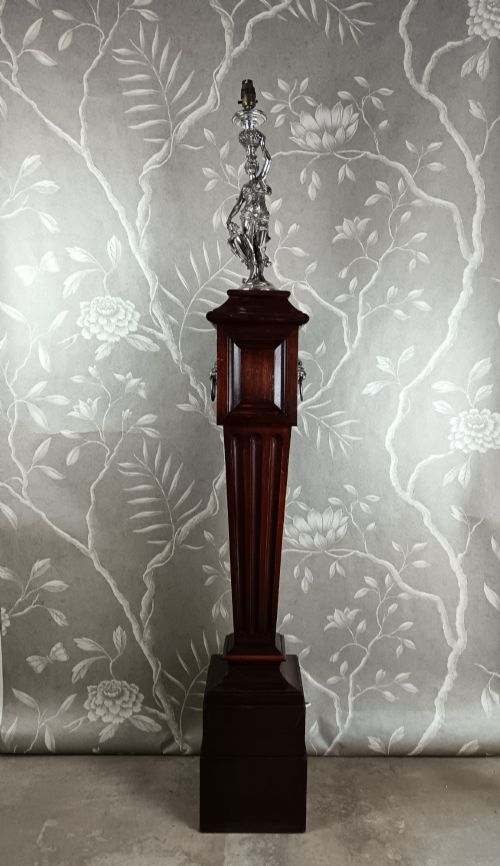
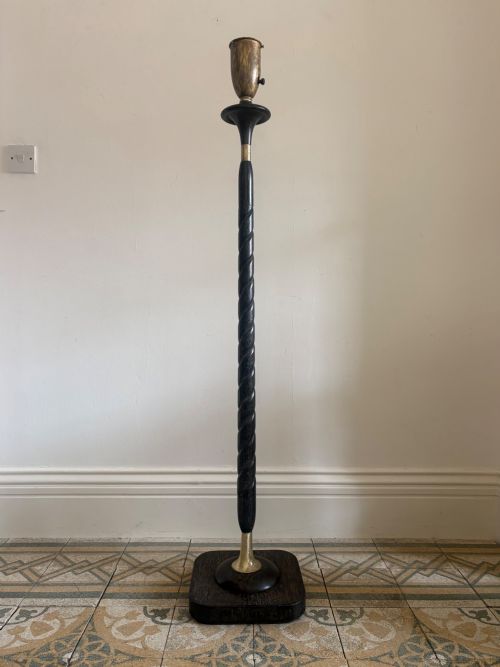
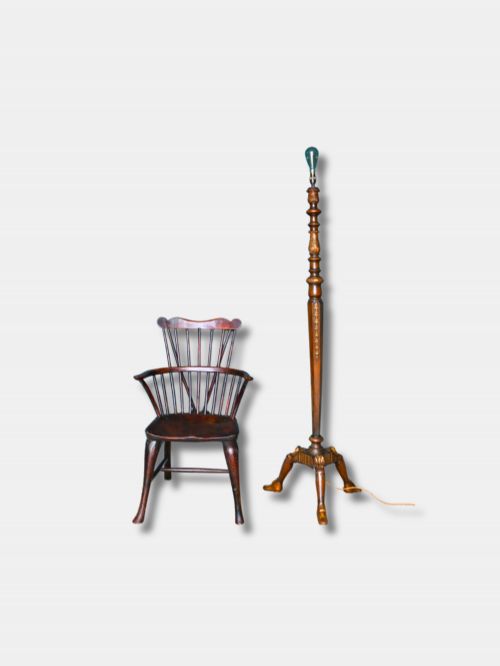
Makers utilised various timber types, producing everything from slender barley twist columns to substantial carved pedestals and figural supports. Many pieces integrate small tables or tripod bases, blending utility with decorative presence.
Materials and construction methods
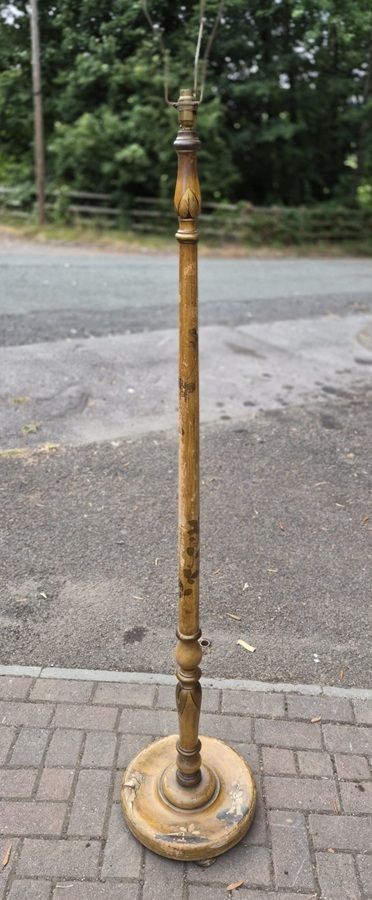
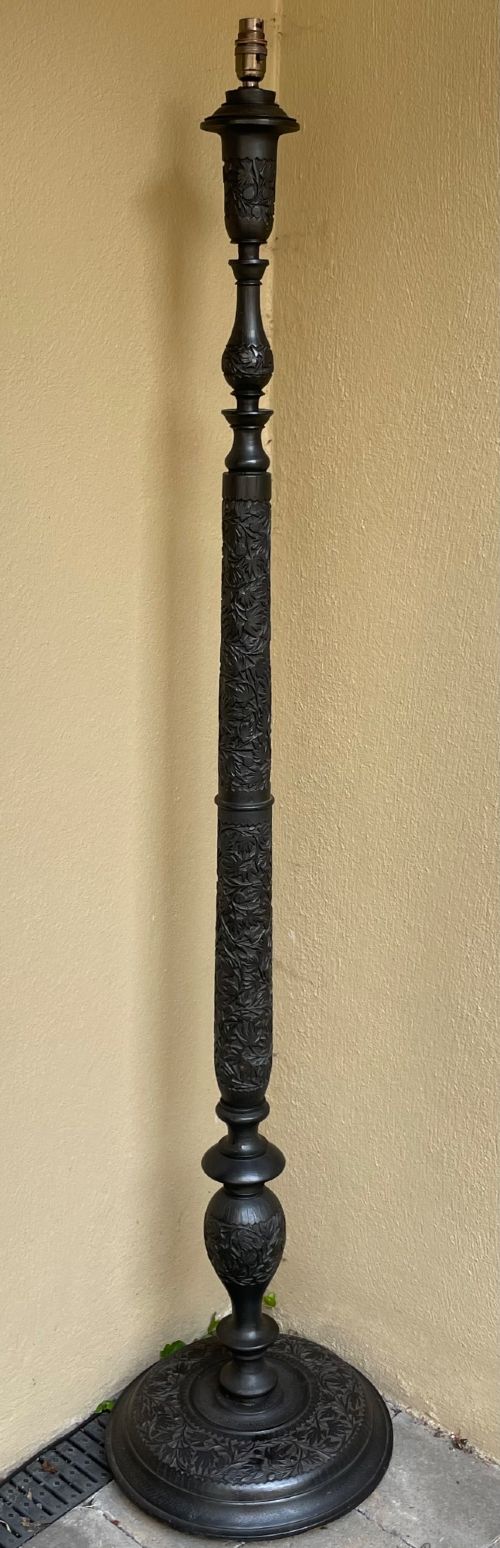
Makers constructed these standards primarily using hardwoods such as oak, walnut, mahogany and ebonised timber, shaped on lathes or carved by hand. Detail was frequently added through parcel gilt, giltwood finishes and hand-painted Chinoiserie decoration on wood.
Construction techniques include barley twisting, pedestal turning and structural joinery to support heavy bases like tripods or square platforms. Some pieces incorporate brass fittings, silver-plated elements and glass components alongside the primary wooden structure.
Periods represented span from the mid-nineteenth century through the Edwardian era and into the Art Deco 1930s.
Assessing quality and craftsmanship
Quality in a standard lamp rests on the crispness of the wood carving, the stability of the base and the integrity of the timber. Finishes range from simple painted surfaces to intricate original gilt polychrome and hand-applied Chinoiserie motifs.
Proportion and balance dictate the better examples, ensuring the tall column remains steady on its tripod or pedestal base. Superior pieces display thoughtful detailing, such as figural elements or integrated tables, rather than plain turned stems.
WMF
The Vintage Wooden Floor Lamp Glossary
- Standard Lamp
- A term frequently used interchangeably with floor lamp, denoting a tall upright lamp designed to stand directly on the floor. These pieces typically hold a fabric shade at head height.
- Chinoiserie
- A decorative style reflecting European interpretations of Chinese and East Asian artistic traditions. It often appears on these lamps as hand-painted motifs on lacquered or coloured wooden surfaces.
- Barley Twist
- A spiral carving technique applied to wooden columns and furniture legs. This style appears frequently on early twentieth-century standard lamp shafts.
- Torchere
- A tall ornamental stand originally designed to carry a candle or torch. In later periods, these forms were adapted to hold electric lamps.
- Parcel Gilt
- A method of decoration where selected parts of an object are gilt with gold leaf while the underlying wood remains visible. This technique highlights carved details on the shaft or base.
Vintage Wooden Floor Lamp: Frequently Asked Questions
How do I date a wooden floor lamp?
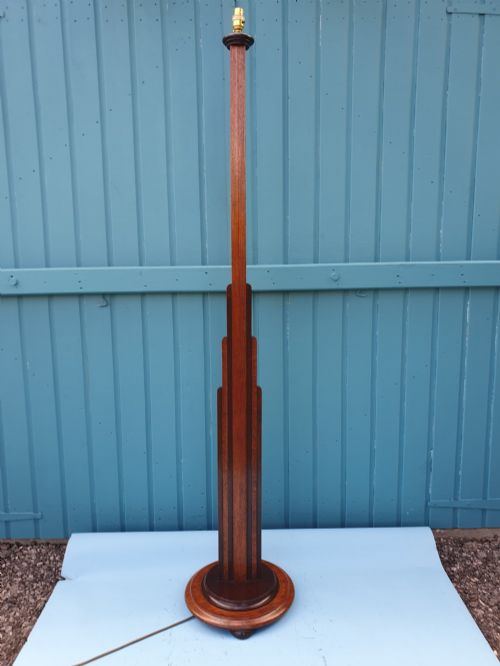
Dating relies on stylistic clues, timber choice and construction methods visible in the base and column. Art Deco examples show geometric forms, while Edwardian and Victorian pieces often feature heavier carving or revival details.
Examining any original hardware, wiring channels and surface finishes helps narrow the production era. Makers active in the early twentieth century often utilised walnut and oak with distinct regional turning styles.
Were these always electric lamps?
Most surviving standards from the Edwardian and Art Deco periods were manufactured or later adapted for electricity. Earlier nineteenth-century examples occasionally started life as torcheres or oil lamps before conversion.
Internal wiring channels are standard in purpose-built electric floor lamps from the 1920s onwards. Converted pieces may show later drilling or adaptations to the original wooden core.
How do I choose the right shade?
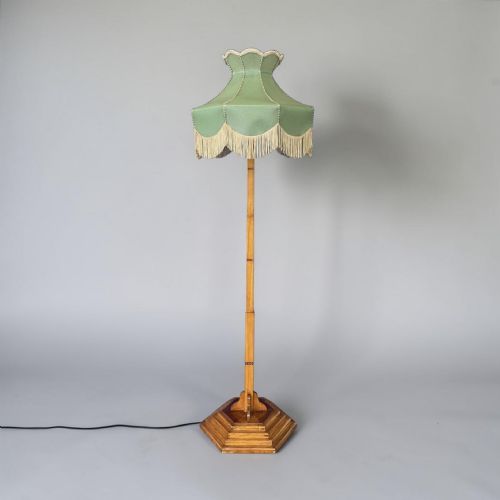
Selecting a shade depends on the height and proportion of the wooden standard as well as the room's style. Art Deco lamps pair well with geometric or simple drum shades, while Chinoiserie standards suit silk or pagoda-style covers.
Ensuring the shade diameter balances the weight of the base prevents the lamp from looking top-heavy. The fitting type must also match the lamp holder, whether brass BC or Edison screw.
Where should I place a standard lamp?
These lamps function effectively in corners or beside seating areas where they provide ambient vertical light without taking up table space. Designs featuring integrated lamp tables work well beside armchairs for reading.
Consider the clearance needed for the tripod or heavy circular base when positioning on wooden floors or carpets. Ensuring adequate stability prevents tipping in high-traffic domestic environments.