


Vintage Wine Stemware
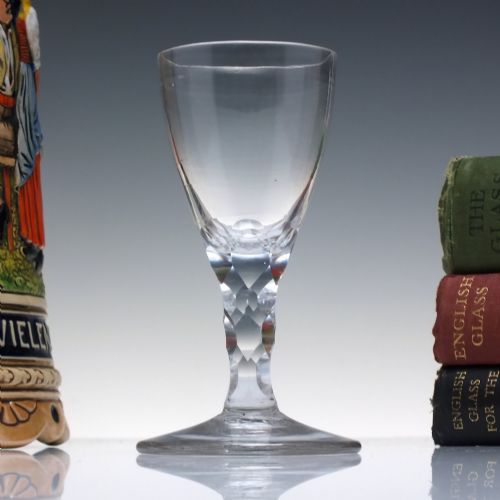
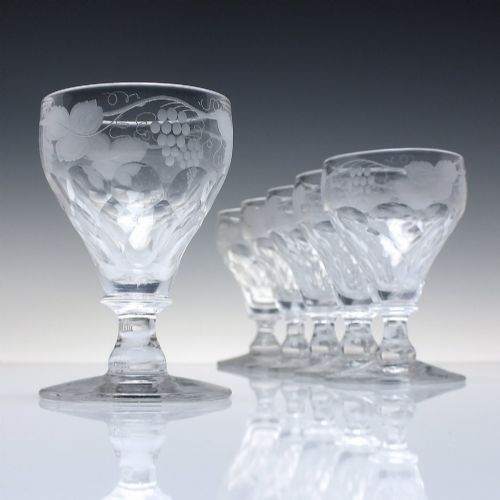
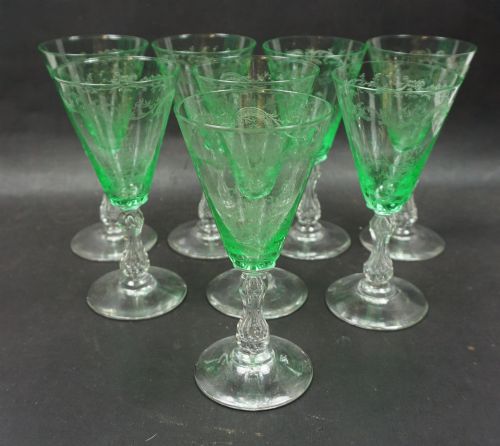
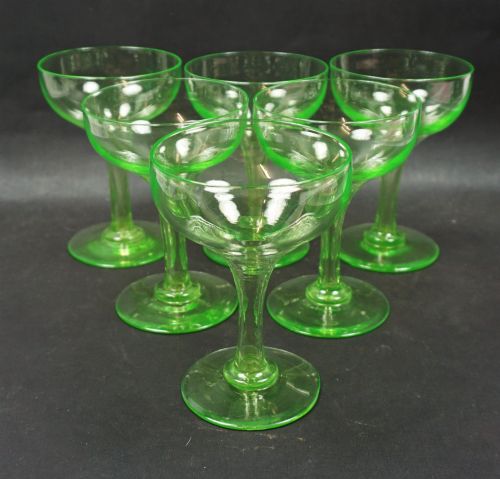
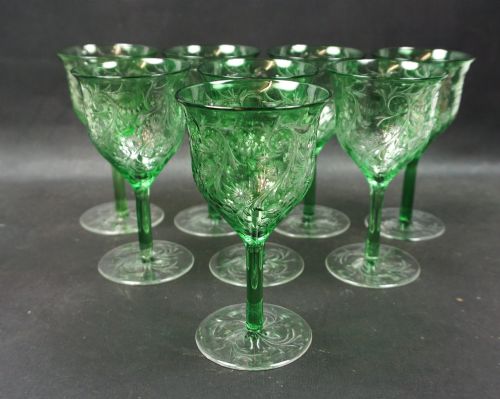
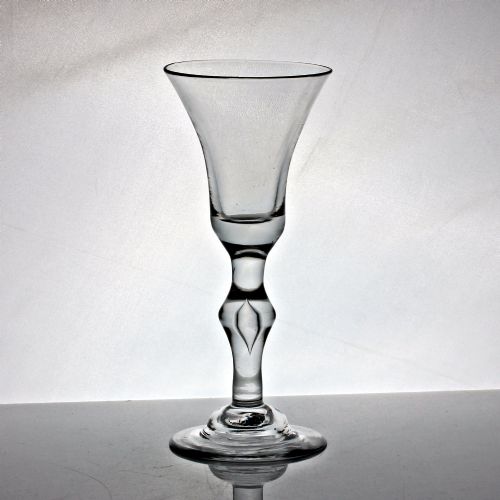
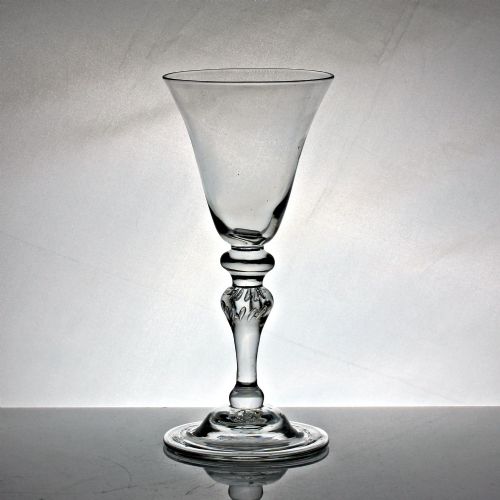
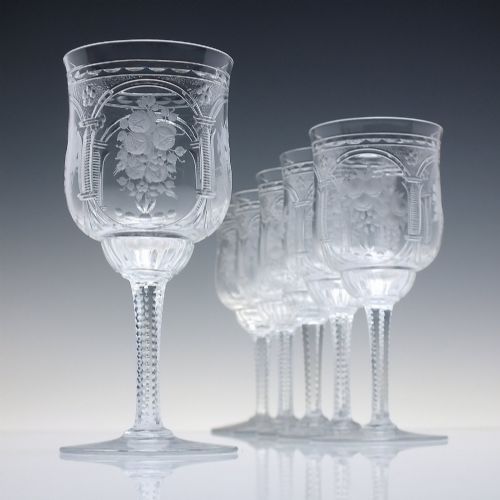
These vintage wine stemware pieces range from eighteenth-century lead glass balusters to twentieth-century coloured crystal, selected for their drinking vessels and decorative forms.
Vintage Wine Stemware
Vintage wine stemware encompasses drinking vessels designed for wine, port, champagne, and cordials across multiple centuries and stylistic movements. A buyer seeking vintage wine stemware encounters forms ranging from early Georgian lead glass balusters to Edwardian and Art Deco coloured glass services.
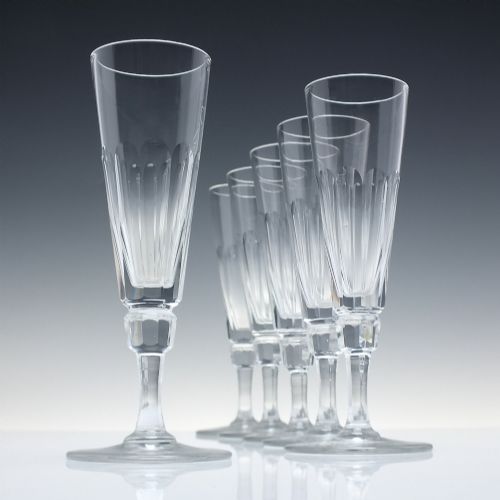
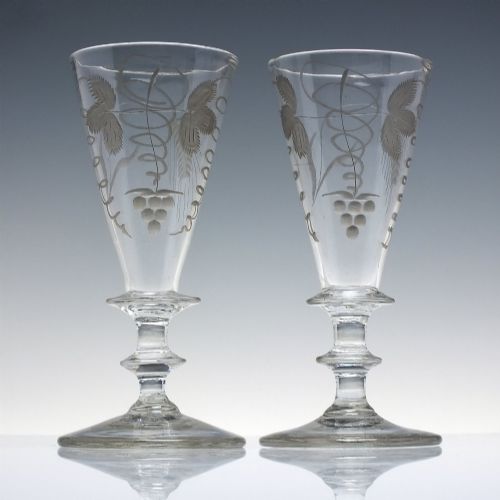
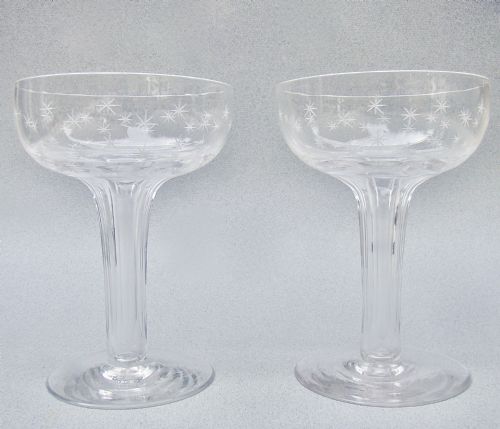
Examples appear individually, in pairs, or in matched sets suitable for table use or display. Forms include flutes, coupes, rummers, and hock glasses with engraved, enamelled, or cut decoration.
How they were made
Glassmakers shaped these drinking vessels using free-blowing, mould-blowing, and hand-forming techniques. Lead glass and crystal compositions provided the clarity and weight necessary for drawing out slender stems and forming wide feet.
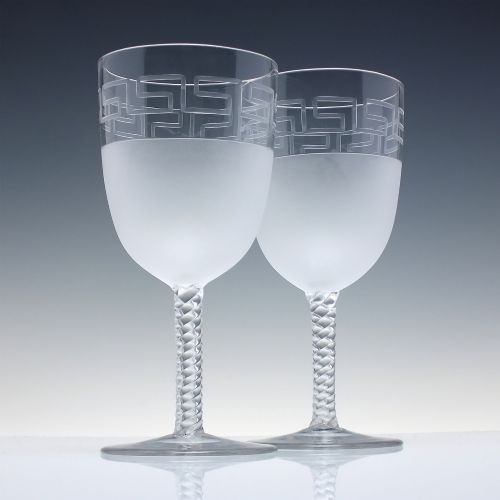
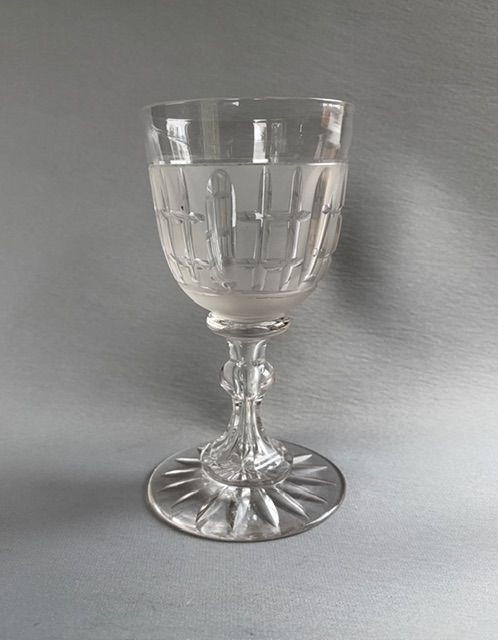
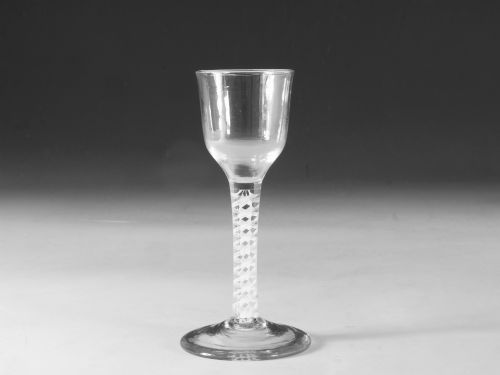
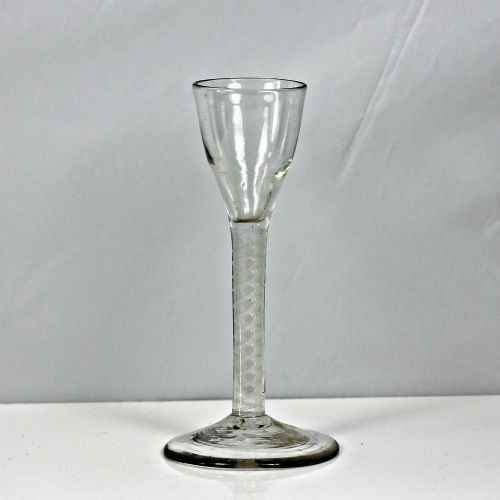
Decoration relied on wheel-engraving, intaglio cutting, and surface enamelling applied to bowls and stems. Twist stems incorporated air, opaque white, or coloured glass threads drawn through the molten metal during formation.
Vintage Wine Stemware Retail Price Guide 2026
Typical asking prices for vintage wine stemware among the pieces listed under this phrase on Sellingantiques today, from the lower quarter to the upper quarter. They describe what is for sale here now, not the wider market.
Listings feature lead glass, crystal, and coloured glass materials spanning the eighteenth, nineteenth, and twentieth centuries.
What varies in quality
Quality rests in the crispness of cutting, the delicacy of engraving, and the structural proportion of bowl, stem, and foot. Superior pieces display clear metal without excessive bubbles or inclusions, coupled with balanced weight distribution.
The complexity of the manufacturing technique dictates the tier of the piece, distinguishing simple moulded bowls from labour-intensive double series twists, intaglio engravings, and multi-layered cased glass.
John Walsh Walsh·St. Louis·Stevens and Williams·Baccarat·Webb Corbett·Theresienthal·Salviati·Massenet
The Vintage Wine Stemware Glossary
- Baluster stem
- A heavy, swelling stem form reminiscent of architectural balusters, common in eighteenth-century drinking vessels. This heavy form provides stability to early lead glass goblets.
- Opaque twist
- A stem containing threads of white or coloured opaque glass enclosed within clear metal. These threads are twisted during the drawing process to form complex internal patterns.
- Cranberry glass
- A rich red-pink glass coloured with gold chloride, popular during the Victorian period. It appears frequently in matched sets of finger bowls and wine glasses.
- Hock glass
- A tall wine glass, traditionally featuring a coloured bowl and stem, used for Rhine wines. These vessels often display elaborate wheel-cut decoration through cased layers.
- Pontil mark
- A rough scar on the base of a vessel where the punty rod was detached after blowing. Its presence indicates hand-finished glasswork.
Vintage Wine Stemware: Frequently Asked Questions
How do I date an old wine glass?
Dating relies on examining the bowl shape, stem construction, foot formation, and manufacturing marks such as pontil scars. Eighteenth-century examples often feature baluster or twist stems and folded feet, while Victorian pieces frequently introduce vibrant colours and pressed or etched decoration.
Later twentieth-century stemware introduces distinct modernist silhouettes, specific maker signatures, and chemical colours like uranium green. Comparing the pontil finish and glass weight helps distinguish early hand-blown metal from later machine-pressed production.
What is an air twist stem?
An air twist stem contains elongated bubbles or threads of air trapped inside the clear glass stem during the pulling process. Makers manipulated the molten metal to draw these air channels into delicate corkscrew spirals.
This technique required high skill to maintain consistent wall thickness and thread distribution. Air twist stems appeared primarily on mid-eighteenth-century drinking vessels before opaque twists gained popularity.
What is a rummer?
A rummer is a heavy, large-bowled drinking glass that emerged during the late eighteenth and early nineteenth centuries. These sturdy vessels were designed for ale, wine, or punch, featuring short stems and thick feet.
Georgian and early Victorian rummers often display bucket bowls with simple facet cutting or engraved floral motifs. Their robust construction made them practical tavern and household drinking vessels.