



Edwardian Crystal Goblets
Edwardian crystal goblets bring brilliant sparkle and delicate engraving to the table, capturing the refined taste of the early twentieth century.
Edwardian Crystal Goblets
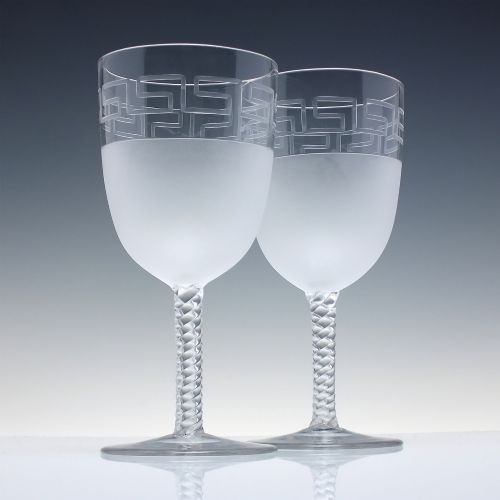
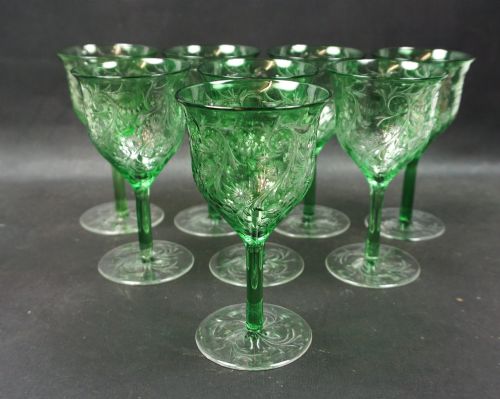
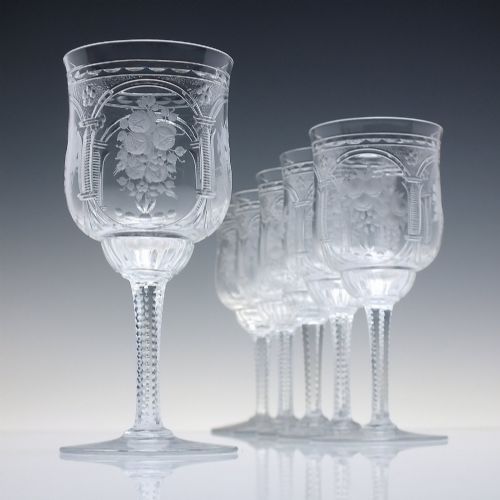
Edwardian crystal goblets encompass tall drinking vessels and matching service pieces produced during the Edwardian era, spanning the turn of the twentieth century up to the reign of George V. The pieces appearing here include wine glasses, cordial glasses, champagne coupes, hock glasses, and commemorative goblets suited for formal dining.
Makers and glasshouses from England, France, Germany, and Bohemia created these drinking vessels in distinct regional styles. Alongside standard English cut lead crystal, buyers meet continental examples showing Art Nouveau, Belle Époque, and Jugendstil motifs.
How they were made
Makers utilised lead crystal and glass as the primary medium for these vessels, shaping them through blowing and cutting techniques. Heavy lead content gave the metal a high refractive index and clear ring when struck.
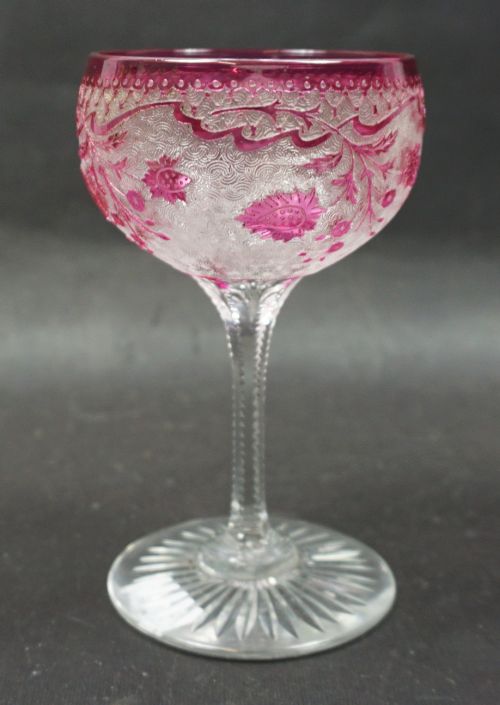
Decoration relied on skilled hand work, including intaglio engraving, surface etching, cutting, gold leaf application, and enamel painting. Overlay glass techniques required fusing coloured glass over clear crystal before cutting back to reveal the contrast.
Edwardian Crystal Goblets Retail Price Guide 2026
Typical asking prices for edwardian crystal goblets among the pieces listed under this phrase on Sellingantiques today, from the lower quarter to the upper quarter. They describe what is for sale here now, not the wider market.
Listings feature lead crystal, overlay glass, and enamel decoration across periods spanning Victorian to 1910.
What varies in quality
Quality rests upon the crispness of the hand cutting and the depth of the intaglio engraving. Superior pieces display precise geometric or naturalistic incisions that catch the light cleanly.
The sophistication of the ornamentation dictates distinction, separating standard pressed or lightly cut items from vessels featuring detailed enamel work, cameo effects, and identified maker signatures.
Stevens and Williams·Baccarat·Theresienthal·Webb Corbett
The Edwardian Crystal Goblets Glossary
- Intaglio
- A technique where the design is carved into the surface of the glass rather than raised above it. This creates a frosted, recessed motif that contrasts with polished crystal.
- Hock glass
- A tall-stemmed wine glass traditionally used for white wine or German hock. These often feature coloured bowls and elaborate surface decoration.
- Roemer
- A traditional Germanic drinking vessel featuring a wide bowl atop a cylindrical, studded stem. Antique Bohemian examples frequently utilise amber or green glass.
- Overlay glass
- A method involving two or more distinct layers of glass fused together. The outer layer is selectively cut away to expose the contrasting colour underneath.
- Champagne coupe
- A shallow, broad-bowled glass designed for sparkling wine. Edwardian versions sit upon slender stems and frequently incorporate cut crystal or coloured overlays.
Edwardian Crystal Goblets: Frequently Asked Questions
What are edwardian crystal goblets?
Edwardian crystal goblets are ornate drinking vessels produced around the early twentieth century, designed for formal dining and special occasions. They encompass tall wine glasses, cordial glasses, and commemorative pieces made by prominent glasshouses.
These vessels reflect the aesthetic movements of the period, including Art Nouveau curves and traditional English cut glass patterns. They remain valued for both display and table use.
How do I care for antique crystal?
Antique crystal requires gentle hand washing in warm water with mild detergent. Sudden temperature changes can crack old glass, so avoid hot water and abrasive sponges.
Storing goblets upright on a stable surface prevents rim damage. Lifting them by the stem rather than the bowl protects the delicate crystal structure.
How do I identify edwardian styles?
Edwardian glass often bridges late Victorian heavily cut designs and fluid Art Nouveau or Jugendstil curves. Look for naturalistic motifs, delicate intaglio engraving, and vibrant coloured overlays characteristic of the era.
Proportions tend to be elegant and refined, moving away from ultra-heavy Victorian lead crystal toward lighter, more decorative continental forms.
Can I use these glasses daily?
While these goblets were made for practical dining, their age and delicate engraved or enamelled surfaces suggest careful handling. Many owners reserve them for special occasions to preserve the fine glasswork.
Hand washing is essential, as modern dishwashers can cloud the crystal and damage surface gilding or enamel decoration over time.