






Vintage Wine Cooler Chest
A vintage wine cooler chest serves as a practical container for bottles, combining period craftsmanship with traditional dining room utility.
Vintage Wine Cooler Chest
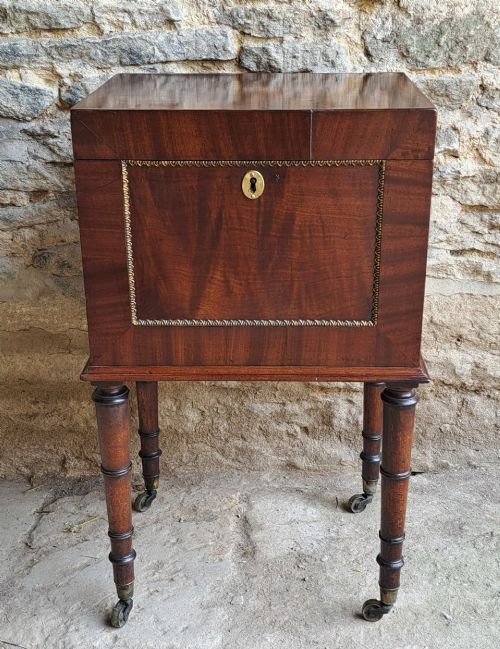
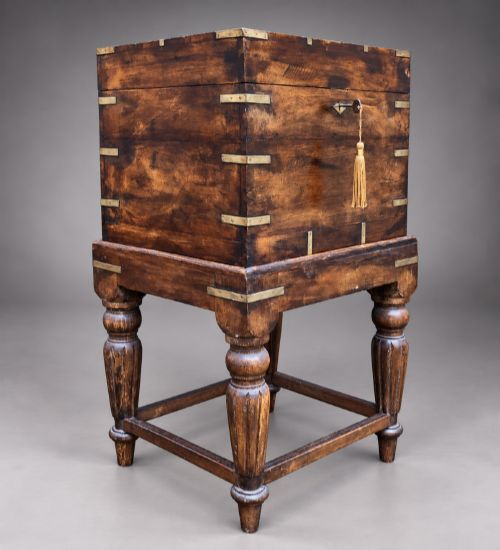
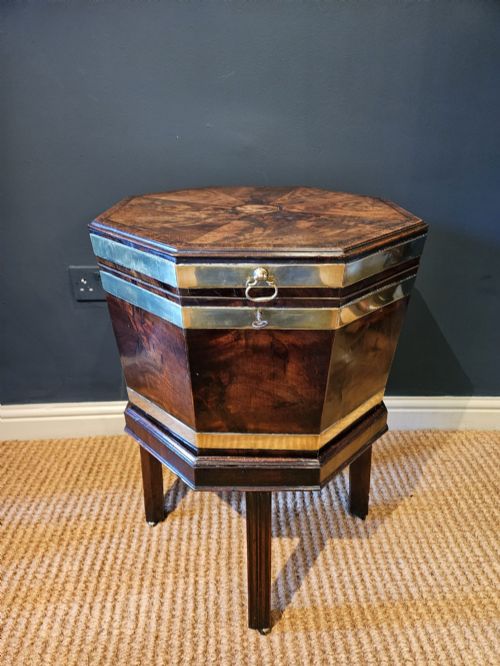
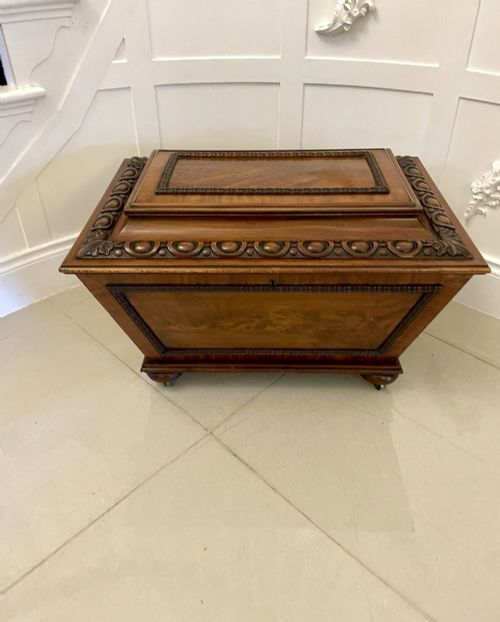
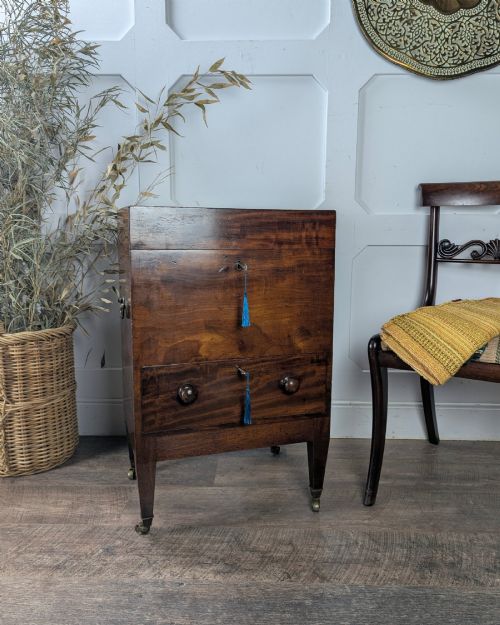
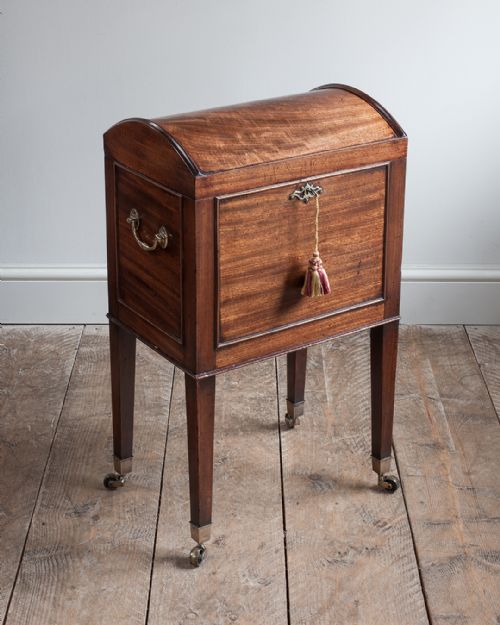
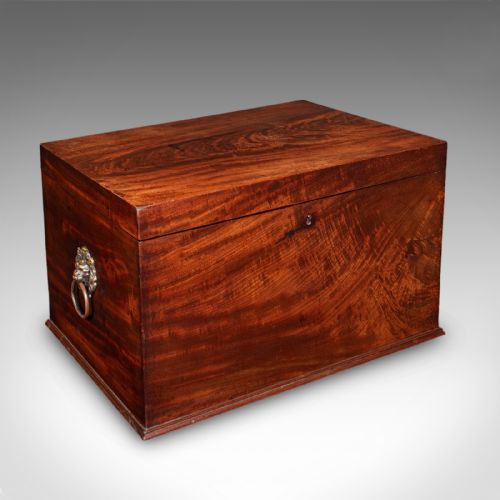
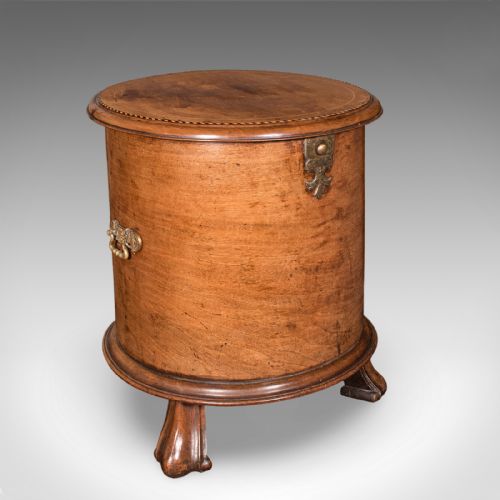
A vintage wine cooler chest, also known as a cellarette, provides dedicated storage for wine and spirits in domestic interiors. These pieces appear in forms such as sarcophagus shapes, oval containers, and box cellarettes on stands.
The selections span from the 18th century through the Georgian, Regency, Victorian, William IV, and Edwardian periods. Mahogany forms the predominant wood type, alongside padouk, walnut, rosewood, and figured elm.
Makers and regional workshops produced these vessels in distinct styles, including Anglo-Indian and Georgian Revival. Buyers most frequently encounter mahogany examples featuring traditional box or sarcophagus designs.
How they were made
Cabinetmakers constructed these chests primarily from solid and veneered timbers such as mahogany, walnut, and padouk, often incorporating satinwood and boxwood inlay for decorative contrast. Carpenters shaped these woods into serpentine fronts, sarcophagus profiles, and oval bodies.
Metal components played a structural and decorative role, with brass bindings, bands, and mountings securing the wooden frames and handles. Selected examples utilised carved ornamentation and specific woods like figured elm to distinguish the exterior finish.
Vintage Wine Cooler Chest Retail Price Guide 2026
Typical asking prices for vintage wine cooler chest among the pieces listed under this phrase on Sellingantiques today, from the lower quarter to the upper quarter. They describe what is for sale here now, not the wider market.
Listings feature mahogany, walnut, satinwood, and padouk across the 18th, 19th, and early 20th centuries.
What varies in quality
The grade of timber selection and complexity of cabinetwork determine the standing of an individual piece within its period. Finely figured mahogany, intricate boxwood inlay, and well-executed brass bound details elevate the execution.
Proportion and stylistic consistency relative to periods like the Regency or Georgian eras govern the success of the design. Pieces retaining integrated stands or original internal compartments demonstrate superior original intent.
Gillingtons·Freemans of Norwich
The Vintage Wine Cooler Chest Glossary
- Cellarette
- A lockable container or chest designed specifically for holding bottles of wine or spirits near the dining table. These items date primarily from the 18th and 19th centuries.
- Sarcophagus
- A heavy, monumental chest shape with a sloping or domed lid, popular during the Regency period for wine coolers. This form mimics ancient stone coffins through stepped or curved wooden profiles.
- Padouk
- A dense tropical hardwood displaying a reddish-brown tone, utilised in Anglo-Indian furniture production. This material offers exceptional durability and depth of grain.
- Satinwood
- A luminous timber native to India and Ceylon, employed for banding and inlay work on Georgian and later furniture. The wood yields a pale yellow, reflective surface.
- Serpentine
- A front profile characterised by a convex central section flanked by two concave curves. This contour requires skilled woodworking to achieve fluid movement across a chest.
Vintage Wine Cooler Chest: Frequently Asked Questions
What is a cellarette?
A cellarette is a storage chest built to hold wine bottles near the dining table.
These pieces kept beverages secure and accessible during meals in period homes.
How do I identify a Regency wine cooler?
Regency wine coolers often feature sarcophagus silhouettes, brass bands, and heavy classical proportions.
Cabinetmakers working in this style drew inspiration from ancient Greek and Roman designs.
What woods were used for wine chests?
Mahogany served as the primary timber, supported by walnut, padouk, rosewood, and figured elm.
Craftsmen frequently added satinwood and boxwood inlay for decorative contrast.
Where were cellarettes placed in a room?
These chests sat directly on the floor, on low frames, or upon dedicated wooden stands.
Their placement typically occurred near the dining room sideboard or table for convenient service.
How do I tell a Georgian piece apart?
Georgian examples rely on classical restraint, oval forms, and precise mahogany grain work.
These designs emphasise balanced proportions and understated brass mountings.