
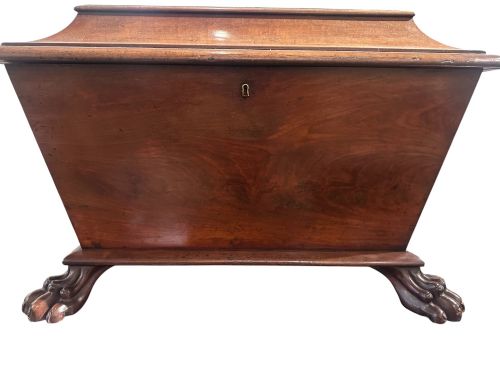


Carved Paw Foot Cooler
These carved paw foot cooler options are solid timber cellarettes and wine coolers built to hold bottles at the dining table.
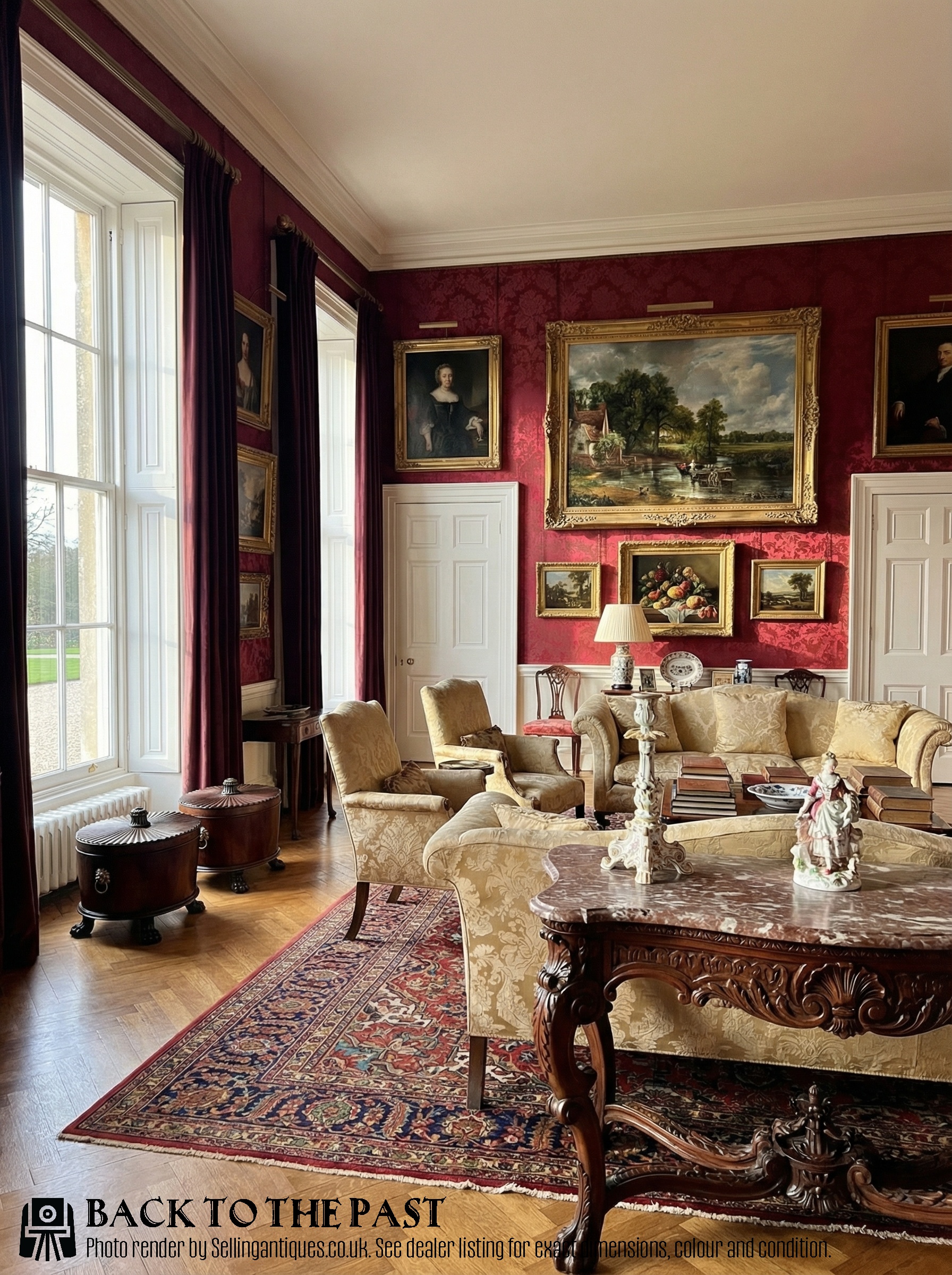
Carved Paw Foot Cooler
A carved paw foot cooler is primarily a wine cooler or cellarette designed to chill wine and spirits during dining. These forms emerge mainly across the Georgian, Regency, and nineteenth century periods.
Most examples found here take the characteristic sarcophagus shape, featuring carved paw feet that anchor the heavy timber construction. Mahogany remains the dominant timber, alongside occasional walnut, oak, and padouk.
The objects serve as freestanding containers, often fitted internally for bottles, bridging utility and formal dining room display.
Materials and construction
Makers utilised solid mahogany, flame mahogany veneer, and walnut over robust carcases, frequently mounting the heavy bodies on carved wooden or gilded feet. Brass fittings, handles, and internal zinc linings appear across the pieces to handle ice and water.
Joinery traditions of the Georgian and Regency eras governed the construction, allowing large timber sections to form the sarcophagus bodies without warping.
Listings for this phrase feature pieces predominantly from the Georgian and Regency eras, constructed from mahogany, walnut, and oak.
Judging quality in carved paw foot cooler items
Quality rests in the selection of figured timber, such as flame mahogany or walnut, and the crispness of the carving on the paw feet. Superior examples show careful attention to proportions and the integration of brass handles or liners.
Later reproductions or altered pieces lack the depth of timber grain and the sharp hand-carved detail found on genuine Georgian and Regency period items.
The Carved Paw Foot Cooler Glossary
- Cellarette
- A lockable container used to hold wine and spirits near the dining table. They frequently stand on feet or castors.
- Sarcophagus
- A monumental casket shape with a domed or peaked lid, popular for Regency and Georgian wine coolers. The design mimics ancient stone tombs.
- Paw foot
- A carved foot shaped like an animal's paw, often terminating the legs of tables and wine coolers. This feature frequently appears in Regency furniture.
- Padouk
- A heavy tropical hardwood with a reddish hue, utilised in certain Regency Anglo Indian furniture pieces. It provides a dense, durable surface for carving.
Carved Paw Foot Cooler: Frequently Asked Questions
What is a carved paw foot cooler used for?
These vessels were originally designed to hold wine bottles and ice during formal meals in grand dining rooms. They kept drinks chilled close to the table before refrigeration.
Today, they function well as standalone decorative objects or as distinctive storage bins for blankets and logs in a living space.
How do I tell a Regency cooler from a Georgian one?
Georgian coolers often display straighter lines, fluted details, and classical proportions associated with eighteenth-century design. Regency pieces tend towards the heavier sarcophagus shape with bolder carved paw feet.
Examining the timber grain and internal linings helps clarify the period of manufacture.
Are these coolers waterproof inside?
Many period wine coolers retain original or early zinc linings meant to hold melting ice and liquid. These metal inserts protected the timber carcase from dampness during use.
Checking the interior condition reveals whether the zinc or lead lining remains intact.
Where should I place a cellarette at home?
A cellarette works effectively as a freestanding focal point in a dining room, hallway, or study. Because they are finished on all sides to stand away from walls, they sit comfortably in open spaces.
Ensure placement avoids direct heat sources to protect the polished mahogany or walnut surfaces.