



Vintage Whatnot Shelf
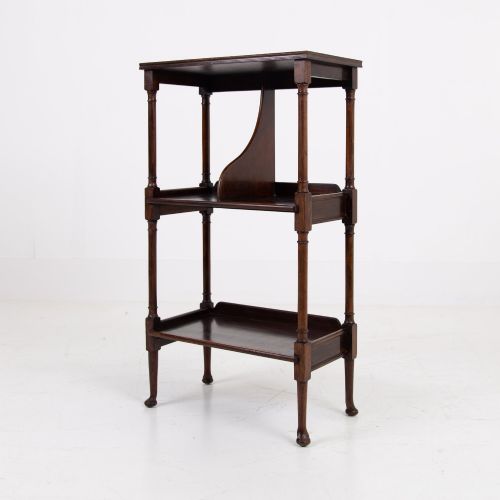
A vintage whatnot shelf provides tiered open display for objects, books and ornaments, bringing traditional multi-level storage to a room.
Vintage Whatnot Shelf
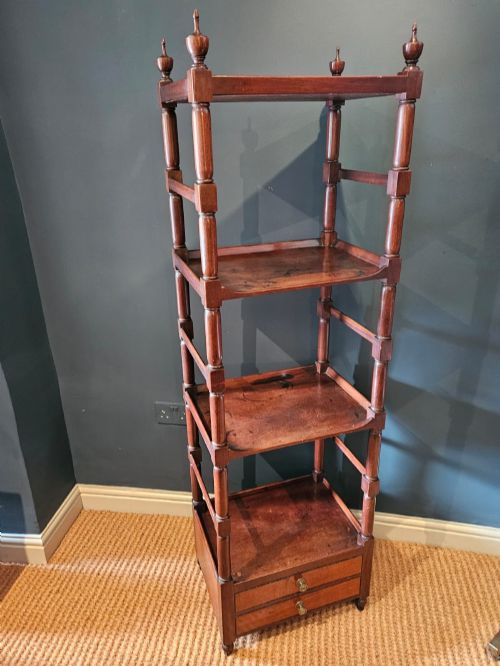
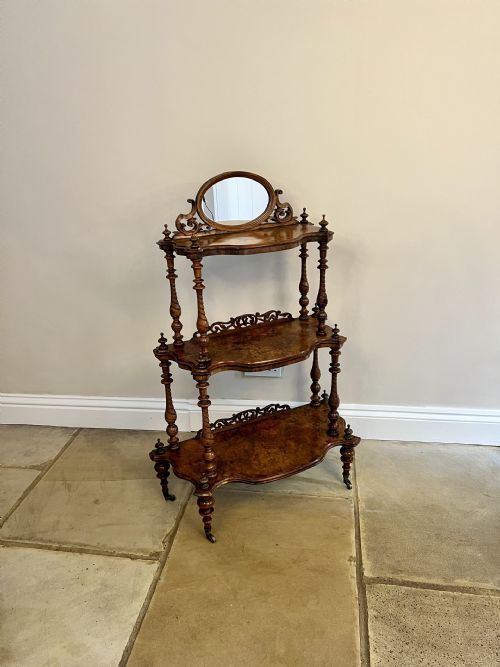
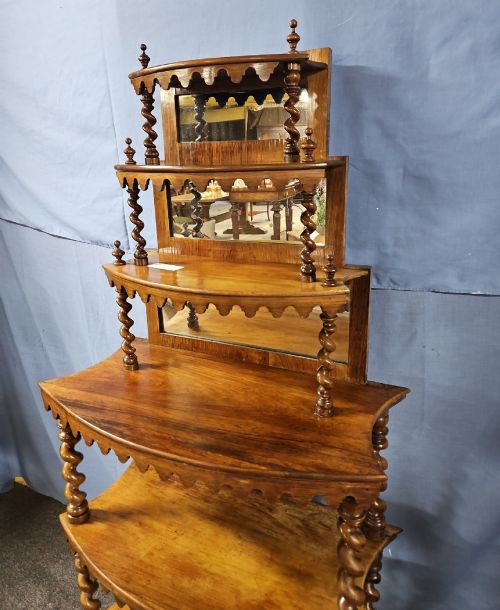
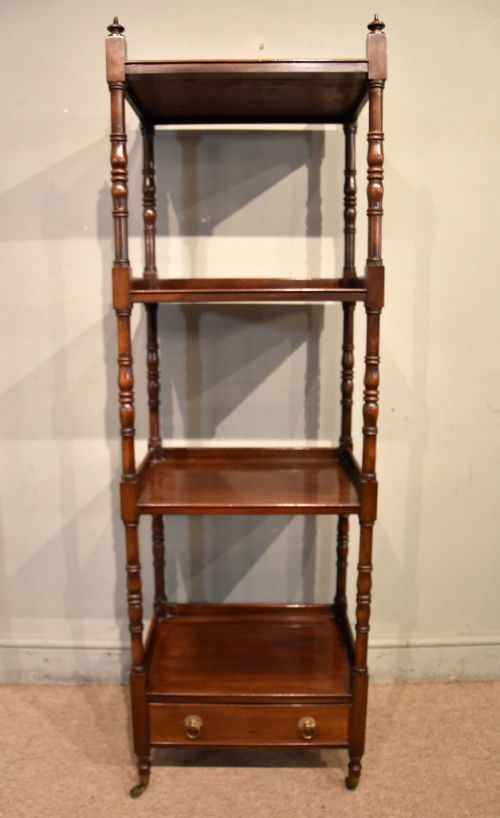
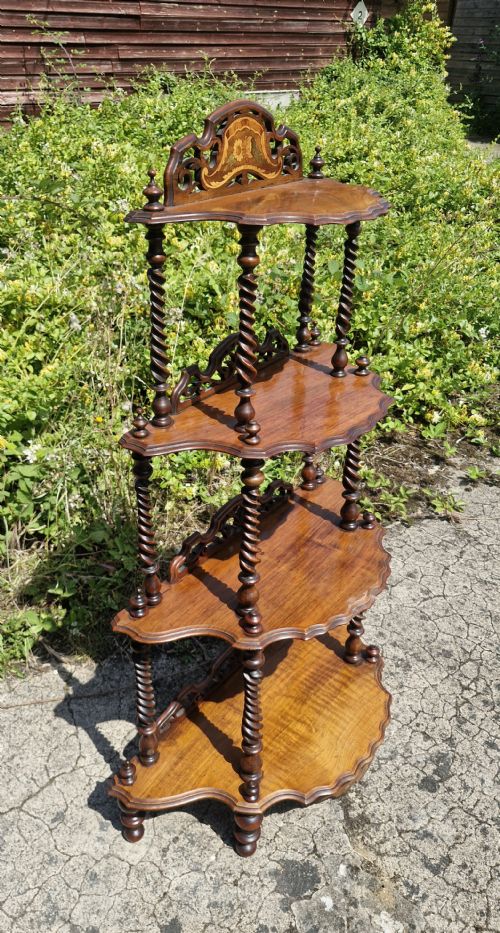
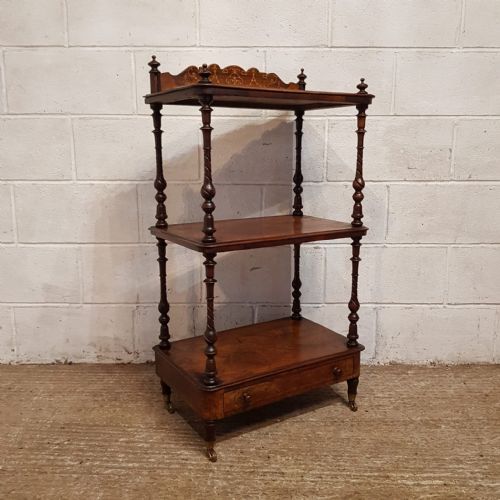
A vintage whatnot shelf is a multi-tiered open display stand designed to hold books, ornaments and small objects, appearing in forms such as corner units, four-tier bookcases and etageres. These pieces date across various periods including the Regency, Georgian, Victorian and Edwardian eras, reflecting changing domestic tastes for tiered shelving.
The most common versions met on this page are mahogany and walnut pieces featuring multiple tiers, alongside specialised forms like music stands, dumb waiters and cabinet-base hybrids. Makers utilised corner designs and freestanding structures to maximise display space in both compact and large rooms.
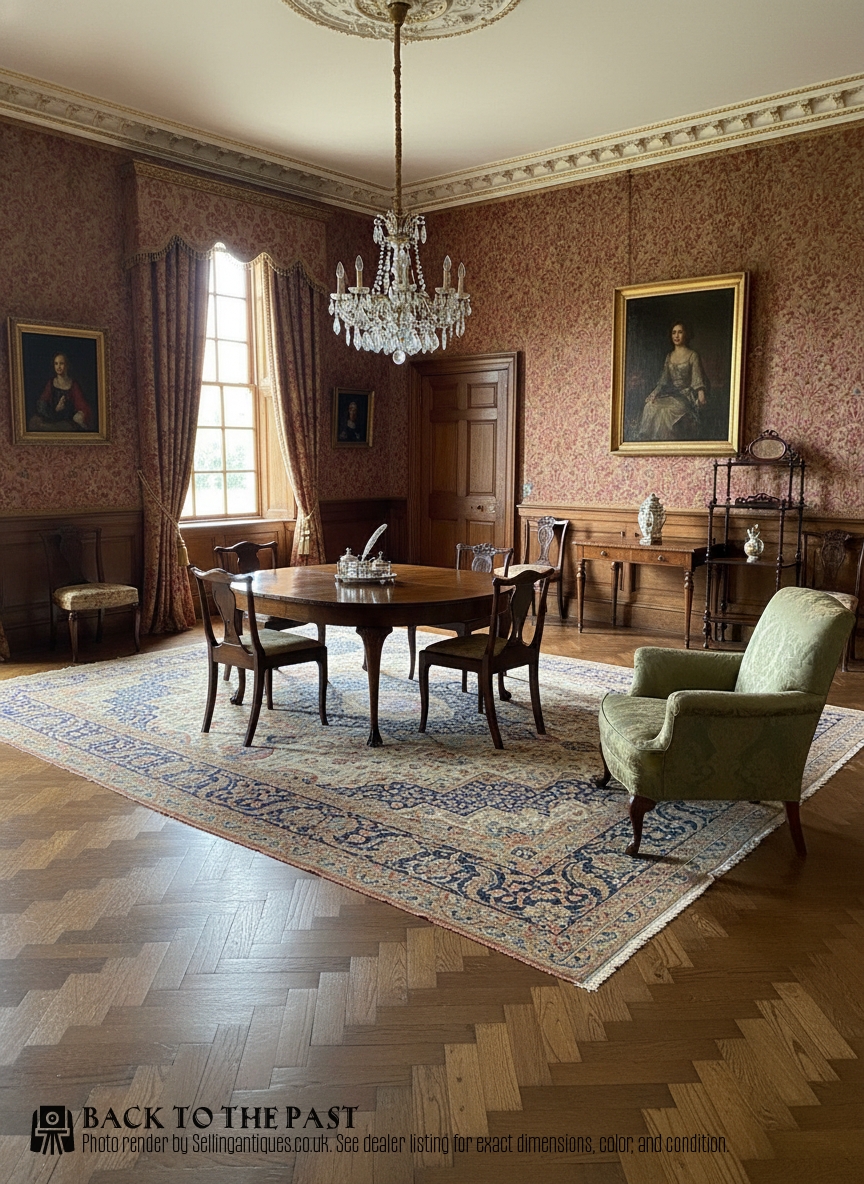
Originating as versatile display furniture, these items bridge the gap between practical storage and decorative presentation. Buyers select them to organise collections while adding period character to a interior scheme.
Materials and construction
Makers constructed these pieces using dense hardwoods such as mahogany, walnut, burr walnut and rosewood, frequently incorporating ebonised wood and cane for contrasting texture and visual weight. These timbers provided the structural strength required to support multiple tiered shelves without buckling under the weight of books and ceramics.
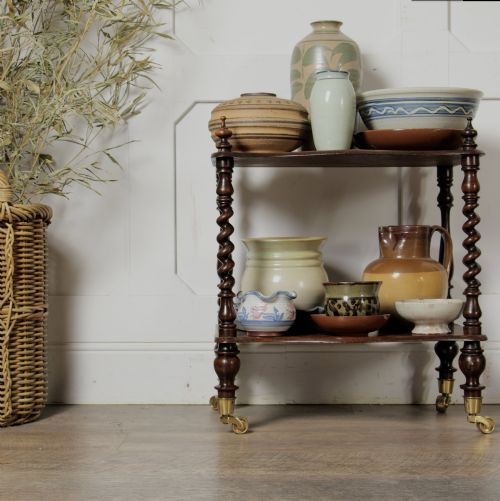
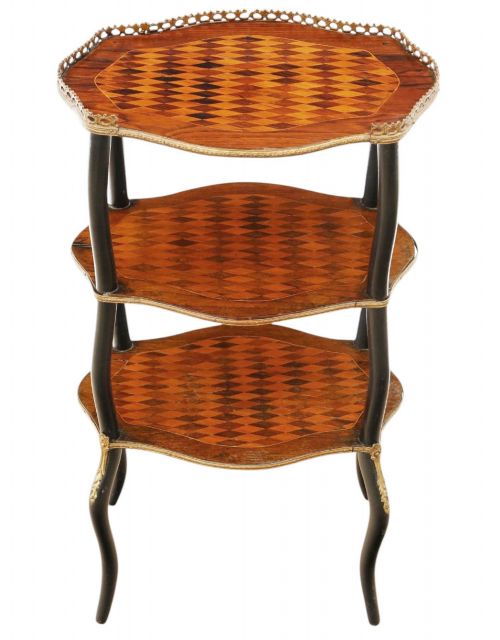
Joinery techniques ranged from straightforward tiered pillar supports to intricate parquetry, marquetry inlay, and barley twist turnings. Finer examples integrated brass mounts, ormolu details and marble tops, elevating simple shelving units into decorative focal points.
Listings feature woods spanning mahogany, walnut, rosewood, burr walnut and ebonised timber, alongside glass and cane.
What separates the best examples
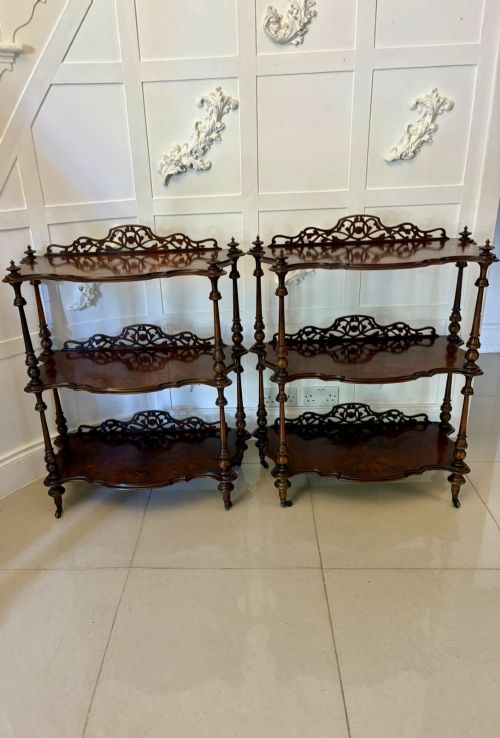
Quality in these pieces rests upon the selection of timber veneers, such as burr walnut or figured mahogany, and the crispness of turned supports like barley twists. Superior items display careful grain matching across the tiers and robust structural integrity in the uprights.
The sophistication of decorative elements, including parquetry inlay, brass mounts and ormolu framing, distinguishes standard utility shelving from high-end cabinet work. Refined proportions and the inclusion of functional additions such as cupboard bases or drawer sections further elevate a piece.
Samson and Son London
The Vintage Whatnot Shelf Glossary
- Whatnot
- An open set of tiered shelves used for displaying ornaments, books or small objects. It first gained popularity in the Georgian and Regency periods.
- Etagere
- A piece of furniture consisting of a set of open shelves for displaying small objects or ornaments. The term often overlaps with the traditional whatnot.
- Barley twist
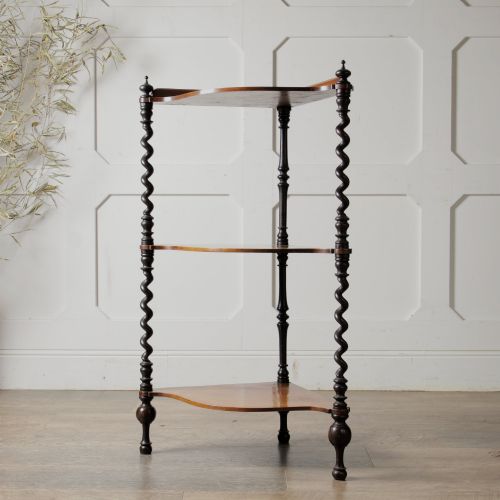
- A type of turned wooden support resembling a spiralling rope or barley sugar stick. It is commonly found on Victorian uprights and legs.
- Parquetry
- A geometric mosaic of wood pieces used for decorative effect on furniture surfaces. It appears on inlaid table tops and shelf surfaces.
- Dumb waiter
- A tiered shelving unit or stand historically used for holding food or tableware. Some variations feature revolving trays or cabinet bases.
Vintage Whatnot Shelf: Frequently Asked Questions
What is a vintage whatnot shelf used for?
These pieces were originally designed to hold books, ceramics and decorative ornaments across multiple accessible levels. Today, they serve the same function in modern homes, offering vertical display space without dominating a room.
Their open tiers make them well-suited for showcasing collections of small objects, glassware or framed photographs.
How do I tell a Victorian whatnot from a Regency one?
Regency examples often feature cleaner architectural lines, lighter mahogany timbers and classical brass details reflecting the early nineteenth-century taste. Victorian pieces tend to introduce heavier woods like burr walnut, darker ebonised finishes and turned supports such as barley twists.
Examining the secondary timbers and the style of the turnings helps clarify the period of manufacture.
Where should I place a corner whatnot?
Corner whatnot shelves fit directly into unused room angles, making them practical for smaller spaces or awkward layouts. They utilise vertical height while keeping floor circulation clear.
They work effectively in sitting rooms, studies or hallways where traditional rectangular bookcases might prove too bulky.
Are these shelves sturdy enough for heavy books?
Most tiered stands were built to support decorative objects, ceramics and lighter volumes rather than heavy rows of architecture or reference books. The structural integrity depends on the tightness of the upright joints and the thickness of the timber shelves.
Lighter display items and select volumes sit safely on the tiers, but heavy loads require caution.