

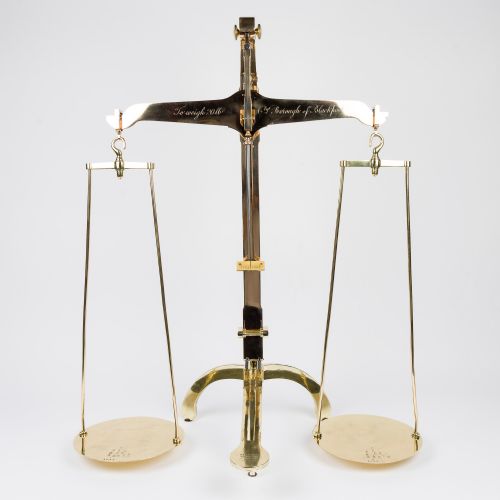
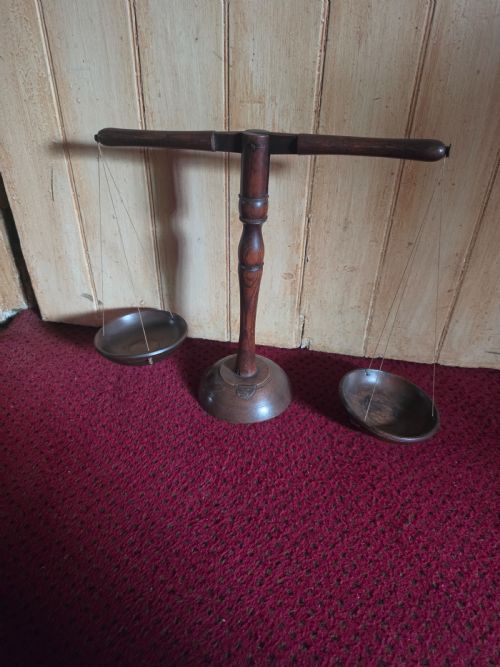

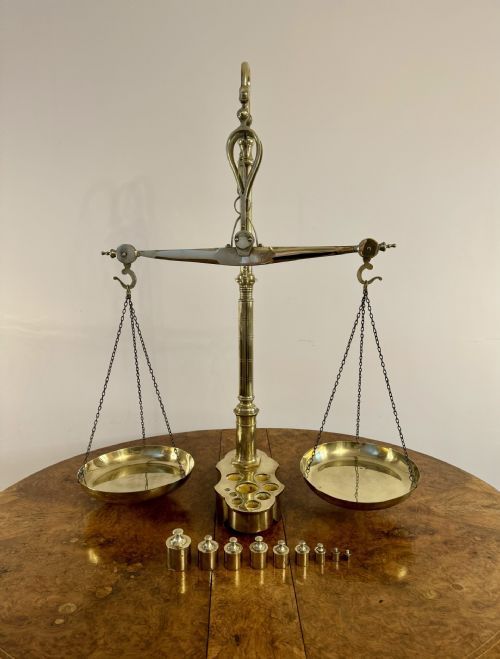
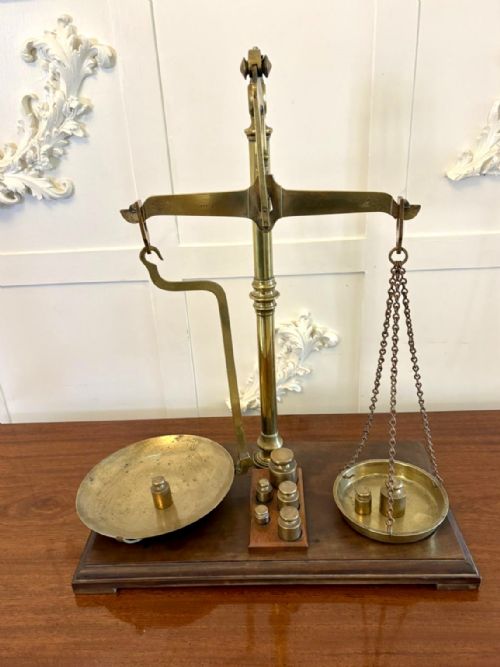


Vintage Weighing Scales
These vintage weighing scales bring utilitarian brass, iron and timber into modern rooms as functional sculptural objects.
Vintage Weighing Scales
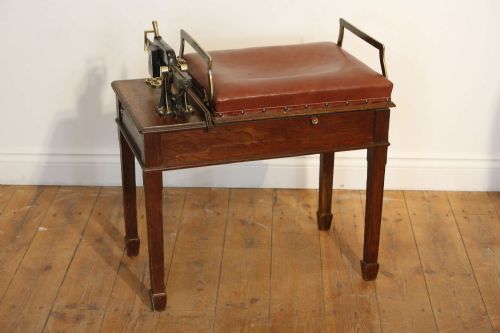
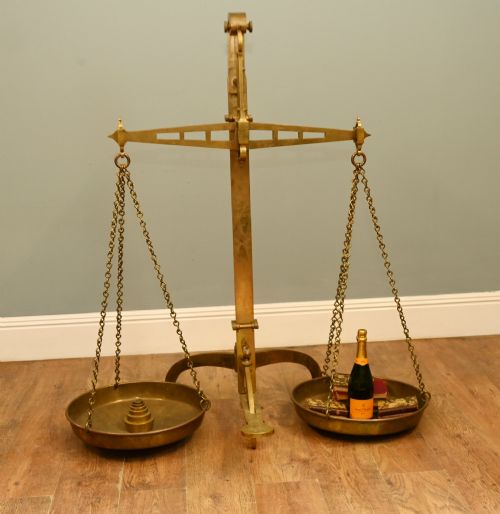
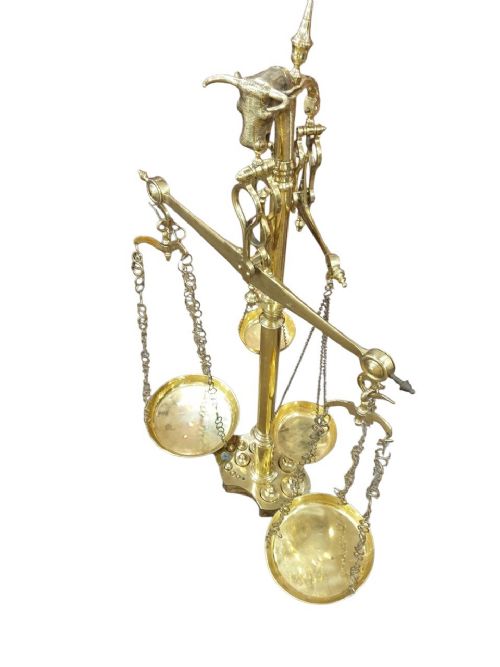
Vintage weighing scales encompass domestic, commercial and institutional balance systems spanning the nineteenth and early twentieth centuries. These pieces range from compact brass postal and apothecary balances mounted on mahogany bases to large floor-standing butcher and grocer beam scales cast in iron.
How they were made
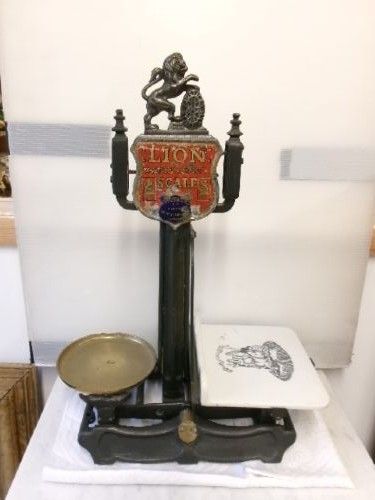
Maker workshops combined heavy structural metals with dense hardwoods to withstand daily industrial and commercial use. Cast iron and wrought iron provide rigid support frames, while polished brass forms the sensitive beams, pans and indicator pointers.
Bases and mounting boards utilise seasoned mahogany, oak and regional hardwoods, often fitted with dovetailed joints and compartments for stored weights. Copper pan inserts, ceramic scale plates and hand-stamped maker inscriptions complete the construction.
Vintage Weighing Scales Retail Price Guide 2026
Typical asking prices for vintage weighing scales among the pieces listed under this phrase on Sellingantiques today, from the lower quarter to the upper quarter. They describe what is for sale here now, not the wider market.
The inventory records specialised trade equipment including dairy, jockey, apothecary, postal and butcher scales spanning the Victorian and Edwardian eras.
What varies in quality
Quality rests in the precision of the surviving mechanism, the clarity of maker inscriptions and the integrity of the original components. Top-tier examples retain matching numbered weights, crisp foundry stamps and unpolished brass surfaces with deep historic patination.
Lower tiers often show replacement pans, missing weights or structural repairs to the wooden bases and iron beams. The balance between utilitarian strength and fine decorative finishing distinguishes standard utility equipment from superior maker-signed instruments.
Day & Millward·Parnall & Sons of Bristol·W & T Avery·Stephen Houghton & Son of Ormskirk·De Grave & Co. London·DE Grave Short & Co.·Young & Son
The Vintage Weighing Scales Glossary
- Balance scale
- A weighing device operating on a lever principle with a central fulcrum and equal arms supporting matching pans. It relies on gravity to determine equal mass between an object and standard weights.
- Beam scale
- A heavy-duty weighing apparatus featuring a long horizontal metal bar from which large pans or hooks suspend. These industrial units were standard in butcher shops and grocery stores.
- Postal scale
- A compact desktop balance designed specifically for weighing letters and parcels to calculate postage rates. They frequently incorporate stepped brass weight platforms and tiered brass weight sets.
- Apothecary balance
- A sensitive precision scale utilised by chemists and pharmacists for measuring small quantities of medicinal powders. They are normally enclosed in glass-fronted mahogany cabinets or fitted with miniature brass pans.
Vintage Weighing Scales: Frequently Asked Questions
How do balance scales operate?
These devices use a central fulcrum and a balanced horizontal beam to compare an unknown mass against standard metal weights placed on the opposite side. When equilibrium is reached, the pointer centres on the scale indicator.
Most antique models rely purely on mechanical leverage without springs, requiring careful levelling on a flat surface to ensure accurate readings.
Were these used in homes or shops?
The pieces span both domestic and commercial environments, ranging from kitchen and postal scales used in private houses to massive floor-standing butcher and grocer balances used in retail trade.
Specialist variants like apothecary, jockey and inspector scales served specific professional niches in laboratories, racing stables and municipal offices.
How should I clean brass and iron?
Preserving the historic surface generally requires only gentle dusting and occasional waxing for exposed timber bases. Heavy chemical metal polishes strip away desirable dark oxidation and age patination.
Iron components benefit from a light application of protective oil or microcrystalline wax to prevent rust while maintaining their matte industrial finish.
Can these scales still weigh accurately?
While many mechanical beam scales remain surprisingly precise, their accuracy depends on the balance of the central knife-edge pivots and the completeness of the original weight sets.
They function well for basic household weighing when properly levelled, though most collectors treat them primarily as decorative objects of industrial heritage.