




Cast Iron Scales
Cast iron scales are robust weighing devices built to last centuries, combining utilitarian metalwork with domestic and commercial history for your home.
Cast Iron Scales
Cast iron scales represent heavy-duty weighing instruments designed for trade, kitchen work, and commercial establishments throughout the Victorian and Edwardian eras. These machines range from robust butcher and grocer balance scales to delicate postal balances and domestic bathroom models.
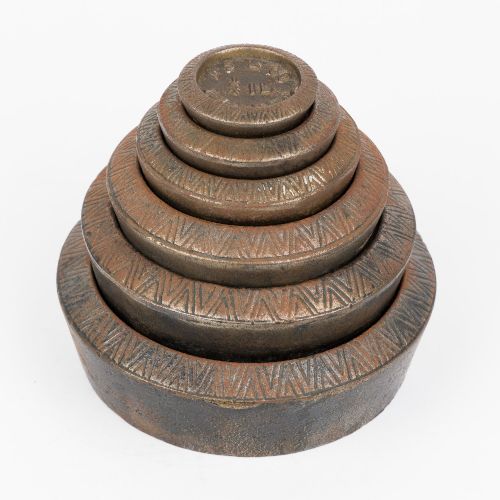
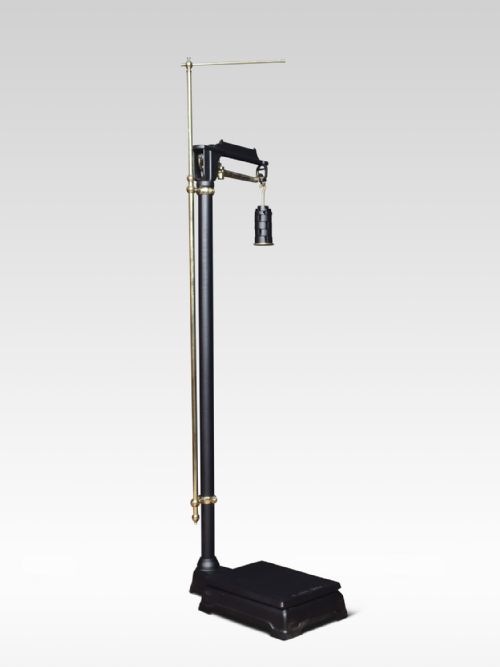
The pieces appearing on this page span the nineteenth and early twentieth centuries, bringing industrial utility directly into domestic spaces. Collectors encounter various forms, including traditional beam balances, platform machines, and sets complete with original stacking weights.
Originating from British, French, American, and German workshops, these objects reflect the widespread industrial standardisation of weight and measure. Each specimen carries the marks of its working life, whether utilised in a dairy, a butcher shop, or a doctor's surgery.
Materials and construction
Makers utilised heavy cast iron for the structural bases and frames, providing the necessary mass and stability to withstand rigorous daily commercial use. This dark metal frequently pairs with contrasting polished brass pans, copper components, and steel pivots to ensure smooth mechanical movement.
Surfaces often retain traces of early painted finishes, applied to protect the metal from corrosive environments such as dairies, butcher shops, and industrial warehouses. Wooden elements and glass dials occasionally appear, grounding the heavy metal construction in domestic utility.
Some butcher scales advertised sausages directly on the dial, ensuring customers knew the exact trade conducted at the counter.
Factors of quality
Quality in these instruments rests upon the integrity of the casting and the precision of the mechanical balance. Finer examples retain their original painted surfaces, clear maker markings, and matching brass or copper pans rather than modern replacements.
The presence of matching original weights elevates a piece, demonstrating that the set remained intact through decades of commercial or domestic service. Smooth articulation of the beams and legible maker plaques distinguish superior workshop production from standard utilitarian output.
Fairbanks Scale Co·Wm Hodgson Salford·Maple and Co·T Avery Ltd
The Cast Iron Scales Glossary
- Balance scales
- Weighing instruments utilising a central fulcrum and two suspended pans to determine mass by comparison with standard weights. These form the traditional archetype of trade and commerce.
- Cast iron
- An iron-carbon alloy poured into moulds to create rigid, heavy components with high compressive strength. It forms the primary structural body of these machines.
- Postal scales
- Compact balance devices engineered specifically for weighing letters and parcels to calculate postage rates accurately. They often incorporate brass pans and sensitive small springs or levers.
- Stacking weights
- Sets of calibrated metal masses designed to nest securely inside one another for efficient storage. They frequently accompany commercial balance scales.
- Fulcrum
- The central pivot point upon which the weighing beam oscillates. Its precise construction determines the sensitivity and accuracy of the scale.
Cast Iron Scales: Frequently Asked Questions
Are these scales still accurate for weighing?
Most antique scales serve primarily as decorative objects and historical artefacts rather than certified instruments for modern kitchen use. Over decades, pivots wear and calibration drifts away from legal standards.
Collectors appreciate them for their industrial aesthetics and craftsmanship rather than daily culinary measurement.
What is the difference between kitchen and trade scales?
Trade scales handled heavy commodities like meat, flour, and sacks of potatoes in butcher shops and grocery stores. They feature robust iron frames and massive platforms built for commercial durability.
Kitchen scales are smaller domestic versions designed for household baking and cooking, often paired with brass or copper bowls.
How do I identify Victorian examples?
Victorian specimens display characteristic heavy cast iron ornamentation, often featuring painted crests, japanned finishes, and manufacturer stampings. Their proportions reflect nineteenth-century standards of commercial utility and robust engineering.
Look for registration marks or cast lettering that indicate the period of manufacture and the regulatory authority of the era.