


Edwardian Balance Scales
Edwardian balance scales are practical pieces of precision engineering in brass, iron and mahogany that bring period utility to a room.
Edwardian Balance Scales
When you search for edwardian balance scales, you encounter functional objects designed for weighing mail, household goods and shop produce during the early twentieth century. The selections available here comprise postal scales, shopkeeper's scales, butcher's balance scales and chemist's precision beam scales.
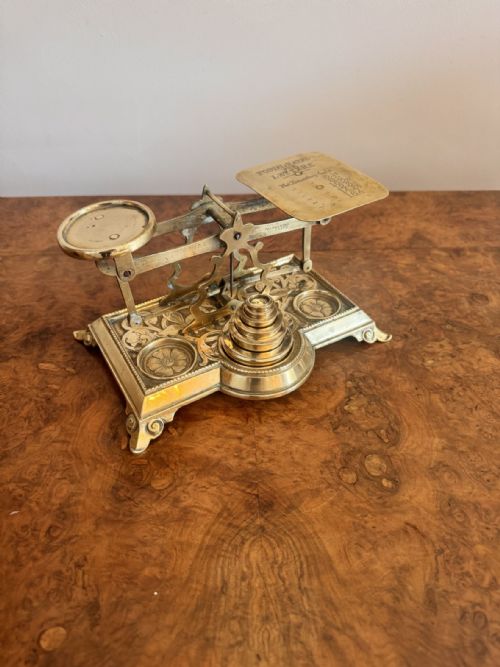
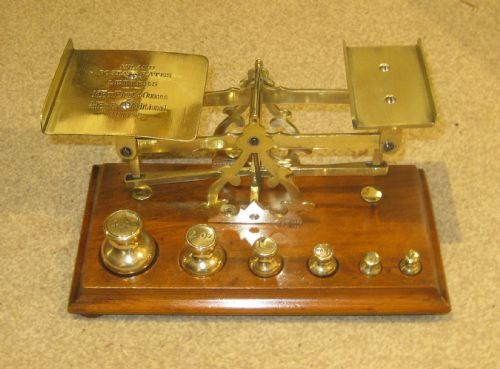
The version you are most likely to meet on this page is the postal scale mounted on a mahogany or oak base, frequently accompanied by brass weights. These domestic instruments reflect the postal demands of the period alongside heavier iron, copper and walnut variants.
Originating primarily from the Edwardian era, these pieces combine utilitarian function with polished metals and timber bases. They range from everyday postal examples to specialised trade weights and precision laboratory instruments.
How they were made
These scales combine cast iron, solid brass and turned copper with seasoned hardwoods such as mahogany, oak and walnut. Makers mounted metal beams and pans onto timber bases, sometimes incorporating fitted compartments for original iron and brass weights.
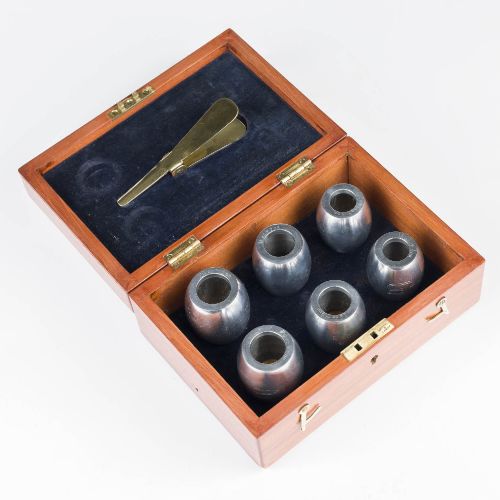
Precision instruments like beam scales utilise finely calibrated metal components housed within glass or wooden cases, while commercial variants rely on robust iron and copper construction to withstand daily trade use.
Listings feature Edwardian postal and shop scales constructed from brass, mahogany, cast iron and oak.
What varies in quality
The distinction between standard utility items and finer examples lies in the integrity of the materials and the precision of the mechanism. Solid oak and mahogany bases with heavy cast brass beams demonstrate a higher grade of manufacture than utilitarian iron alternatives.
Presence of original weights and maker signatures elevates a piece, showing that the instrument retains its complete working assembly as originally issued by the workshop.
De Grave Short And Co·Palethorpes·De Grave·Oertling
The Edwardian Balance Scales Glossary
- Postal Scales
- Devices designed specifically for weighing letters and parcels to calculate correct postage rates. They typically feature a flat platform or spring mechanism mounted on a wooden base.
- Beam Scales
- Instruments utilising a central pivoting lever with two suspended pans for exact weight comparison. They represent the traditional standard for precision measurement.
- Avoir Weights
- Standard units of mass used in the avoirdupois system for general commerce. These metal weights accompanied trade and postal scales.
- Chemist's Precision Beam Scales
- Highly sensitive weighing instruments used in apothecary work. They require enclosed glass housing to prevent air currents from affecting the measurement.
Edwardian Balance Scales: Frequently Asked Questions
What were edwardian balance scales used for?
These scales served daily commercial and domestic functions, from weighing incoming letters in offices to measuring ingredients or goods in shops.
Heavier variants handled trade produce like meat, while precision instruments measured chemicals in apothecary settings.
How do I clean the brass on these scales?
Brass components respond well to gentle dusting and occasional cleaning with a non-abrasive metal polish.
Care should be taken to avoid touching wooden bases or painted iron surfaces with chemical cleaning agents.
Are the weights usually original?
Many surviving sets retain their matching brass or iron weights, often housed in dedicated slots on the wooden base.
Listings specify whether original weights are present with the instrument.
Where should I place balance scales in a room?
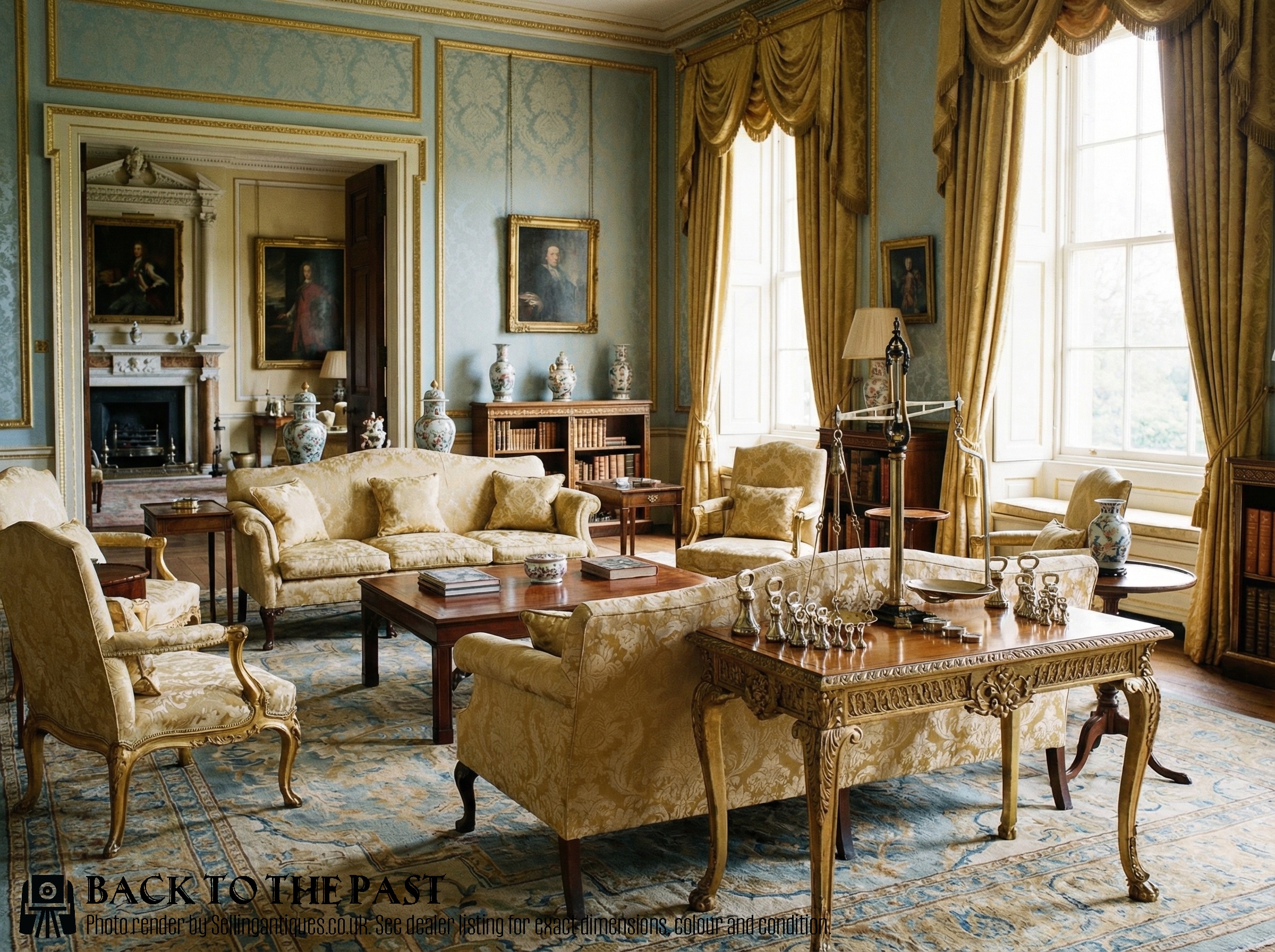
Their compact wooden bases and polished metal beams suit placement on desks, sideboards or kitchen counters.
They require a stable, flat surface to maintain equilibrium and display the mechanism clearly.