


Brass Shop Scales
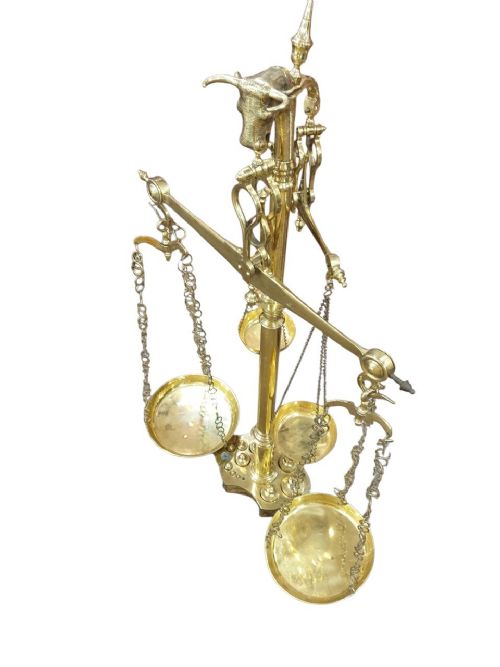
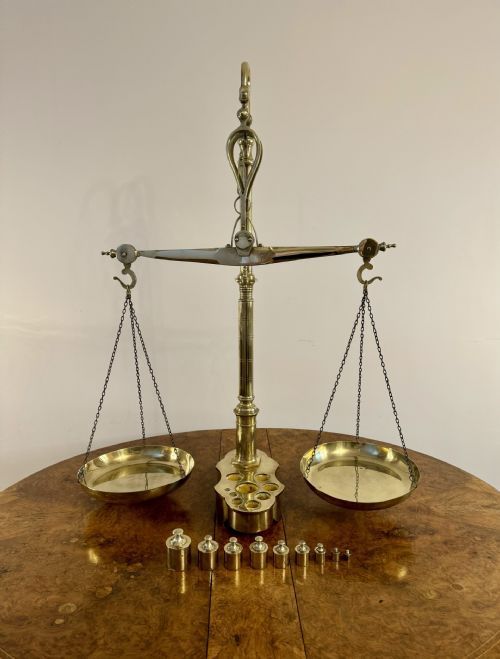
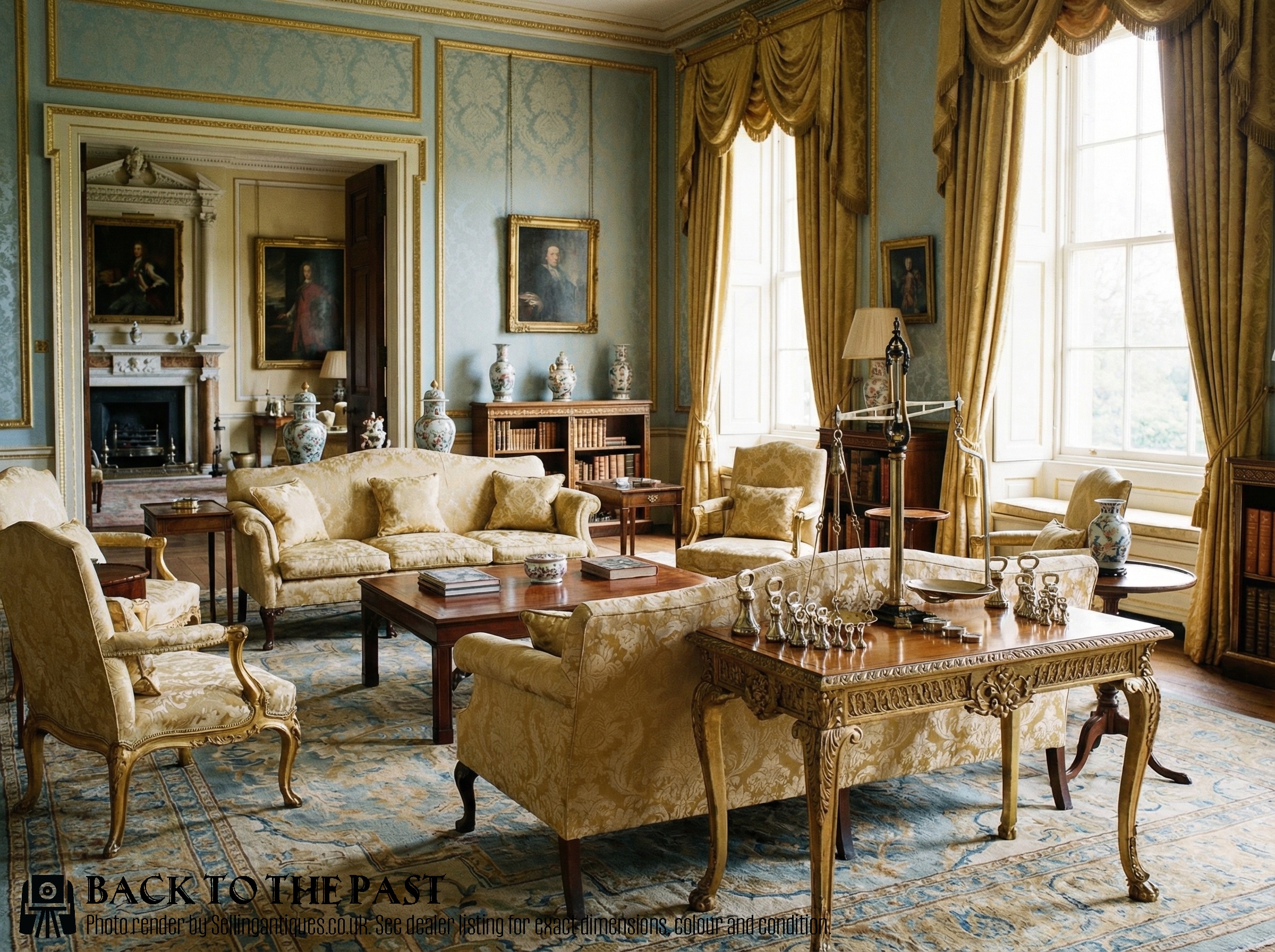
Brass shop scales are heavy commercial working tools that bring utilitarian strength and polished metal into a modern interior.
Brass Shop Scales
Brass shop scales are robust weighing instruments built for trade use in grocery shops, butcher counters and cooperative stores during the nineteenth and early twentieth centuries. When searching for brass shop scales, a buyer encounters substantial balance mechanisms designed to handle daily commercial transactions.
The pieces available on this page include Victorian beam scales, early twentieth century grocer's balances, butcher's scales and calibration weights. Formats range from large floor-standing butcher apparatus to smaller counter sets originating from British makers and French workshops.
Construction relies heavily on polished brass components paired with cast iron bases, wooden plinths and marble slabs. Surviving examples often retain original manufacturer markings, advertising details and matched sets of standard weights.
Materials and construction
Makers built these commercial scales using heavy cast iron and shaped brass, combining structural rigidity with movable balance arms that required precise calibration. Brass components were cast, polished and engraved to display maker details and weight capacities clearly.
Bases frequently incorporate dense hardwoods like mahogany and oak, or polished marble and glass surfaces designed for easy cleaning in retail environments. Velvet lining occasionally appears inside storage compartments or display fittings associated with sensitive measurement sets.
Palethorpes butcher scales come complete with sausage advertising, proving that Victorian meat marketing understood the power of a good display.
Assessing quality
Quality in these commercial instruments rests upon the precision of the casting, the crispness of maker stamps and the retention of original matching weights. Superior examples demonstrate smooth balance movement without excessive play in the pivots and beam joints.
The presence of named regional makers, original painted advertising panels or municipal verification markings elevates an ordinary utility object into a significant piece of retail history. Material combination also plays a role, with thick marble bases and heavy cast iron detailing distinguishing high-grade commercial installations from smaller domestic versions.
Parnall & Sons of Bristol·G Story·Avery·Hunt & Co London
The Brass Shop Scales Glossary
- Beam scale
- A weighing device consisting of a horizontal lever suspended from a central fulcrum with pans hanging from each end. This traditional design forms the primary mechanism for commercial retail measuring.
- Calibration weight
- A standardised metal mass used to test and adjust the accuracy of weighing scales. These items are often stamped with municipal or borough verification marks.
- Grocer's scales
- Countertop weighing apparatus utilised in food shops for dry goods and provisions. They typically feature flat brass pans or scoops suited for loose produce.
- Balance scales
- An equal-arm weighing instrument that determines mass by comparing an unknown load against known standard weights. Such instruments require careful leveling to ensure accurate readings.
Brass Shop Scales: Frequently Asked Questions
How do brass shop scales work?
These instruments operate on the principle of equal balance, where goods placed on one pan are measured against standard metal weights placed on the opposite side. The central beam pivots on a knife-edge fulcrum to indicate equilibrium.
Fine adjustments can be made using the threaded balancing screws or indicators fitted to the main beam assembly.
Where were these scales used?
Commercial scales stood upon counters in butcher shops, grocers, cooperative stores and sweet shops throughout the nineteenth and twentieth centuries. They handled everything from bulk meat joints to delicate confectionery.
Larger floor-standing variants served heavy trades where substantial quantities of produce needed daily verification.
How should I clean brass scales?
Dust surfaces regularly with a soft dry cloth to prevent grime accumulation on the polished metal and wooden elements. Avoid harsh chemical polishes that can remove historic patination and maker stamps.
Wooden and marble bases respond well to appropriate natural waxes applied sparingly according to the material needs.
How do I date an antique scale?
Dating relies on stylistic clues, cast maker names, patent dates and municipal verification stamps engraved on the metal components or weights. Victorian and Edwardian examples often display distinct decorative casting styles on their iron bases.
Advertising details and surviving company records provide additional chronological markers for specific retail pieces.