
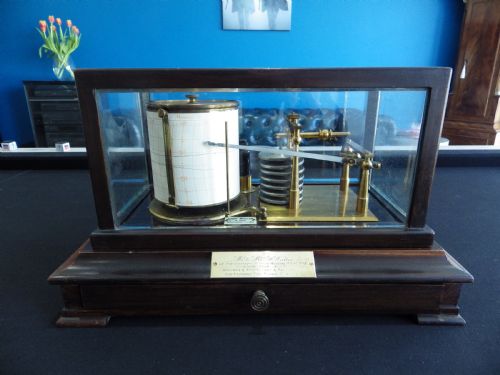


Vintage Weather Recorder
A vintage weather recorder records atmospheric pressure or rainfall over time, offering a mechanical window onto shifting skies that anchors any room.
Vintage Weather Recorder
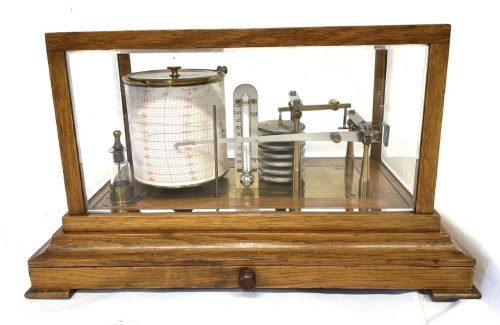
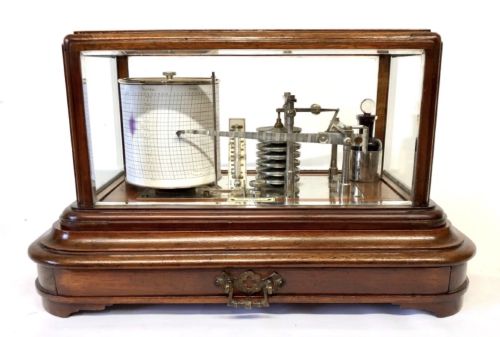
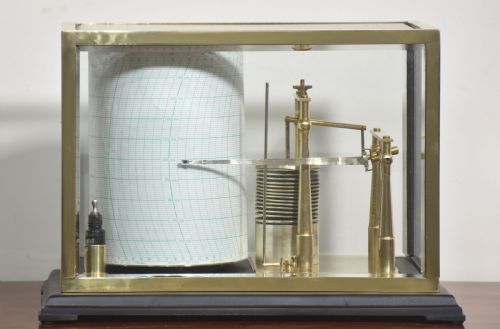
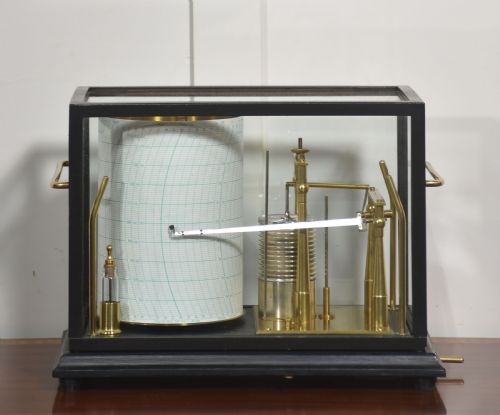
A vintage weather recorder usually takes the form of a barograph, charting barometric pressure on paper drums using stacked metal bellows. These mechanical instruments trace the atmospheric rise and fall with an ink nib across weekly charts.
The selection ranges from Victorian designs to 1940s examples, covering scientific instruments housed in wood and glass cabinets. Oak and mahogany dominate the timber choices, often enclosing bevelled glass panels and chart drawers.
Makers such as Short and Mason and Negretti and Zambra appear alongside French makers like Jules Richard. Alongside barographs, the category includes recording rain gauges and sunshine recorders from the late nineteenth century onwards.
Evaluating quality and execution
Quality rests in the precision of the brass mechanism and the integration of auxiliary instruments like thermometers or barometer dials. Well-executed cabinets feature substantial timber, neatly fitted drawers for spare paper charts, and bevelled glass rather than plain panes.
Signed movements by established makers command attention for their engraved details and robust construction. The inclusion of original maker signatures on the dial plate and movement distinguishes standard production items from finer workshop pieces.
Listings span the Victorian, Edwardian, and interwar periods, utilising oak, mahogany, and walnut alongside brass and bevelled glass.
Short And Mason·Negretti And Zambra·Jules Richard·Casella London·Gaupp And Co
The Vintage Weather Recorder Glossary
- Barograph
- A self-recording barometer that draws continuous pressure readings on a revolving paper drum. It translates atmospheric changes through sealed metal vacuum boxes into mechanical arm movements.
- Aneroid barometer
- An instrument measuring air pressure without liquids, using a flexible metal capsule that expands or contracts. This movement drives the pointer across a graduated dial face.
- Bevelled glass
- Glass panes with cut and polished angled edges, fitted into cabinet doors to catch the light. This detail denotes higher quality cabinet work on scientific instrument cases.
- Chart drawer
- A small compartment built into the base of the wooden instrument case to store spare recording papers and spare ink bottles. It keeps necessary maintenance accessories close to the mechanism.
- Sunshine recorder
- A meteorological device using a glass sphere to focus sunlight and burn a trace onto a graduated card. These Victorian and Edwardian examples record daily sunshine duration.
Vintage Weather Recorder: Frequently Asked Questions
How do I change the chart paper?
Lift the brass pen arm gently off the drum to protect the delicate nib. Slide the used paper chart off the metal cylinder and wrap a fresh weekly chart around, securing it neatly along the seam.
Wind the clockwork mechanism inside the drum before restarting the recording. Lower the ink arm back onto the paper with care so the trace begins cleanly.
Where should I place a barograph at home?
Position the instrument on a stable, level surface away from direct sunlight, radiators, and heavy vibrations. Hallways or studies suit them well, as steady indoor temperatures help mechanical parts function accurately.
Keep the wooden cabinet out of damp environments to protect both the timber polish and the internal brass work from oxidation. Ensure guests can view the rotating drum easily without disturbing its position.
How do I date an antique weather recorder?
Examine the style of the timber case, the lettering on the maker's plate, and any patent dates inscribed on the brass bedplate. Edwardian and Victorian models often display distinct cabinet moulding and brass hardware characteristics.
Check for retailer signatures such as Harrods, which can help narrow down the period of sale. Paper labels left inside chart drawers occasionally record service dates from past decades.
What maintenance do these instruments need?
Dust the brass and glass components regularly using a soft, dry cloth to prevent grime accumulation on the moving parts. The clockwork drum requires periodic winding to keep the cylinder turning at the correct speed.
Refill the recording pen with specialised violet or green barograph ink when the trace begins to fade. Avoid oiling the delicate linkages unless a professional restorer advises it.