





Vintage Weather Gauge
A vintage weather gauge brings practical nineteenth and twentieth-century observation into daily rooms through brass, mahogany, and glass.
Vintage Weather Gauge
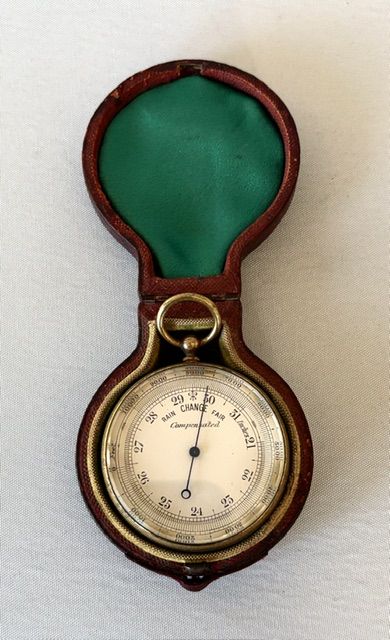
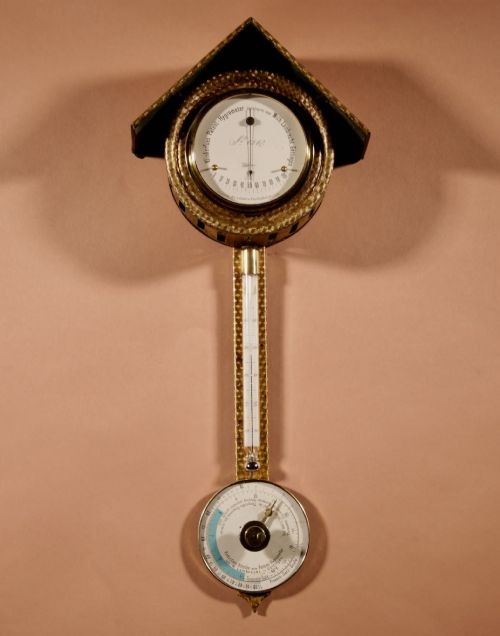
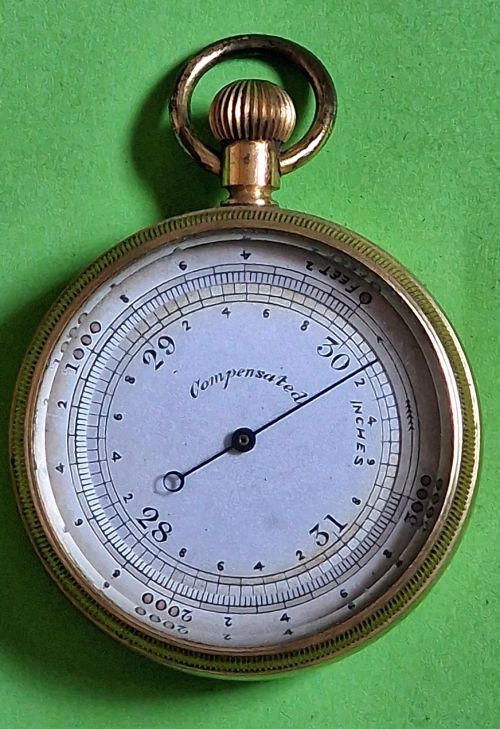
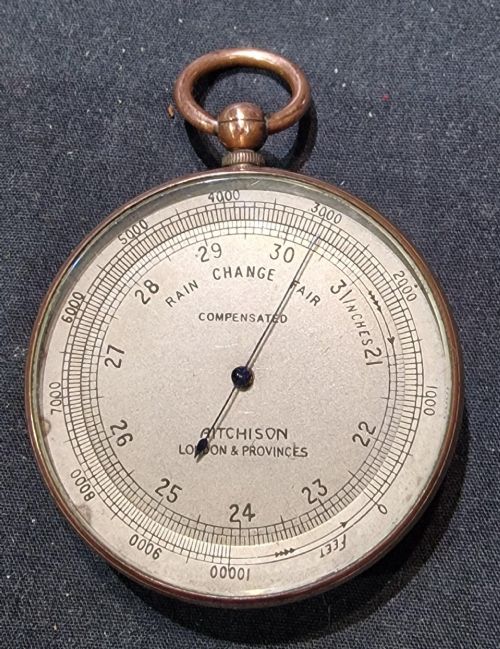
A vintage weather gauge encompasses scientific instruments designed to measure atmospheric pressure, humidity, wind, and temperature across the Victorian, Edwardian, and 1930s periods. Buyers seeking these pieces encounter a diverse range of forms, including pocket barometers, banjo barometers, wall barometers, hygrometers, barographs, and thermometers. Most examples stem from the late nineteenth century and early twentieth century, reflecting an era of domestic and scientific precision.
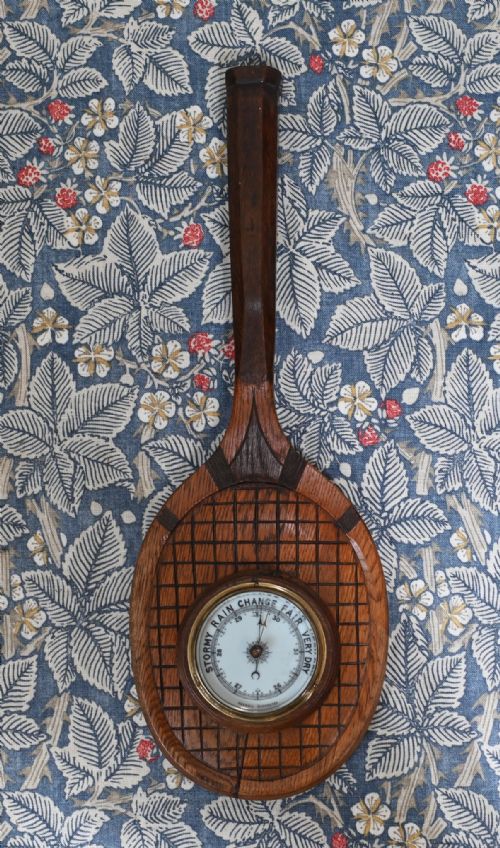
The selection ranges from compact pocket instruments to substantial wall-mounted weather stations and cased barographs. Common formats include mahogany and oak banjo barometers, circular wooden cases in beech or walnut, and specialised meteorological apparatus like hair hygrometers and anemometers. These objects bridge the gap between utilitarian scientific equipment and decorative domestic furnishings.
Materials and construction
Construction relies heavily on traditional cabinet timbers such as mahogany, oak, rosewood, walnut, and beech, frequently shaped into banjo frames, wall dials, or protective desktop cases. Metal components incorporate brass, steel, and silvered metal for dials, bezels, and internal mechanical movements, often paired with protective glass viewing faces. Certain specialised pieces feature carved wooden elements, such as Victorian Black Forest motifs or Chinoiserie lacquered finishes.
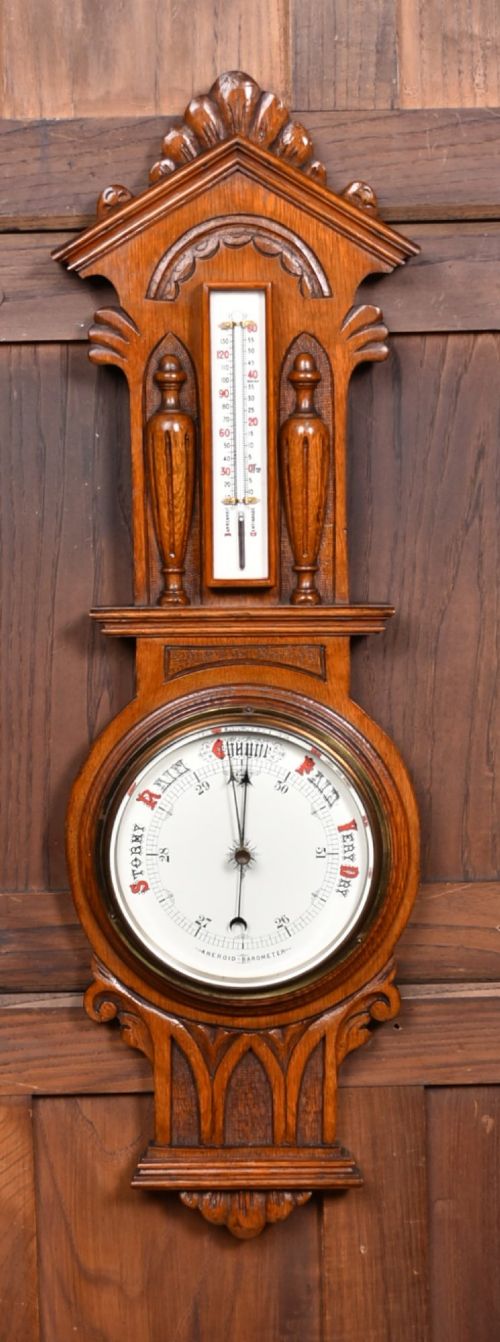
Makers utilised precision engineering alongside cabinetmaking skills to house delicate aneroid mechanisms, thermometers, and recording drums. Dials are frequently engraved on silvered metal or rendered in ceramic, while more decorative models showcase marquetry inlay, ebonised surfaces, or carved oak foliage.
Materials span traditional cabinet woods like mahogany and oak alongside technical metals including silvered brass and steel.
Assessing quality and execution
Quality in a vintage weather gauge rests on the crispness of the dial engraving, the precision of the mechanical movement, and the integrity of the timber housing. Finer examples display meticulously divided silvered scales, finely blued steel indicator hands, and robust cabinetry with harmonious proportions and original veneers.
Makers known for scientific precision, such as Short & Mason or Negretti & Zambra, often distinguish pieces through superior optical and mechanical execution. The complexity of the instrument, ranging from simple domestic wall barometers to multi-function weather stations and recording barographs, likewise defines the upper tiers of the range.
Wilh. Lambrecht·Poulenc Freres·Short & Mason·Negretti & Zambra·J Hicks·C F Casella·Callaghan & Co·James H Kelly·Blake & Son·Dollond·W Watson & Sons
The Vintage Weather Gauge Glossary
- Aneroid barometer
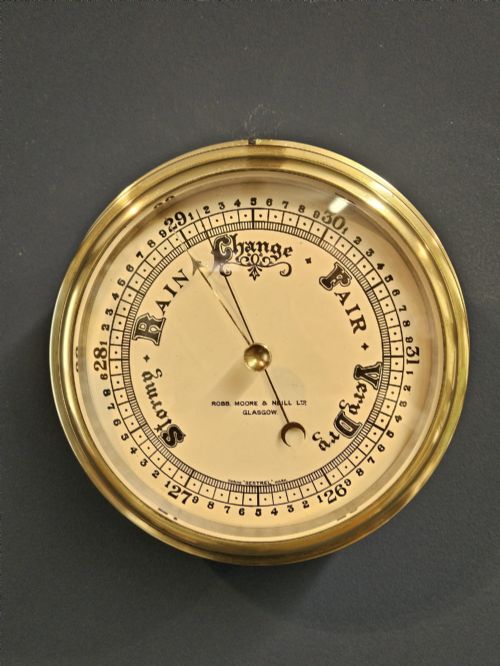
- An instrument measuring atmospheric pressure without liquid, using a flexible metal box that expands or contracts. This mechanical design allowed barometers to be made in compact portable and wall-hanging formats.
- Hygrometer
- A device used to measure the humidity or moisture content of the air. Many period examples utilise human hair to register changes in atmospheric moisture.
- Barograph
- A recording barometer that plots barometric pressure over time onto a rotating paper chart housed within a glazed wooden case. These instruments provide a continuous visual record of weather fluctuations.
- Anemometer
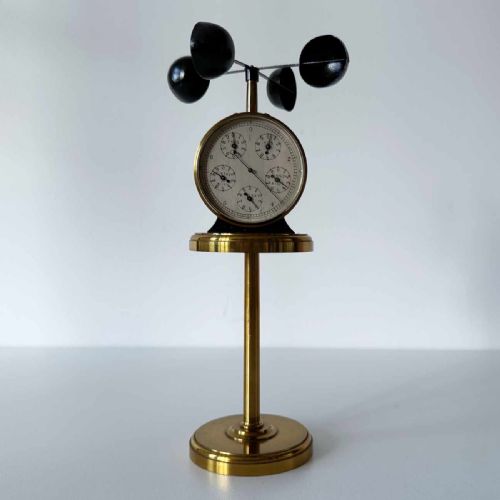
- An apparatus designed to measure wind speed and pressure. Listed patterns include portable and pedestal configurations by prominent nineteenth-century scientific makers.
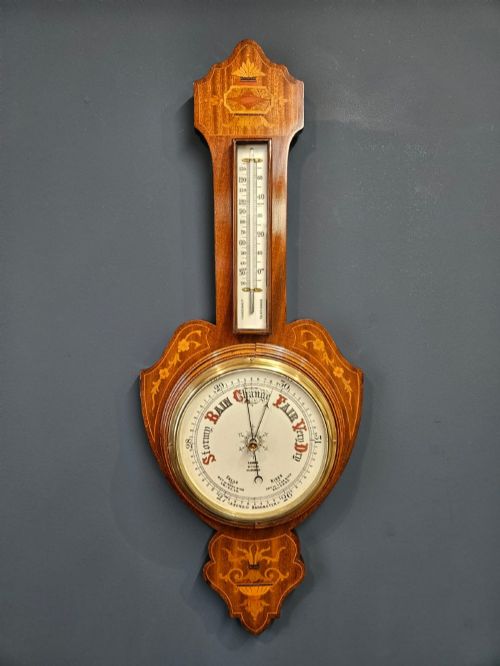
- Banjo barometer
- A wall barometer featuring a characteristic elongated wooden body, typically housing a thermometer at the top and a large circular dial at the base. This form dominated domestic interiors during the Victorian and Edwardian eras.
Vintage Weather Gauge: Frequently Asked Questions
How do aneroid barometers work?
An aneroid barometer measures changes in atmospheric pressure using a sealed, flexible metal capsule called an aneroid cell. As pressure rises or falls, the cell flexes internally.
This minute movement connects through mechanical levers to the visible pointer on the dial, translating barometric shifts into readable weather indicators.
What is the difference between a barometer and a weather station?
A standard barometer primarily measures atmospheric pressure to help forecast short-term meteorological changes. A weather station combines multiple instruments into a single unit.
These combined setups typically integrate a barometer, a thermometer, and a hygrometer to record pressure, temperature, and humidity simultaneously.
How should I care for a vintage weather gauge?
Keep the instrument away from direct sunlight, extreme heat sources, and damp environments that could damage wooden cabinetry or delicate internal metal components. Dust wooden surfaces gently with a dry cloth.
Avoid tampering with internal mechanical linkages or adjusting calibration screws unless handled by a qualified specialist.
Are pocket barometers accurate today?
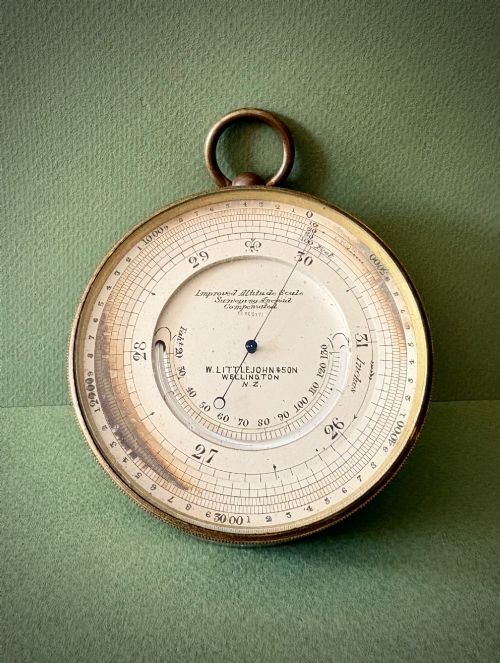
Pocket barometers were engineered as precise portable instruments for travellers, surveyors, and mountaineers during the nineteenth and early twentieth centuries. Many retain functional mechanical sensitivity.
However, historical instruments may require professional calibration against a known standard to reflect exact local barometric pressure accurately.