
Vintage Weather Barometer
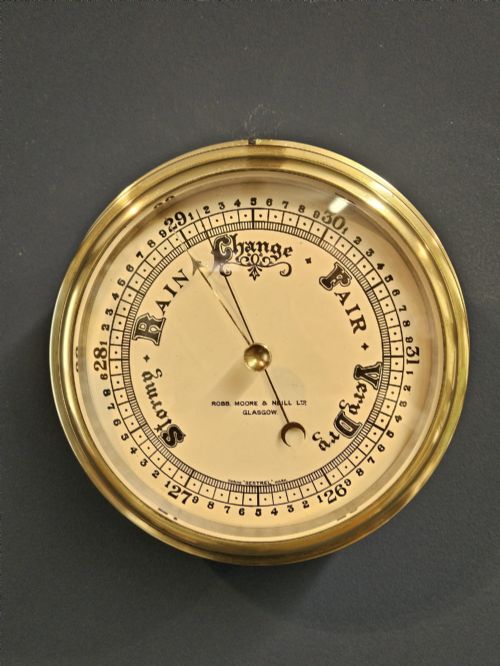
A vintage weather barometer measures atmospheric pressure to track changes, bringing period craftsmanship and scientific history into the home.
Vintage Weather Barometer
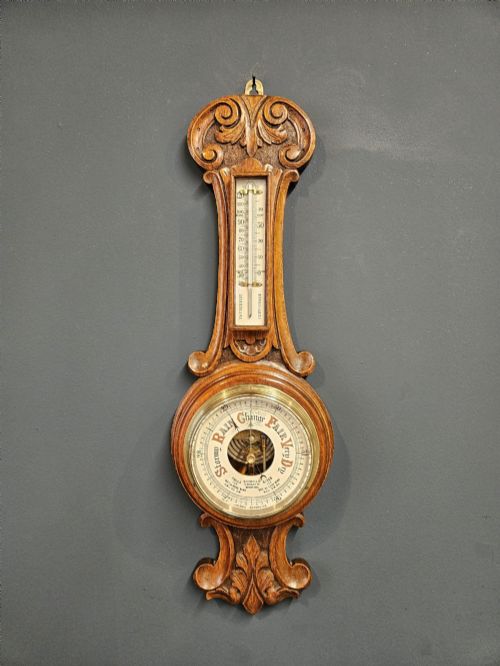
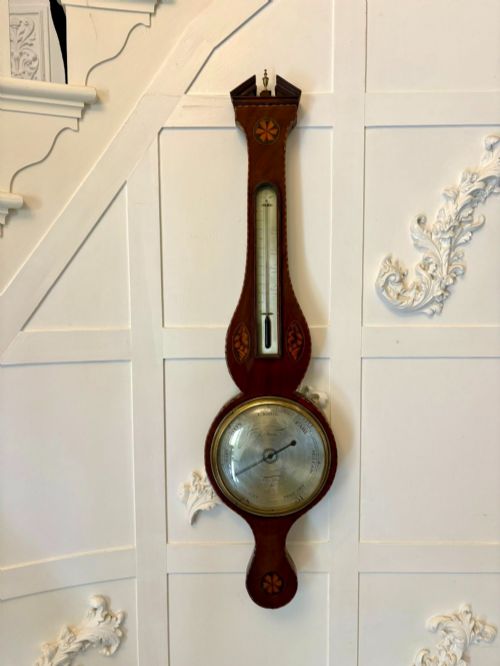
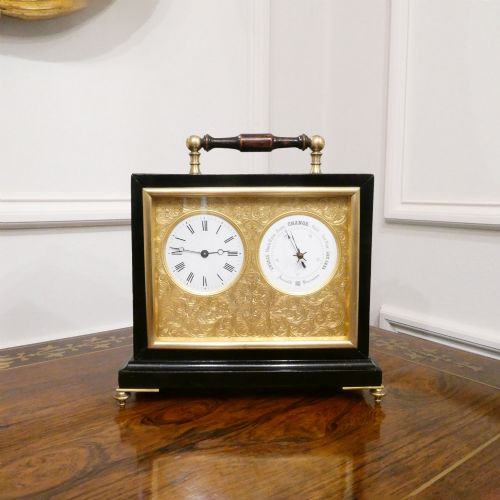
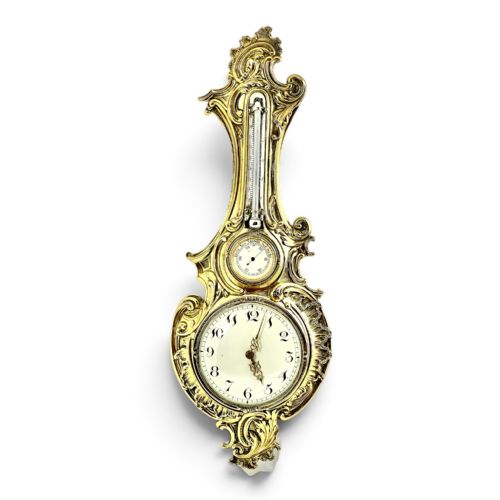
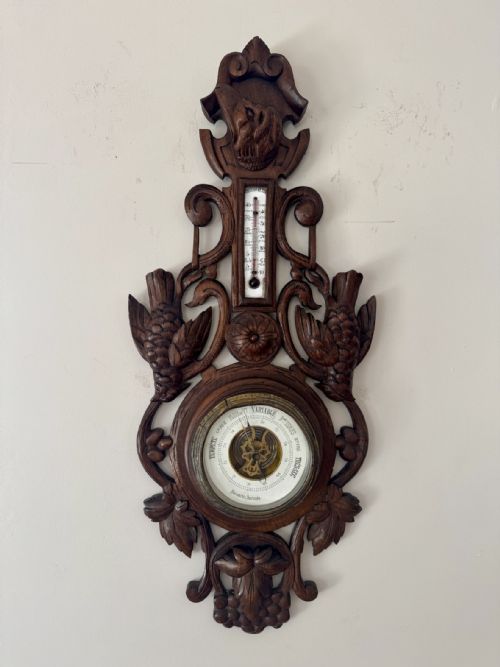
The selection spans Georgian stick barometers to Art Deco wall pieces and Black Forest carvings, reflecting shifting domestic tastes across the nineteenth and twentieth centuries. Many incorporate auxiliary instruments such as thermometers, hygrometers, and clock stations alongside the main dial.
Pocket barometers and altimeters offer portable measurement, while larger wall barometers serve as prominent interior fixtures. Regional variations include British makers alongside pieces originating from Germany and colonial outposts.
Materials and Construction
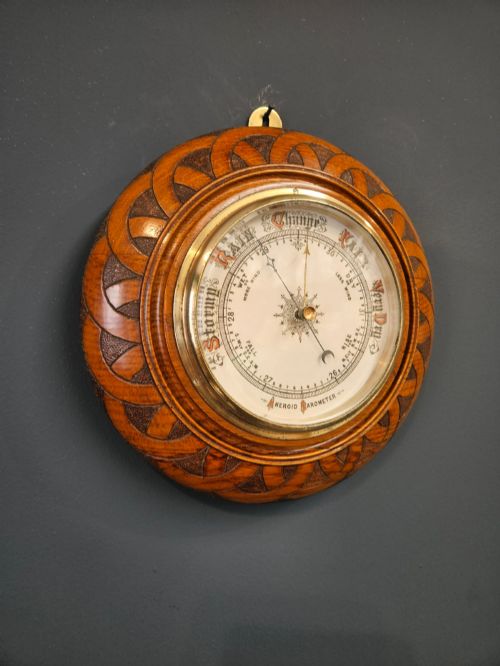
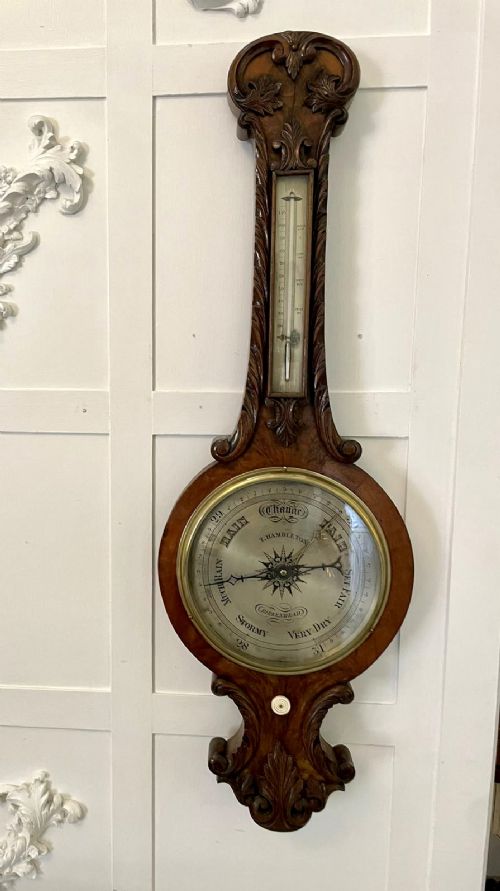
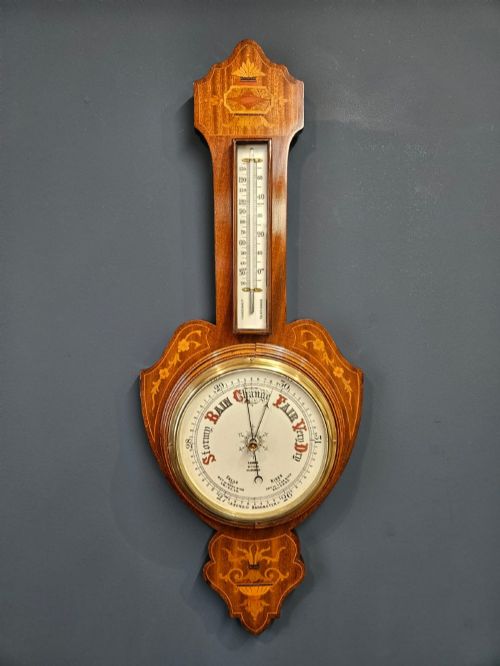
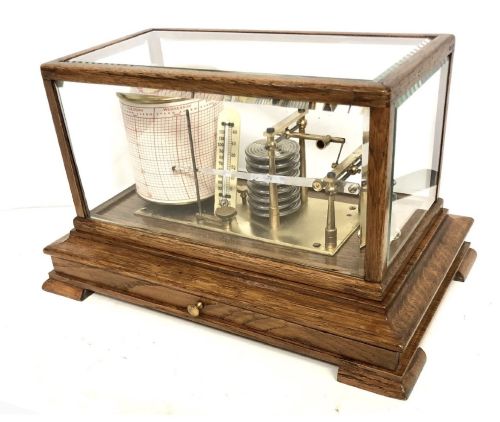
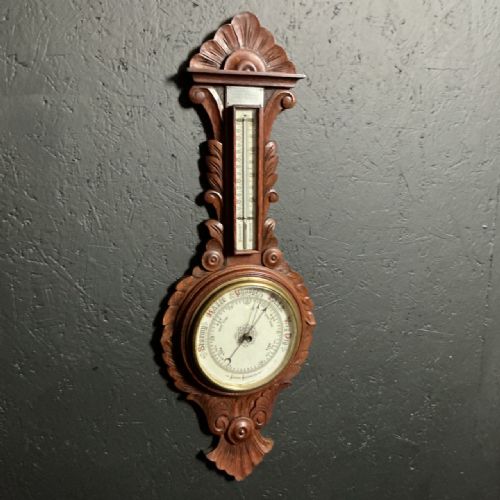
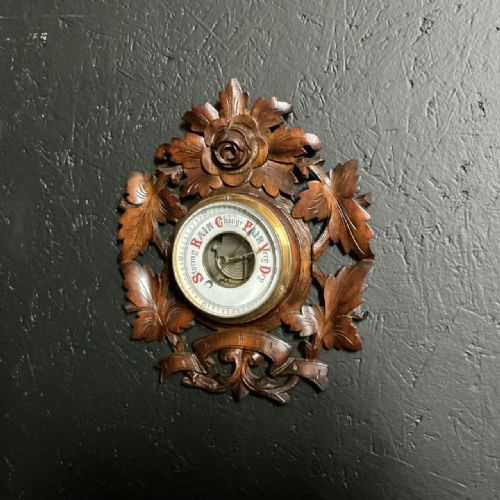
Cases utilise dense hardwoods like mahogany, burr walnut, carved oak, and turned woods, frequently decorated with shell inlay, mother of pearl, or elaborate Black Forest carving. Glass protects the dials, with bevelled edges appearing on finer barograph cases and scientific instruments.
Internal mechanisms rely on brass components, aneroid capsules, mercury columns within stick barometers, and hair hygrometer elements. Metal dials feature engraved or silvered chapter rings, while brass and silver gilt finishes adorn portable pocket cases and desk stations.
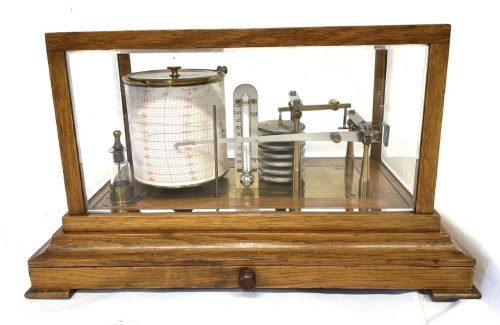
The selection includes portable pocket barometers alongside large floor and wall-mounted barographs.
Quality and Execution
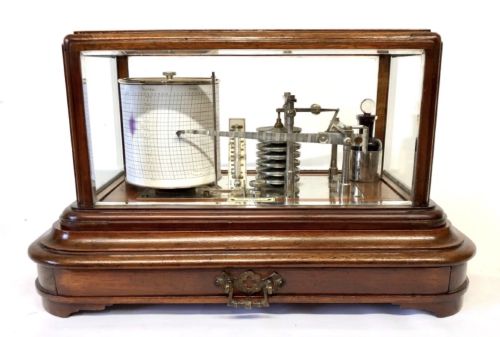
The standard of a vintage weather barometer depends on the crispness of the wood carving, the quality of cabinet timbers like burr walnut or figured mahogany, and the precision of the engraved metal dial. Finer examples feature integrated thermometers, chart drawers, and bevelled glass that elevate them beyond standard utility items.
Maker attribution and patent movements separate ordinary production pieces from exceptional scientific instruments. The preservation of original surfaces, legible dial inscriptions, and intact mechanical components determine the standing of each piece.
Negretti & Zambra·Short & Mason·Hyde & Sons Sleaford·Wilh. Lambrecht Göttingen·P. Caminada Taunton·B. Besozzi of Weymouth·GAUPP & CO
The Vintage Weather Barometer Glossary
- Aneroid barometer
- An instrument that measures atmospheric pressure using an expanding and contracting metal capsule rather than liquid mercury. It forms the basis of most wall and pocket instruments from the Victorian era onward.
- Barograph
- A self-recording meteorological instrument that draws a continuous line of atmospheric pressure onto a revolving paper chart. These often include a built-in thermometer and a glazed wooden case with a drawer for spare charts.
- Banjo barometer
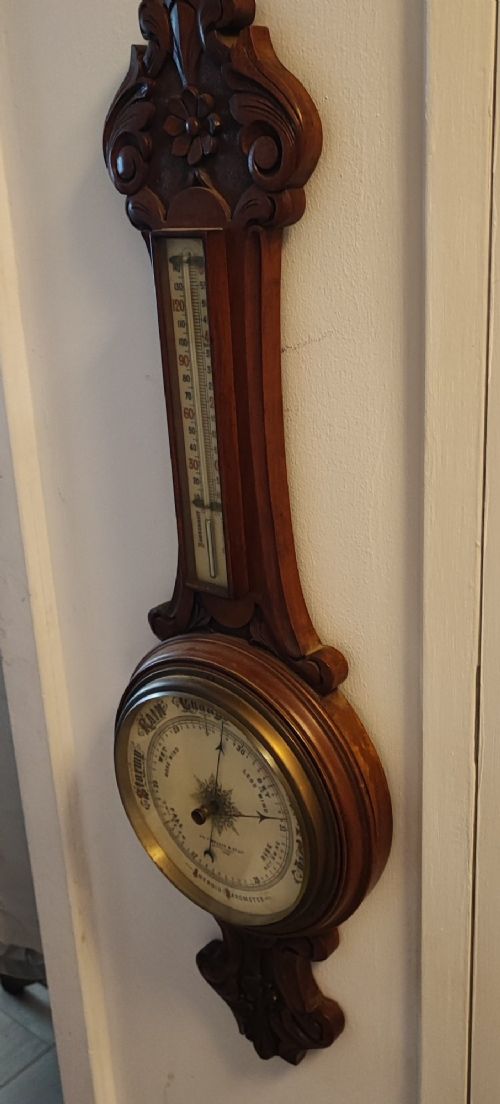
- A wall-mounted instrument housed within a distinctive curved wooden case resembling a banjo. These frequently feature dampness indicators, spirit levels, and thermometers along the trunk.
- Stick barometer
- A vertical instrument containing an open column of mercury to register barometric changes. Georgian and Regency examples usually display minimalist wooden trunks and exposed glass tubes.
- Hygrometer
- A device for measuring humidity in the air. Specialised hair hygrometers utilise human or animal hair to register moisture levels in tandem with atmospheric readings.
Vintage Weather Barometer: Frequently Asked Questions
How do aneroid and mercury barometers differ?
Aneroid barometers use a sealed metal vacuum capsule that flexes with air pressure changes to move a dial pointer. They require no liquid and are safer for general domestic hanging.
Mercury barometers rely on a column of liquid in a glass tube that rises or falls against a scale. They represent earlier Georgian and Regency engineering traditions.
What is a barograph used for?
A barograph records atmospheric pressure continuously over a week onto a rotating drum fitted with a paper chart. The mechanical arm tracks weather shifts visually over time.
They were kept in offices, libraries, and country houses to monitor storms and approaching weather patterns closely.
How do I read a pocket barometer?
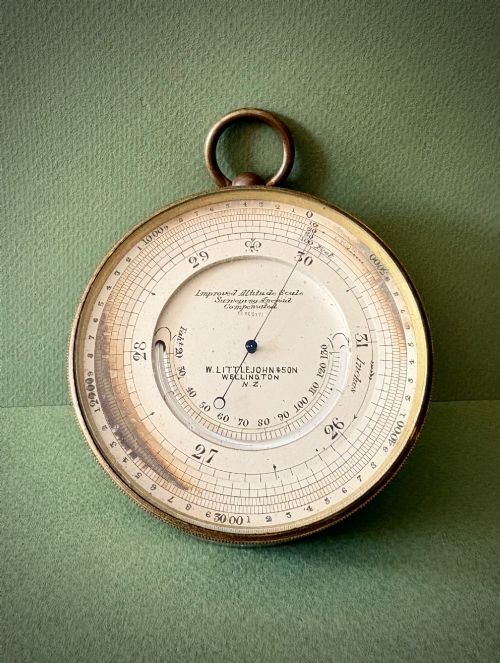
Pocket barometers function as portable aneroid instruments, frequently doubling as altimeters for climbing or travel. The outer scale measures pressure while the inner rotating bezel tracks altitude.
They were carried in leather cases by Victorian travellers, surveyors, and gentlemen outdoors.
Can these instruments still show the weather?
Most vintage barometers can be calibrated to local pressure using a small adjustment screw on the back or front dial. They respond to current barometric changes just as they did originally.
They serve as working meteorological tools alongside decorative interior objects.