



Vintage Walnut Tiered Shelving
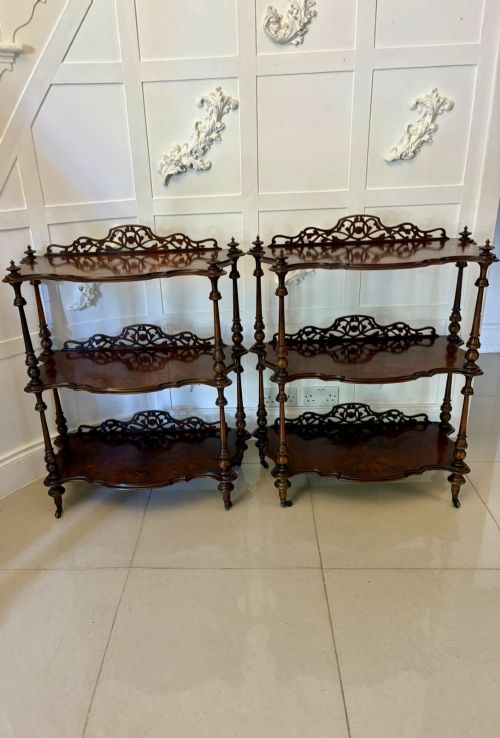
These vintage walnut tiered shelving pieces are open display stands for rooms, offering practical tiers and distinct period character.
Vintage Walnut Tiered Shelving
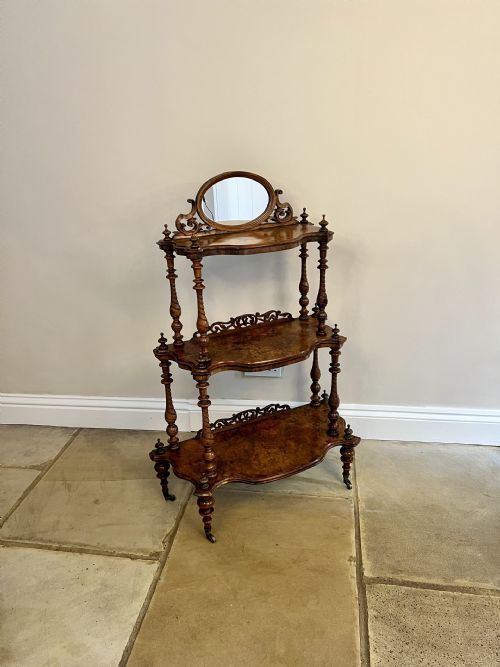
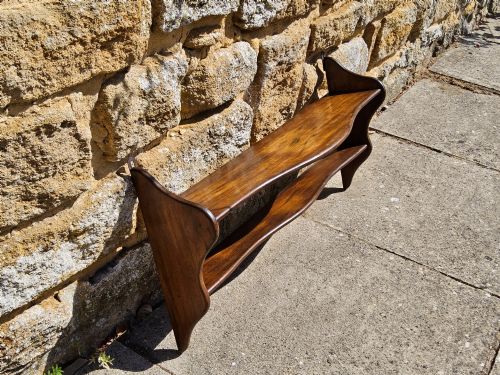
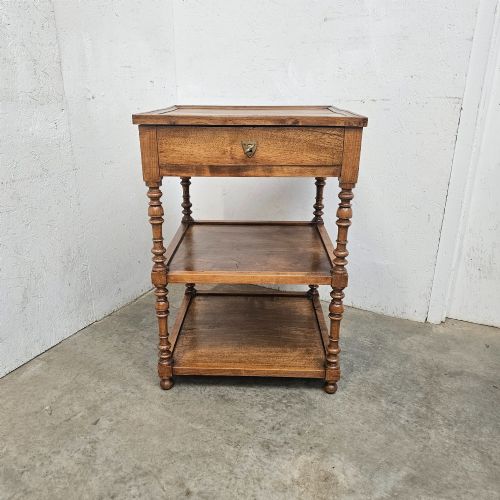
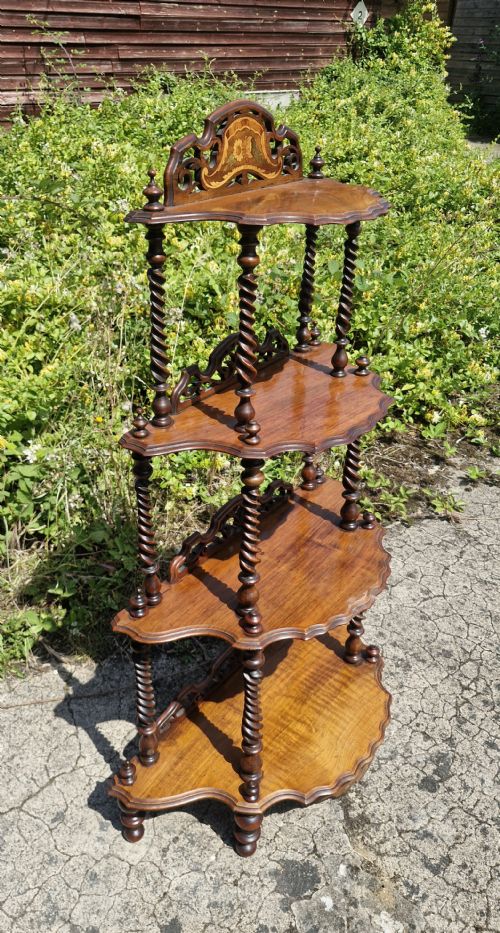
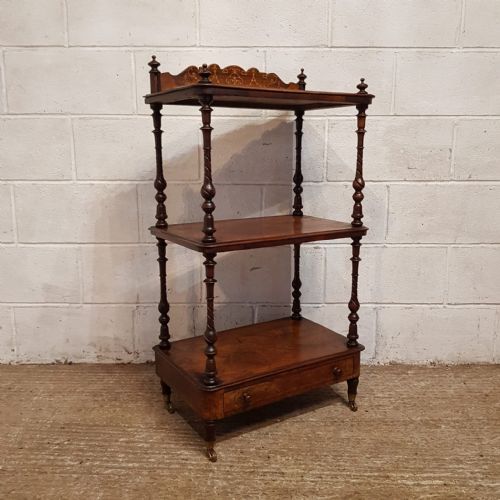
When searching for vintage walnut tiered shelving, buyers encounter multi-tiered display stands and wall-mounted units designed to hold books, ornaments, and small collections. The selections here span the Victorian, Edwardian, and Art Deco periods, encompassing various forms of whatnots, etageres, wall shelves, and bookcases.
The most common versions on this page are Victorian burr walnut whatnots, alongside French etageres and corner shelving units. These pieces utilise rich wood grains, contrasting inlays, and graduated tiers to create practical display space in a domestic interior.
Makers and designers from the nineteenth and early twentieth centuries produced these items in diverse regional styles, ranging from French Provincial and Napoleon III to British Victorian and Art Deco. Each object type serves a specific display function, whether standing freely on turned legs or hanging upon a wall.
Materials and construction methods
Constructed predominantly from walnut and burr walnut, these pieces frequently incorporate secondary woods like mahogany alongside brass mounts, gilt metal, and mirror glass. Wood inlay and marquetry enrich the surfaces, adding decorative contrast to the dark timber ground.
Joinery methods rely on traditional cabinet-making techniques, utilising turned legs, fitted shelves, and sturdy upright supports. Brass fixtures and mirror glass panels are integrated securely into the framework, particularly in campaign pieces and etageres.
Listings feature walnut, burr walnut, mahogany, and brass across Victorian, Edwardian, and Art Deco periods.
Markers of quality and craftsmanship
Quality in these pieces rests upon the selection of timber veneers, specifically the richness and figuring of the burr walnut surfaces. Finer examples display meticulous wood inlay, balanced proportions across multiple tiers, and precise turning on the upright supports.
Structural integrity and the retention of original brass or metal mounts distinguish superior pieces from standard workshop productions. The clarity of mirror glass panels and the crispness of marquetry further elevate the standing of individual etageres and whatnots.
The Vintage Walnut Tiered Shelving Glossary
- Whatnot
- An open multi-tiered piece of furniture designed for displaying ornaments, books, or bric-a-brac. These items became popular during the Victorian period.
- Etagere
- A piece of furniture consisting of a number of open shelves for displaying small objects. French examples often feature delicate turned legs and inlaid surfaces.
- Burr Walnut
- A specialised wood veneer taken from the wart-like growths on walnut trees. It provides a highly decorative and swirling grain pattern.
- Marquetry
- Decorative woodwork where pieces of veneer are applied to a structure to form intricate designs. This technique appears on panels and tabletops.
- Campaign Washstand
- Portable furniture designed for travel, typically featuring fitted compartments and brass mounts. These pieces combine utility with sturdy construction.
Vintage Walnut Tiered Shelving: Frequently Asked Questions
What is a whatnot?
A whatnot is an open shelving unit with multiple tiers designed specifically for holding ornaments, small books, and decorative objects. These pieces were widely used in nineteenth-century interiors to display collections.
They stand either upright on the floor or fit neatly into room corners. Their open structure allows items to be viewed from multiple angles.
How do I clean walnut furniture?
Clean walnut and burr walnut surfaces using a soft, dry cloth to remove dust. Avoid harsh chemical polishes that can damage old polished finishes.
Periodic application of a quality beeswax helps maintain the timber's natural lustre. Keep these items away from direct sunlight and excessive moisture.
Where should I place wall shelves?
Wall shelves suit spaces where floor area is limited, such as hallways, studies, or living room alcoves. They provide secure display surfaces at eye level.
Ensure proper wall fixings are used to support the weight of the timber and any displayed items. Match the wood tone to existing furniture in the room.