


Victorian Turned Column Shelf
These Victorian turned column shelf pieces and related whatnots offer tiered display space in rich nineteenth-century timbers.
Victorian Turned Column Shelf
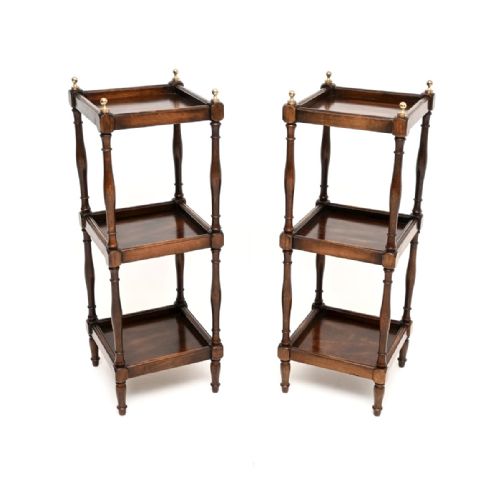
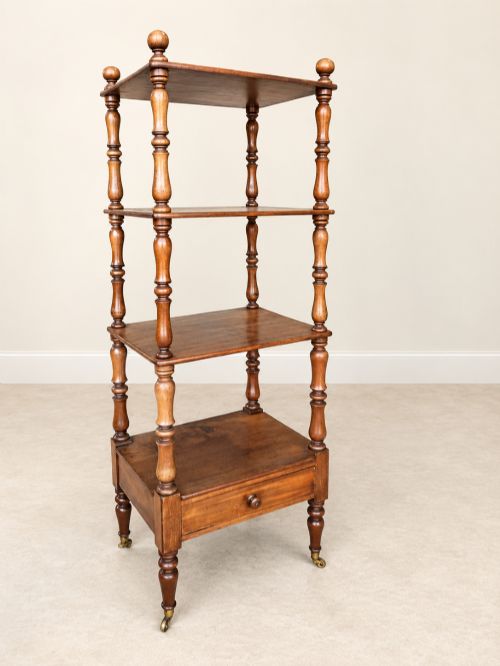
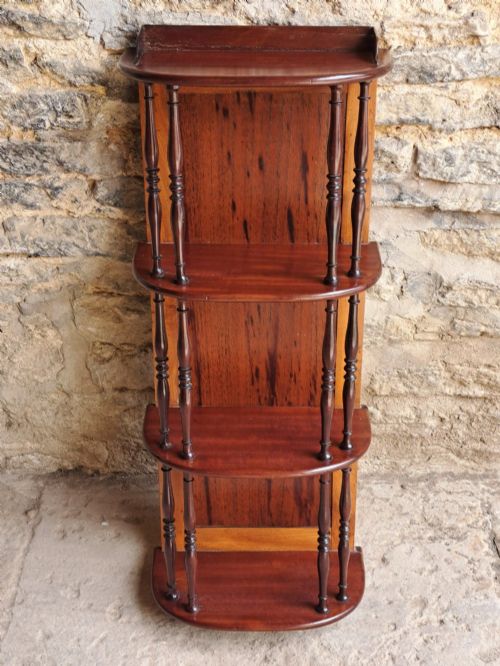
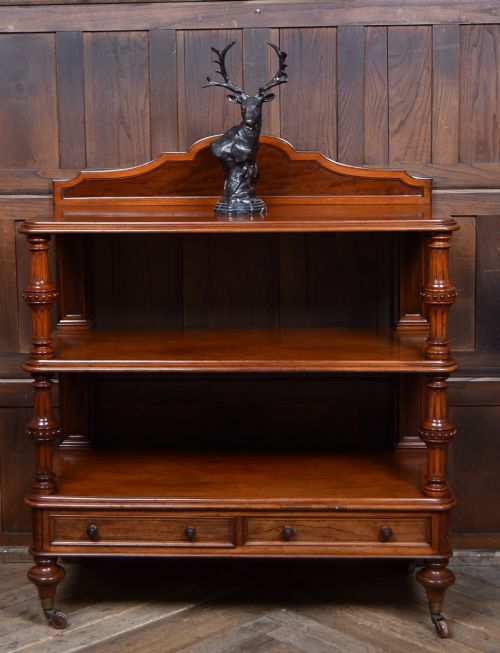
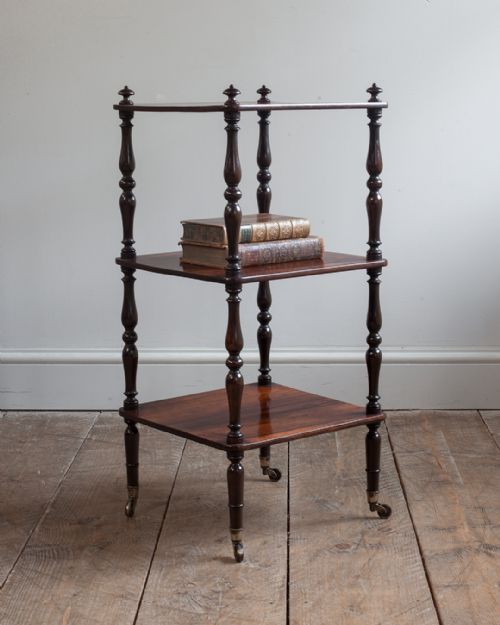
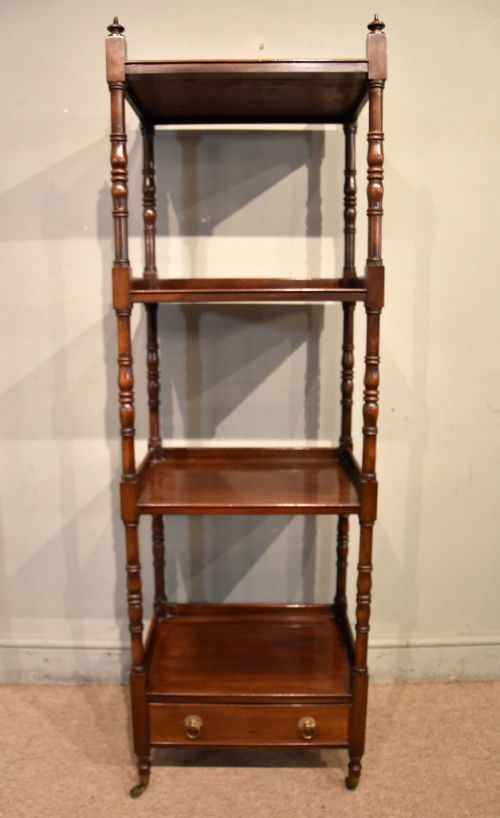
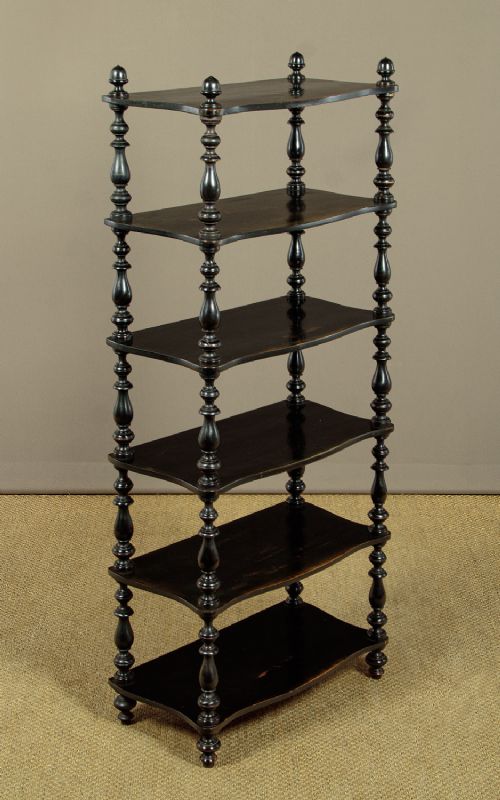
A Victorian turned column shelf or whatnot is a tiered furniture piece designed for storage and display in nineteenth-century interiors. These items range from wall-mounted hanging shelves to tall freestanding etageres with multiple tiers supported by turned columns.
The pieces appearing on this page belong primarily to the Victorian era and the wider nineteenth century, with occasional examples from the Edwardian period. Forms span simple wall bookcases, corner etageres, and multi-tiered freestanding stands utilising hardwoods.
Buyers frequently encounter mahogany and walnut variants alongside rosewood, ebonised wood, and burr walnut constructions. These versatile items served historically to hold books, decorative ornaments, and collections within parlours and drawing rooms.
How They Were Made
Cabinetmakers utilised dense timbers such as mahogany, walnut, rosewood, and satin birch to construct the framework and shelves. Turning lathes shaped the characteristic vertical columns and supports that separate each tier.
Joinery techniques involved secure fixing of shelves to upright turned supports, occasionally incorporating inlaid elements or brass fittings. Woods were polished to highlight the natural grain patterns of burr walnut, birdseye maple, and other figured veneers.
Some Victorian whatnots managed to accumulate five separate tiers of display space without tipping over the tea.
What Varies in Quality
The distinction between standard and superior pieces rests on the choice of timber and the complexity of the turned columns. Dense, finely figured woods like burr walnut and rosewood elevate a piece above simpler hardwood versions.
Attention to detail in the joinery, the crispness of the wood turning, and the presence of subtle inlay work separate ordinary utility furniture from finer display pieces.
The Victorian Turned Column Shelf Glossary
- Whatnot
- An open piece of furniture with shelves tiered one above another, used for displaying ornaments or books. This form emerged in the early nineteenth century and remained popular through the Victorian period.
- Etagere
- A French term for a piece of furniture consisting of a set of open shelves for displaying small objects. These freestanding stands often feature turned supports similar to whatnots.
- Burr Walnut
- A specialised wood veneer taken from the burl growth of a walnut tree, prized for its swirling, highly figured grain patterns. Cabinetmakers utilised this material on high-status Victorian cabinet fronts and shelves.
- Ebonised Wood
- Timber treated with a dark stain or finish to imitate ebony. This technique was frequently applied to nineteenth-century display stands to create a striking contrast with lighter objects.
Victorian Turned Column Shelf: Frequently Asked Questions
Where were these shelves placed?
These tiered pieces stood against walls or fitted into corners within nineteenth-century living spaces and drawing rooms.
Freestanding etageres and smaller wall-mounted shelves held books, ceramics, and decorative objects for everyday viewing.
How do I clean these timbers?
Maintenance requires gentle dusting with a dry, soft cloth to protect the polished wood surfaces.
Harsh chemical cleaners or excess moisture will damage nineteenth-century polishes and delicate burr walnut or mahogany veneers.
Are these pieces freestanding?
The inventory includes both wall-mounted hanging shelves and heavy freestanding etageres or whatnots.
Freestanding stands rely on sturdy turned columns to support multiple tiers without requiring wall attachment.
What woods were used?
Cabinetmakers predominantly worked with mahogany, walnut, and rosewood across the nineteenth-century pieces.
Satin birch, burr walnut, and ebonised wood also appear among the listed materials and decorative finishes.