

Vintage Walnut Office Desk
A vintage walnut office desk brings warmth and structured authority to a room, offering practical workspace through pedestal and writing table forms.
Vintage Walnut Office Desk
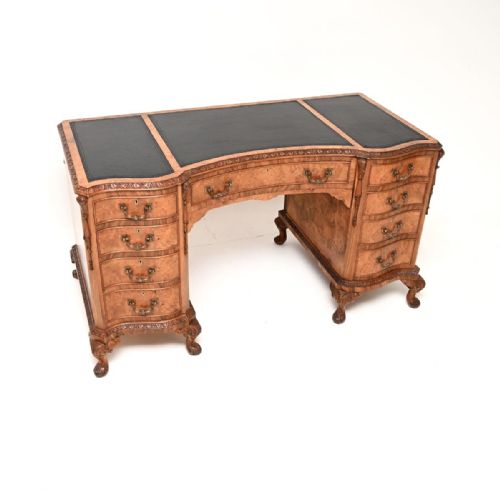
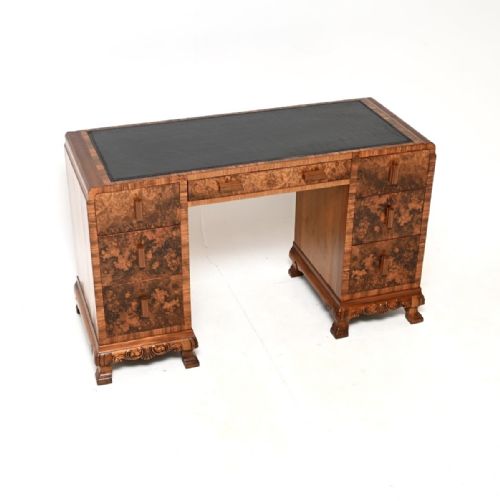
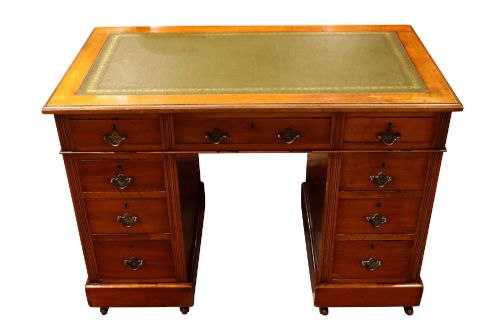
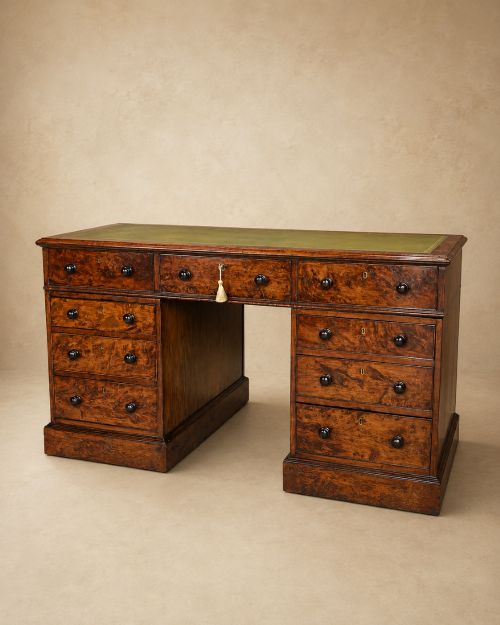
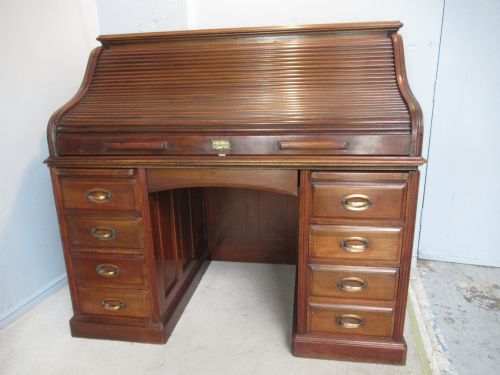
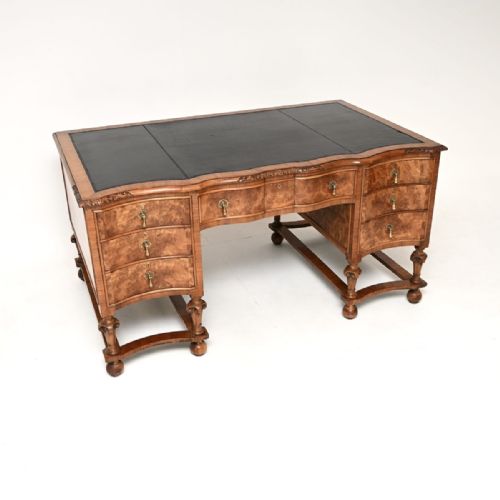
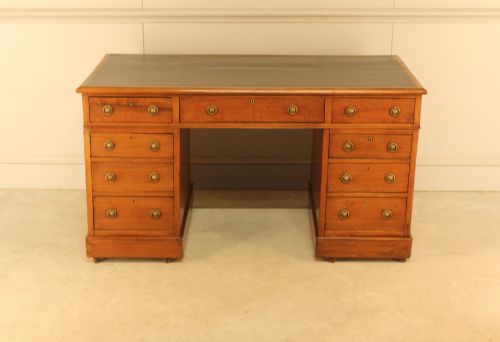
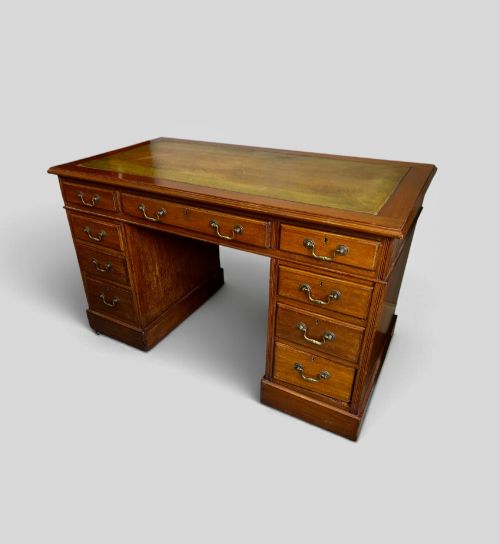
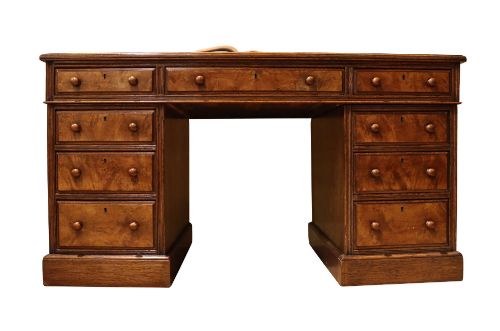
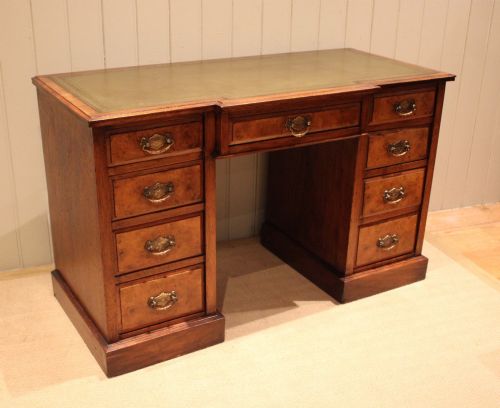
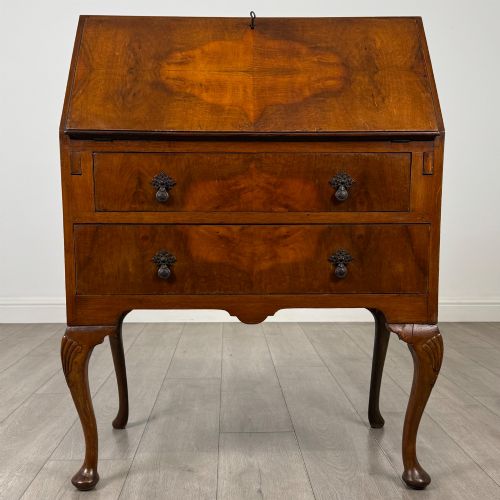
A vintage walnut office desk primarily takes the form of a pedestal desk, partners desk, or writing table, drawn from periods spanning the Victorian era through the 1930s. The most common version met on this page is the pedestal desk, frequently featuring multiple drawers and a leather writing surface.
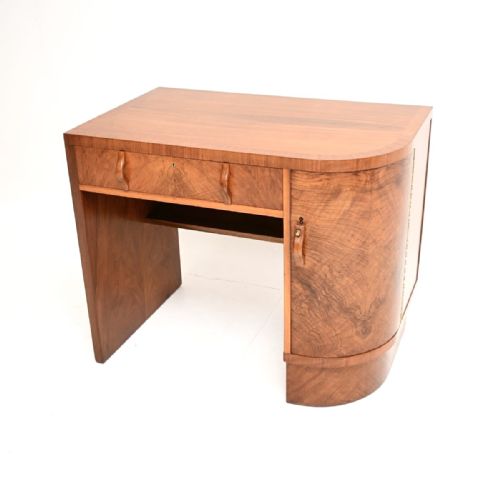
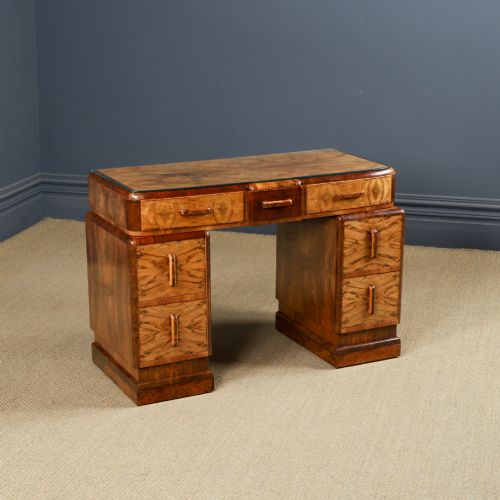
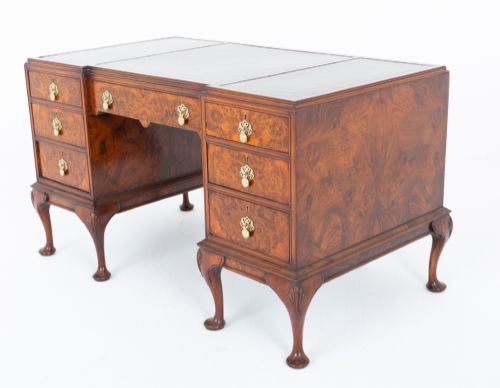
Makers and workshops across England and Scotland produced these pieces in styles ranging from Victorian and Edwardian to Art Deco and Queen Anne Revival. Buyers encounter robust walnut timbers, often accented with burr walnut veneers, shaped fronts, and integrated brass hardware.
Materials and Technique
Cabinet makers utilised solid walnut, oak, and secondary woods as a foundation, applying highly figured burr walnut and walnut veneer to visible exterior surfaces. These timbers were selected for their rich grain patterns and warm tones, which developed deep patination over decades of use.
Writing surfaces were typically inset with tooled leather inserts, often edged in gold leaf tooling, while structural elements relied on traditional dovetail joinery for drawers and internal framing. Art Deco pieces additionally introduced glass, sycamore, and metal elements to complement the primary walnut construction.
Some Art Deco walnut desks come with an integrated lamp so you can read your ledgers without fumbling for the switch.
Evaluating Construction and Design
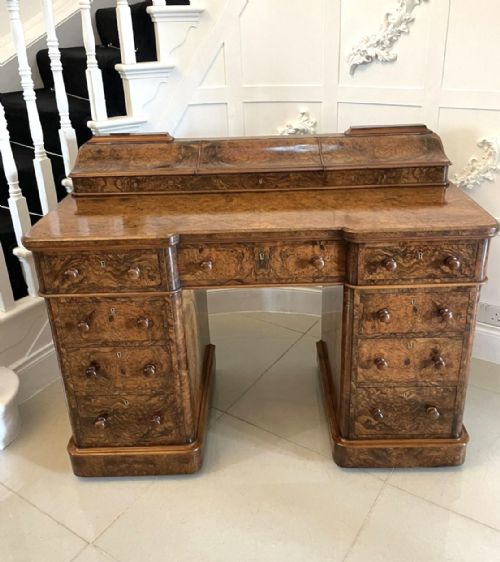
The division between standard production and top tier examples rests on the selection of veneer and the crispness of carved or shaped details. Pieces featuring heavily figured burr walnut across large, unbroken drawer fronts and pedestals represent superior craftsmanship.
Makers with established reputations, such as Maple and Co or Wylie and Lochhead, demonstrate exceptional joinery, balanced proportions, and integrated secondary details like fitted interiors or specialised hardware that elevate the standing of the desk.
Maple and Co·Wylie and Lochhead Glasgow·F.H. Marshall and Co Glasgow·Betty Joel
The Vintage Walnut Office Desk Glossary
- Pedestal desk
- A heavy freestanding desk supported by two pedestals or columns of drawers flanking a central kneehole.
- Partners desk
- A large double-sided desk designed so two people can sit opposite each other, featuring drawers on both faces.
- Burr walnut
- A prized veneer taken from the gnarled growth of a walnut tree, creating swirling, highly decorative grain patterns.
- Kneehole desk
- A compact desk with a central recess for the legs, usually flanked by small banks of drawers.
Vintage Walnut Office Desk: Frequently Asked Questions
What is a vintage walnut office desk?
A vintage walnut office desk is a historic workspace piece constructed primarily from walnut timber, appearing in pedestal, partners, and writing table formats.
These pieces date from the nineteenth and early twentieth centuries, encompassing Victorian, Edwardian, and Art Deco design movements.
How do I care for a leather top desk?
Leather writing surfaces require gentle cleaning with a damp cloth and occasional conditioning to prevent the material from drying out and cracking.
Avoid placing hot items directly on the leather and protect the surface from prolonged exposure to direct sunlight.
How do I distinguish Edwardian from Victorian desks?
Victorian desks tend to display heavier proportions, darker finishes, and more ornate Victorian or revival detailing such as carved paneling.
Edwardian examples often feature lighter construction, cleaner lines, and simpler hardware reflecting the shift in interior tastes around 1900.
Can I use an antique desk daily?
These desks were built using solid timbers and traditional joinery designed for heavy administrative work, making them durable for contemporary office use.
Their robust construction of walnut and oak handles modern computing equipment and daily writing tasks without structural strain.