
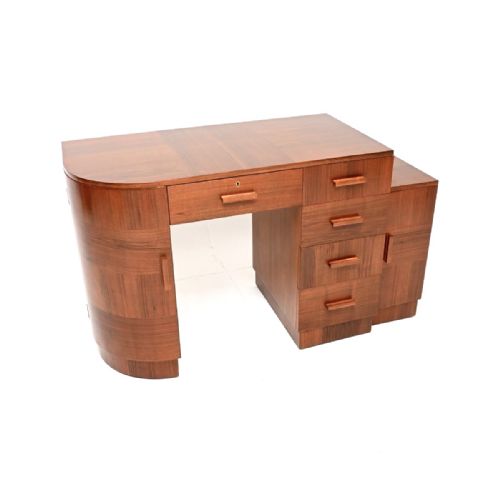
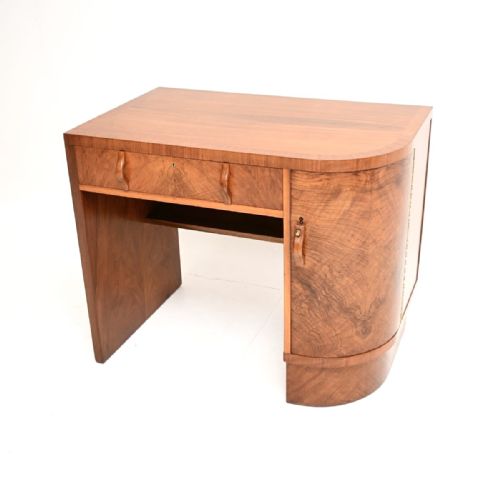


Figured Walnut Study Desk
A figured walnut study desk brings warmth and striking grain patterns to a room while offering a practical surface for writing.
Figured Walnut Study Desk
A figured walnut study desk encompasses various forms designed for writing and administration, featuring prominent timber grain across the top and drawer fronts. These items range from compact writing tables and kneehole desks to bureau styles and davenports spanning multiple periods.
The versions most commonly met on this page date from the Victorian era through the early twentieth century, alongside distinct Art Deco interpretations from the nineteen thirties. Buyers frequently encounter revival pieces reflecting earlier Georgian and Queen Anne aesthetics executed in walnut veneer and solid timber.
How they were made
Makers utilised walnut and burr walnut veneers applied over secondary timbers such as oak, creating complex grain patterns across large writing surfaces. Craftsmen occasionally incorporated brass handles, leather inserts for writing surfaces, and ormolu mounts to accent the timber.
Construction techniques evolved from traditional dovetailed drawer boxes in nineteenth century pedestal desks to streamlined geometric forms seen in nineteen thirties Art Deco pieces. Marquetry inlay appeared on specific writing tables, demonstrating intricate surface ornamentation alongside natural wood figure.
Some nineteenth century writing tables hide secret compartments behind dummy drawer fronts for confidential papers.
What varies in quality
The visual impact of a figured walnut study desk depends largely on the choice and symmetry of the veneer across the top and drawer fronts. Selecting timber with deep movement and matching the grain patterns indicates higher execution standards by the maker.
Hardware selection and secondary wood choice also distinguish different tiers of manufacture. High grade examples integrate substantial brass fittings, finely tooled leather writing surfaces, and robust internal framing beneath the decorative exterior.
The Figured Walnut Study Desk Glossary
- Burr Walnut
- A timber obtained from walnut tree growths, featuring swirling, mottled grain patterns highly prized for decorative veneer work. This material often forms the central panels of nineteenth century and revival desks.
- Ormolu
- Gilded bronze ornamentation applied to furniture, frequently seen on nineteenth century writing tables influenced by French design. These metal mounts accentuate the corners and legs of formal desks.
- Davenport Desk
- A compact pedestal desk featuring a sloping writing surface above a bank of drawers accessed from the side. This form became popular during the Victorian period for domestic correspondence.
- Bureau
- A desk form featuring a hinged writing flap that opens to reveal internal compartments and pigeonholes. These pieces range from Georgian solid timber constructions to later revival models.
- Partners Writing Table
- A large desk designed to be used from both sides simultaneously, featuring opposing banks of drawers. These utilitarian yet decorative tables often date from the Victorian era.
Figured Walnut Study Desk: Frequently Asked Questions
What is a figured walnut study desk?
A figured walnut study desk is a writing surface or pedestal table finished with decorative walnut veneer showing prominent grain patterns. These pieces range from nineteenth century pedestal forms to Art Deco writing tables.
Buyers choose them for both their practical surface area and the decorative quality of the timber. They function effectively as focal points in traditional or modern studies.
How do I care for a walnut veneer desk?
Walnut veneer requires protection from direct sunlight and excessive temperature fluctuations to prevent the timber from drying or warping. Regular dusting with a soft cloth keeps the polished surface clean.
Leather inserts benefit from occasional conditioning, while the surrounding wood responds well to traditional beeswax polishes applied sparingly.
How do I tell different periods apart?
Identifying the period involves examining the construction methods, hardware, and stylistic details of the desk. Art Deco pieces display geometric lines from the nineteen thirties, while Victorian and Georgian examples show heavier proportions or specific revival characteristics.
Drawer construction and the type of secondary wood used inside also provide clear indicators of age. Comparing handle styles and foot designs helps narrow down the decade of manufacture.
Can I use these desks for daily work?
These desks provide functional workspace for writing and administrative tasks, though interior storage and surface dimensions vary by form. Pedestal desks offer generous drawer space, whereas compact writing tables provide a simpler surface.
Matching the desk dimensions to modern equipment ensures comfortable daily use while preserving the antique timber.