


Vintage Walnut Headboards
Vintage walnut headboards bring warmth and distinct grain patterns to a bedroom, drawing on decades of period design.
Vintage Walnut Headboards
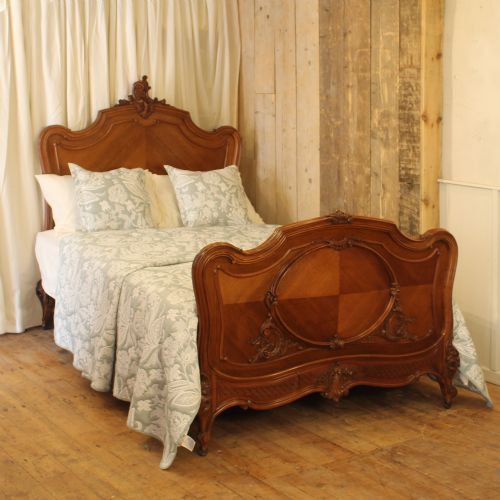
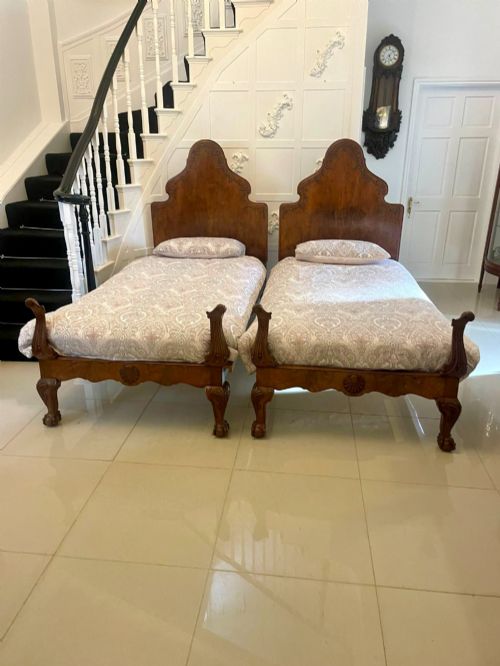
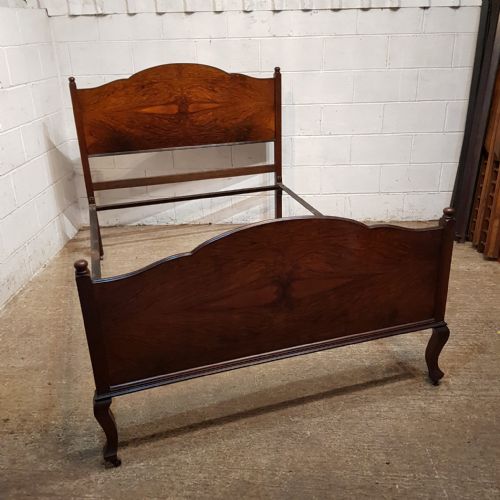
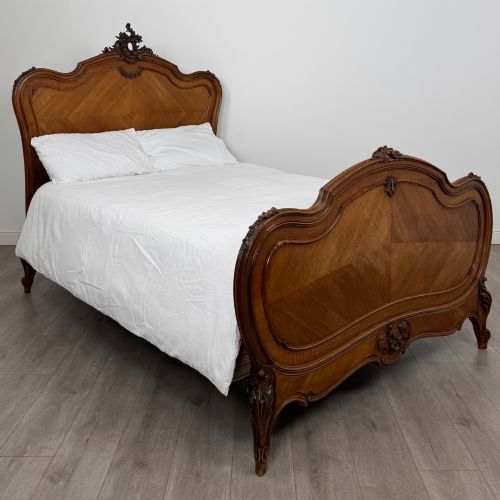
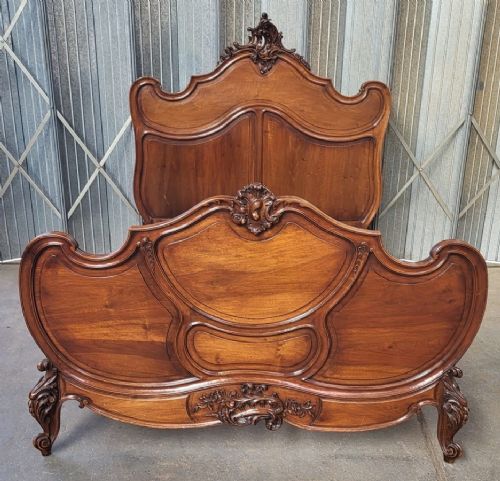
Vintage walnut headboards emerge from decades of bedstead production spanning the Victorian, Edwardian, and Art Deco periods, though many contemporary examples adapt older bed frames. When searching for vintage walnut headboards, buyers encounter various forms originally designed as full bedsteads or complete beds in single, double, and king sizes. The pieces reflect distinct historical styles, ranging from French regional interpretations to streamlined 1930s designs.
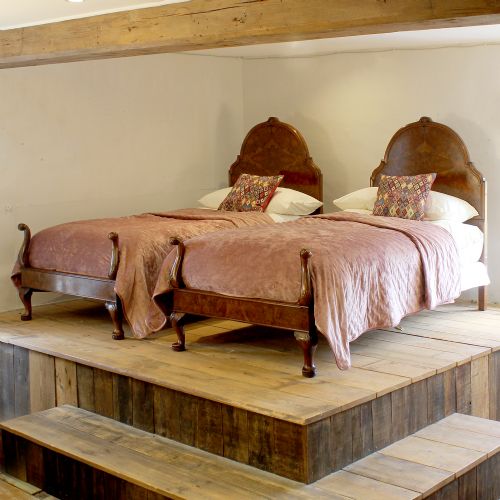
The material selection leans heavily on solid walnut, burr walnut, and figured walnut veneers applied over secondary timbers. Makers utilised these rich woods to create shaped panels, button-backed upholstery frames, and integrated bedside configurations. While complete antique beds dominate the record, the overarching aesthetic centres on warm brown tones and striking decorative grains.
How they were made
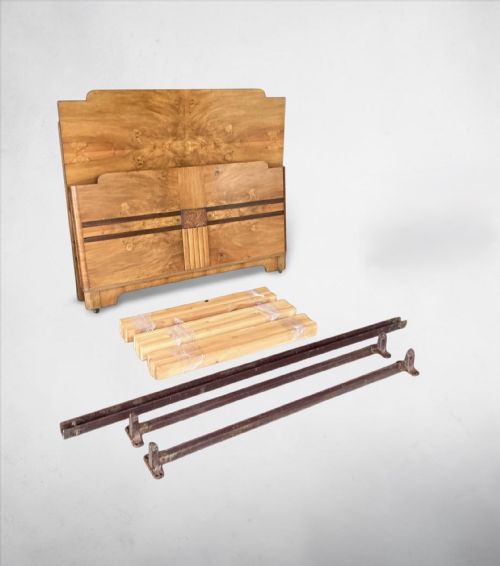
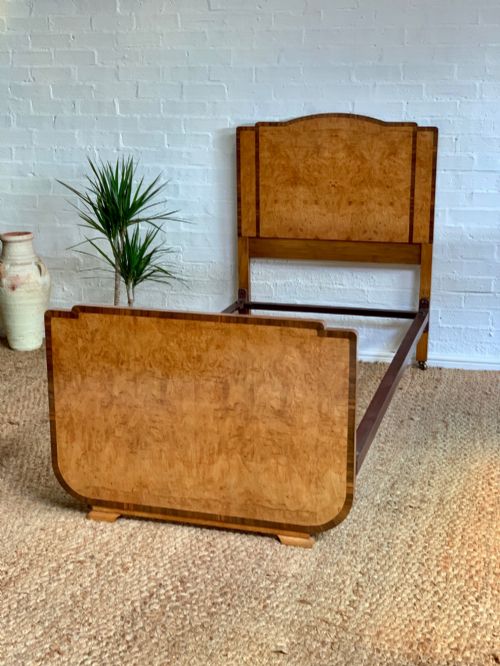
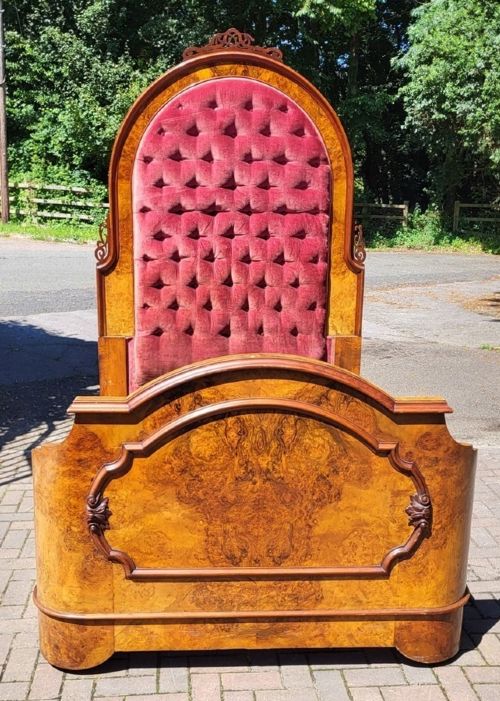
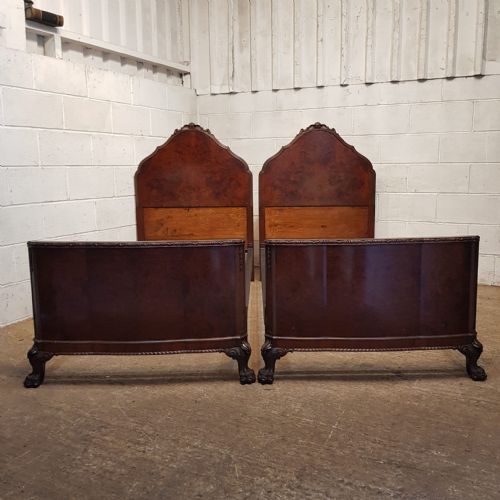
Craftsmen shaped solid walnut and applied decorative walnut veneers to timber frames using traditional cabinetmaking techniques. Burr and burl veneers provided complex, swirling grain patterns across large central panels, often contrasted with plainer framing timbers.
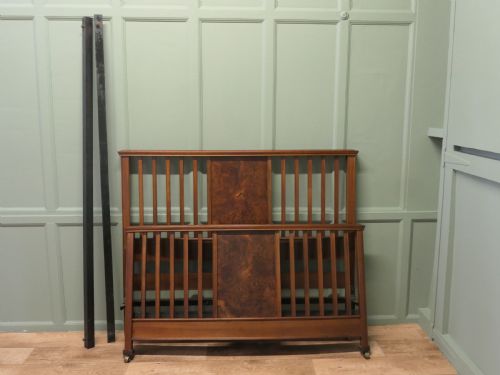
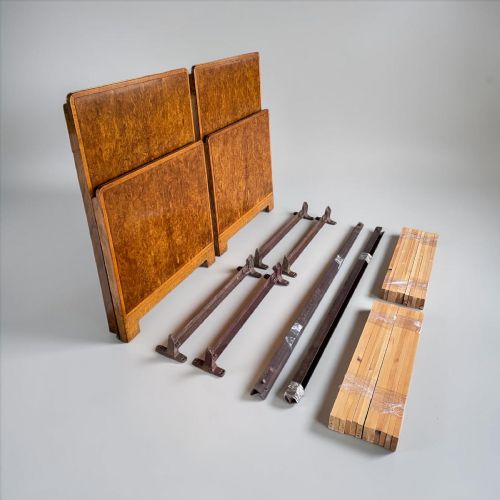
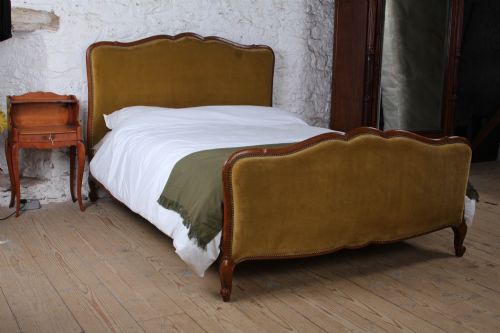
Structural integrity relied on solid timber construction supplemented by iron brackets, brass detailing, and carved decorative elements. Upholstered sections utilised button-backed padding or plain fabric panels inset into the wood structure.
Some Art Deco walnut headboards arrive with built-in bedside tables, proving that breakfast in bed required dedicated architecture.
What varies in quality
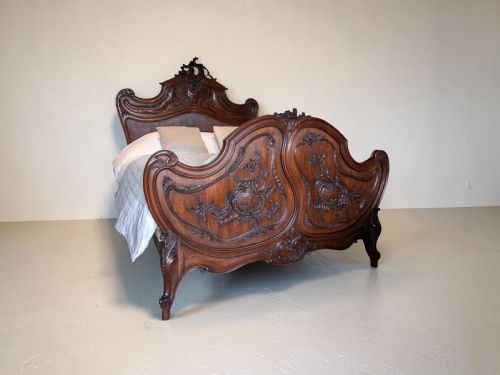
The selection of veneer dictates much of the visual impact, with highly figured burr walnut commanding attention through intricate natural patterns. The depth and precision of hand-carving on French or Victorian frames separate standard production items from finer workshop commissions.
Construction methods also vary, as superior examples employ robust solid timber framing and integrated joinery rather than purely decorative surface applications. The integration of functional elements, such as attached bedside tables in Art Deco pieces, demonstrates careful planning and cohesive design.
Waring & Gillow England
The Vintage Walnut Headboards Glossary
- Burr walnut
- A prized veneer taken from the warted growth on a walnut tree, yielding swirling, knotty patterns. This material appears frequently on decorative panels of 1930s and Edwardian pieces.
- Veneer
- A thin slice of superior wood applied to a base timber surface. This technique allows cabinetmakers to display rich grain patterns without consuming scarce solid lumber.
- Art Deco
- A design style prominent in the 1930s, characterised by streamlined shapes, geometric fan motifs, and curvaceous forms. Pieces from this era often incorporate figured walnut and built-in furniture.
- Louis XV Style
- A decorative French revival style featuring cabriole legs, asymmetrical scrollwork, and organic floral carving. 19th-century makers frequently adopted these graceful proportions for walnut bedsteads.
- Bedstead
- A framework of a bed consisting of head and foot boards with side rails. Many standalone headboards originate from the adaptation of these complete structures.
Vintage Walnut Headboards: Frequently Asked Questions
How do I attach a vintage headboard?
Many vintage pieces originate as complete bedsteads rather than standalone panels. Adapting them often requires custom brackets or wall-mounting solutions.
Check the rear construction of the timber frame to determine the safest method for securing the piece to a modern divan base or wall.
What is burr walnut?
Burr walnut is a specialised wood veneer harvested from a tree growth that produces dense, swirling cluster patterns. It provides a highly decorative surface on many period furniture designs.
Cabinetmakers prized this material for central panels where its complex grain acts as the primary visual feature.
How do I identify Art Deco pieces?
Art Deco walnut headboards typically feature geometric shapes, fan motifs, and curvaceous, streamlined silhouettes dating from the 1930s. Some examples incorporate integral bedside tables or contrasting blonde satinwood details.
The focus shifts away from traditional historic revival carving toward smooth, symmetrical lines that highlight the natural figure of the wood.
Are these pieces solid walnut?
Most items combine solid walnut structural components with walnut veneers applied over stable timber bases. This method prevents warping while displaying decorative grain patterns on large surfaces.
Examining the edges and interior surfaces helps reveal the underlying construction methods used by the maker.