


Walnut Twin Bedsteads
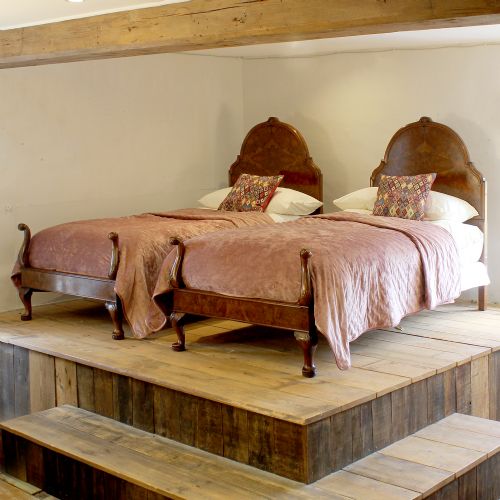
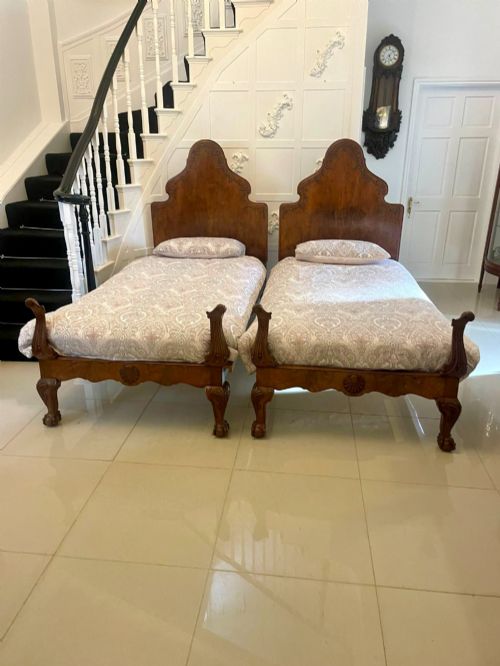
These walnut twin bedsteads offer matching sleeping quarters in rich timber, pairing period character with symmetrical design for a coordinated bedroom scheme.
Walnut Twin Bedsteads
Walnut twin bedsteads provide matching bed frames designed for use as a pair, originating from periods spanning the nineteenth century through to the nineteen-thirties. The selection includes examples styled in the Queen Anne revival, Art Deco, Edwardian, and French Empire tastes.
Most pieces encountered on this page date from the Edwardian era and the nineteen-twenties, constructed primarily from walnut, burr walnut veneer, and timber. Buyers will find single bed formats intended to furnish a twin room with period consistency.
The objects take the form of paired single beds and bedsteads, occasionally accompanied by related bedroom seating. They combine structural timbers with decorative veneers and metal hardware such as brass and ormolu.
How They Were Made
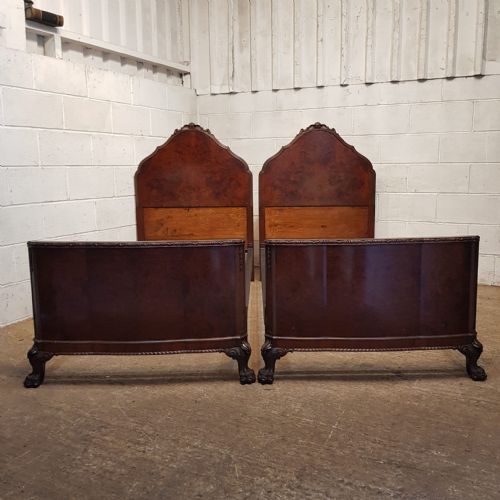
Cabinetmakers utilised solid walnut and timber for structural framing, applying burr walnut veneer to visible headboard and footboard surfaces for dramatic grain patterns. Carved ornamentation adorns the woodwork on revival and traditional pieces.
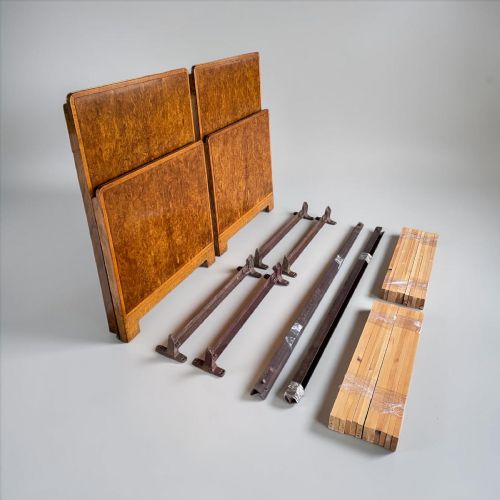
Construction integrates metal components, with iron frameworks providing internal support while brass and ormolu mounts supply decorative accents on specific French Empire and Edwardian examples.
What Varies in Quality
The refinement of the timber selection dictates the visual impact, particularly where burr walnut veneer displays complex, highly figured grain patterns across both matched frames. Carved details range from simple mouldings to deeply sculpted flourishes.
Coherence between the paired bedsteads determines their success as a matching set, alongside the integration of period hardware such as brass mounts and ormolu details.
Heals
The Walnut Twin Bedsteads Glossary
- Burr walnut veneer
- A thin slice of wood cut from a walnut tree growth, prized for its swirling grain patterns. It is applied to the primary surfaces of the headboards and footboards.
- Ormolu
- Gilt bronze mounted onto furniture as a decorative detail. It appears on French Empire style frames.
- Queen Anne style
- A design movement characterised by cabriole legs and pad feet, echoed in revival beds from the early twentieth century.
- Edwardian chinoiserie
- A decorative style incorporating Chinese motifs applied to furniture from the reign of Edward VII.
Walnut Twin Bedsteads: Frequently Asked Questions
What periods do these twin beds cover?
The inventory spans the nineteenth century, the Edwardian period, and the nineteen-twenties up to nineteen-thirty.
Specific examples reflect nineteenth century French Empire designs alongside later Art Deco and Queen Anne revival styles.
Are mattresses included with the bedsteads?
Listings focus on the timber and metal frames rather than modern mattresses.
Buyers should check internal dimensions to ensure standard modern mattresses fit the antique frames.
How do I identify a revival style?
Revival pieces borrow decorative vocabulary from earlier centuries, such as Queen Anne or French Rococo.
These twentieth-century interpretations combine historical ornament with the construction methods of their own era.
What metals are used in the frames?
Iron provides structural strength for the internal bed frames and supports.
Brass and ormolu appear as decorative fittings and mounts on specific styles.