


Walnut Twin Beds
Walnut twin beds bring warmth and matching symmetry to a bedroom, offering distinct periods from Edwardian designs to Art Deco forms.
Walnut Twin Beds
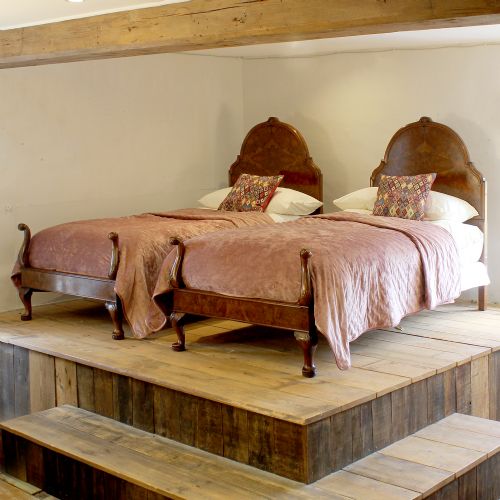
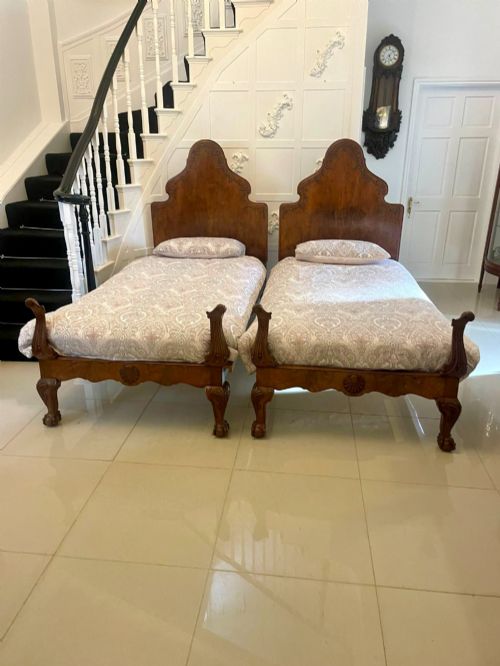
Walnut twin beds consist of matched pairs of single bed frames constructed primarily from walnut timber, burr walnut, and related woods. These pieces appear in forms ranging from nineteenth-century French Empire designs to early twentieth-century Edwardian and Art Deco iterations.
Buyers encountering this selection most frequently meet early twentieth-century examples, particularly pieces dated to nineteen-twenty and nineteen-thirty. These often incorporate styles such as Queen Anne Revival alongside streamlined Art Deco geometries.
Materials and Construction
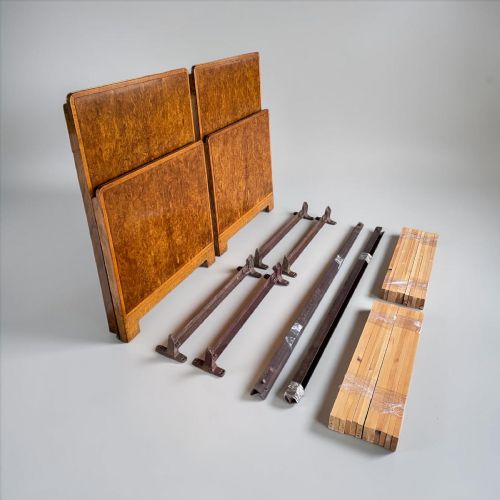
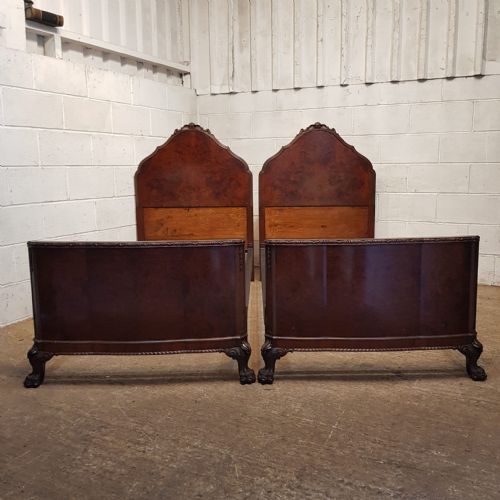
Construction relies heavily on solid walnut and decorative burr walnut veneer, which showcases intricate grain patterns across large headboards and footboards. Secondary woods and supporting materials such as iron, birch, and satinwood appear within the frames and internal structures.
Surface decoration ranges from carved details on Queen Anne style frames to sleek, polished veneers characteristic of Art Deco pieces. Some nineteenth-century and Edwardian examples also incorporate brass elements or painted leather panels to add textural contrast.
Some Edwardian walnut beds arrive accompanied by a matching bedroom chair, ready for afternoon daydreams.
Variations in Quality
Quality in walnut twin beds rests primarily upon the selection of timber and veneer, particularly the richness and symmetry of burr walnut figures. Superior pieces display careful grain matching across both headboards and footboards to create a cohesive aesthetic.
Execution of carving and joinery separates standard production from finer workshop output, evident in the crispness of Edwardian carved details or the precise geometry of Art Deco designs. The inclusion of integrated matching elements, such as bedside tables or chairs, also elevates a pairing.
Heals
The Walnut Twin Beds Glossary
- Burr walnut
- A prized wood veneer harvested from the wart-like growths on walnut trees, known for its swirling, highly figured grain patterns.
- Art Deco
- A design style prominent around nineteen-thirty characterised by clean lines, geometric shapes, and streamlined modern forms.
- Queen Anne style
- A traditional aesthetic featuring curved lines, cabriole legs, and understated carved details popular in early twentieth-century revivals.
- Edwardian
- Pertaining to the period around nineteen-ten, often showcasing lighter woods, refined proportions, and delicate decorative touches.
- French Empire
- A classical revival style originating in the nineteenth century, notable for monumental form and architectural presence.
Walnut Twin Beds: Frequently Asked Questions
What periods do these beds come from?
These beds span the nineteenth century through the early twentieth century, including Edwardian, nineteen-ten, nineteen-twenty, and nineteen-thirty Art Deco periods.
Most examples date from the early decades of the twentieth century, reflecting stylistic shifts from traditional revival designs to modern geometric forms.
Are these beds standard modern sizes?
Antique twin beds often differ slightly from modern mattress dimensions, frequently measuring around three feet in width.
Buyers should verify internal frame dimensions carefully to ensure standard modern mattresses fit comfortably within the antique wooden or iron side rails.
How do I identify Art Deco twin beds?
Art Deco twin beds typically date to nineteen-thirty and feature smooth, polished burr walnut veneer without heavy carving.
They often emphasise clean horizontal or vertical lines, sometimes incorporating matching elements like built-in bedside tables or contrasting satinwood details.
What is the difference between Queen Anne style and Edwardian beds?
Queen Anne style beds draw on eighteenth-century vocabulary, featuring shaped wooden panels and carved details executed around nineteen-ten to nineteen-twenty.
Edwardian beds encompass a broader range of lighter designs, occasionally combining walnut with brass components or chinoiserie painted decoration.