
Vintage Walnut End Table
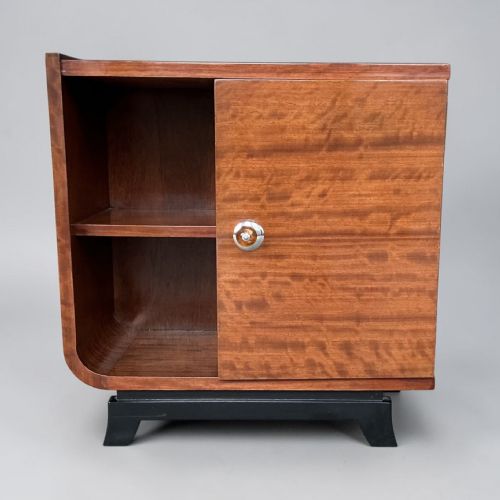
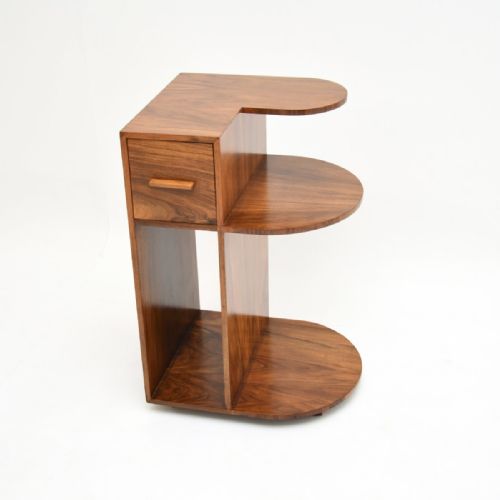
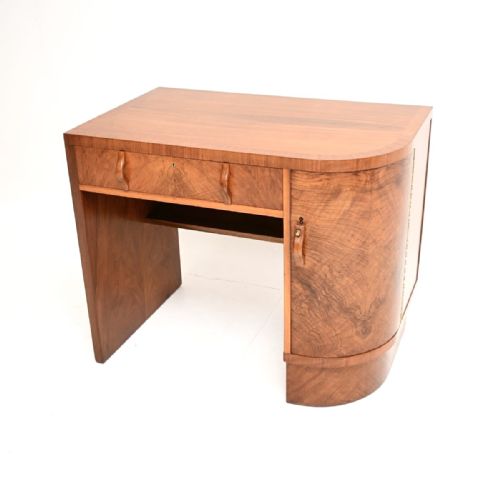
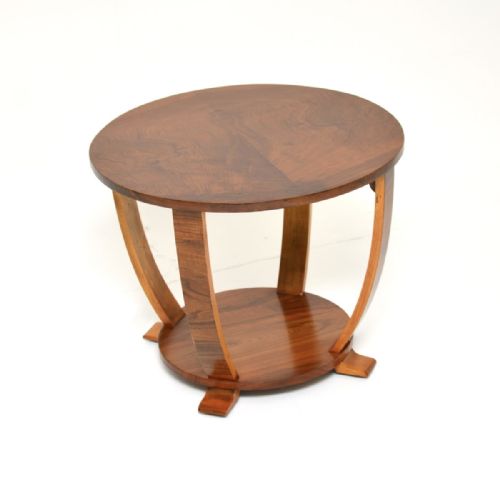
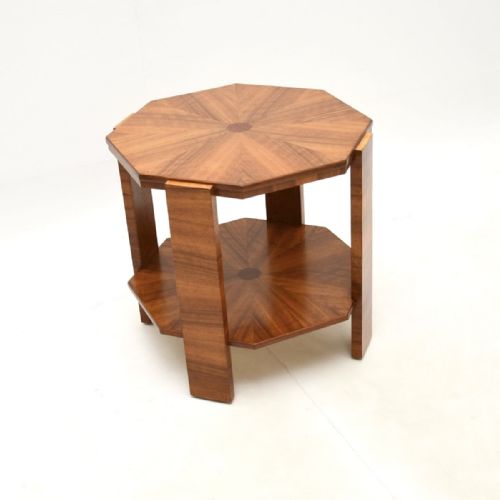
These vintage walnut end table pieces bring rich timber grain and compact utility to a room, led largely by Art Deco designs.
Vintage Walnut End Table
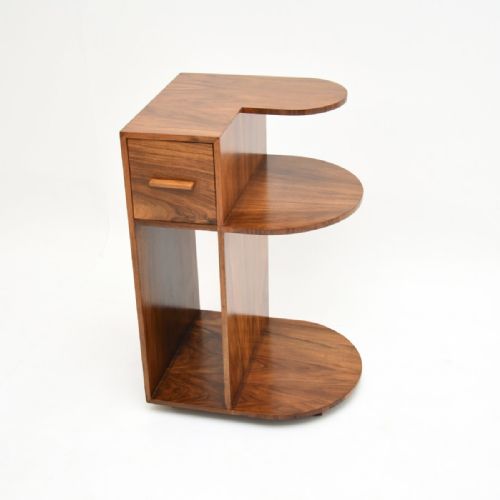
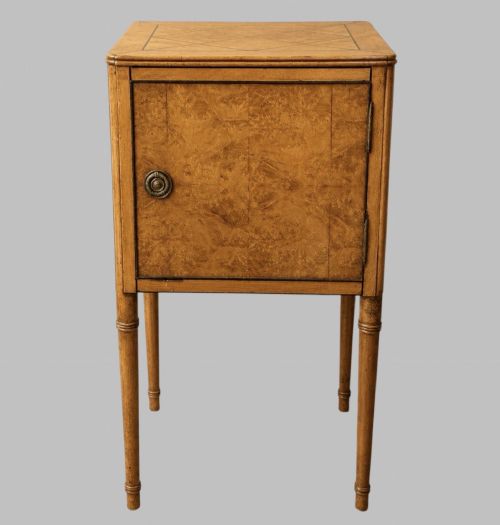
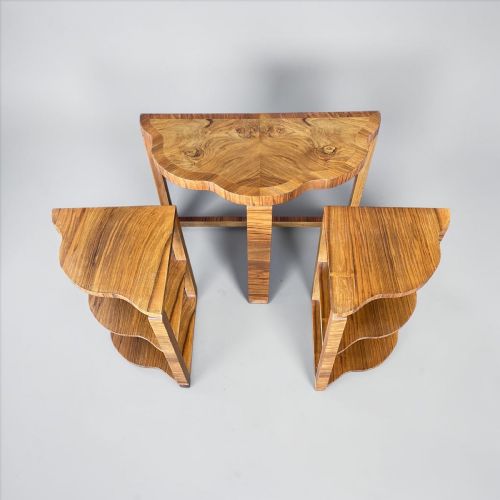
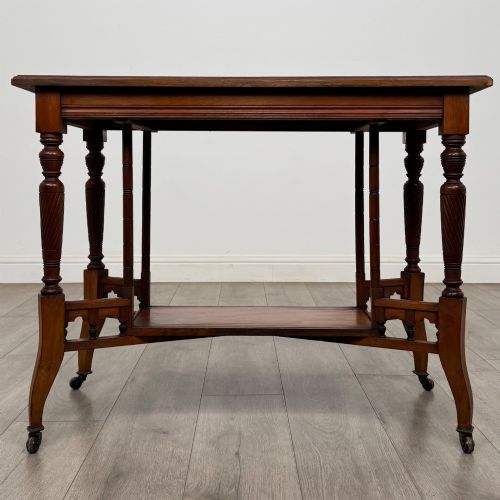
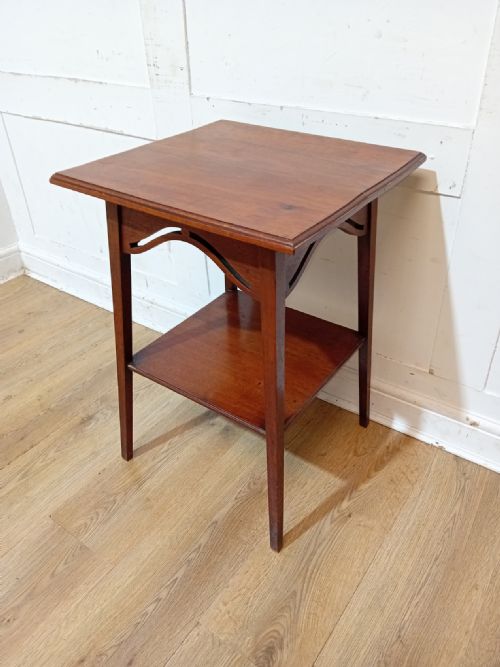
A vintage walnut end table serves as a versatile resting place beside a chair or bed, encompassing forms such as side tables, occasional tables, bedside cabinets, and nests of tables. The selection draws heavily from Art Deco creations of the 1930s alongside Edwardian and Victorian examples.
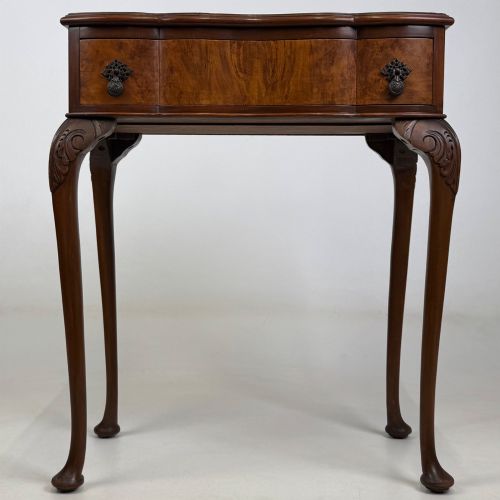
Makers and designers working in various historical revivals also shaped these forms, yielding Queen Anne style curves, French provincial lines, and occasional gate-leg structures. Buyers find pieces ranging from simple single-tier surfaces to multi-tiered tables and cabinets with drawers.
How they were made
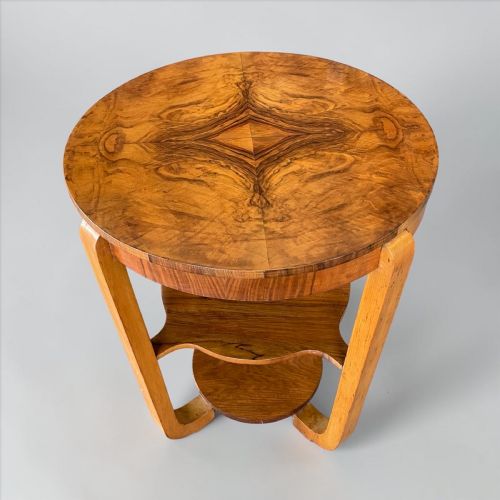
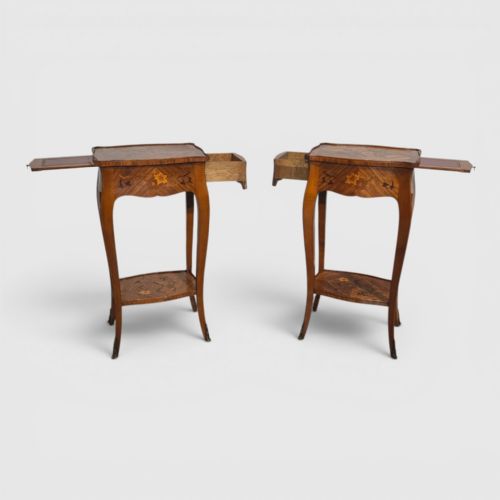
Makers utilised solid walnut and walnut veneer, often selecting burr walnut to display intricate, swirling grain patterns across tabletops and cabinet fronts. Inlaid marquetry, satin walnut, and contrasting timbers like maple added decorative border work.
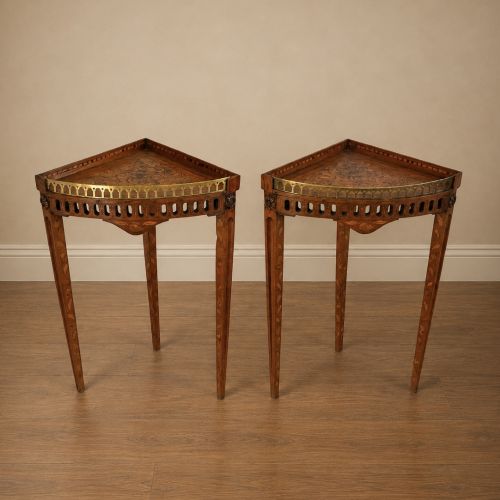
Hardware and structural accents incorporated brass galleries, metal fittings, and chrome details, particularly in twentieth-century pieces. Ebonised wood appeared on specific mouldings and turnings to provide visual contrast against the warm brown tones of the primary timber.
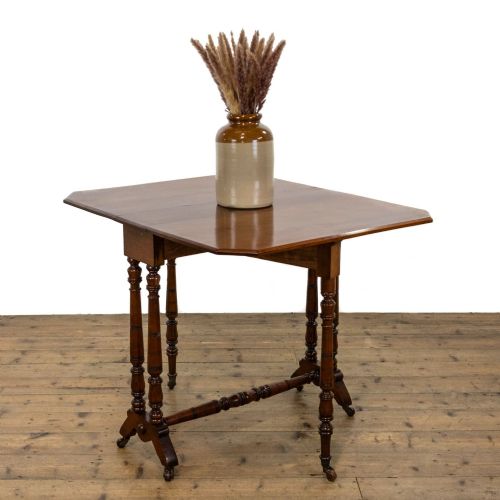
A solitary bobbin gate-leg table stands among the sleek lines of the Art Deco items.
What varies in quality
The visual impact often depends on the selection and matching of figured veneer grains, where book-matched burr walnut creates symmetrical patterns across a surface. Finer examples display meticulous marquetry inlay and well-integrated secondary timbers rather than simple plain surfaces.
Construction methods and hardware choice distinguish standard production from high-end workshop output, such as pieces bearing maker attribution or incorporating specialised materials like chrome and mirror glass. The integrity of the underlying joinery and the crispness of turned or carved details dictate the longevity of each table.
Walter Carter Harrods·Gilbert Rohde·Maurice Adams·Liberty of London
The Vintage Walnut End Table Glossary
- Burr walnut
- A specialised timber cut from the abnormal growths on walnut trees, yielding highly figured and swirling grain patterns. It remains prized for decorative furniture surfaces.
- Veneer
- A thin slice of superior wood applied over a stable secondary timber base. This technique allows makers to display striking grain figures without risking the warping associated with solid boards.
- Marquetry
- The art of applying pieces of veneer to a structure to form decorative patterns or pictures. Craftsmen utilise various coloured woods to achieve tonal depth.
- Gate-leg table
- A table with hinged legs that swing out to support drop leaves when raised. It provides an expandable surface area while remaining compact when folded.
- Sutherland table
- A narrow drop-leaf table where the leaves fold down almost vertically. The gate-leg mechanism supports these long, drooping leaves.
Vintage Walnut End Table: Frequently Asked Questions
How do I identify Art Deco tables?
Art Deco tables typically display geometric symmetry, stepped forms, and clean lines rather than heavy carving. They frequently utilise figured walnut veneers that highlight the natural grain patterns.
Many examples from this era date around 1930 and may incorporate modern metal accents like chrome alongside traditional timber.
Are bedside cabinets considered end tables?
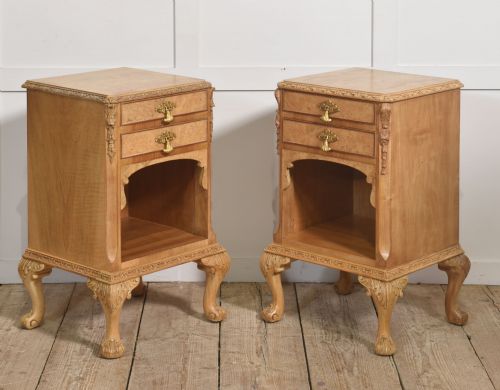
Bedside cabinets and bedside tables function similarly to end tables by providing surface space and enclosed storage next to seating or sleeping areas. Many compact designs transition easily between bedroom and living room settings.
They share the same walnut materials and period styles found across standard occasional tables.
How do I care for walnut veneer?
Walnut veneer requires protection from direct sunlight and excessive moisture to prevent fading and lifting of the thin wood layer. Regular dusting with a soft, dry cloth maintains the finish without needing harsh polishes.
Keeping the timber away from extreme temperature fluctuations preserves the integrity of the adhesive beneath the veneer.