



Vintage Walnut Bedstead
A vintage walnut bedstead brings rich grain and solid warmth to a bedroom, offering a grounding architectural presence.
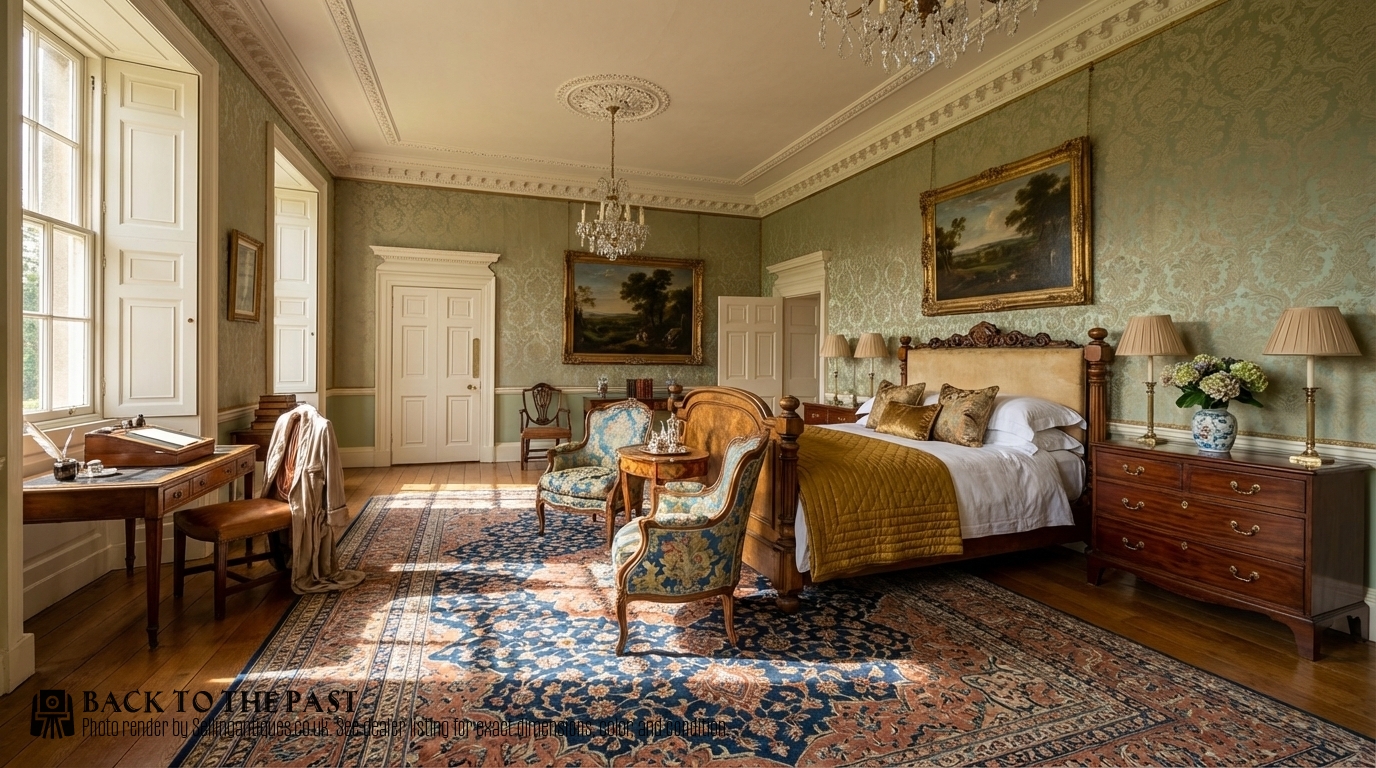
Defining the Vintage Walnut Bedstead
A vintage walnut bedstead unites substantial timber construction with the deep, warm tones characteristic of walnut. The pieces found here encompass double and single beds spanning the nineteenth century through the Art Deco and Queen Anne Revival periods.
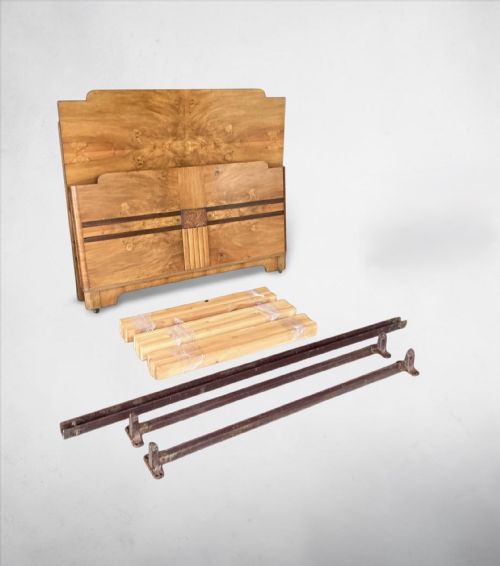
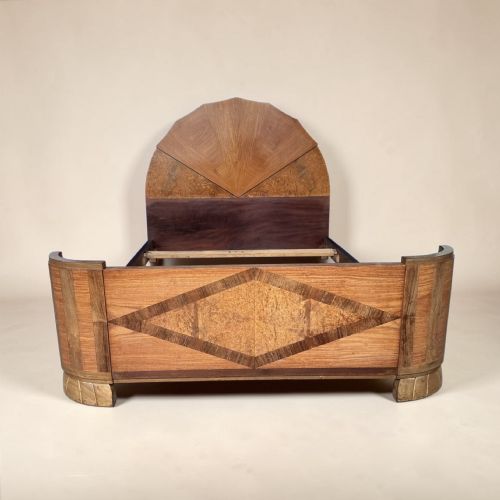
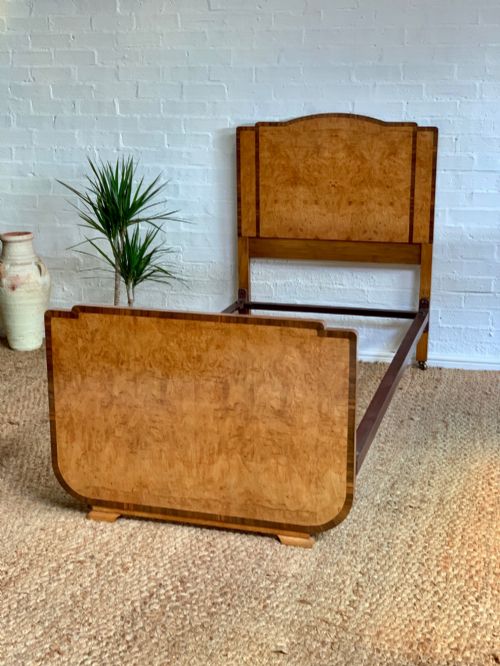
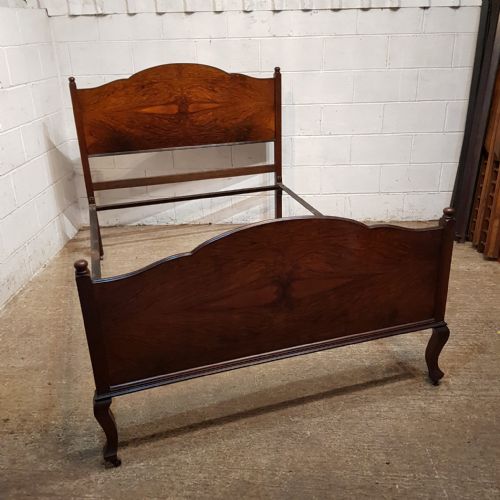
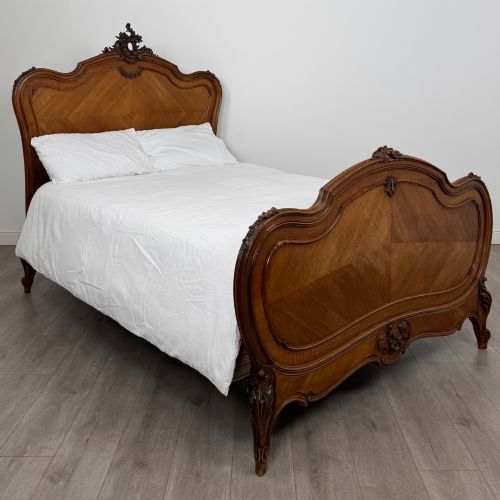
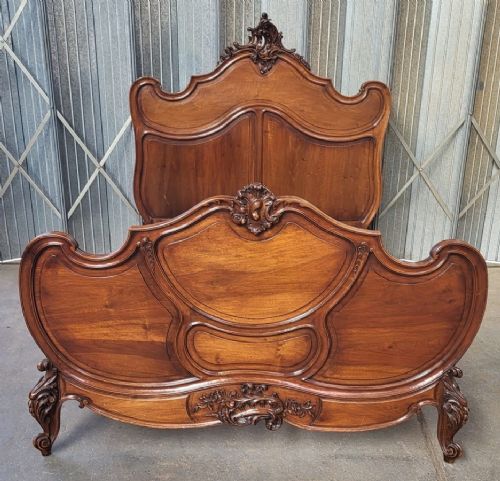
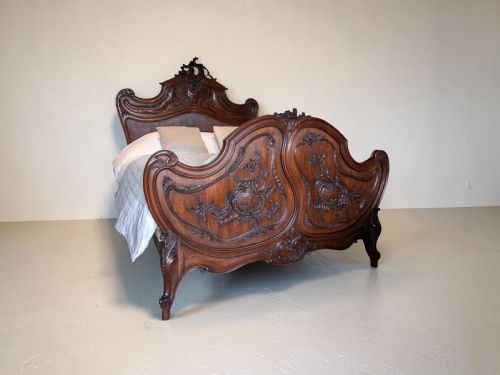
Art Deco examples display striking figuration and clean architectural lines from around nineteen thirty. Earlier interpretations draw on French Rococo Revival and Queen Anne styles, offering curved headboards and refined silhouettes.
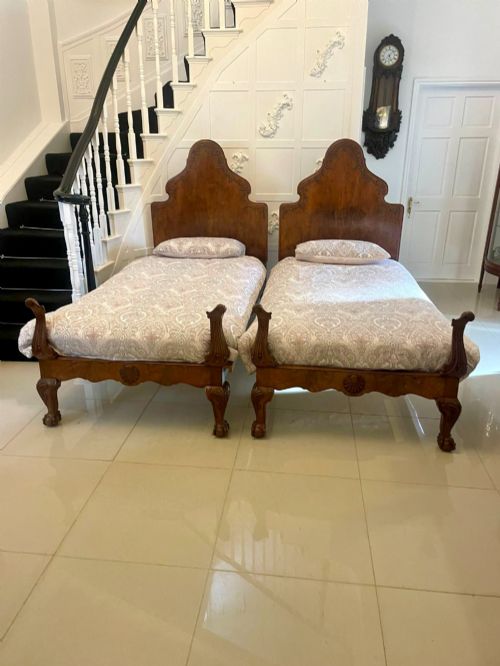
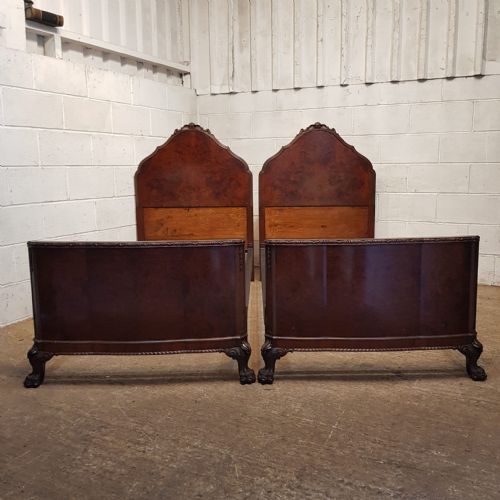
Single beds appear in matched pairs alongside larger double proportions. These pieces range from nineteenth century work to nineteen twenties revivals, providing distinct options for bedroom schemes.
Materials and Construction
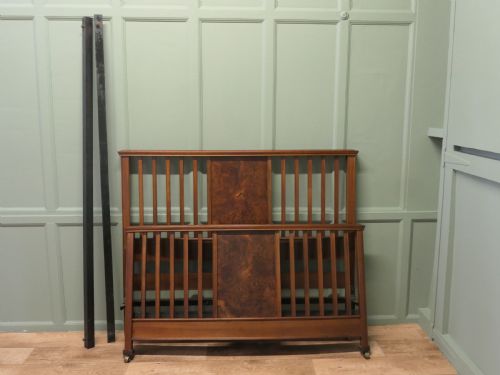
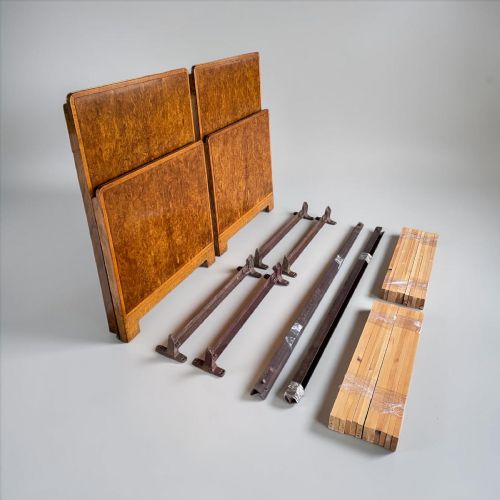
Construction relies heavily on walnut timber, burr walnut, and burr walnut veneer applied over supportive secondary woods. Iron components provide structural stability within the framework, while textile elements complete the bedding structure.
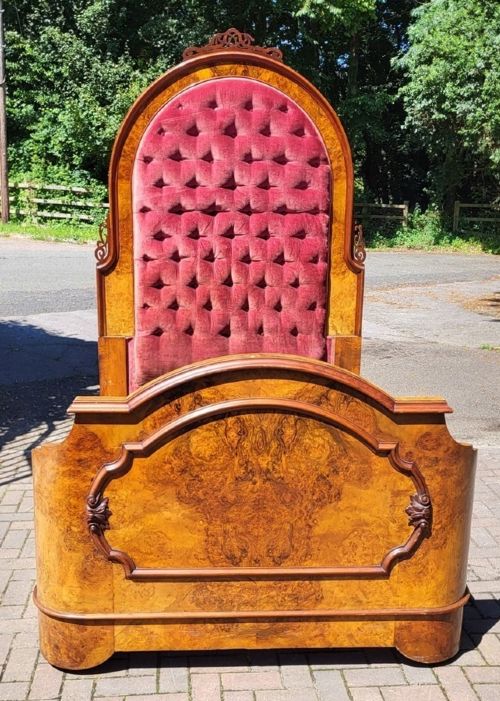
Veneering techniques highlight the natural movement of the grain, particularly in highly figured burr walnut panels. Cabinetmakers selected matching veneers to create symmetrical patterns across large headboard and footboard surfaces.
Retail Price Guide 2026
Typical UK retail prices for vintage walnut bedstead, calculated from the Sellingantiques database of over a million retail prices indexed since 2003. This retail price guide relies exclusively on Sellingantiques data; no external sources or auction records are used, so the figures do not describe the wider market.
Styles represented on this page include Art Deco, French Rococo Revival, and Queen Anne Revival forms.
Assessing Quality and Character
Quality rests in the selection and application of the timber veneer. Heavily figured burr walnut displays complex patterning that elevates the visual impact far beyond plain timber surfaces.
Stylistic cohesion defines the finer examples, where revival details or Art Deco geometries are executed with precision. The integration of ironwork and timber framing determines the overall solidity of the bedstead.
The Vintage Walnut Bedstead Glossary
- Burr walnut
- A veneer cut from the gnarled growth of a walnut tree. This produces intricate, swirling grain patterns highly prized for decorative furniture surfaces.
- Queen Anne Revival
- A decorative style reviving early eighteenth century forms. It incorporates curved lines, cabriole legs, and subdued ornamentation.
Frequently Asked Questions
What periods do these bedsteads date from?
The pieces span the nineteenth century through to nineteen thirty. Key design eras include the Art Deco period, the Victorian era, and various revival movements.
Specific dates range from nineteenth century examples to items produced around nineteen twenty and nineteen thirty.
Are single beds available as pairs?
Certain listings feature matched pairs of single beds. These typically date from the nineteen twenties and share identical wood figures and revival styling.
Single pairs allow for coordinated twin bedroom layouts using matching antique furniture.
What wood finishes appear most often?
Walnut is the primary timber, appearing as solid wood, burr walnut, and decorative veneer. Figured varieties showcase complex natural grain patterns across the headboards.
Underlying iron structures provide hidden support beneath the wooden framework.
How do Art Deco beds differ from earlier styles?
Art Deco beds from nineteen thirty emphasise bold geometric shapes and heavily figured burr walnut veneers. They present a sleek, modern aesthetic compared to earlier revivals.
Nineteenth century and revival models lean towards traditional carved details and curved silhouettes influenced by French Rococo or Queen Anne aesthetics.