



Vintage Velvet Ottoman
These vintage velvet ottoman pieces range from compact Victorian footstools to large country house storage seats.
Vintage Velvet Ottoman
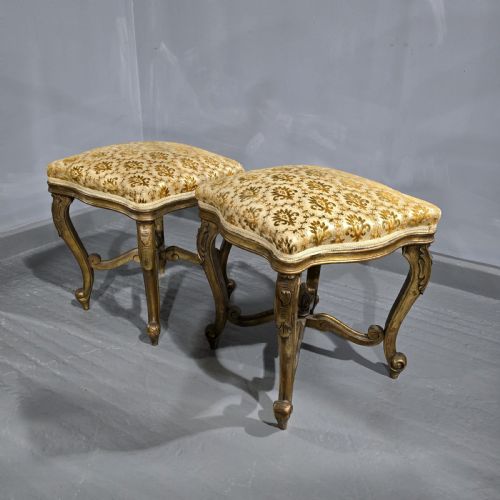
A vintage velvet ottoman buyer searches for upholstered seating designed for resting feet or lounging, spanning the nineteenth century and early twentieth century. These furnishings appear in styles such as Victorian Rococo Revival, Regency, Chippendale Revival, and French Chateau, reflecting the tastes of their respective periods.
The most common forms on this page include mahogany, walnut, and rosewood stools, alongside larger storage ottomans and dressing stools. Pieces emerge from diverse origins, encompassing English, Scottish Baronial, and French workshops from the eighteen-hundreds onwards.
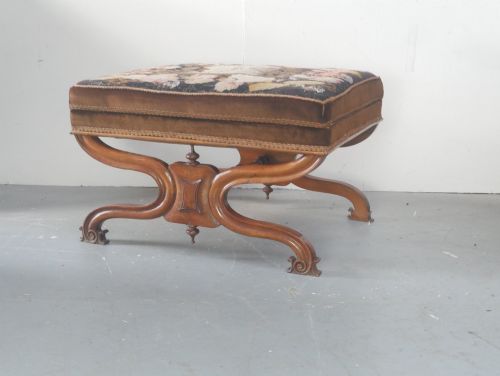
Functionality bridges the gap between decorative salon seating and practical footrests. Variations include X-framed structures, buttoned upholstery, and cabriole legs suited for drawing rooms and bedrooms.
What varies in quality
The sophistication of the timber carving and the solidity of the hardwood frame dictate the primary tier of craftsmanship. Pieces featuring detailed cabriole legs or X-frames stand apart from simpler structural forms.
The selection and execution of the velvet upholstery, alongside supplementary decorative elements like needlepoint or buttoning, separate standard workshop items from exceptional country house commissions.
One unexpected item escaping the standard seating category is a gold-embroidered jacket originating from Turkish or Kurdish traditions.
Hallett & Sons
The Vintage Velvet Ottoman Glossary
- Cabriole leg
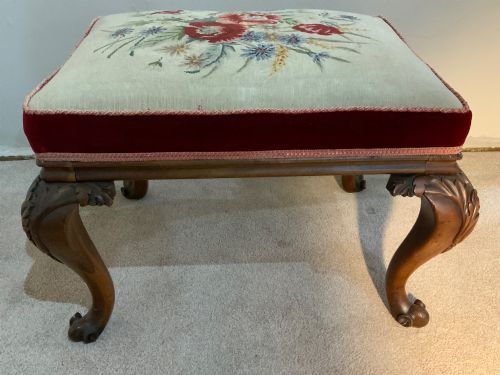
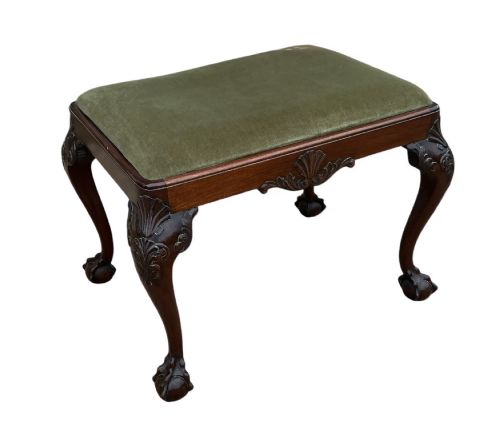
- A furniture leg that curves outward and then tapers inward, mimicking an animal's limb. This form appears frequently on eighteenth and nineteenth-century seating.
- X-framed
- A structural support design formed by intersecting diagonal timbers. This configuration provides stability and decorative presence.
- Needlepoint
- Canvas embroidery stitched with yarn to create pictorial or geometric designs. It often covers the top surface of period footstools.
- Regency
- An English design style spanning the early nineteenth century, drawing inspiration from classical Greek, Roman, and French motifs. Furniture from this era often exhibits sabre legs.
- Buttoned
- An upholstery technique where indentations are formed across the padded surface using tightly secured tufting buttons. This method adds texture and secures internal padding.
Vintage Velvet Ottoman: Frequently Asked Questions
What is a vintage velvet ottoman?
A vintage velvet ottoman is a low upholstered seat or footrest covered in velvet fabric, dating primarily from the nineteenth and early twentieth centuries.
These pieces function as footstools, dressing seats, or salon furnishings, incorporating woods like mahogany and walnut.
How do I identify a Victorian stool?
Victorian stools often feature dense hardwoods like walnut or mahogany, frequently mounted on carved cabriole legs or finished with buttoned upholstery.
Stylistic influences from this era range from simple domestic forms to ornate revival designs such as Victorian Rococo Revival and Scottish Baronial.
Were these ottomans used for storage?
Certain larger examples, such as country house storage ottomans, were specifically built with internal compartments for household items.
Most pieces listed, however, serve primarily as footstools, dressing stools, or window seats rather than storage chests.
What wood types are most common?
Mahogany and walnut dominate the wooden frames of these seating items, alongside occasional uses of rosewood and general hardwood.
These materials provided the structural strength required for cabriole, sabre, and turned legs.
Can I use an antique footstool daily?
Antique footstools and ottomans were constructed from solid hardwoods intended for functional daily use in period homes.
Placing them in modern spaces requires an appreciation of their historical upholstery and timber frames.