

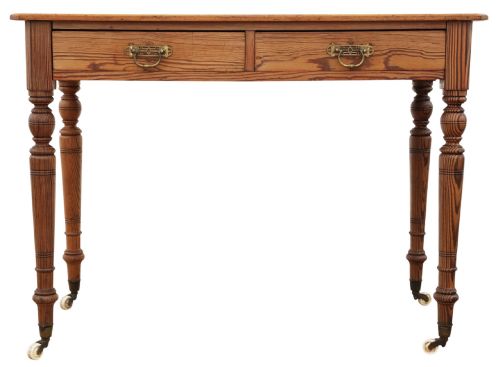
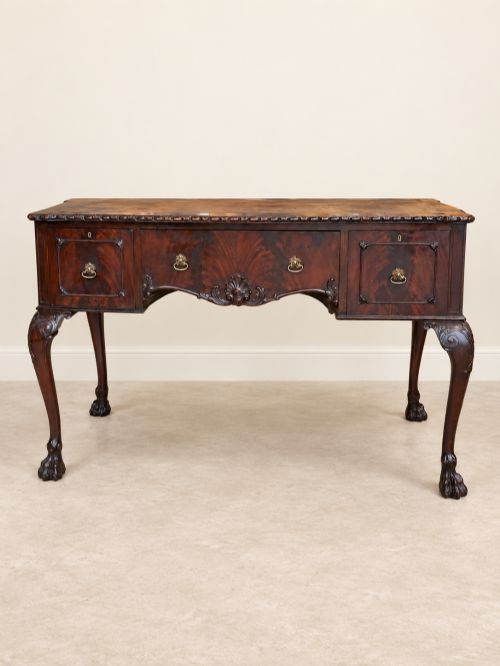
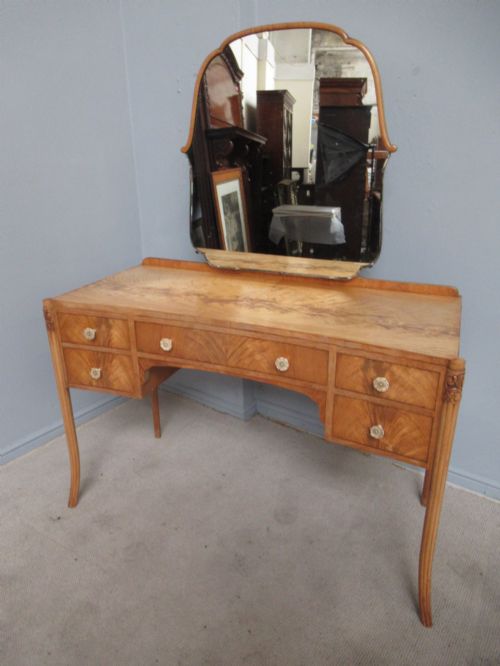
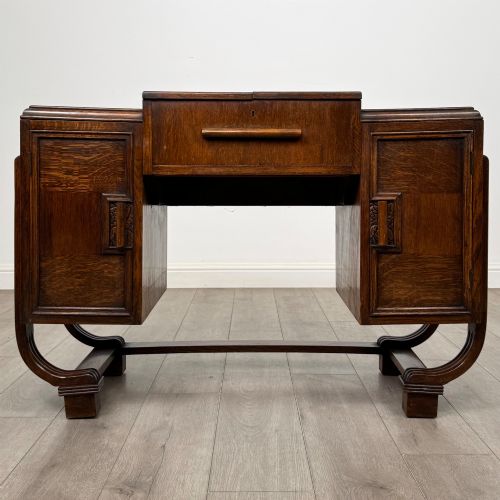
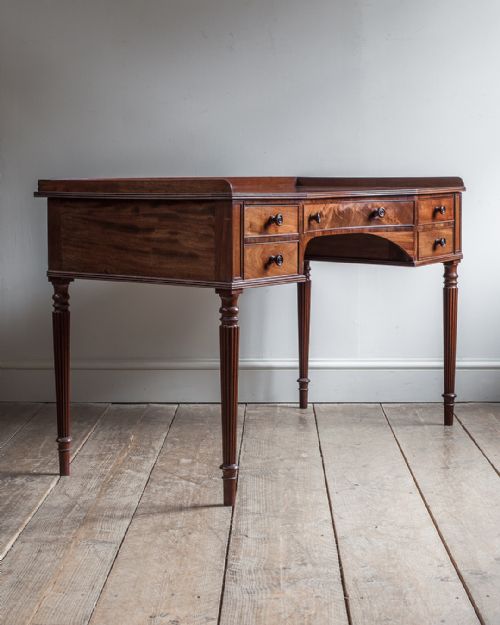
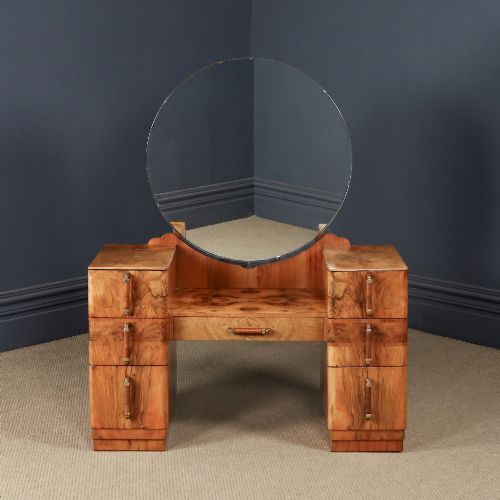
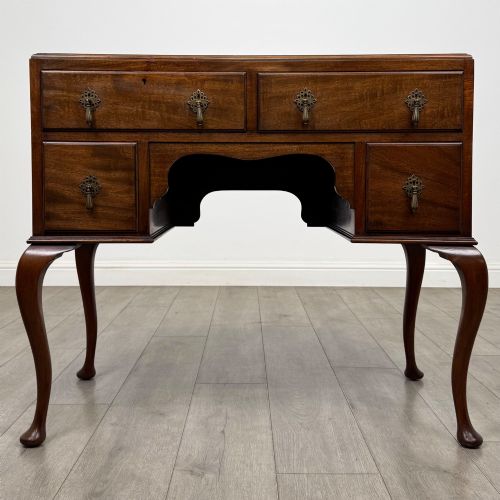
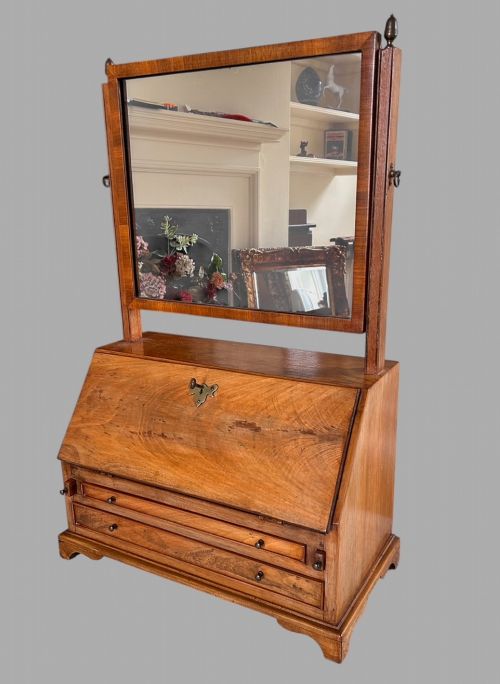
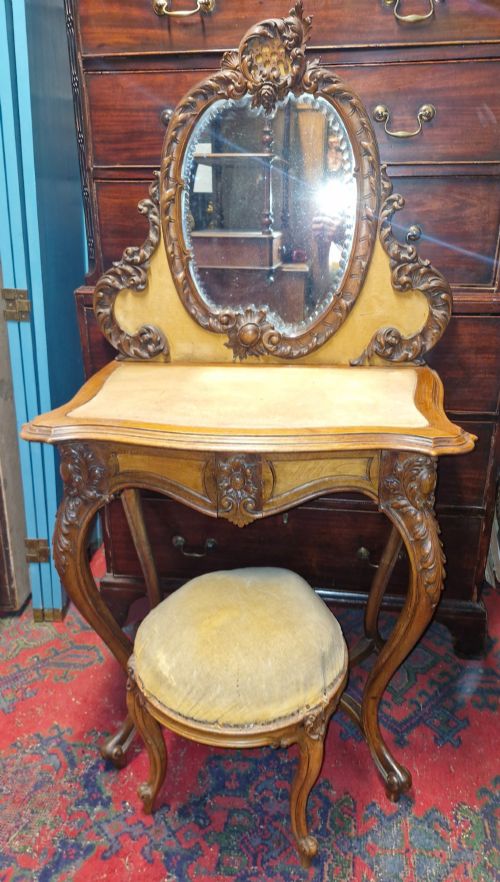
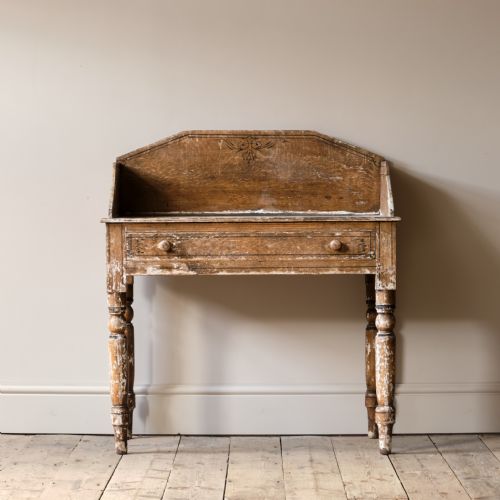
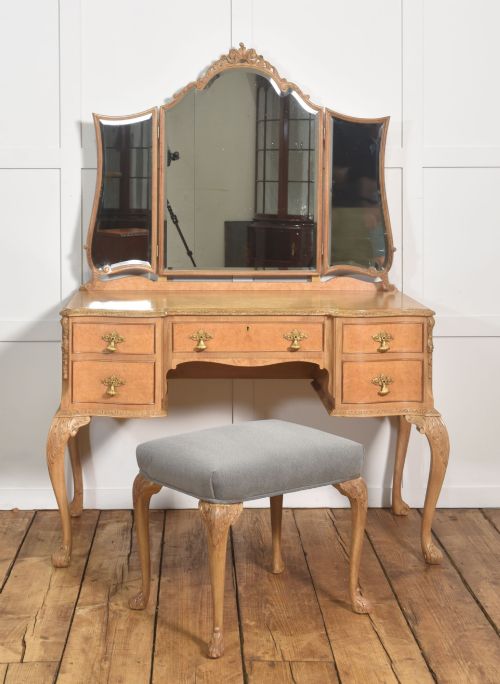
Vintage Vanity Desk
These vintage vanity desk examples bring practical surface space and period character to a bedroom.
Defining the vintage vanity desk
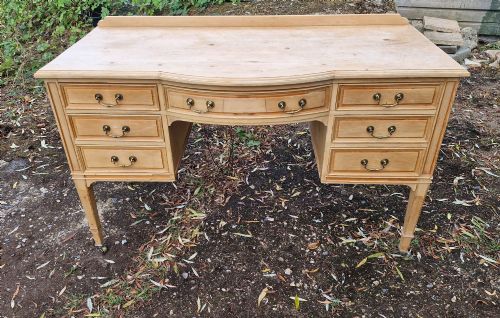
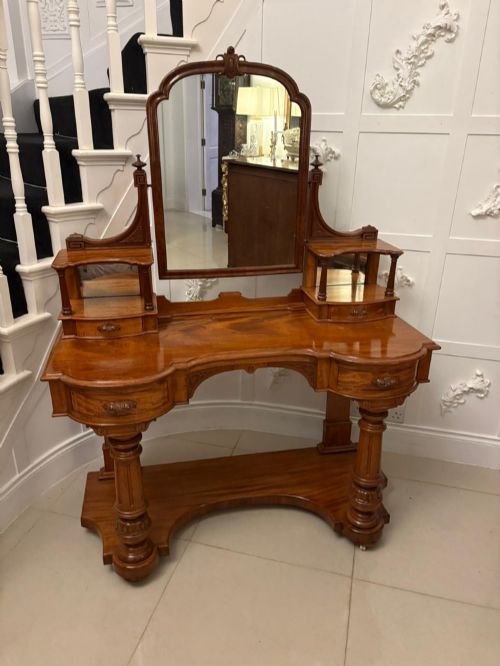
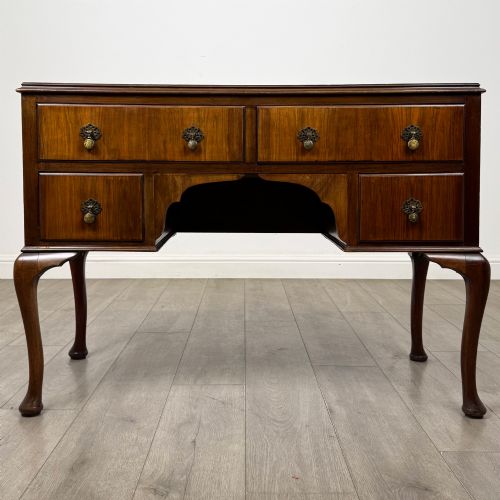
A vintage vanity desk combines the surface utility of a writing table with the mirror and storage facilities of a traditional dressing table. When you search for a vintage vanity desk, you encounter pieces designed primarily for personal grooming and writing tasks.
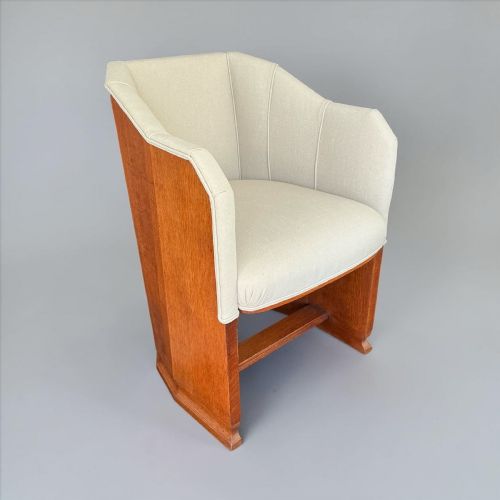
The selections span the 19th Century, Edwardian era, and the 1930s, offering distinct architectural forms. You are most likely to meet kidney-shaped desks alongside larger dressing tables spanning the Victorian, Regency, and Art Deco styles.
Makers such as Harry and Lou Epstein, alongside works attributed to Betty Joel, represent the higher end of these forms. These pieces function as focal points in period bedrooms while providing genuine daily utility.
Materials and construction
Cabinet makers utilised solid woods and wood veneers over internal carcases, selecting flame mahogany and burr walnut for rich grain patterns. These figured veneers were carefully matched and laid across large surfaces to create decorative symmetrical patterns.
Surfaces were frequently paired with matching glass tops, inset mirrors, and fabric elements to complete the dressing function. Brass hardware and fittings appeared on drawers and structural joints, adding metallic contrast to the timber.
Retail Price Guide 2026
Typical UK retail prices for vintage vanity desk, calculated from the Sellingantiques database of over a million retail prices indexed since 2003. This retail price guide relies exclusively on Sellingantiques data; no external sources or auction records are used, so the figures do not describe the wider market.
Current listings feature materials including glass, mahogany, walnut, burr walnut, mirror, fabric, wood veneer, and brass.
Judging quality and execution
Quality rests heavily on the selection and matching of wood veneers, particularly the dramatic figuring found in burr walnut and flame mahogany pieces. Finer examples display meticulous attention to grain alignment across multiple drawers and curved surfaces.
Harry and Lou Epstein·Betty Joel
The Vintage Vanity Desk Glossary
- Burr walnut
- A highly figured wood veneer taken from the wart or burl growths of the walnut tree. This material creates swirling, organic patterns across the front of a dressing table.
- Kidney-shaped
- A curved desk or table profile that wraps inwards towards the user. This ergonomic shape allows comfortable seating while providing extended side surfaces.
- Flame mahogany
- A specific cut of mahogany timber that produces a flickering, flame-like grain pattern. It was favoured by cabinet makers for grand 19th Century pieces.
- Art Deco
- A design style spanning the 1920s and 1930s characterised by geometric forms and streamlined silhouettes. Pieces from this era often utilise bold wood veneers and polished glass.
Frequently Asked Questions
What is a vintage vanity desk?
A vintage vanity desk is a piece of furniture designed for grooming and personal care, often featuring integrated mirrors and drawers.
These items bridge the gap between a traditional writing desk and a dressing table, utilising periods from the 19th Century to the 1930s.
How do I identify Art Deco styles?
Art Deco pieces typically feature streamlined silhouettes, geometric lines, and dramatic wood veneers like burr walnut.
They emerged strongly during the 1920s and 1930s, moving away from ornate Victorian carvings towards sleek modernity.
Are kidney-shaped desks practical?
Kidney-shaped desks offer a curved workspace that wraps around the user for convenient access to drawers and surfaces.
This specific shape requires advanced joinery and provides a distinctive aesthetic in a bedroom or dressing room.
Which woods were commonly used?
Cabinet makers relied heavily on mahogany and walnut, often applying decorative veneers to create striking visual patterns.
Flame mahogany and burr walnut are particularly prominent in higher-tier pieces from the 19th Century and the 1930s.