

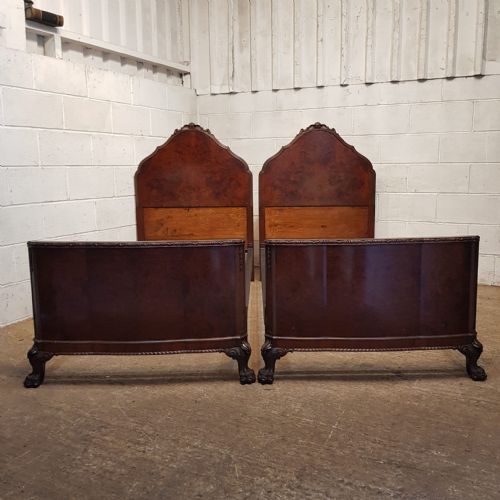


Vintage Twin Bedsteads
Vintage twin bedsteads offer matched sleeping arrangements from the nineteenth and twentieth centuries, spanning robust metal frames and polished hardwoods.
Vintage Twin Bedsteads
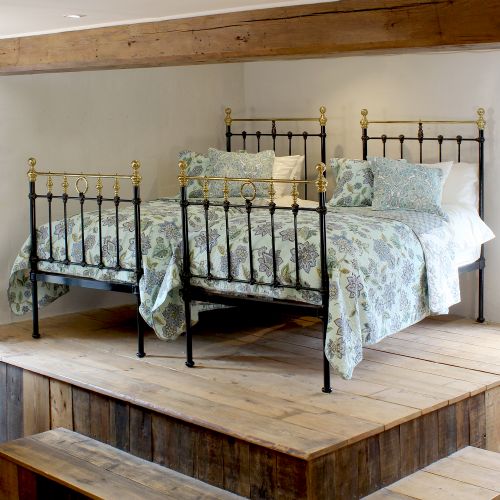
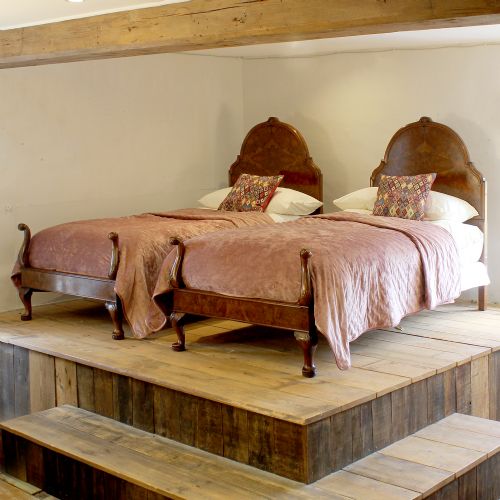
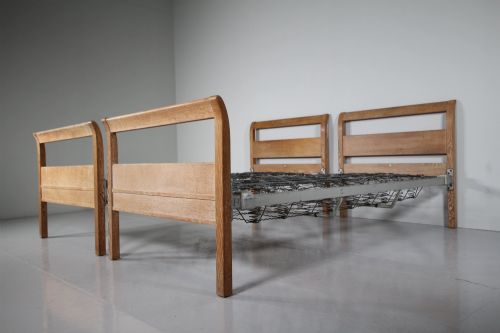
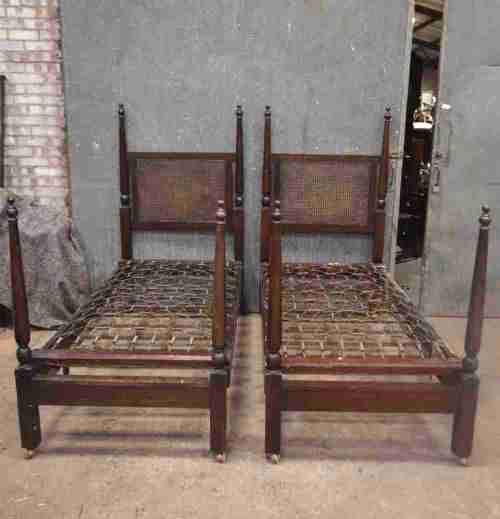
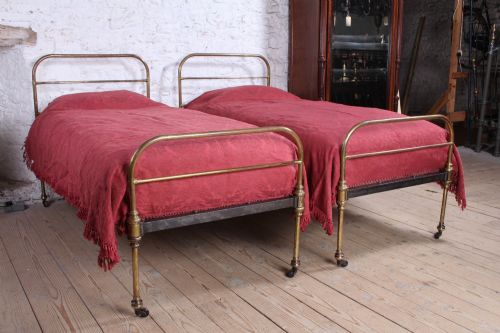
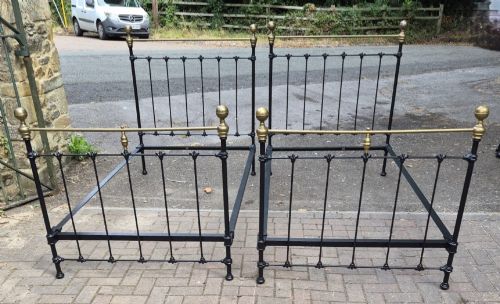
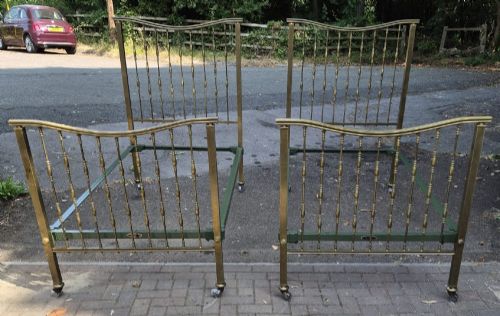
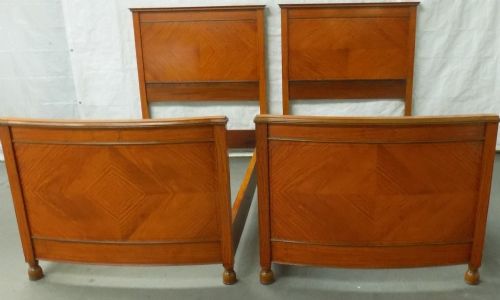
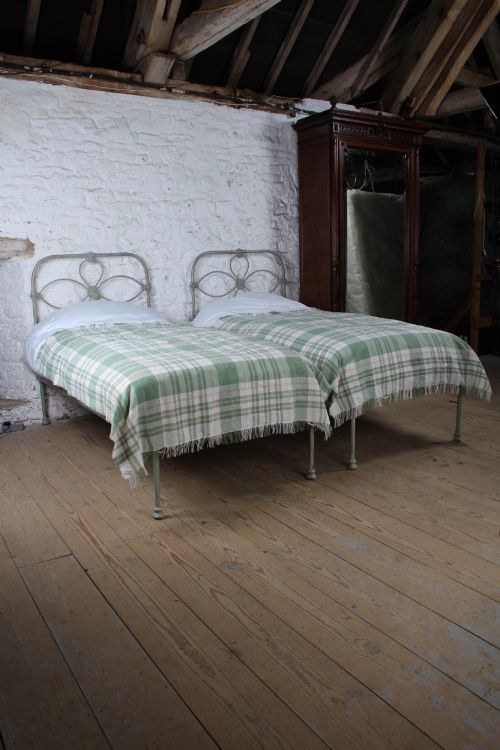
Vintage twin bedsteads include matched pairs and individual frames designed for single sleepers, originating from periods such as the Victorian, Edwardian, and Art Deco eras. Buyers searching for vintage twin bedsteads encounter substantial metal constructions in iron and brass, alongside timber versions fashioned from oak, walnut, and fruitwood. These pieces often arrive as pairs that can sit alongside one another or join to form wider configurations.
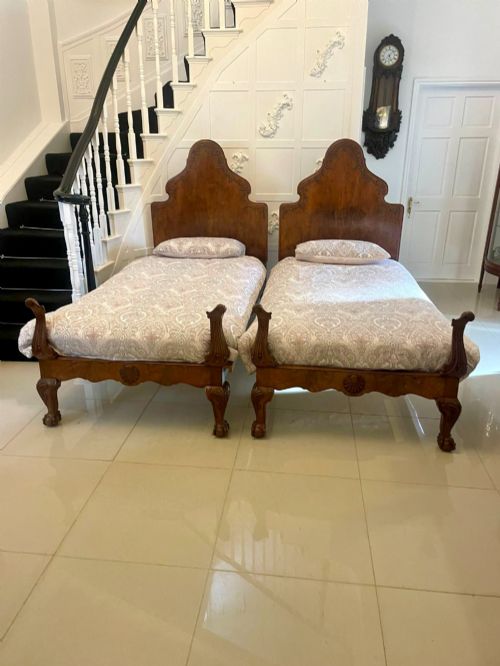
The selection ranges from utilitarian iron frameworks with simple headboards to elaborate wooden designs featuring inlaid satinwood, carved burr walnut, and painted French finishes. Makers and designers from Heals to Betty Joel are represented among the timber examples, while brass and iron models frequently display the robust engineering typical of nineteenth and early twentieth-century metalfounders.
How they were made
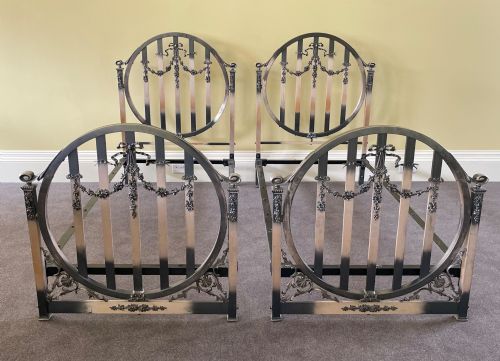
Metal vintage twin bedsteads rely on cast iron, wrought iron, and brass components, often combining heavy structural iron with decorative brass finials, tubing, and nickel plating. These metal frames utilise robust joints and heavy-duty castors to support bedding while maintaining structural rigidity over decades of use.
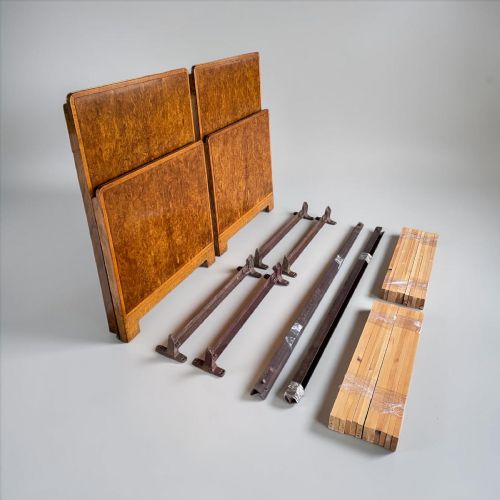
Wooden examples employ solid timbers and decorative veneers such as oak, fruitwood, mahogany, and burr walnut, shaped through traditional cabinetmaking techniques including carving, parquetry, and inlay. Painted and upholstered frames incorporate textile panels, hand-applied paint finishes, and intricate woodwork aligned with styles from Louis XVI to Art Deco and Arts and Crafts.
Several iron beds retain their original castors, ready to roll smoothly across bedroom floors just as they did in eighteen-ninety.
What varies in quality
Quality in these beds rests upon the integrity of the materials and the sophistication of the construction, whether in the weight of the cast iron and thickness of the brass plating or the selection of figured burr walnut and fruitwood veneers. Finer examples display meticulous hand-carving, original makers' labels, and harmonious proportions across matched pairs.
The standard of finish and retention of original components also distinguish the pieces, from crisp brass castings and intact porcelain castors to well-preserved painted and upholstered surfaces. Lesser examples may exhibit replacement hardware or diminished structural stability in the joints.
Heals·Oliver Morel·Hoskins and Sewell·R W Winfield·Betty Joel
The Vintage Twin Bedsteads Glossary
- Bedstead
- A framework of a bed consisting of headboard, footboard, and side rails designed to support a mattress and base. It distinguishes the physical frame from the bedding itself.
- Bergere
- A type of enclosed armchair or bed component featuring woven cane panels set into a wooden frame. It appears on lighter Edwardian and twentieth-century timber designs.
- Corbeille
- A French style of bed featuring an incurved or rounded headboard and footboard that wraps around the sleeper. This curved silhouette is typical of painted and upholstered continental frames.
- Parquetry
- A geometric mosaic of wood pieces used for decorative effect on furniture surfaces. Fruitwood and hardwood frames frequently employ this technique to create patterned panels.
- Nickel plated
- A thin protective and decorative coating of nickel applied over base metals such as iron or steel. This finish provides a bright silver appearance seen on Edwardian metal frames.
Vintage Twin Bedsteads: Frequently Asked Questions
Can vintage twin bedsteads be joined together?
Many metal and wooden pairs are designed with compatible dimensions or joining mechanisms that allow them to be secured together as a wider bed.
Buyers should examine the specific side rails and fixings of each pair to confirm whether they can be united safely.
What mattress sizes fit these antique beds?
These frames were manufactured before modern standard mattress sizing became universal, often accommodating narrow single or three-foot dimensions.
Measuring the internal space between the headboard, footboard, and side rails is essential before ordering a custom or standard mattress.
How do I care for wooden and metal frames?
Timber frames benefit from occasional application of quality wax to nourish the wood and protect veneers, avoiding excess moisture.
Metal components require gentle dusting and careful cleaning that preserves brass patination and nickel plating without abrasive compounds.
How are different periods identified?
Stylistic indicators such as Arts and Crafts simplicity, Victorian brass ornamentation, and Art Deco geometric lines point directly to distinct eras of manufacture.
Maker signatures, labels, and traditional construction methods further clarify the age and origin of individual pieces.