


Marquetry Walnut Bed
A marquetry walnut bed brings warmth and intricate timber patterning to a bedroom, combining rich burr figures with delicate floral inlay.
Marquetry Walnut Bed
A marquetry walnut bed provides a striking focal point for a bedroom, drawing the eye with detailed timber inlay work set into rich brown grain. When searching for a marquetry walnut bed, buyers encounter a range of continental and British examples spanning the nineteenth and early twentieth centuries.
The selection here leans heavily towards French and Italian designs, moving through Victorian, Edwardian, and Art Deco periods. Forms include double and king size bedsteads, often accompanied by matching marble top bedside cabinets or forming part of larger bedroom suites.
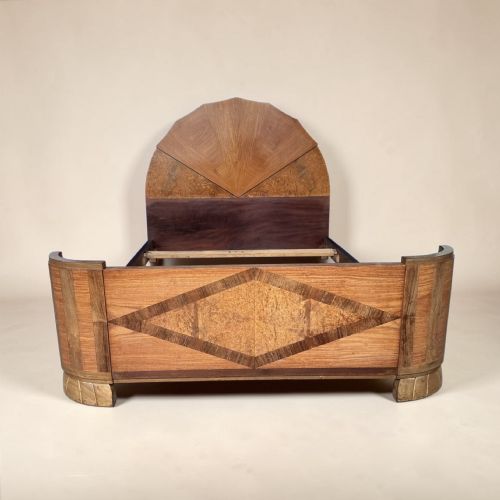
Continental pieces often showcase elaborate revival styles, including Louis XV and Louis XVI motifs, alongside clean geometric lines from the Art Deco era. The integration of floral marquetry and contrasting veneers defines the visual character of these larger bedroom pieces.
Assessing quality in marquetry walnut
The standard of a marquetry walnut bed rests on the precision of the inlay work and the depth of the timber figuring. Superior pieces display seamless joints in the veneer where complex floral motifs fit tightly without visible gaps or excessive filler.
The choice of walnut matters significantly, with burr and figured sections commanding attention for their rich texture and varied grain. Structural integrity in the main bedstead frame and the crispness of any cast ormolu mounts further separate standard production from exceptional craftsmanship.
Louis Majorelle
The Marquetry Walnut Bed Glossary
- Marquetry
- Decorative veneer work where small pieces of various timbers are assembled to form pictorial or geometric patterns on a surface. This technique requires considerable skill to ensure each piece fits snugly into the design.
- Burr walnut
- A prized timber harvested from a growth on the walnut tree, showing swirling, knotted grain patterns. It adds rich visual texture to panel surfaces.
- Ormolu
- Gilded bronze mounts applied to furniture for decorative effect, often cast with floral or scroll motifs. These metal additions enhance the formality of French revival pieces.
- Bedstead
- The complete structural framework of a bed, including headboard, footboard, and side rails. This term distinguishes the decorative structure from modern mattress systems.
- Louis XVI Revival
- A nineteenth-century design style referencing the neoclassical taste of the French court, featuring straighter lines and symmetrical floral patterns.
Marquetry Walnut Bed: Frequently Asked Questions
How do I fit a modern mattress?
Many older bedframes use wooden slats or custom supports that can accommodate standard contemporary mattress sizes with minor adjustments. It is sensible to check the internal dimensions of the rails before purchasing.
Custom spacing or hidden modern wooden slats can be added discreetly to ensure proper support without altering the visible antique frame.
How should I clean the wood?
Dust the marquetry and walnut surfaces regularly with a soft, dry cloth to prevent dirt accumulation in the fine veneer joints. Avoid using harsh chemical sprays or silicone polishes.
Applying a traditional beeswax occasionally helps nourish the walnut grain and maintains a gentle, protective sheen across the polished timber.
Are these beds easy to assemble?
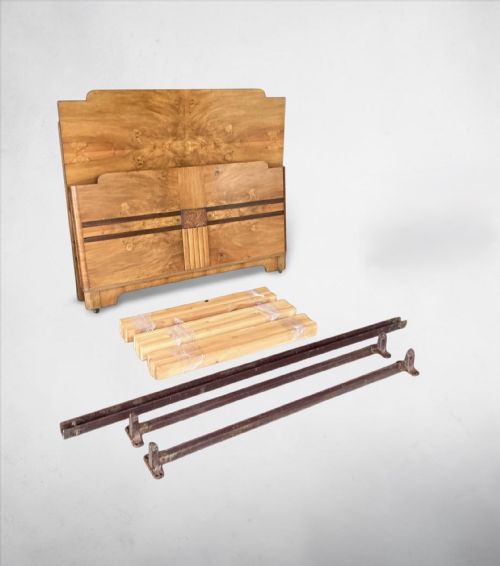
Most antique bedsteads use traditional metal bed bolt connections or slot-in side rails that allow the structure to dismantle into manageable components. Assembly generally requires basic spanners and two people to handle the heavy head and footboards.
Care must be taken when tightening joints to ensure the walnut and veneer surfaces remain undamaged during the process.
How do I date these beds?
Dating relies on examining the timber construction methods, the style of the marquetry, and any surviving hardware such as bolts or castors. Victorian and Edwardian pieces often show different joinery techniques compared to earlier French revival examples.
Comparing the decorative motifs against known stylistic periods like Art Deco or Louis XV revival helps narrow down the decade of manufacture.