




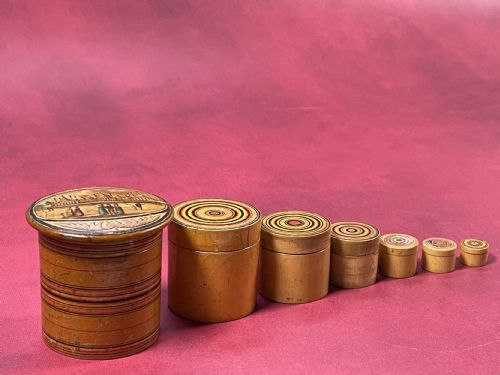

Vintage Turned Wood Pot
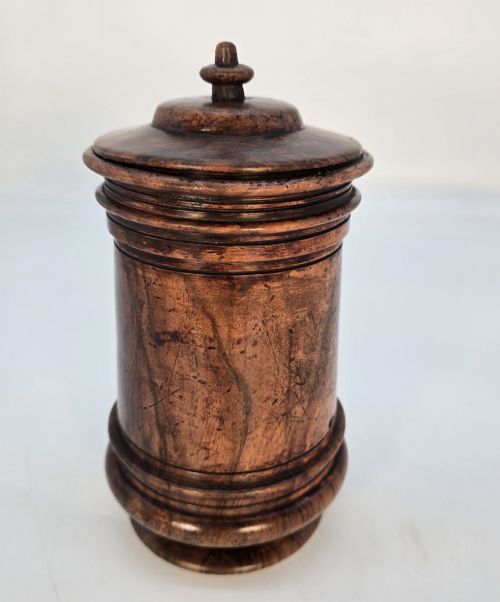
These vintage turned wood pot examples are domestic containers shaped on a lathe, prized by collectors for their tactile grain and utility.
Vintage Turned Wood Pot
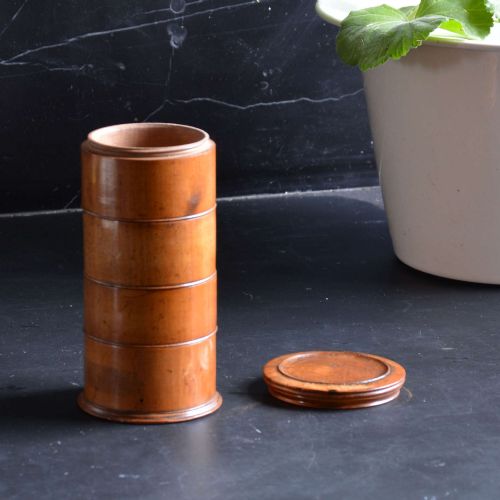
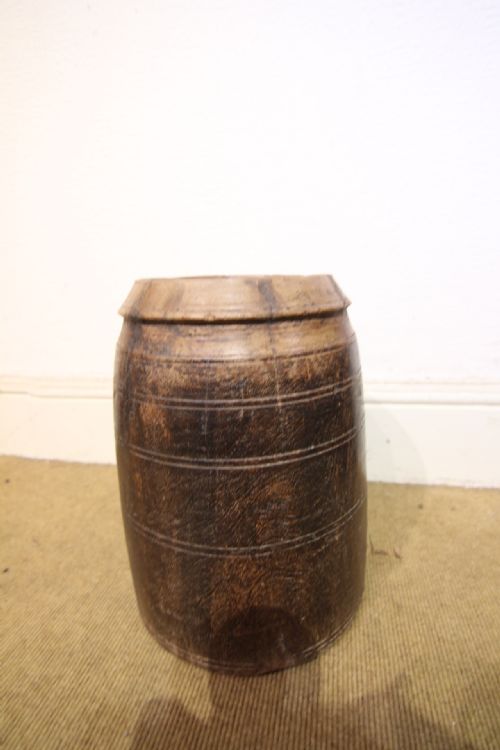
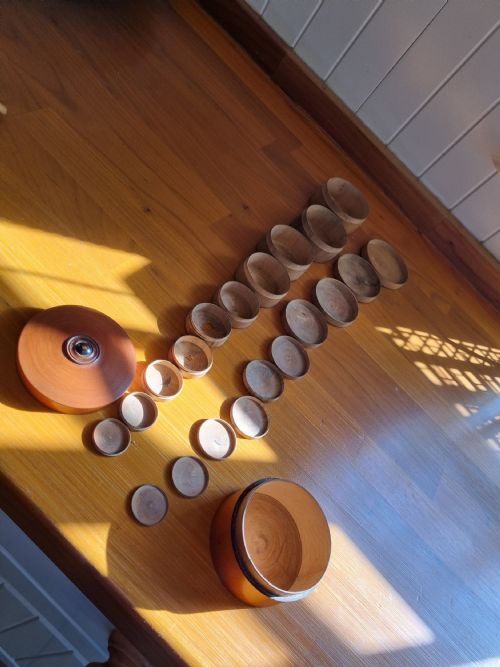
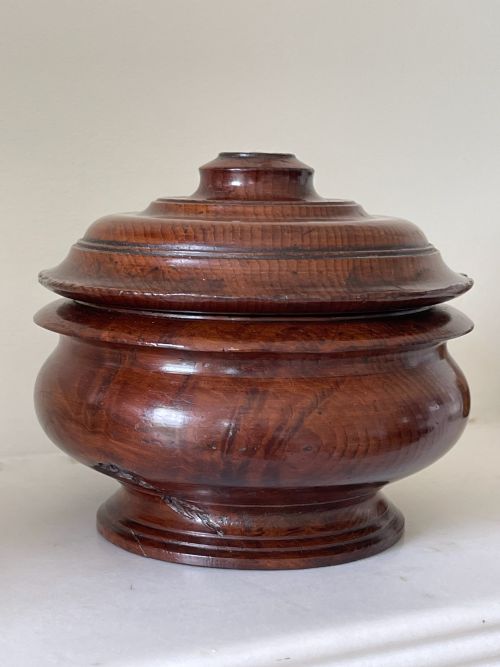
A vintage turned wood pot encompasses small domestic containers and vessels shaped on a lathe during the Georgian, Victorian, and nineteenth-century periods. Buyers searching this phrase encounter turned objects ranging from treen tobacco jars and spice towers to layered boxwood containers holding smaller pots.
The material selection spans traditional timbers such as boxwood, walnut, sycamore, and yew, occasionally paired with painted finishes or souvenir whitewood decorations. These functional vessels served various domestic purposes before becoming decorative cabinet pieces.
How they were made
The construction relies on lathe turning, a technique where timber is rotated against cutting tools to shape symmetrical vessels and fitted covers. Artisans utilised dense hardwoods like boxwood, walnut, and yew, which held fine details and intricate threads.
Makers fashioned multi-part items, such as spice towers and nesting containers, by hollowing solid blocks of wood with precise tolerances. Individual components were turned separately to ensure snug fits between jars, covers, and bases.
What varies in quality
Quality separates simple utility wares from intricate multi-part containers through the crispness of the turning and the complexity of the design. Multi-tiered spice towers and nested sets require superior joinery and stable timber selection to maintain alignment.
The preservation of the original surface patination and timber grain heavily influences the desirability of a piece. Fine execution is visible in the proportional balance of the lid, body, and base.
The Vintage Turned Wood Pot Glossary
- Treen
- Small handmade wooden domestic objects. These utilitarian items include turned vessels, containers, and kitchenwares.
- Boxwood
- A dense, pale hardwood suited to fine lathe work. Artisans utilised this material for intricate turned treen and small containers.
- Sycamore
- A light-coloured hardwood used for turned vessels and jars. This timber provides a smooth surface for detailed shaping.
- Tunbridge Ware
- Small decorative wooden objects decorated with mosaic marquetry. These souvenirs feature intricate geometric patterns built from tinted woods.
Vintage Turned Wood Pot: Frequently Asked Questions
What were turned wood pots used for?
These turned wooden containers served practical storage roles in domestic interiors. They held domestic commodities such as tobacco, spices, and small dry goods.
Over time, many of these utilitarian vessels transitioned from functional pantry items to decorative display pieces collected for their craftsmanship.
How do I date an old turned wood pot?
Dating relies on identifying the timber species, tool marks, and design characteristics associated with specific eras. Nineteenth-century pieces often display distinct lathe turning patterns and specific regional timber choices.
Comparing the form and construction methods to documented examples from Georgian and Victorian periods helps establish an approximate timeframe.
How do I clean wooden pots?
Maintenance requires gentle dusting with a dry, soft cloth to protect the historic surface. Avoid using water, detergents, or modern polishes that can damage the timber.
Applying a traditional microcrystalline wax occasionally helps preserve the dry patination and natural grain of the wood without leaving a sticky residue.
Are these pots made from one piece of wood?
Construction methods vary depending on the specific form of the vessel. Simple jars and vases are turned from a single block of timber, while multi-tiered spice towers comprise separate stacked sections.
Many examples include fitted lids turned independently to match the body of the container precisely.