




Turned Wooden Pot
These turned wooden pot examples are honest vessels shaped at the lathe, offering tactile warmth and domestic history for any room.
Turned Wooden Pot
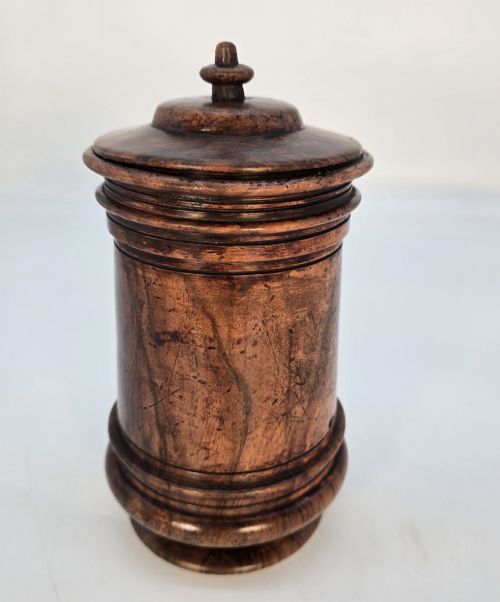
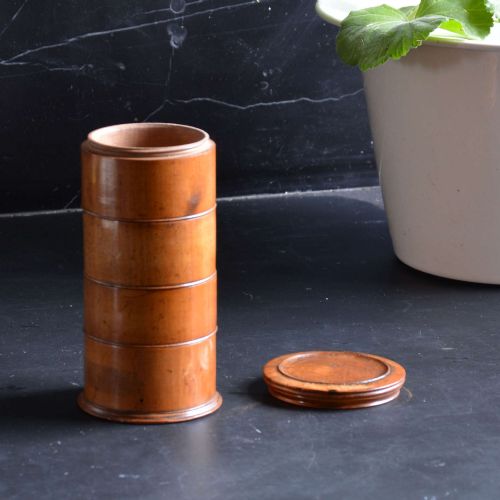
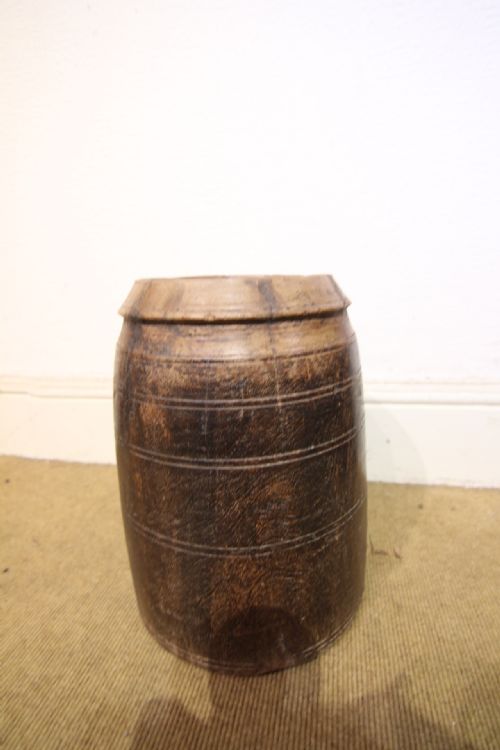
A turned wooden pot is a vessel shaped on a lathe, drawing from domestic treen and utility objects of past centuries. When searching this phrase, collectors encounter small lidded jars, spice towers, and stacking containers alongside larger utilitarian vessels.
The pieces span several periods from the eighteenth century through the early twentieth century, reflecting varied regional joinery and turning traditions. Oak, walnut, boxwood, and sycamore appear frequently in these forms.
Many items serve specific historical domestic functions, such as tobacco storage, spice preservation, or the holding of small personal effects. Others survive simply as decorative treen or utilitarian vessels carved from dense timber.
How They Were Made
Turners worked green or seasoned timber on a foot-powered or pole lathe to achieve symmetrical hollow forms and tight-fitting lids. Dense hardwoods like boxwood, walnut, and fruitwood allowed for thin walls and precise threaded or friction-fit joints.
Makers utilised local woods available to their workshops, selecting figured grains for decorative effect or plain timbers for everyday utility. Surface finishes typically rely on natural waxes, oils, or friction polishes applied while spinning on the lathe.
What Varies in Quality
The standard of a turning rests upon the balance of the profile and the crispness of any applied mouldings or lid seating. Superior examples show confident tool work without excessive sanding, maintaining sharp transition lines and well-proportioned walls.
Selection of the timber dictates much of the character, with tight, unblemished grain patterns commanding greater visual interest. The survival of original patination and matching covers without shrinkage splits or warping elevates the standing of an individual piece.
The Turned Wooden Pot Glossary
- Treen
- Small wooden domestic objects made by turning or carving. This category encompasses domestic items from spoons to lidded jars.
- Pounce pot
- A small container with a perforated lid used for sprinkling gum sandarac powder onto parchment. This prepared rough paper surfaces for ink writing.
- Spice tower
- A tiered wooden vessel consisting of several interlocking sections designed to hold various culinary spices. Each compartment nests into the one below.
- Tunbridge Ware
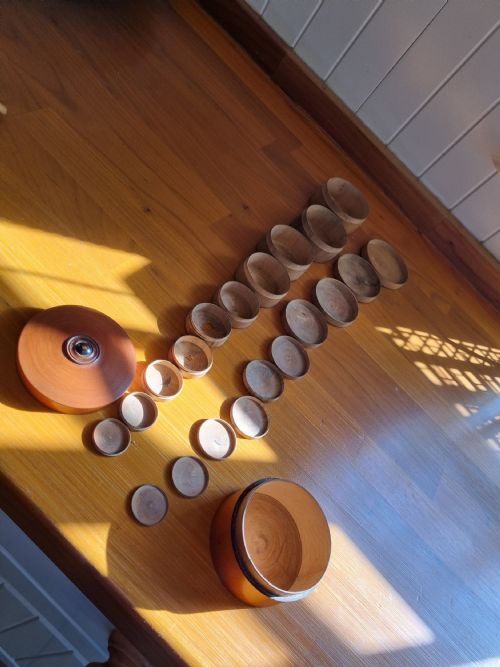
- Small wooden objects decorated with intricate mosaic patterns made from tiny segments of different coloured woods. These souvenir pieces often took the form of stacking pots.
Turned Wooden Pot: Frequently Asked Questions
What were turned wooden pots used for?
These vessels held domestic goods such as tobacco, spices, and pounce powder in homes of the eighteenth and nineteenth centuries.
Smaller lidded containers served on writing desks or dining tables to keep dry substances protected from moisture.
How do I date a turned wooden pot?
Dating relies upon timber selection, tool marks left on the interior, and the specific profile of the turning. Eighteenth-century examples often employ dense native hardwoods with hand-finished tool ridges inside.
Later nineteenth-century pieces may display more standardised lathe work and different finishing techniques suited to mass production.
Are these pots made from solid wood?
Makers turned these vessels from solid blocks of timber rather than constructing them from laminated or bent sheets. This solid construction accounts for their weight and tactile presence.
Common timbers include walnut, boxwood, sycamore, and various fruitwoods chosen for stability on the lathe.
How should I care for antique turned wood?
Keep wooden vessels away from direct heat sources and drastic humidity changes to prevent the timber from splitting or warping. Natural beeswax applied sparingly helps maintain the surface sheen.
Avoid using liquid cleaners or water on historic wood surfaces, relying instead on a soft, dry cloth for dusting.