


Victorian Treen Box
These pieces of victorian treen box handle daily domestic rituals with carved timber warmth and practical utility.
Victorian Treen Box
A victorian treen box serves various small household purposes, frequently taking the form of a snuff container, spice tower, string dispenser, or sewing accessory. When searching this phrase, a buyer encounters domestic wooden objects spanning the nineteenth century, including Georgian and Edwardian examples.
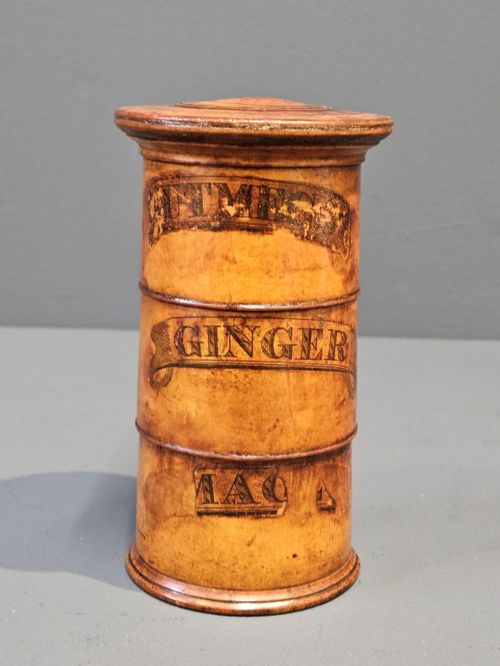
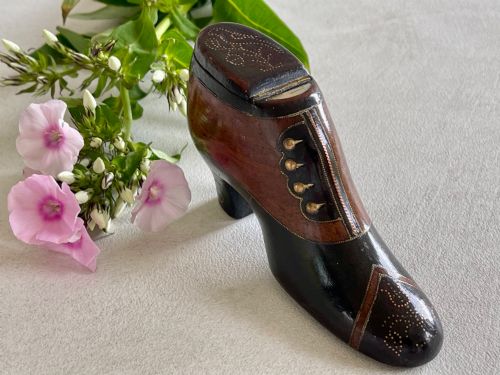
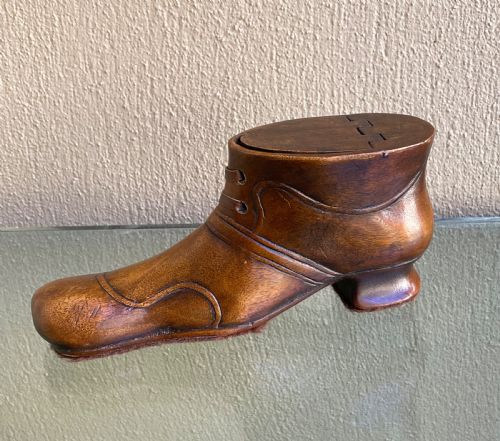
The most common formats on this page include pocket snuff boxes shaped like shoes, multi-tiered spice towers, and turned string barrels. These items reflect everyday usage in domestic spaces rather than formal display.
Makers produced these containers in diverse regional styles, encompassing Welsh folk art, Scottish pieces, and Tunbridge Ware. Each object relies on vernacular woodworking traditions rather than strict factory standardisation.
Materials and construction
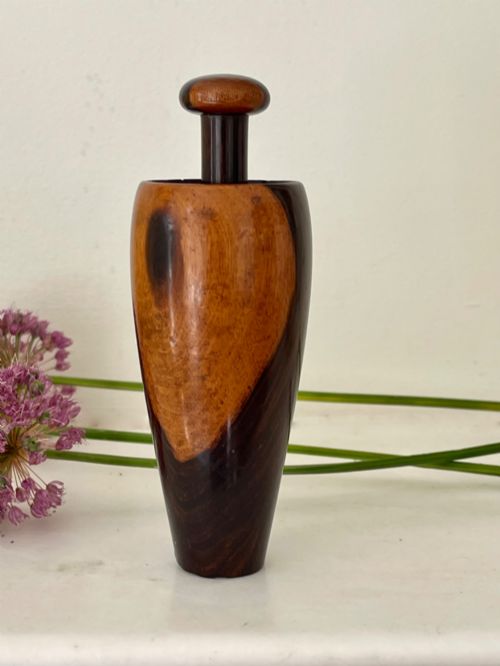
Craftsmen shaped these items primarily from dense hardwoods and fruitwoods such as boxwood, sycamore, mahogany, fruitwood, and lignum vitae, utilising lathes for turning and hand tools for carving. Dense timbers allowed for crisp turnery and precise threaded lids on spice towers and string holders.
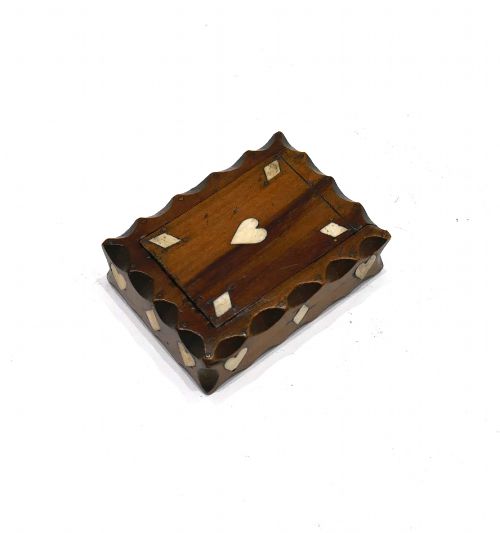
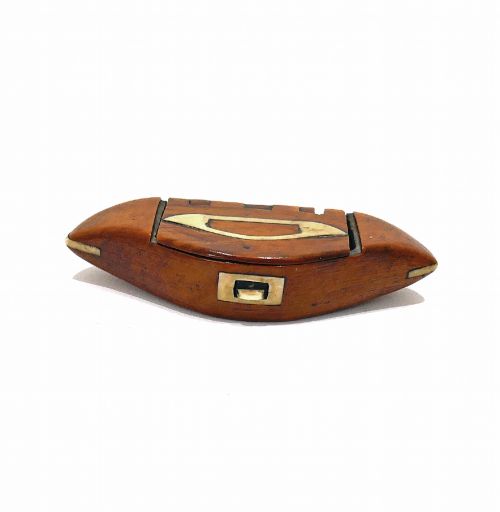
Many containers incorporate decorative techniques including bone inlay, chip carving, pen work, and tortoiseshell veneers. Artisans also employed coopering methods for tobacco stands and barrels, alongside intricate multi-tiered construction for spice containers.
The listings show diverse wooden forms spanning the Georgian, Victorian, and Edwardian periods, including fruitwood, mahogany, boxwood, and lignum vitae.
Qualities of distinction
Quality rests upon the crispness of the turning, the complexity of the form, and the preservation of the original surface patina. Novelty shapes, such as shoes, hands, and wine bottles, demonstrate greater sculptural ambition than simple circular containers.
The integration of decorative elements like bone hearts, geometric diamond inlays, or detailed chip carving separates standard utility items from more accomplished folk art pieces. The integrity of threaded lids and interlocking tiers also indicates superior workshop execution.
The Victorian Treen Box Glossary
- Treen
- Small handmade wooden household objects. The term derives from the old English word for tree.
- Snuff box
- A small pocket container designed to hold powdered tobacco. These often feature sliding lids, hinged compartments, or novelty shoe and book forms.
- Spice tower
- A multi-tiered cylindrical container used for storing culinary spices. Individual sections stack securely upon a central spindle or screw together.
- Lignum vitae
- An extremely dense and heavy tropical hardwood used for string holders and mortars. Its weight suited utilitarian objects that needed to stay stable during use.
- Tunbridge Ware
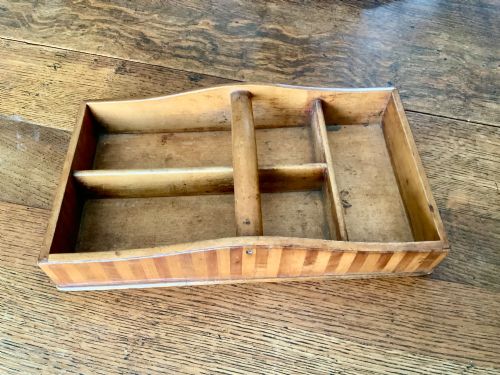
- Woodworking characterised by mosaic patterns made from tiny wood prisms. These items display intricate geometric or pictorial designs on boxes and baskets.
Victorian Treen Box: Frequently Asked Questions
What were treen boxes used for?
These small wooden objects held household commodities like snuff, spices, nutmeg, string, and pills. They served practical daily functions in kitchens, sitting rooms, and apothecary settings.
Over time, many transitioned from utilitarian workshop tools to collectable display items appreciated for their vernacular craftsmanship and tactile qualities.
How do I date a wooden box?
Dating relies on material selection, construction marks, and stylistic indicators such as chip carving or bone inlay. Nineteenth-century pieces often display hand-turned tool marks and regionally specific folk art motifs.
Comparative analysis with documented examples helps narrow down the period, ranging from Georgian precursors to Edwardian novelties.
How do I care for antique treen?
Maintain stable indoor humidity levels and keep wooden containers away from direct heat sources and strong sunlight. Sudden environmental changes can cause timber to split or warp.
Occasional light waxing with appropriate formulations preserves the historical patina without altering the natural surface texture of the wood.
What is the difference between utility and novelty treen?
Utility treen focuses strictly on domestic function, such as plain string barrels and mortar sets. Novelty treen incorporates playful sculptural forms, including shoes, hands, and fruit shapes.
Both categories utilise traditional turning and carving methods, but novelty pieces often showcase the maker's artistic whimsy alongside practical storage.