




Brown Treen Container
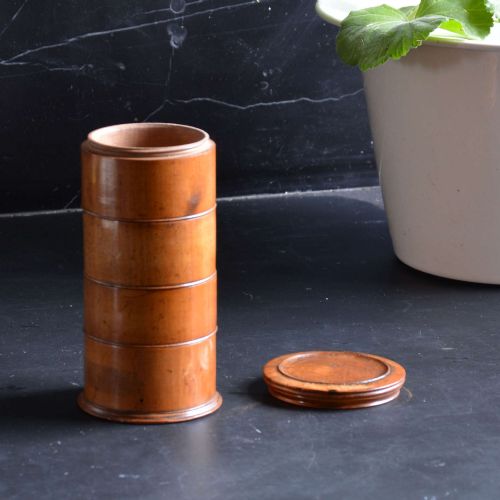
A brown treen container offers tactile history in turned and carved timber, satisfying the desire for functional domestic antiques.
Brown Treen Container
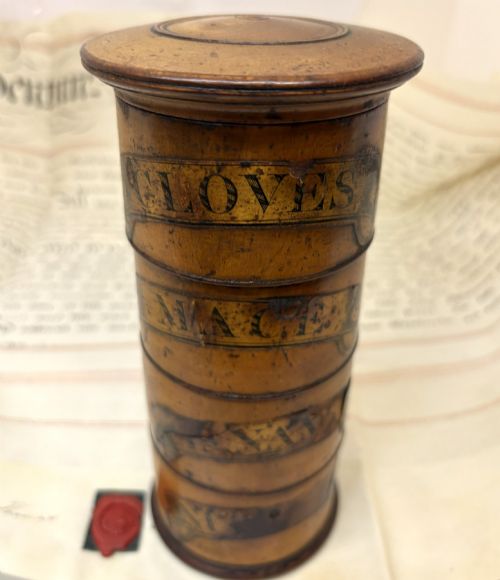
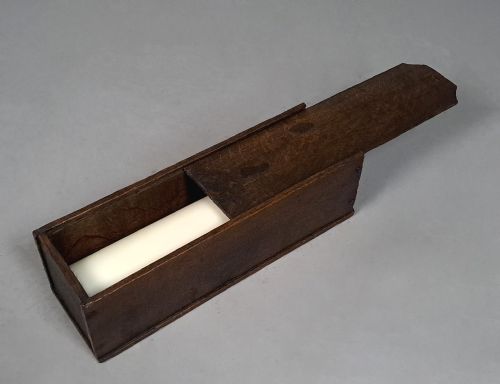
A brown treen container encompasses wooden domestic objects ranging from spice towers and snuff boxes to candle boxes and jars. These small utilitarian items served daily household needs across the eighteenth, nineteenth, and early twentieth centuries.
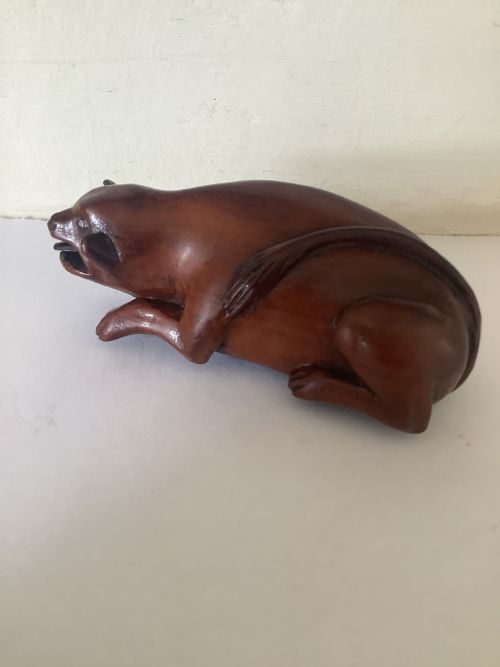
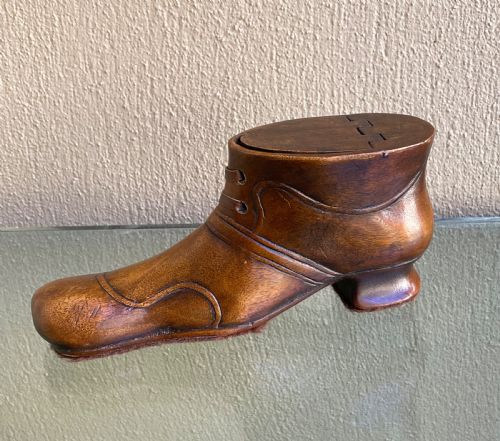
The selections on this page draw from Georgian and Victorian eras, demonstrating vernacular craftsmanship and folk art traditions. Buyers encounter everything from multi-tiered spice towers to carved wooden shoes and barrels.
Most examples display the warm patination accumulated through decades of handling and use in domestic settings. Their practical origins contrast with their later appeal as decorative cabinet pieces.
How they were made
Maker-carpenters and turners utilised native and exotic timbers such as boxwood, oak, yew wood, fruitwood, and mahogany on the lathe or with hand chisels. Turning created precise circular profiles for jars and spice towers, while carving shaped figurative snuff boxes like hands and shoes.
Surface finishing relied on friction polishing, wax, and natural oils applied to dense hardwoods, which developed rich patinas over time. Inlaid decoration and multi-component construction required careful joinery to fit stacked tiers and sliding lids.
What varies in quality
Quality rests upon the crispness of the turning, the ambition of the form, and the retention of original surface patination. Sculptural novelty pieces that demand precise hand-carving occupy a different tier from straightforward utility boxes.
Completeness alters desirability, particularly for multi-part items like spice towers with nested containers or tinder boxes retaining their original fittings. Timber selection also plays a role, with dense fruitwoods and figured specimens commanding attention.
The Brown Treen Container Glossary
- Treen
- Small handmade wooden objects for the home. The word derives from the old term for tree.
- Spice tower
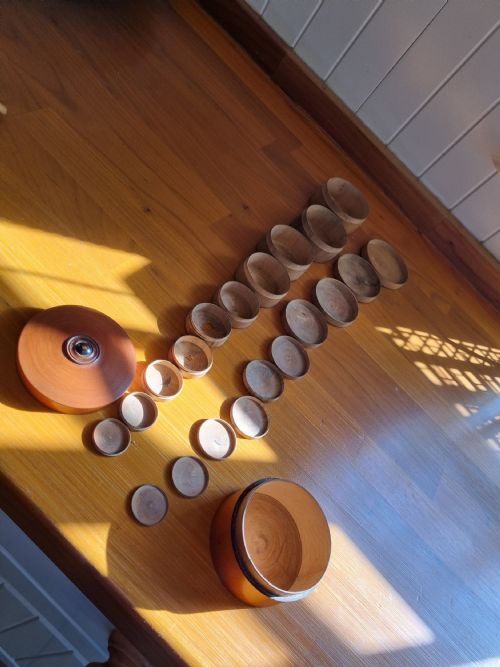
- A stacked multi-tiered container used for storing culinary spices. Individual sections thread or fit together closely.
- Snuff box
- A small pocket or table container designed to hold powdered tobacco. Examples often feature sliding lids or carved figural shapes.
- Patina
- The surface sheen and colour developed by wood through age and handling. Good patination shows depth and warmth.
- Vernacular treen
- Everyday wooden items made by local artisans without grand stylistic pretension. These pieces reflect regional traditions and practical utility.
Brown Treen Container: Frequently Asked Questions
How old are these wooden containers?
The pieces listed span from the early eighteenth century through the Georgian and Victorian periods up to the Edwardian era. Earlier examples often show the marks of hand-tooling and deep patination.
Nineteenth-century pieces frequently display greater variety in form, including novelty shapes and multi-tiered spice towers.
What woods were used for treen?
Turners and carvers utilised whatever dense timbers were available, including native fruitwoods, oak, boxwood, sycamore, and yew wood. Some decorative pieces incorporate exotic specimen woods like amboyna.
Hardwoods were chosen because they held fine turned details and resisted splitting during daily use.
How do I care for antique treen?
Antique wooden containers require stable indoor humidity away from direct heat sources and strong sunlight. Sudden temperature changes can cause timber to split or warp.
An occasional application of microcrystalline wax helps protect the surface without building up sticky residue or altering the patina.
Were these boxes meant for kitchen use?
Many brown treen containers had distinct domestic functions, ranging from saltboxes and butter tubs to candle boxes mounted on walls. Others, such as snuff boxes and spice towers, belonged in the parlour or dining room.
Their specific forms directly reflect the daily domestic routines of past centuries.