





Antique Spice Jar
An antique spice jar brings tactile warmth to a room, offering turned wooden towers and solid silver vessels crafted to store dried flavourings.
Antique Spice Jar
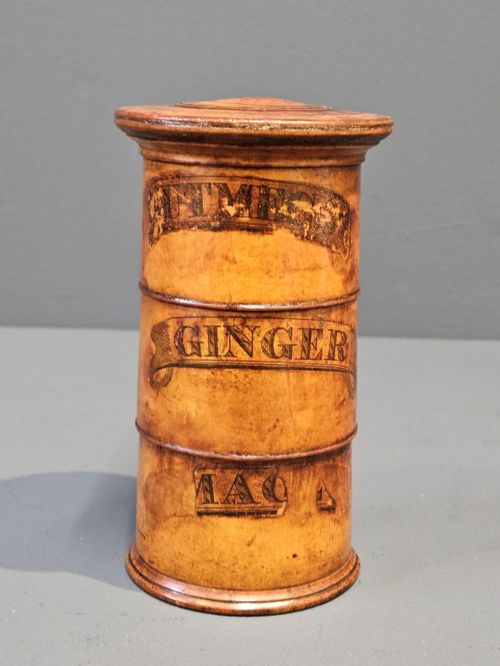
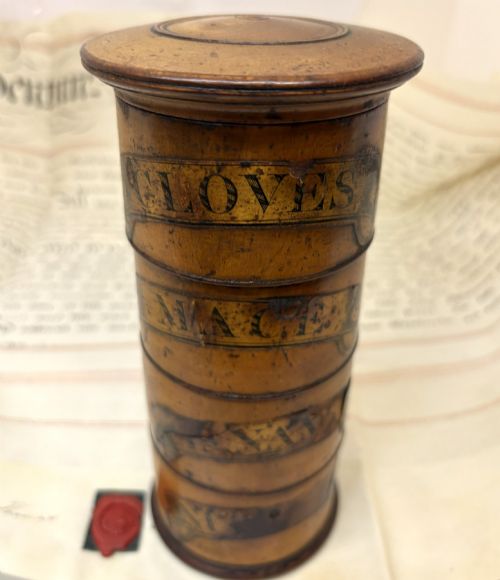
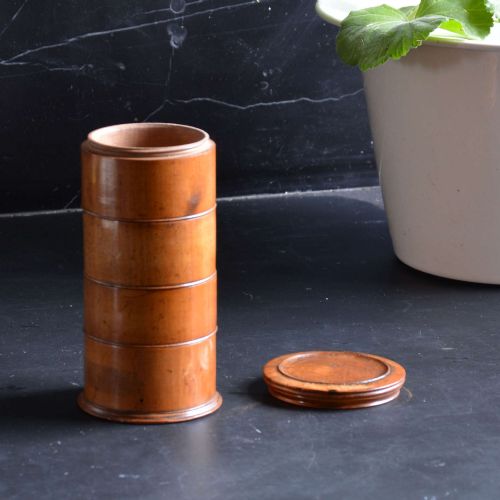
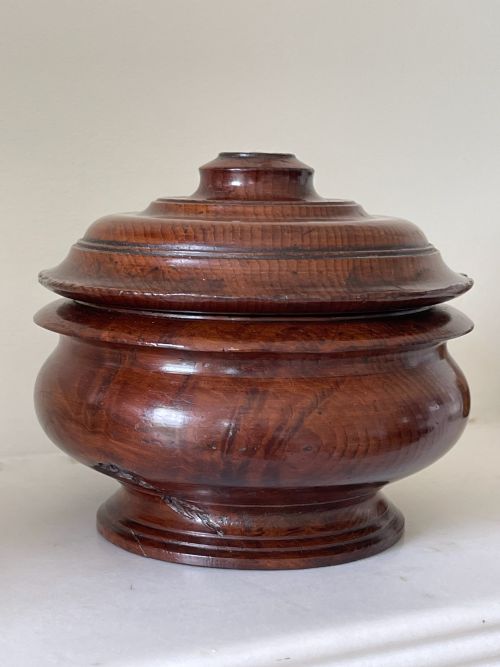
When you search for an antique spice jar, you encounter a specialised form of treen and metalwork spanning the Georgian, Victorian, and Edwardian eras. These containers range from multi-tiered wooden towers designed to hold various powders to single lidded pots fashioned for domestic kitchens.
The versions most commonly met on this page are turned wooden spice towers in boxwood, fruitwood, and sycamore, alongside occasional silver and bronze examples. Domestic treen containers and kitchen collectables dominate the selection, reflecting nineteenth-century kitchen storage traditions.
Materials and construction
Turned wood forms the backbone of these pieces, utilising dense timbers like boxwood, fruitwood, laburnum, and sycamore shaped on a lathe into multi-compartment vessels. Makers also employed solid silver, bronze, and cut glass for more formal dining and pantry containers.
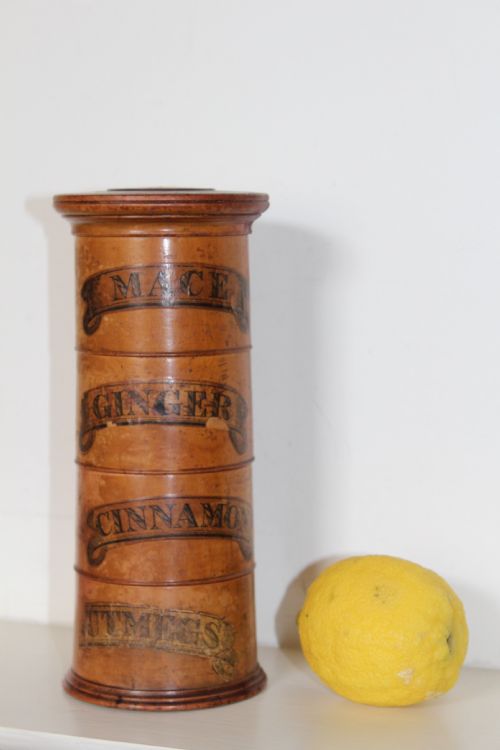
Surface finish relies on natural grain and simple turning marks rather than heavy decoration, though some regional pieces display embossed metalwork or paper labels denoting specific contents.
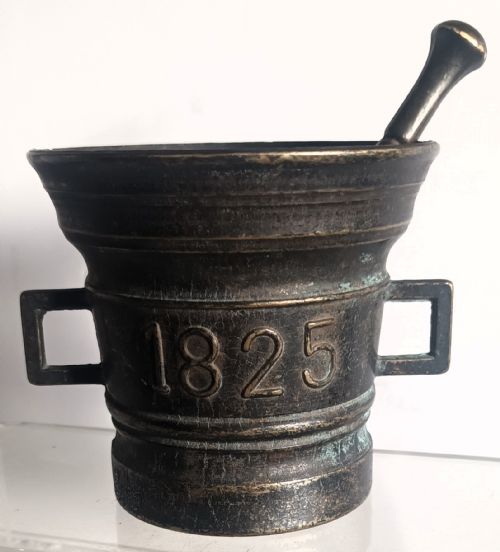
Listings feature turned wood pieces from the Georgian and Victorian eras, alongside silver containers and nineteenth-century bronze mortars.
Assessing quality and character
Quality in these containers rests on the precision of the turning and how well the stacked tiers fit together without warping or excessive play. A superior piece shows crisp definition in the turned rings and a warm, handling patina across the timber.
Weight and balance distinguish sturdy utility items from purely decorative later versions, while the choice of timber - such as figured laburnum or dense boxwood - dictates the desirability of the object.
The Antique Spice Jar Glossary
- Treen
- Small handmade wooden domestic objects and utensils. This term covers everything from small kitchen containers to turned vases.
- Spice tower
- A multi-tiered vessel with stacked compartments that unscrew or lift apart to hold different flavourings. These often feature threaded joints between sections.
- Mortar and pestle
- A heavy bowl and club-shaped tool used for grinding dry ingredients or seeds. Bronze and stone versions appear frequently in early kitchen collections.
- Pomander
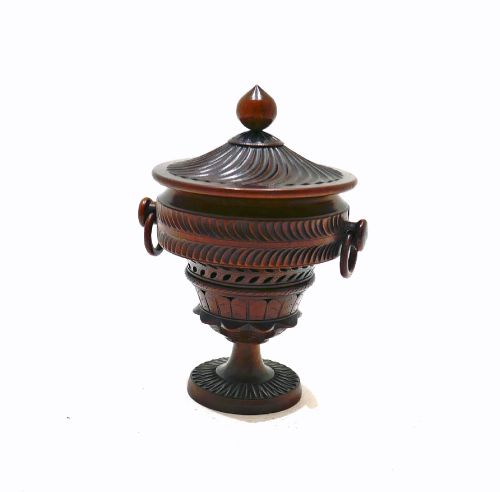
- A small container or perforated ball held to diffuse scent or store aromatics. Early examples sometimes share turning characteristics with treen spice containers.
- Sycamore
- A light-coloured hardwood frequently utilised by turners for domestic vessels. It takes a smooth finish and develops a deep tone through handling.
Antique Spice Jar: Frequently Asked Questions
What were antique spice jars used for?
These containers stored valuable dried flavourings, seeds, and aromatics in domestic kitchens and dining rooms before the era of mass packaging. Multi-tiered versions kept several distinct powders separated within a single vertical footprint.
Smaller lidded pots held specific kitchen stores or table seasonings, protecting delicate aromas from dampness and loss.
How do I date a wooden spice tower?
Dating relies heavily on timber selection, turning style, and the method used to join stacked tiers together. Georgian and early nineteenth-century pieces often display tighter, more precise lathe work in dense fruitwoods and boxwood.
Later Victorian and Edwardian examples may show broader turning profiles or incorporate alternative materials like silver plating and paper labels alongside traditional woods.
Are these containers still safe for food?
While historic wooden vessels can physically hold dry spices, porous antique timbers absorb oils and aromas over centuries of use. Most collectors treat them as decorative display items or historical treen rather than active pantry storage.
Silver and glass variants require simple washing, but wooden tiers should be kept dry to prevent splitting or movement in the historic grain.
How do I clean antique turned wood?
Cleaning should remain minimal, relying on a dry brush or a soft cloth to remove dust from turned grooves and tight joints. Moisture raises the grain and can damage old dry surfaces or loosen fitted sections.
A light application of microcrystalline wax helps protect the surface if the timber appears dry, but original handling patina should be preserved.