





Turned Wood Container
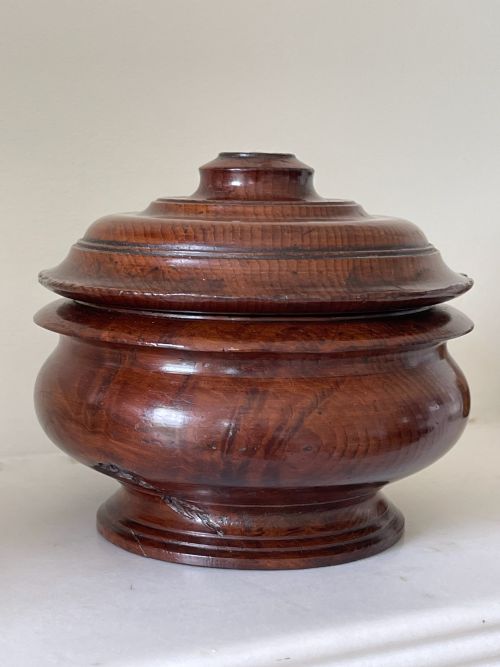
These turned wood containers are practical treen vessels shaped at the lathe, offering both tactile warmth and domestic history for any collector.
Turned Wood Container
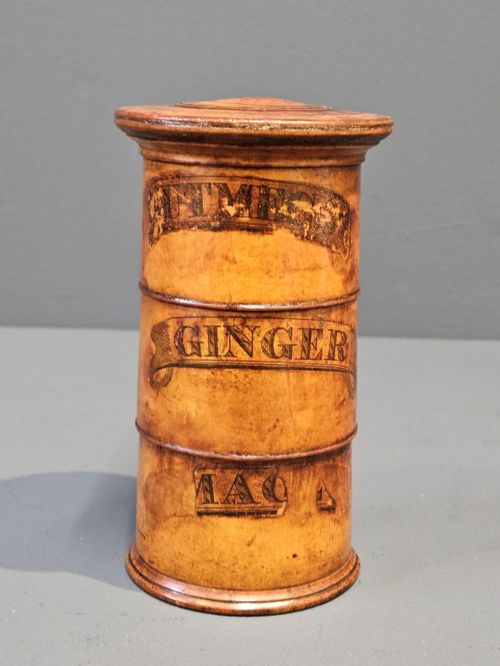
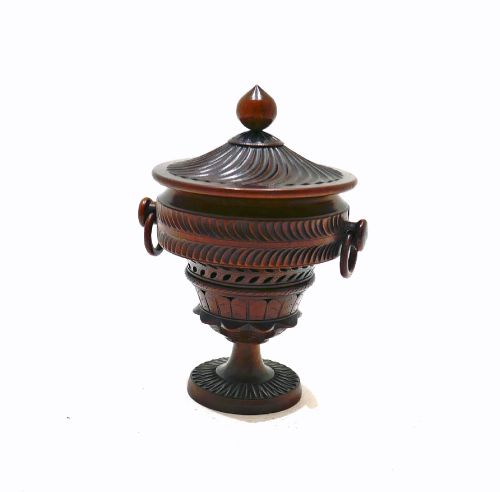
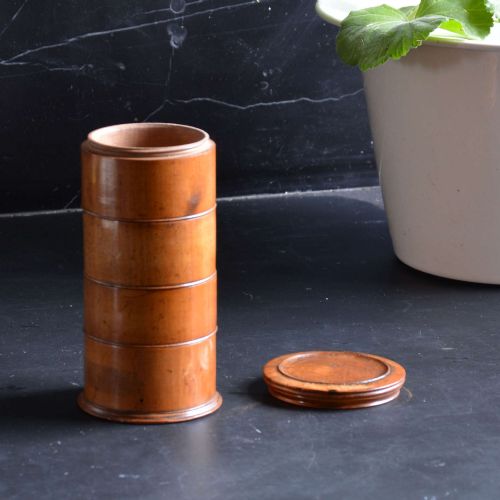
A turned wood container spans various functional forms shaped by the lathe, including spice towers, string holders, jars, lidded cups, and barrels. These objects served utilitarian domestic roles in Georgian, Victorian, and Edwardian households, functioning as receptacles for spices, thread, or personal items.
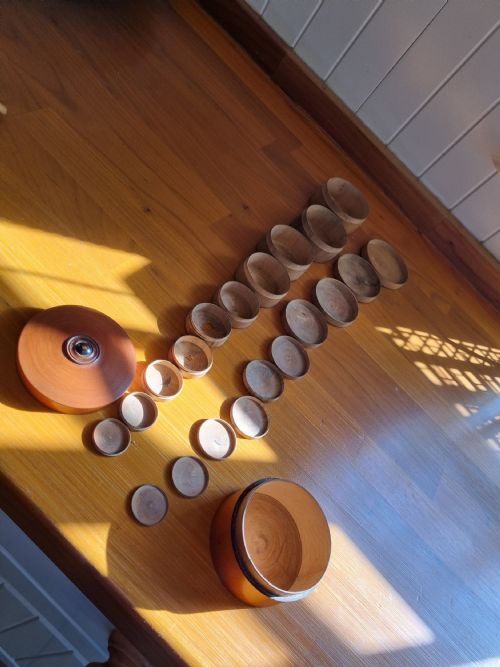
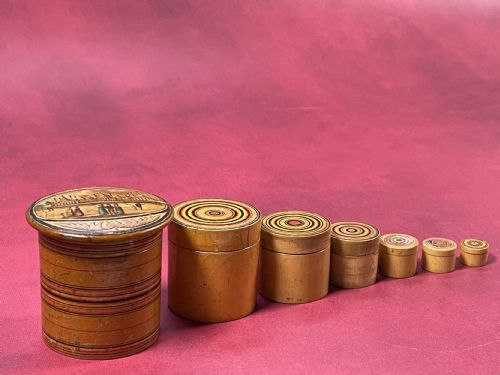
Makers produced these containers for everyday utility or as decorative treen, sometimes incorporating multiple smaller vessels inside a single larger housing. Their survival demonstrates the enduring appeal of turned treen in English country and folk art traditions.
Materials and construction
Craftsmen utilised a range of dense hardwoods selected for their stability and fine grain on the lathe, principally fruitwood, boxwood, yew wood, sycamore, mahogany, and lignum vitae. These timbers allowed turners to achieve precise friction-fit lids, multi-tiered stacking sections, and thin-walled vessels without splitting.
Production relied on traditional woodturning techniques, shaping blocks of timber on a lathe to create symmetrical hollow forms, jars, and cylindrical barrels. Some pieces integrated primitive carved elements or paper labels alongside the turned body, while others featured inlaid decoration or whitewood construction.
Materials recorded across the available pieces include boxwood, fruitwood, yew wood, sycamore, mahogany, and lignum vitae.
Quality and distinction
The quality of a turned wood container rests upon the crispness of the lathe work, the proportion of the vessel, and the preservation of the original surface patina. Pieces that retain their matched covers, tight-fitting tiers, and clean tool marks demonstrate superior craftsmanship.
Complexity of form distinguishes ordinary utilitarian items from finer examples, such as multi-tiered spice towers holding nested containers or well-figured yew and boxwood grains. The choice of dense timbers like lignum vitae or boxwood often indicates a higher grade of manufacture intended for domestic display or refined storage.
The Turned Wood Container Glossary
- Treen
- Small handmade wooden objects of domestic use. This broad category encompasses everything from kitchen collectables to decorative boxes and spice towers.
- Spice Tower
- A multi-tiered turned wooden container designed with stacking compartments. These vessels held various culinary spices in the kitchen.
- String Holder
- A hollow turned container designed to dispense twine or string. They frequently feature a central aperture for the cord.
- Pomander
- A lidded container used to hold aromatic substances or perfumes. In treen, these took the form of turned cups and covers.
- Lignum Vitae
- An exceptionally dense and heavy hardwood utilised for durable turned objects. It yields a smooth dark finish with distinct grain patterns.
Turned Wood Container: Frequently Asked Questions
What were turned wood containers used for?
These vessels served various domestic purposes in historical households, holding dry spices, string, snuff, or small personal items. Their shapes often reflected their specific function, such as tall multi-tiered towers for spices or spherical containers for twine.
Over time, many utilitarian objects transitioned into decorative collector pieces. Their sturdy construction allowed them to survive centuries of household handling.
How do I date a turned wood container?
Dating relies on timber selection, tool marks, form, and stylistic indicators associated with Georgian, Victorian, or Edwardian periods. Early nineteenth-century pieces often display hand-turned characteristics and specific fruitwood or boxwood usage.
Comparing the object to documented examples of treen and spice towers helps narrow down the decade of manufacture. Paper labels and specific regional styles also offer clues to an item's age.
What is treen?
Treen refers to small, functional wooden items made for the home, spanning kitchenware, boxes, and decorative containers. These objects were fashioned by woodturners and folk artisans using local timbers.
Collecting treen focuses on the utility, tactile quality, and age of each piece. Turned containers form a prominent part of this broader category.
How should I care for antique wood containers?
Antique wooden vessels require stable environmental conditions away from direct sunlight and excessive humidity to prevent timber movement. Maintaining consistent indoor temperatures protects the natural patina and prevents the wood from drying out.
Gentle dusting with a dry cloth is sufficient for maintenance. Avoid applying modern polishes or water directly to the historic surface.