







Vintage Turkmen Flatweave
These vintage turkmen flatweave textiles bring rich tribal geometry and nomadic history straight to your floor.
Vintage Turkmen Flatweave
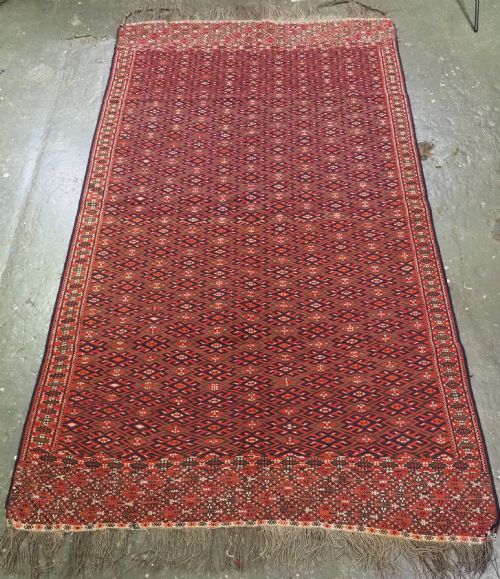
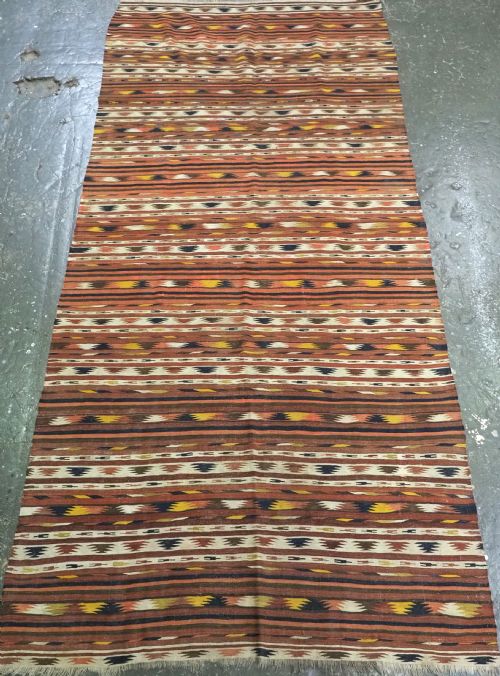
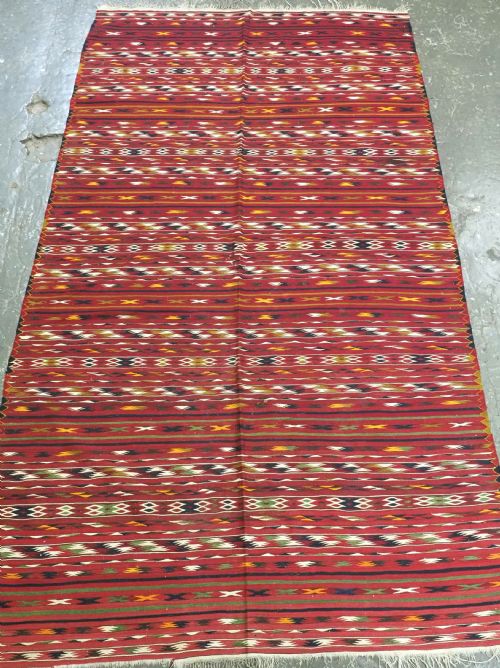
When you search for vintage turkmen flatweave, you are looking at tribal textiles and rugs produced across Central Asia by nomadic groups including the Tekke and Yomut tribes. The pieces available here encompass various forms, from kilim rugs and palas soumak weaves to functional storage bags like chuvals and mafrashes, alongside long tent bands.
The objects date from the mid-nineteenth century through to the early twentieth century, capturing a period of traditional nomadic craft before commercial dyes fully altered production. These woven works served practical domestic and architectural purposes within the yurt, functioning as floor coverings, wall hangings, and structural bands.
Among these items, kiln-woven kilims, banded dali designs, and soumak weaves appear most frequently alongside complete or fragmentary storage faces. Each piece reflects the specific tribal identity and weaving vocabulary of its maker through distinct geometric arrangements.
How they were made
These textiles rely on wool foundations and surfaces, frequently combined with cotton elements and coloured using natural dyes. The makers employed flatweave techniques such as kilim and soumak structures, which build patterns through the interlocking or wrapping of weft threads without creating a piled surface.
Weavers produced structures ranging from standard rug formats to exceptionally fine weaves and fifty-foot tent bands intended for securing yurt architecture. Many examples retain long kilim ends or original fabric backs, demonstrating the complete construction methods of nineteenth and early twentieth-century Central Asian workshops.
Vintage Turkmen Flatweave Retail Price Guide 2026
Typical asking prices for vintage turkmen flatweave among the pieces listed under this phrase on Sellingantiques today, from the lower quarter to the upper quarter. They describe what is for sale here now, not the wider market.
Some surviving tent bands stretch to fifty feet in length, once tasked with holding an entire nomadic home together against the wind.
What varies in quality
Quality in these flatweaves rests upon the tightness and precision of the weave, distinguishing everyday utility items from exceptionally fine examples produced with meticulous detail. The crispness of the geometric motifs and the depth achieved through natural dyes dictate the visual strength of each textile.
Preservation also marks the distinction between pieces, with surviving structural elements like complete backs, extended kilim ends, and intact tent band lengths separating well-preserved specimens from heavily worn fragments.
The Vintage Turkmen Flatweave Glossary
- Kilim
- A flatwoven rug or textile produced without a pile by tightly interweaving warp and weft strands. This technique creates a lightweight, reversible fabric with sharp geometric patterns.
- Chuval
- A large nomadic storage bag used inside a yurt, often made by Tekke or other Turkmen tribes. The faces of these bags are frequently preserved as decorative wall hangings or small rugs.
- Soumak
- A flatweaving technique involving a wrapping of weft threads over the warp to produce a textured, durable surface. It results in a heavier fabric than standard slit-tapestry kilims.
- Mafrash
- A Turkmen storage bag or panel typically woven in flatweave or soumak techniques. They originally formed part of a matching pair used for loading household goods on animals.
- Tent band
- A long structural textile used to secure the framework of a nomadic yurt. These bands display continuous geometric patterns across extended lengths of wool.
Vintage Turkmen Flatweave: Frequently Asked Questions
How were flatweave rugs used in yurts?
Nomadic families utilised flatweaves across the interior of the yurt for multiple structural and domestic purposes. Rugs covered the earthen floor for warmth, while large storage bags held bedding and household possessions.
Long tent bands wrapped around the wooden lattice framework to secure the structure against strong winds. Every textile served a direct functional role in nomadic daily life.
How do I care for a flatweave textile?
Gentle handling and regular, light vacuuming without a rotating brush help maintain the wool fibres of an antique flatweave. Keeping the textile away from direct sunlight prevents natural dyes from fading over time.
Using a quality rug underlay provides cushioning on hard floors and prevents slipping. Professional textile cleaners with experience in tribal rugs should handle any washing requirements.
How can I tell the different tribes apart?
Tribal attributions rely on specific colour palettes, structural choices, and repeated geometric motifs unique to groups like the Tekke or Yomut. Certain border designs and medallion structures appear consistently within the output of particular weaving communities.
Comparing the weave density and material handling provides further clues to regional origin. Reference literature on Turkmen carpets helps map these distinct visual markers to specific groups.