


Vintage Turkish Mat
When you search for a vintage turkish mat, you step into a rich tradition of Anatolian weaving produced across centuries of village and town workshops.
Vintage Turkish Mat
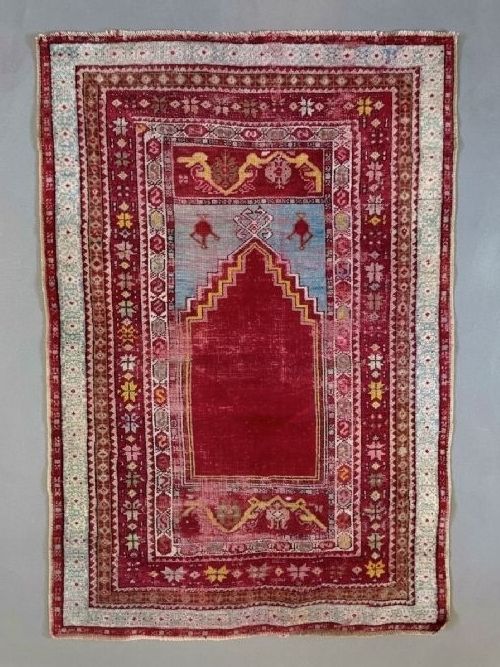
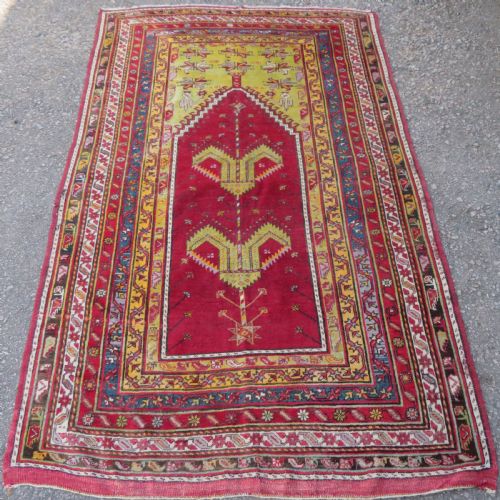
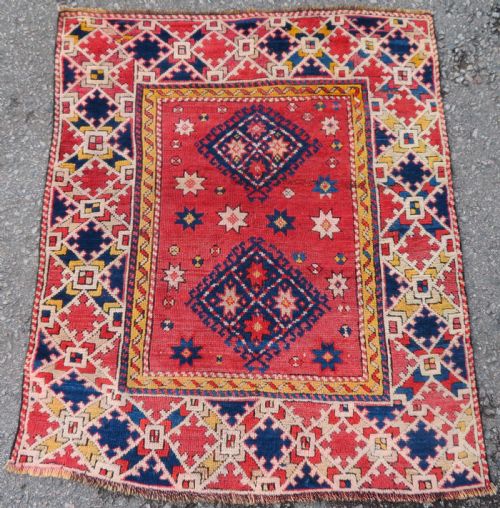
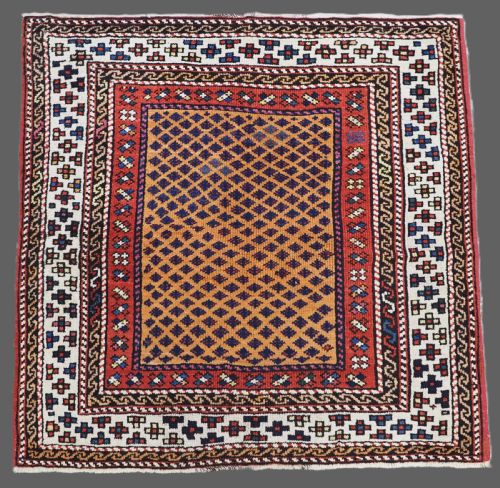
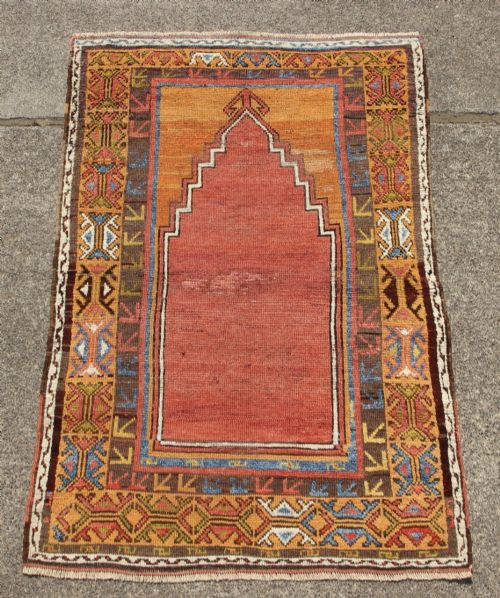
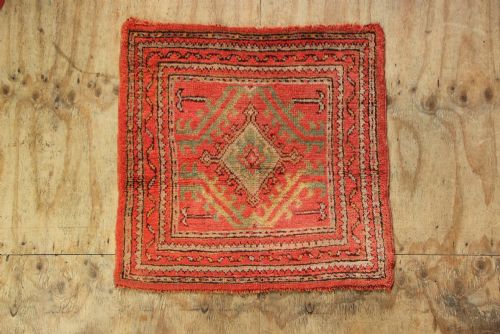
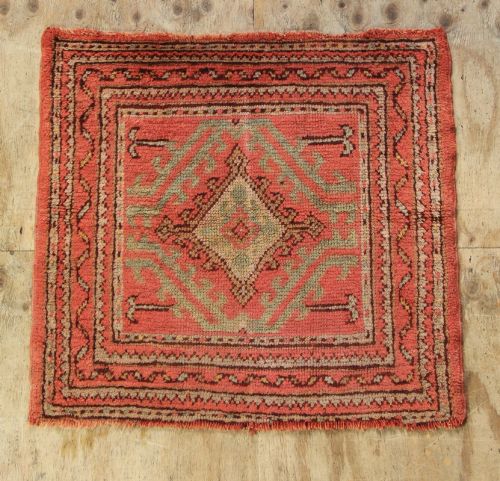
A vintage turkish mat typically encompasses smaller format floor coverings, accent pieces, and village rugs originating from various Anatolian regions. Buyers exploring this selection will frequently encounter prayer rugs alongside square formats and village weaves dating from the nineteenth and early twentieth centuries.
The regional diversity spans centres such as Bergama, Konya, Kirsehir, Ladik, and Milas, each bringing distinct local patterns and layouts to the surface. These pieces range from modest domestic floor coverings to finely knotted examples created for ceremonial or devotional use.
Materials and construction
Weavers relied principally on wool, hand-spun wool, cotton foundations, and occasional silk highlights to build durable pile and flatweave structures. Natural dyes provided the palette, yielding stable tones that settle into soft variations over decades of light and use.
The construction involves hand-knotting techniques tied tightly onto warp and weft foundations, creating dense structures designed to endure heavy foot traffic. Artisans bound the edges and secured the ends manually, embedding regional motifs directly into the grid of the weave.
Vintage Turkish Mat Retail Price Guide 2026
Typical asking prices for vintage turkish mat among the pieces listed under this phrase on Sellingantiques today, from the lower quarter to the upper quarter. They describe what is for sale here now, not the wider market.
The listings here span the nineteenth and early twentieth centuries, featuring wool, cotton, and natural dyes across diverse Anatolian regional styles.
Quality and execution
The calibre of a piece rests on the precision of the knotting, the complexity of the design layout, and the depth of the natural dyework. Finer examples display crisp geometry in the borders and central fields, maintaining balance across the composition.
Materials also dictate the tier of a piece, with finely spun wool and well-preserved natural hues commanding greater appreciation among collectors. The integrity of the foundational weave and the preservation of original borders further separate standard village output from master weaver production.
Tuduc
The Vintage Turkish Mat Glossary
- Prayer rug
- A rug featuring a distinctive architectural niche, known as a mihrab, designed to indicate the direction of prayer during daily use.
- Mihrab
- The pointed arch or niche motif at one end of a prayer rug that mimics the prayer halls of mosques.
- Natural dye
- Colourants derived from plants, roots, and insects rather than synthetic chemicals, creating varied and stable hues.
- Warp
- The vertical threads stretched tightly on the loom that form the structural foundation supporting the knots and weft.
- Weft
- The horizontal threads passed across the warp strands after each row of knots to bind the structure securely together.
Vintage Turkish Mat: Frequently Asked Questions
How do I identify a prayer rug?
A prayer rug is typically recognised by the arched mihrab design at one end, which directs the viewer toward a specific orientation during daily devotions. These pieces often incorporate spandrels and columns within the field to frame the central niche.
In daily life, these smaller formats served portable devotional functions rather than general floor coverage in large rooms. Their compact size makes them suitable for hanging on walls or placing in low-traffic areas where the pile remains protected.
What are natural dyes?
Natural dyes are colourants extracted from botanical sources, roots, and insects, utilised by traditional weavers long before the introduction of synthetic alternatives. These dyes interact with wool fibres to produce complex, subtle shades that mellow gracefully over time.
To live with these textiles successfully, keep them away from direct, harsh sunlight to preserve the integrity of the natural tones. Regular gentle vacuuming without a rotating brush roll helps maintain the wool pile without damaging the antique structure.
Where were these rugs made?
These textiles originate from various towns and nomadic or settled villages across Anatolia, including regional centres like Bergama, Konya, and Kirsehir. Each district developed distinct geometric or floral vocabularies passed down through generations of local weavers.
Recognising these origins involves studying the specific border arrangements, palette choices, and structural proportions unique to each weaving tradition. Local materials available in each geographic pocket further influenced the final appearance of the village output.
How do I care for an antique wool rug?
Antique wool textiles require careful maintenance, starting with occasional light shaking and gentle surface cleaning rather than aggressive washing. Professional cleaning tailored to vintage rugs ensures that natural wool and historic dyes are treated with appropriate solutions.
Placing a breathable rug underlay beneath the mat prevents slipping and reduces internal friction between the foundation threads during everyday use. Rotating the piece periodically ensures even exposure to light and wear across the surface.