




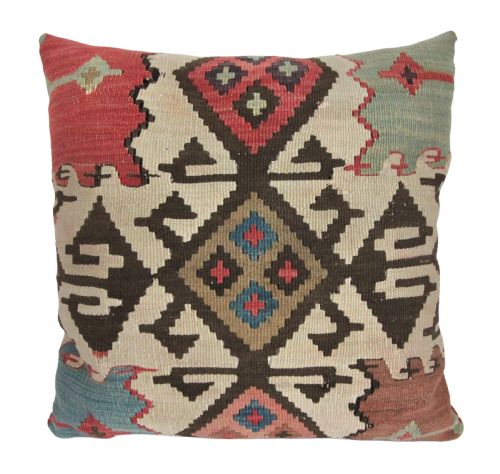


Vintage Turkish Flatweave
These vintage turkish flatweave textiles bring centuries of nomadic pattern and dyed wool into modern rooms.
Vintage Turkish Flatweave
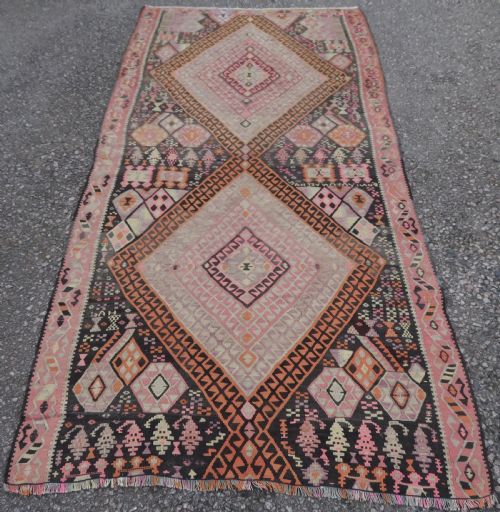
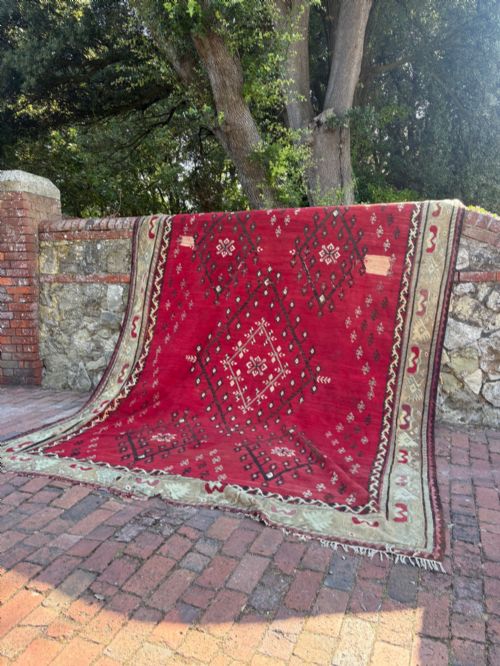
When searching for a vintage turkish flatweave, you encounter heavy floor carpets, runner rugs, and smaller utility items adapted from tribal life. These textiles span periods from the mid-nineteenth century through the early twentieth century, originating from regional weaving centres across Anatolia and the Balkans.
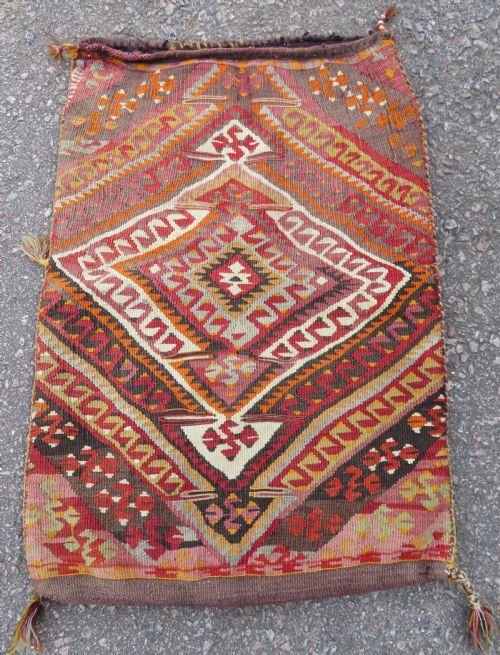
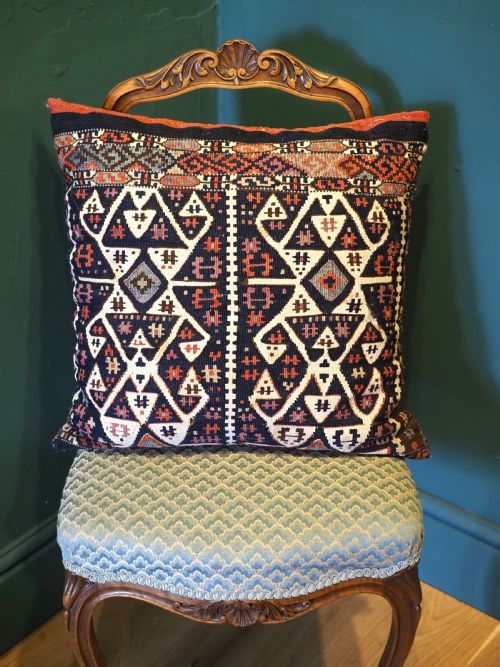
The selections available here range from large room-sized carpets down to cushions made from repurposed grain sacks and saddle bags. Traditional formats include prayer kilims, woven panels, and two-part rugs joined together from narrower looms.
Makers in regions such as Konya, Malatya, and Sarkoy produced these utilitarian floor coverings and furnishings using indigenous designs passed down through generations. The resulting objects carry distinct local geometry and palette traditions tied to specific tribal groups.
Materials and construction
These flatweaves rely on wool and cotton foundations, where coloured woollen weft threads are tightly beaten against warp threads to build the pattern without a pile. This tapestry technique creates reversible textiles with sharp geometric edges where colour changes occur.
Certain regional types, including those from the Bergama and Reyhanli regions, involve weaving narrow strips on portable looms that are subsequently stitched together down the centre to form a wider carpet. Additional decorative methods incorporate embroidery techniques, such as cicim work, applied over the flat-woven ground.
Vintage Turkish Flatweave Retail Price Guide 2026
Typical asking prices for vintage turkish flatweave among the pieces listed under this phrase on Sellingantiques today, from the lower quarter to the upper quarter. They describe what is for sale here now, not the wider market.
Several vintage pieces preserve the original function of grain sacks and animal saddle bags.
Evaluating the weaving
Quality in these textiles rests upon the tightness of the weave, the clarity of the geometric motifs, and the depth of the dye work. Tighter packing of the weft threads produces a firmer, more durable textile that maintains structural integrity over decades of use.
The nuance and saturation of the colours define the visual tier of a piece, with naturally dyed wools ageing into soft patinas. Condition varies from pristine examples with complete borders to timeworn pieces bearing historical repairs and distress that reflect extended domestic service.
The Vintage Turkish Flatweave Glossary
- Kilim
- A flat-woven carpet or rug lacking a pile, produced by tightly interweaving coloured weft threads through vertical warp threads. This method creates lightweight, reversible textiles with crisp pattern transitions.
- Cicim
- A supplementary weft-float embroidery technique applied to a woven ground to create raised geometric patterns on the surface. Artisans use this method to add texture and secondary ornamentation.
- Warp
- The stationary vertical threads stretched taut on a loom before weaving begins. The weft threads pass horizontally over and under these foundational threads.
- Weft
- The horizontal threads passed through the warp to build the fabric and create the visible pattern. In flatweaves, these coloured threads completely conceal the vertical warp.
- Anatolian
- Pertaining to the geographical region of Asia Minor, encompassing major historical weaving districts such as Konya, Malatya, and Ushak. This label covers diverse tribal and village weaving traditions.
Vintage Turkish Flatweave: Frequently Asked Questions
How do I clean an old kilim?
Surface dust should be removed gently using a low-suction vacuum without a beater bar, running in the direction of the weave rather than across the edges. Professional textile cleaners who specialise in antique woven rugs should handle deep washing to prevent dye migration or shrinkage.
Are these rugs suitable for high-traffic areas?
These flat-woven wool textiles possess inherent durability because they lack a fragile upright pile that can crush or wear down unevenly. Placing a quality rug underlay beneath the piece prevents slipping and cushions the fibres against hard flooring.
Why are some rugs woven in two parts?
Nomadic and village weavers frequently used portable looms with limited widths to produce large floor coverings. They completed two separate long panels and stitched them together down the middle to achieve room dimensions.
How can I tell a prayer kilim apart?
Prayer formats typically feature a distinct pointed arch motif, known as a mihrab, at one end of the field. This directional design directed the placement of the rug toward Mecca during daily devotions.