






Nomadic Kilim Wall Hanging
A nomadic kilim wall hanging brings centuries of tribal weave and bold geometric design straight into a modern interior.
Nomadic Kilim Wall Hanging
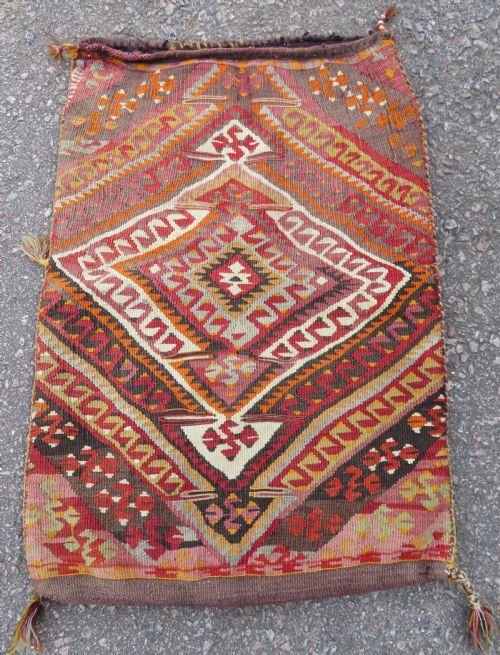
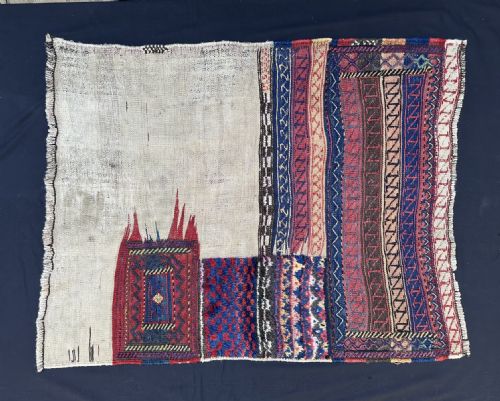
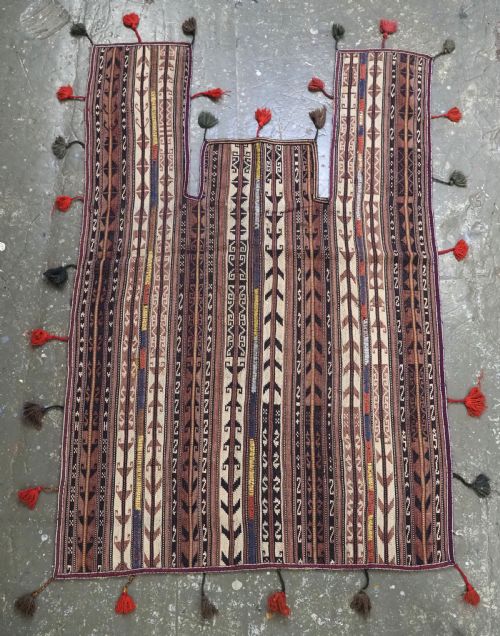
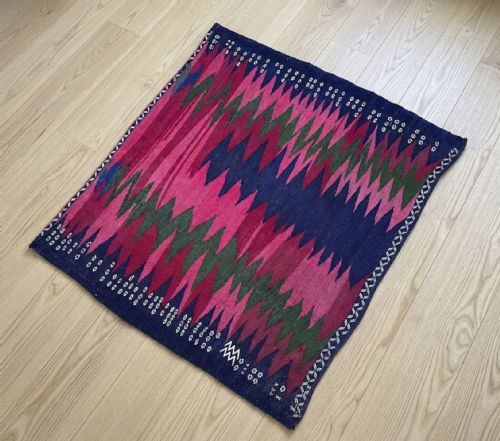
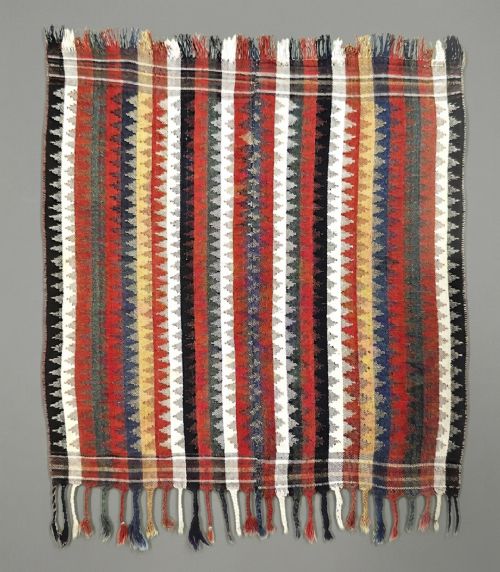
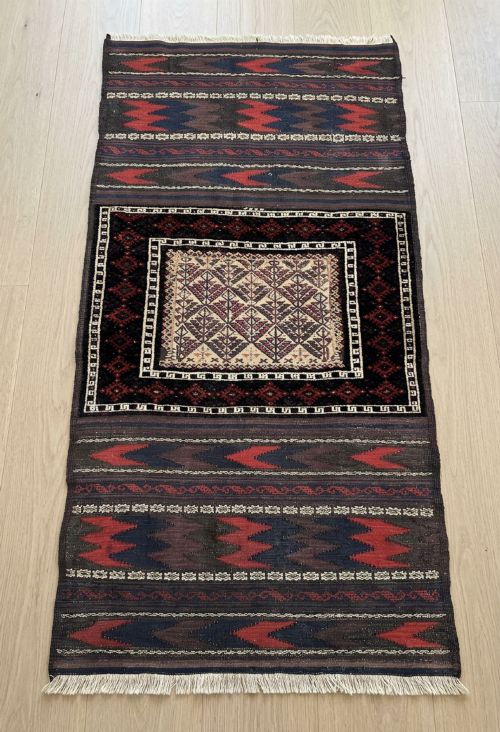
A nomadic kilim wall hanging originates from utilitarian household and travel textiles produced by tribal groups across Persia, Central Asia and Anatolia. These pieces include grain sacks, bread cloths, storage bags and tent bands repurposed for display.
The objects seen here date from the nineteenth century into the early decades of the twentieth century, reflecting the weaving traditions of tribes such as the Qashqa'i, Afshar, Bakhtiari and Baluch.
Many items arrive as complete bags, saddlebag faces or flatweave panels that lend themselves naturally to vertical display on a wall.
Quality and Craftsmanship
Quality rests upon the fineness of the weave, the tightness of the tension and the clarity of the tribal motifs. Superior examples maintain structural integrity alongside original finishes like backs, tassels and borders.
The depth and vibrancy of the natural dyes, combined with the precision of geometric patterning, separate standard utility pieces from exceptional tribal artistry.
Nomadic Kilim Wall Hanging Retail Price Guide 2026
Typical asking prices for nomadic kilim wall hanging among the pieces listed under this phrase on Sellingantiques today, from the lower quarter to the upper quarter. They describe what is for sale here now, not the wider market.
Many wall pieces began life as heavy-duty grain sacks, proving that nineteenth-century flour storage had genuine artistic flair.
The Nomadic Kilim Wall Hanging Glossary
- Sofreh
- A flatweave cloth used for dining or bread preparation by nomadic tribes. These textiles often feature minimalist central medallions and geometric borders.
- Tacheh
- A traditional tribal wheat or grain sack. They display dense flatweave designs intended originally for utilitarian storage.
- Torba
- A small storage bag or torba face produced by Turkmen and other Central Asian groups. They are characterised by banded geometric patterns.
- Kilim
- A pileless flatweave textile created by tightly interweaving warp and weft strands. This technique produces a flat fabric with identical patterns visible on both sides.
- Natural Dyes
- Colourants derived from plants, insects and minerals. They yield organic hues that age with distinct patination over decades.
Nomadic Kilim Wall Hanging: Frequently Asked Questions
What is a nomadic kilim wall hanging?
A nomadic kilim wall hanging is typically a repurposed tribal flatweave, such as a grain sack, bread cloth or storage bag face, created by nomadic weavers.
These textiles were originally made for daily utility in tents and settlements, featuring geometric motifs and flatweave construction suited for vertical display.
How do I hang a textile securely?
Textiles require weight distribution across the entire top edge rather than single suspension points. Using a fabric sleeve sewn to the back allows a discreet wooden batten or rod to carry the load evenly.
Conservation-grade Velcro stitching or professional mounting boards also protect fragile wool and cotton structures from distortion over time.
How do I identify tribal origins?
Tribal attribution relies on specific structural traits, wool quality, colour palettes and characteristic geometric iconography unique to regions like Fars, Kerman or Khorassan.
Weaving techniques and specific bag formats, such as salt bags or saddlebag pairs, further indicate the producing confederation or nomadic group.
Are these pieces genuinely old?
The pieces recorded here date predominantly from the late nineteenth century and the early decades of the twentieth century. Hand-spun materials and traditional natural dye palettes substantiate their age.
Wear patterns, structural quirks from manual looms and authentic regional construction methods distinguish these antique nomadic textiles from modern reproductions.