
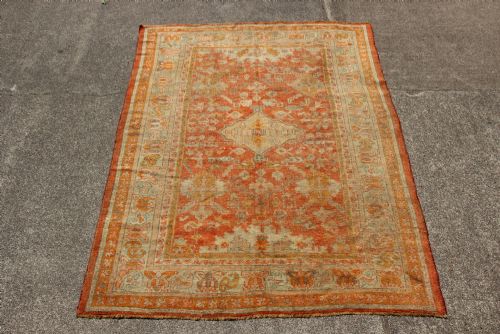
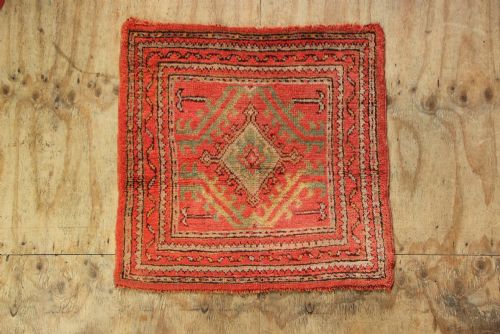


Vintage Turkish Area Carpet
A vintage turkish area carpet brings centuries of nomadic design and woven warmth directly onto a hardwood floor.
Vintage Turkish Area Carpet
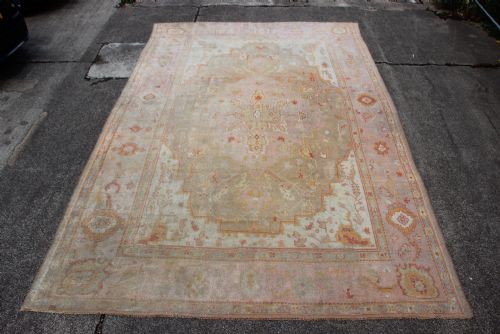
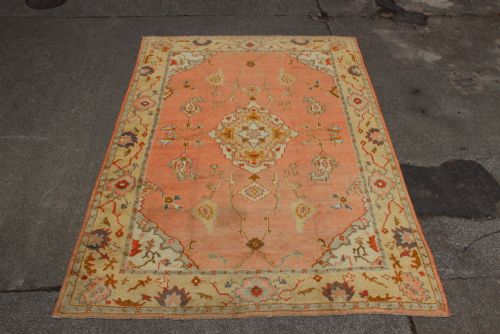
A vintage turkish area carpet embodies centuries of textile tradition, ranging from grand city workshops to remote mountain villages. Buyers exploring this category encounter floor coverings that span periods from the eighteenth century through the early decades of the twentieth century.
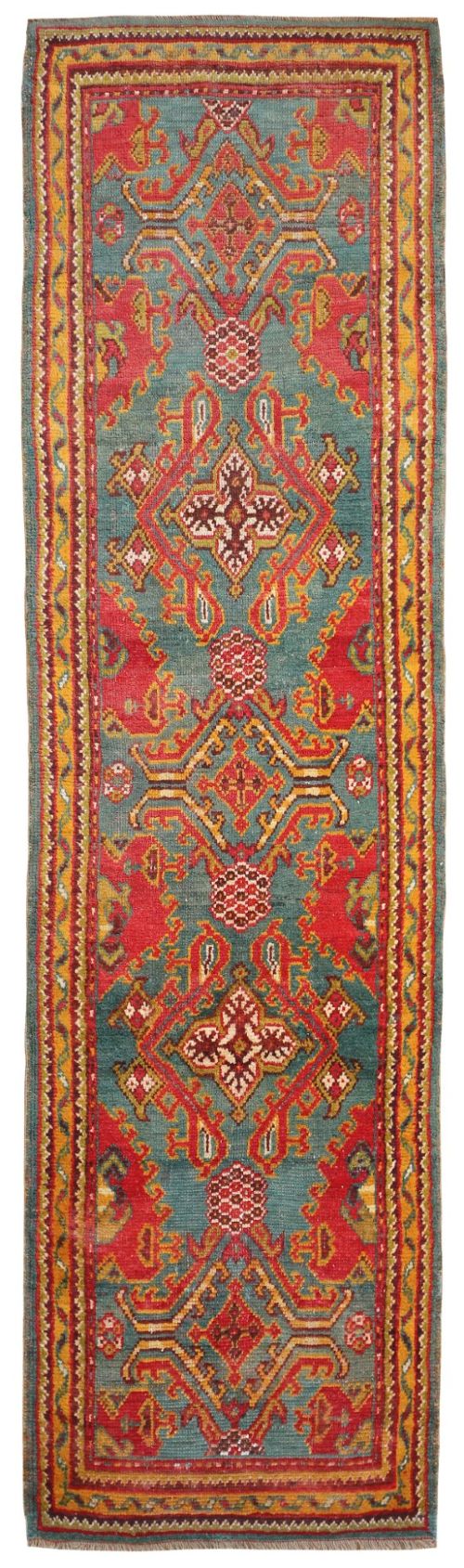
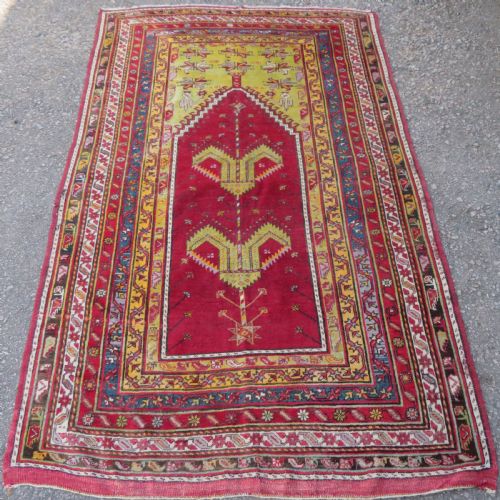
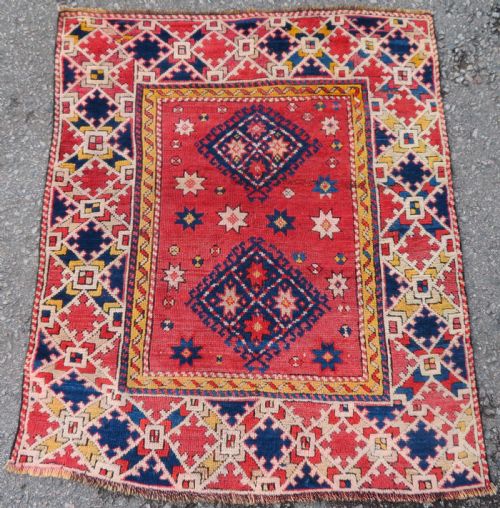
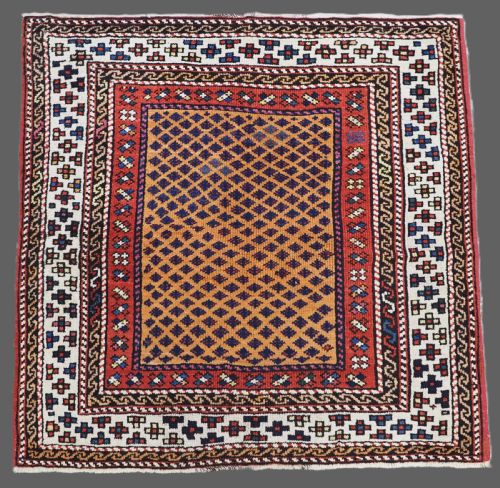
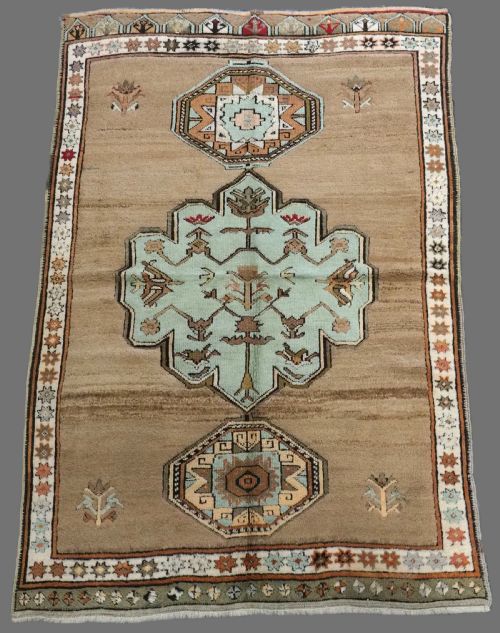
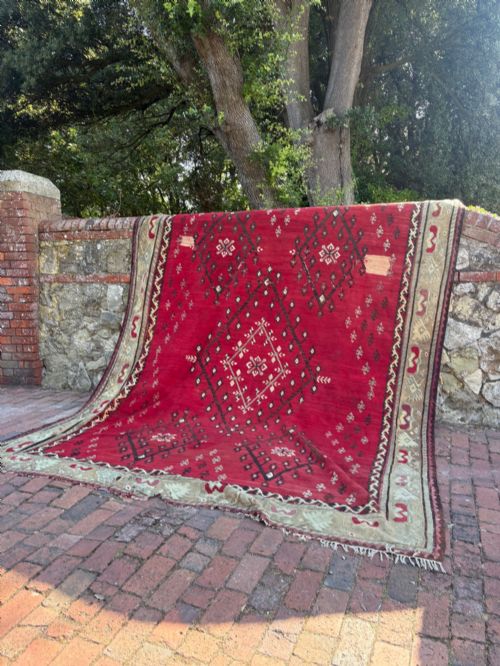
The assortment includes massive hall carpets alongside square formats, small accent rugs, and prayer rugs bearing distinct architectural mihrab designs. Regional identities surface clearly through specific patterns associated with centres such as Ushak, Bergama, and Kirsehir.
Flatwoven kilims and pile-woven carpets both appear frequently, offering different textures and structural weights. These textiles serve primarily as durable floor coverings that anchor room schemes with muted earth tones or bold geometric motifs.
How they were made
Weavers constructed these pieces using natural materials, predominantly hand-spun wool and cotton foundations, occasionally incorporating camel wool and silk. Angora wool also appears, lending a softer hand and distinct sheen to the pile.
Manual knotting and flatweaving techniques define the construction, relying on traditional upright looms set up in households or larger regional workshops. Dyes derived from natural sources yielded the palette of soft colours, faded blues, and rich field tones visible across the pieces.
What varies in quality
Knot density and structural integrity distinguish finer examples from simpler village work, dictating how cleanly curvilinear or geometric patterns resolve. The choice of fleece quality and the depth of the initial spin also influence the durability of the pile.
Subtlety in the ageing process and the preservation of original selvedges and ends separate superior survivals from heavily altered pieces. The harmony of the remaining natural dye colours dictates the visual impact of each carpet.
The Vintage Turkish Area Carpet Glossary
- Kilim
- A flatwoven textile produced without a pile by tightly interweaving warp and weft threads. These lightweight rugs often feature sharp geometric designs.
- Prayer rug
- A small format rug featuring a mihrab or arch motif designed to indicate the direction of prayer. These pieces frequently originate from weaving centres like Kirsehir and Ladik.
- Oushak
- A prominent weaving tradition known for large-scale floral patterns and pale, muted colour palettes. Carpets from this origin often measure on a grand scale.
- Mihrab
- The arched niche design depicted on prayer rugs, representing the direction toward Mecca. This architectural element forms the focal point of the field.
- Warp
- The vertical threads stretched tightly on the loom that form the structural skeleton of the rug. Wefts and knots are built upon these foundational threads.
Vintage Turkish Area Carpet: Frequently Asked Questions
How do I choose the right size?
Measure your floor space carefully to ensure the rug leaves an even border of exposed timber or stone around the edges. Large formats anchor living rooms, while runners suit hallways.
Consider how furniture placement interacts with the dimensions so that key pieces sit comfortably on or around the textile.
How should I clean these rugs?
Gentle surface vacuuming without a beater bar removes loose grit that settles deep within the pile over time. Professional cleaning tailored to antique textiles remains essential for deep washing.
Avoid harsh chemical spot treatments that can strip natural dyes from the wool and cotton foundations.
Can I place them in high traffic areas?
Wool and cotton construction provides natural durability that handles normal domestic foot traffic quite well. Hallways and sitting rooms benefit from the sturdy nature of traditional pile rugs.
Rotating the rug periodically ensures even wear across the surface over the years.
What indicates an older piece?
Materials such as hand-spun wool, irregular hand-knotted structures, and softer naturally derived colour palettes often point toward older production dates. Structural quirks reveal the work of individual village weavers operating outside mass production.
Regional motifs tied to nineteenth-century styles help narrow down the historical context.