


Turkish Konya Rug
These woven floor coverings and wall hangings bring centuries of Central Anatolian village craft into your home with distinct prayer designs and traditional motifs.
Turkish Konya Rug
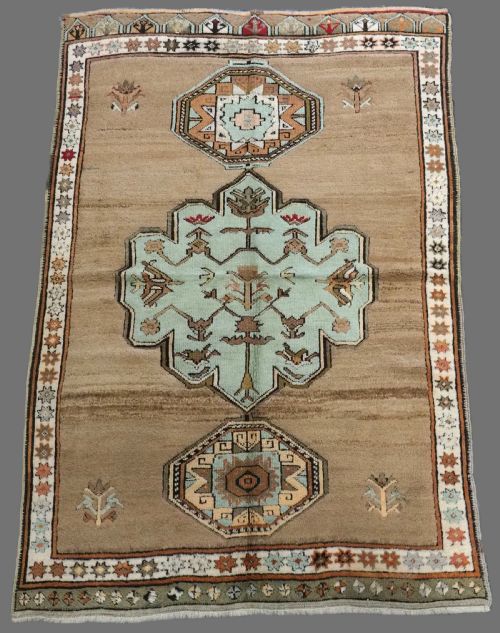
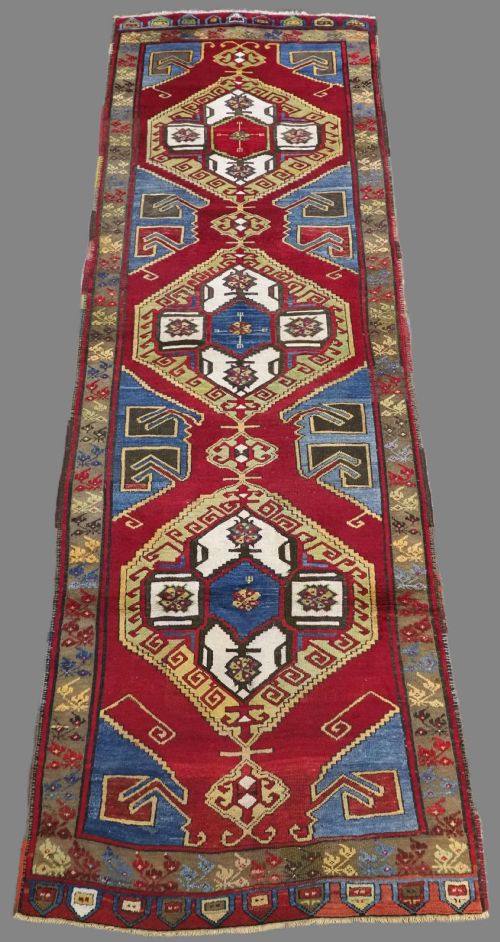
A turkish konya rug originates from the Central Anatolian region, encompassing specific village formats like prayer rugs, runners, and flatweave kilims. Pieces on this page span from the early 19th century into the early 20th century, reflecting long-standing regional weaving traditions.
Makers produced these textiles in various dimensions, from small yastiqs and prayer formats to large runners and carpets. The designs frequently incorporate classical Anatolian tribal patterns, ivory grounds, and camel wool fields.
Materials and construction
Weavers utilised hand-spun wool, cotton, and camel wool to build durable foundations and dense pile surfaces. Vegetable dyes provided the natural colour palettes seen across these regional village pieces.
Techniques range from knotted pile prayer rugs to flatweave kilims, cicim embroidered panels, and half-kilim constructions. Artisans worked within traditional Anatolian styles, incorporating regional village motifs.
The listings show pieces dated across the 1800s, 1850, 1890, 1900, 1910, and 1920, utilising wool, cotton, camel wool, and vegetable dye.
Assessing the examples
Quality depends upon the fineness of the wool, the clarity of the natural vegetable dyes, and the integrity of the weave. Finer pieces demonstrate precise execution of classical tribal designs and well-preserved borders.
The handle of the wool, the complexity of the prayer arch, and the balance of soft colours differentiate standard village output from exceptional regional examples.
The Turkish Konya Rug Glossary
- Prayer rug
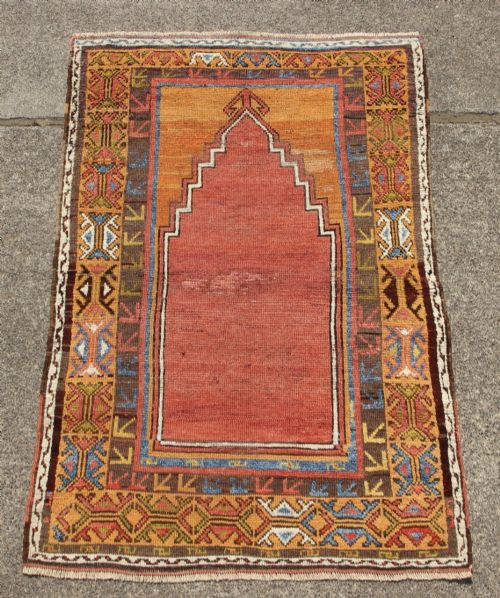
- A textile featuring a mihrab or niche design, historically utilised for ritual daily prayer in Anatolian communities. These pieces often direct the eye toward a central apex.
- Kilim
- A flatweave textile produced without a pile by tightly interweaving warp and weft threads. Konya kilims display sharp geometric patterns and vibrant regional motifs.
- Yastik
- A small cushion face or small rug traditionally utilised as a bolster or sitting mat in Turkish homes. Their compact dimensions make them accessible display pieces.
- Cicim
- An embroidery technique applied to a woven ground to create raised supplementary pattern threads across the surface. Pairs of these panels appear as decorative wall hangings.
- Karapinar
- A specific town and weaving centre within the Konya region known for distinct village carpets. Pieces from this area often exhibit bold coloration and classic design structures.
Turkish Konya Rug: Frequently Asked Questions
How do I identify a prayer rug?
Prayer rugs feature a distinct architectural arch, known as a mihrab, at one end of the field. This design element historically oriented the worshipper during daily devotions.
Konya region examples often combine this niche motif with ivory or camel wool grounds, surrounded by geometric borders and soft botanical colour palettes.
Where were these pieces made?
The pieces originate from Central Anatolia, specifically the Konya region and associated villages such as Karapinar, Sivrihisar, and Isiklar. Local nomadic and village weavers produced them on traditional vertical looms.
Each village contributed distinct variations in motif arrangement, colour combination, and structural techniques like flatweaving or pile knotting.
How do I care for antique wool rugs?
Protect antique textiles by placing them in low-traffic areas away from direct, harsh sunlight to preserve the natural vegetable dyes. Regular gentle vacuuming without a rotating brush bar prevents dust accumulation in the wool pile.
For flatweaves and kilims, ensure a suitable rug underlay is utilised to prevent slipping and reduce friction against hard flooring surfaces.