
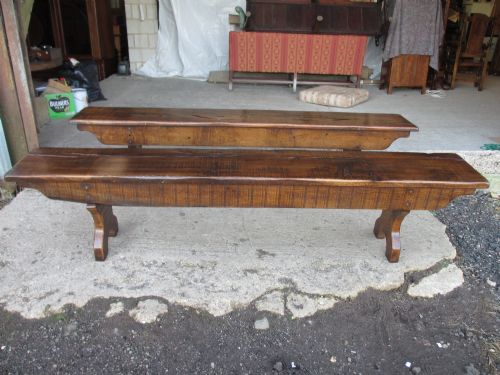
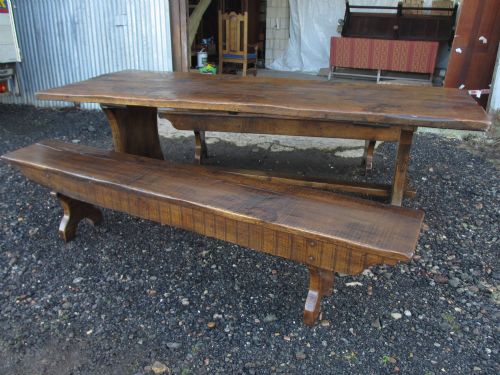
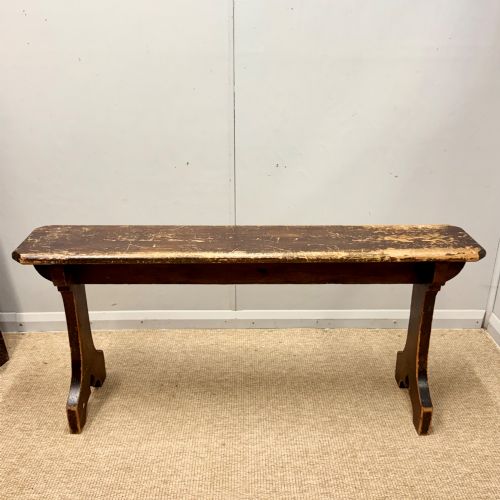
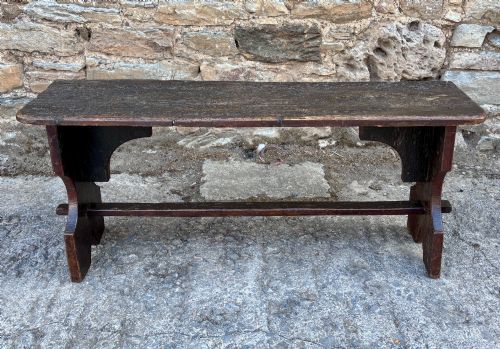
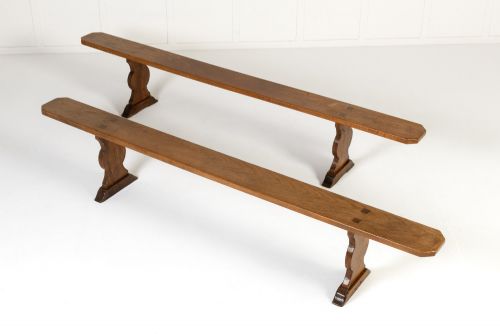
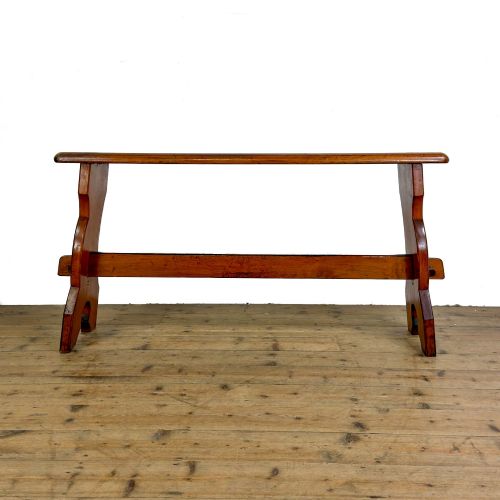
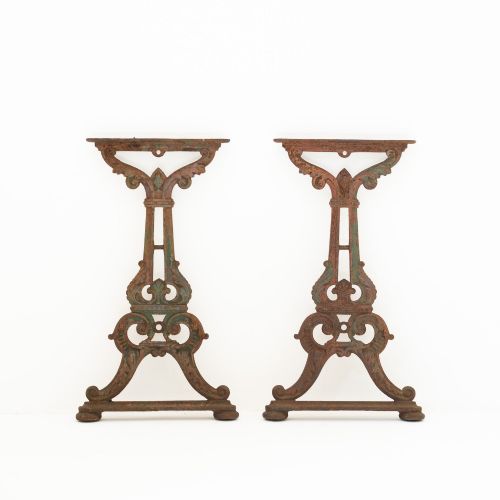
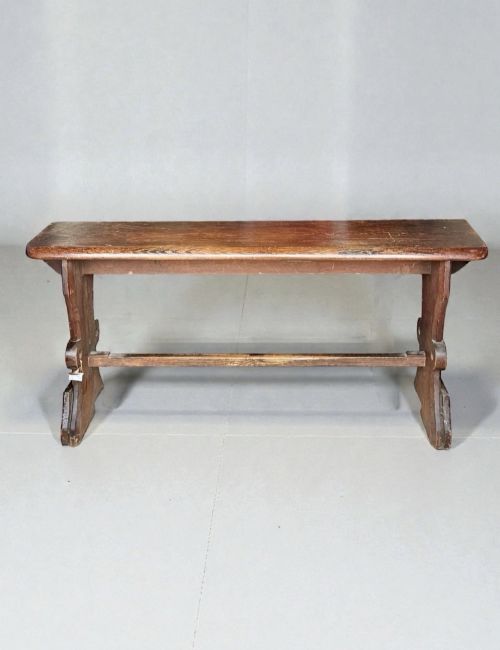



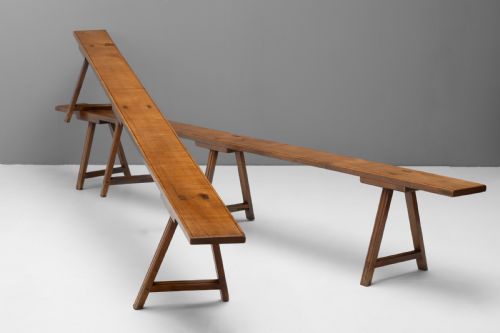
Vintage Trestle Bench
These vintage trestle bench forms offer honest utility and sturdy timber construction for everyday seating.
Vintage Trestle Bench
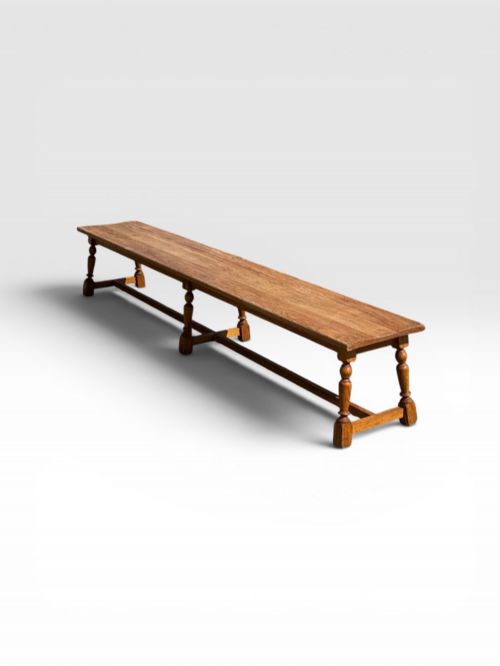
A vintage trestle bench provides a long, linear seating option suited to refectory tables and communal dining spaces. The pieces gathered under this phrase span from the nineteenth century into the twentieth, encompassing Victorian, Edwardian, and rustic country origins.
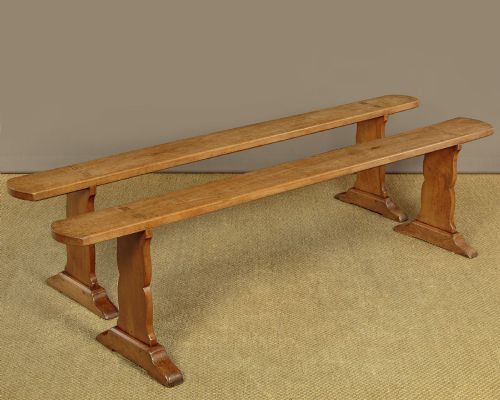
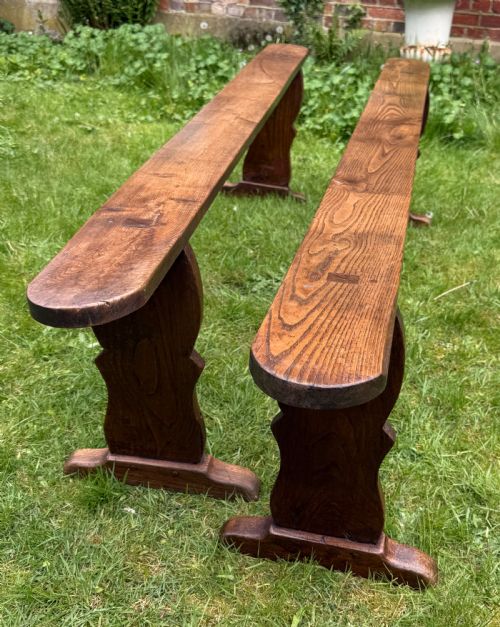
Most examples rely on simple wooden boards paired with supportive end frames rather than four separate legs. Pine, oak, and elm dominate the forms, appearing either as single long seating boards or as pairs designed for dining setups.
Evaluating Quality and Character
Quality rests in the density and selection of the timber, where dense oak, old elm, and thick pine outlast lighter hardwoods. The integrity of the trestle ends and the tightness of the original joints dictate how well the bench bears heavy daily sitting.
Surface finish and natural patina separate standard utility seating from finer examples. Scrubbed timbers, original grain, and honest wear tell the history of the object without masking its structural soundness.
Listings feature timbers such as pine, oak, elm, cherrywood, and sycamore across Victorian and Edwardian periods.
The Vintage Trestle Bench Glossary
- Trestle
- A support consisting of a horizontal beam fixed to two splayed legs, providing stable weight distribution for long seating boards.
- Refectory table
- A long dining table traditionally used in communal dining halls, frequently accompanied by matching long benches.
- Scrubbed
- A surface finish achieved by vigorous cleaning that leaves the raw timber grain exposed and pale.
- Patina
- The surface sheen and colour acquired by wood through age, use, and cleaning over many decades.
Vintage Trestle Bench: Frequently Asked Questions
How do I choose the right length?
Measure the span of your dining table to ensure the bench fits comfortably underneath or alongside the surface. Long examples often exceed six feet, requiring adequate floor clearance.
Consider how many people need to sit together on one side. Trestle designs allow diners to slide in easily without obstruction from corner legs.
Are these benches sturdy enough for daily dining?
Solid timber construction in oak, elm, and heavy pine provides high structural durability for regular seating use. The trestle supports distribute weight evenly across the floor.
Inspect the joinery at the ends and underside to confirm stability. Most period examples were built for demanding workshop, school, or refectory environments.
How do I care for antique wood surfaces?
Maintain timber boards with natural wax or oils appropriate for old wood to prevent excessive drying. Avoid placing them near direct heat sources that cause warping.
Clean spills promptly with a dry or barely damp cloth. Preserving the original patina involves minimal intervention and gentle handling.
What periods do these pieces represent?
The selection includes items produced during the nineteenth century, Victorian era, Edwardian period, and early twentieth century. Each era brings distinct timber choices and workshop traditions.
French and English country origins appear frequently among the listings. Dating relies on timber type, construction methods, and surface wear patterns.