


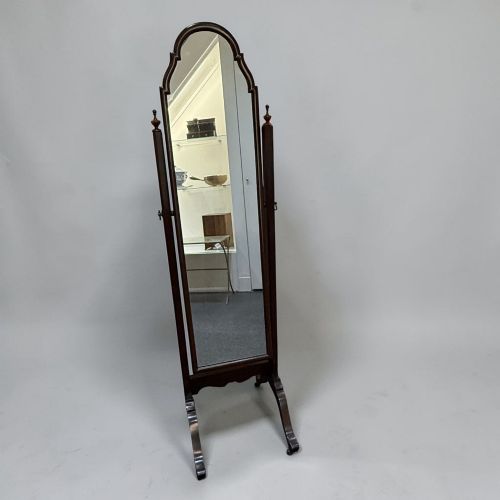
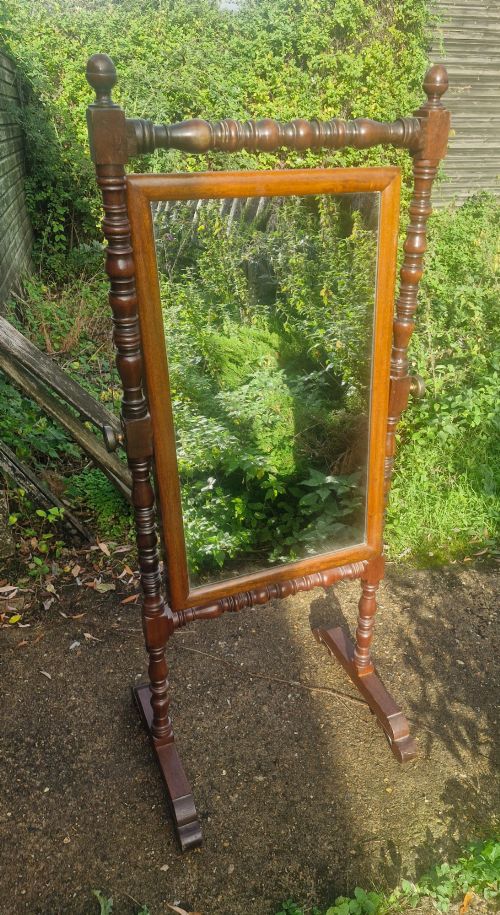
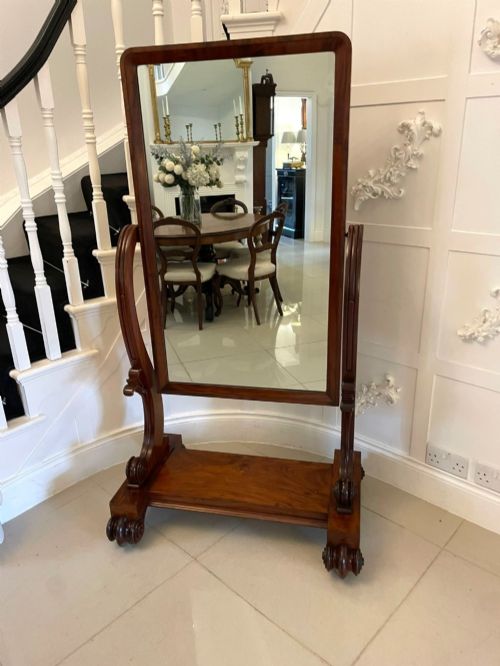
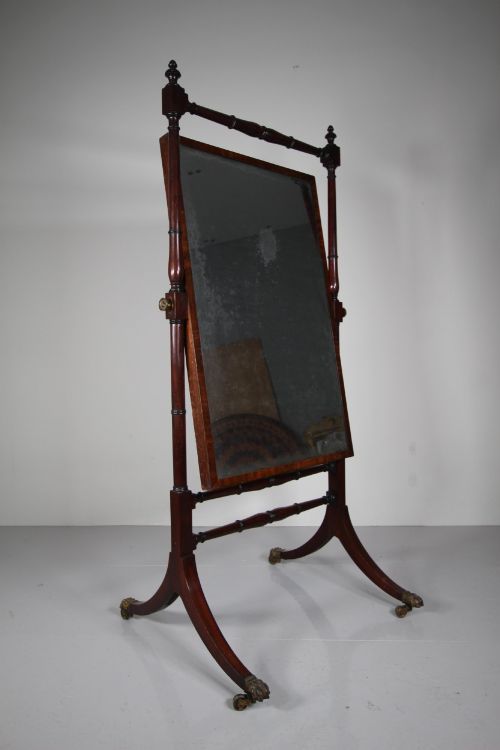
Vintage Tilt Dressing Mirror
A vintage tilt dressing mirror pivots to catch the light, bringing period timber and bevelled glass to a daily routine.
Vintage Tilt Dressing Mirror
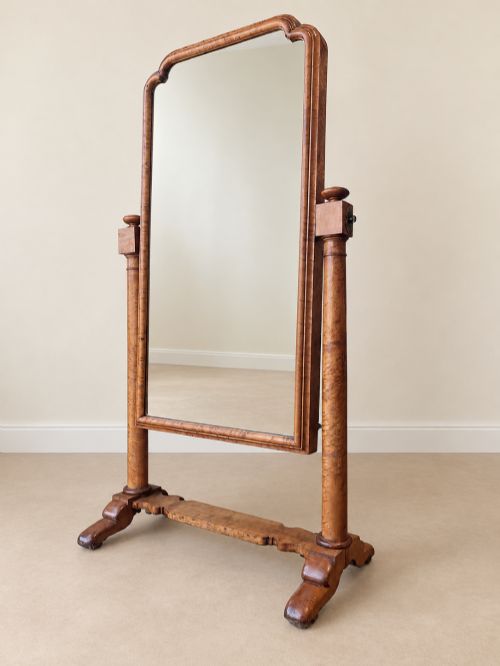
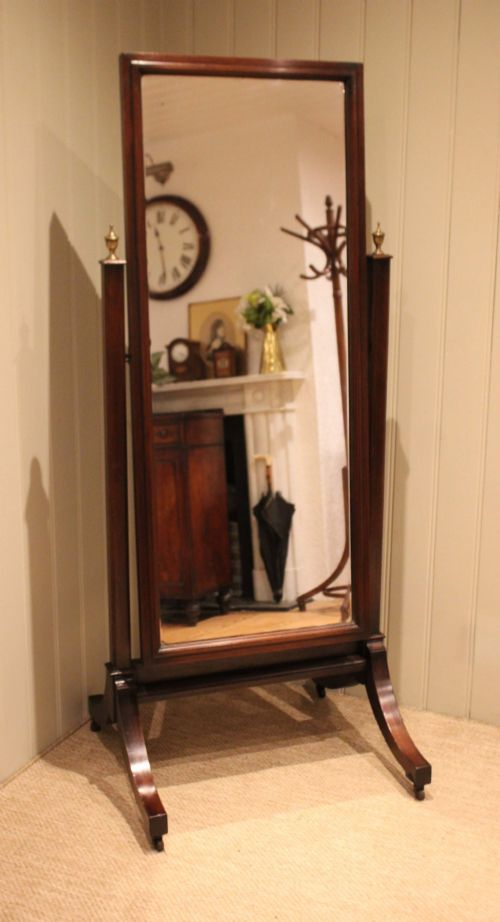
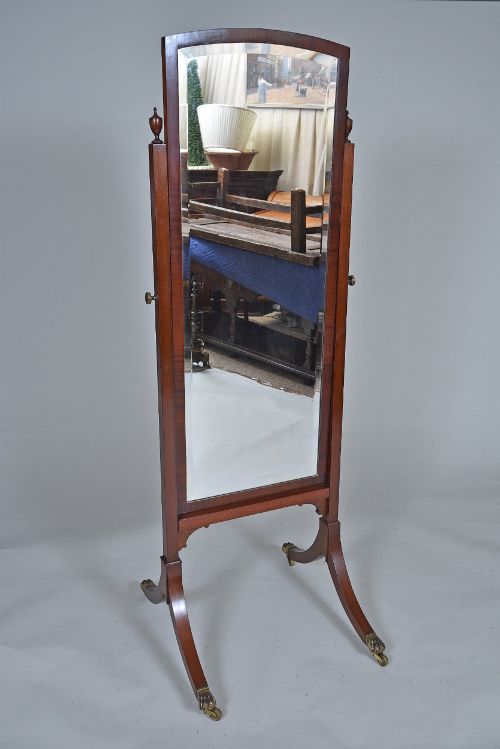
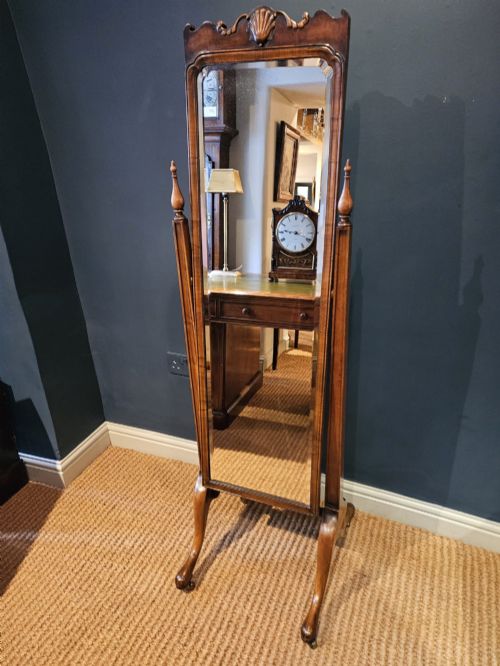
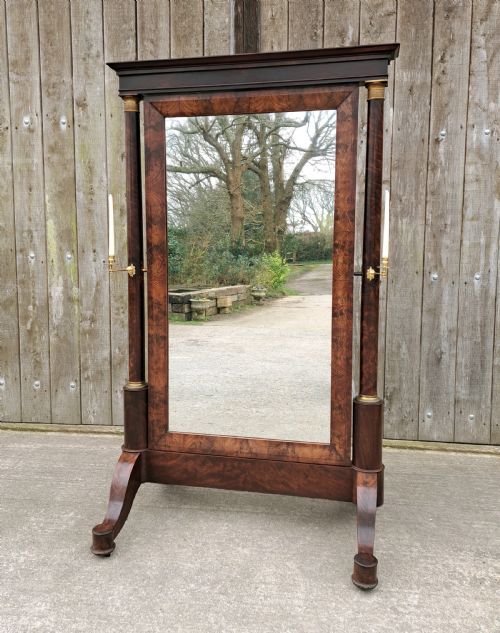
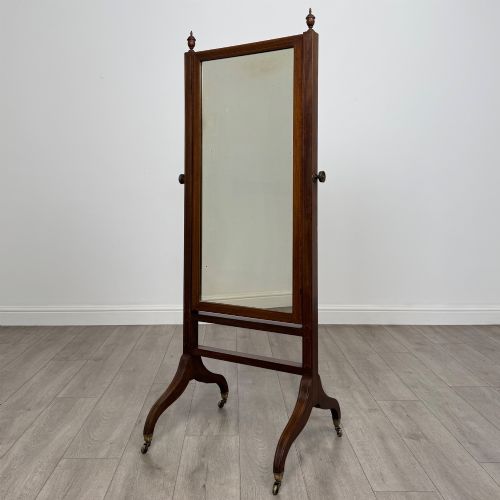
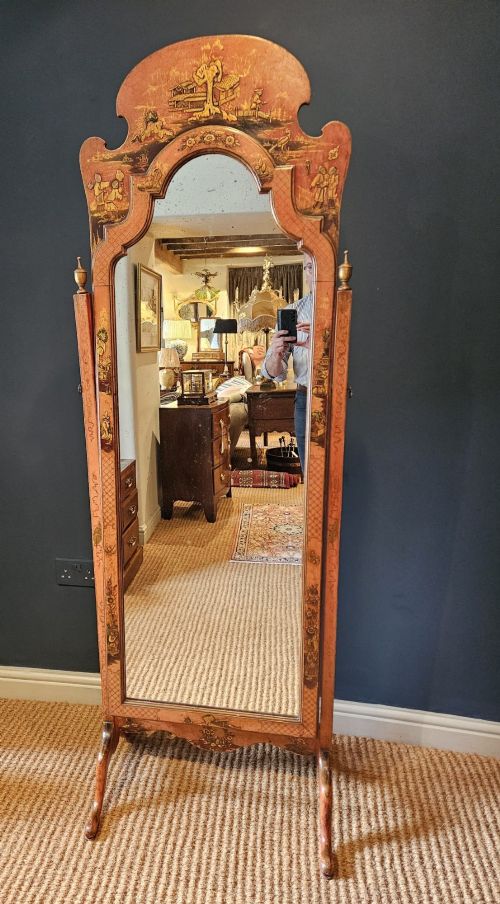
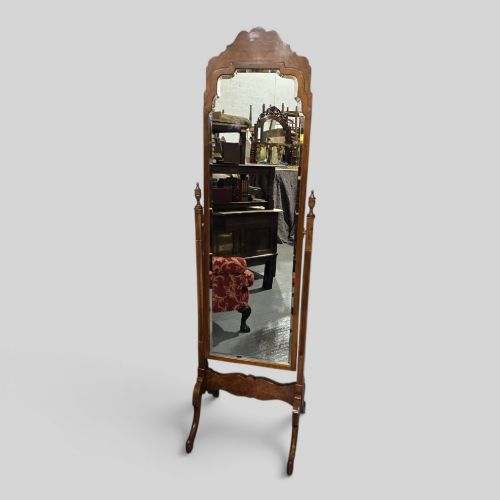
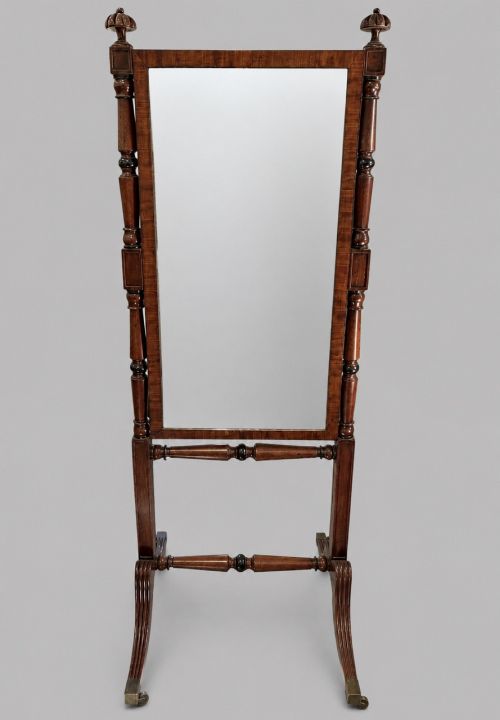
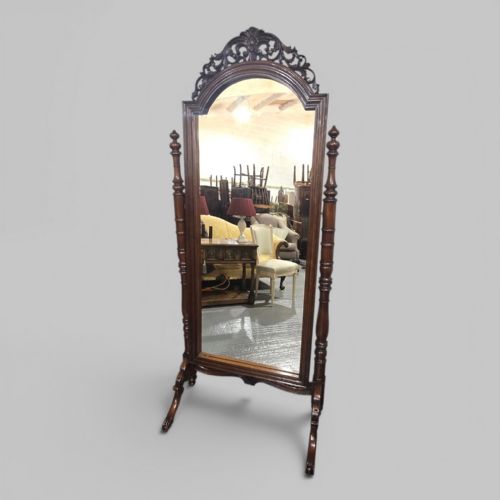
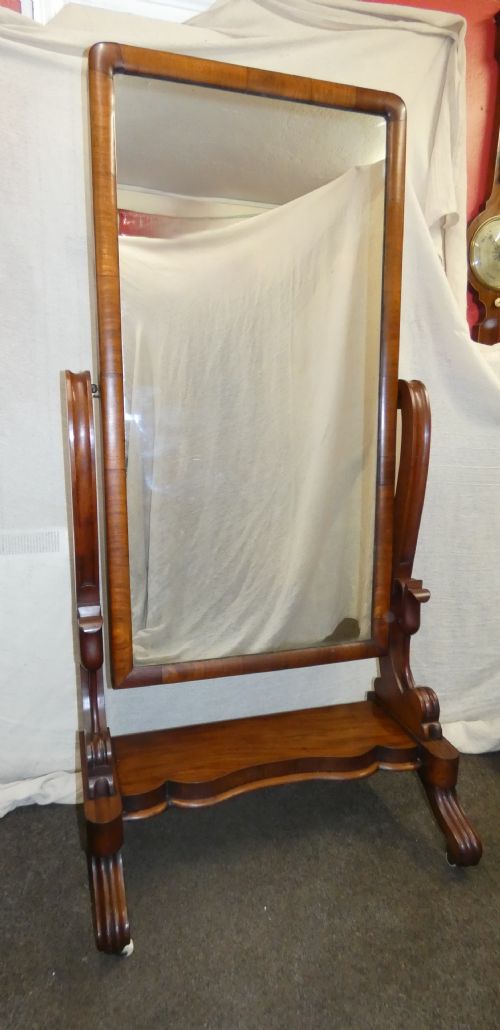
A vintage tilt dressing mirror stands as a functional piece of furniture designed to adjust on side pivots for a full view. When a buyer searches for a vintage tilt dressing mirror, they encounter freestanding cheval frames and smaller table versions intended for a chest or dressing table.
The examples gathered here span from nineteenth-century mahogany to nineteen-twenties walnut, encompassing Edwardian and Regency expressions. Most items on this page lean towards tall cheval designs rendered in rich timbers with swivelling plates.
Makers such as Waring and Gillow and Whytock & Reid appear alongside unsigned pieces, reflecting both bespoke cabinet work and standard domestic production. Each piece offers a reflection of past interiors while serving a practical modern purpose.
How they were made
Cabinetmakers constructed these frames using solid timbers and veneered panels, with mahogany, walnut and oak forming the primary structural carcasses. Brass pins, screws and side arms secure the mirror plate within its upright supports, allowing the glass to tilt smoothly on its axis.
Surfaces received French polishing, lacquer or painted finishes, often supplemented by fine string inlay or gilt highlights. Brass sabots and castors frequently finish the feet of larger cheval stands, aiding mobility across floor coverings.
Vintage Tilt Dressing Mirror Retail Price Guide 2026
Typical asking prices for vintage tilt dressing mirror among the pieces listed under this phrase on Sellingantiques today, from the lower quarter to the upper quarter. They describe what is for sale here now, not the wider market.
One recorded mirror once belonged to a military general, proving that even high-ranking strategists needed to check their uniform cuffs.
What varies in quality
The distinction between ordinary and exceptional work lies in the selection of timber figures, such as burr walnut grain or dense mahogany cuts. Superior pieces display thoughtful proportions, sturdy pivot mechanisms that hold tension without slipping, and cleanly cast brass mounts.
Hand-carved details and precise joinery separate bespoke workshop output from mass-produced items of later decades. The clarity of the glass and the weight of the supporting frame dictate how well the mirror performs its function over time.
Waring and Gillow·Whytock & Reid
The Vintage Tilt Dressing Mirror Glossary
- Cheval mirror
- A full-length freestanding mirror suspended on a frame with vertical posts and side pivots. This format allows the entire plate to swing back and forth.
- Sabot
- A metal sleeve or socket fitted to the foot of a furniture leg. Brass versions protect the timber base and often incorporate small castors.
- Chinoiserie
- A decorative style employing European interpretations of Chinese motifs and techniques. Lacquered surfaces and painted Oriental scenes typify this aesthetic.
- Veneer
- A thin layer of figured wood applied over a secondary timber base. This technique showcases decorative grains like burr walnut without using solid blocks.
Vintage Tilt Dressing Mirror: Frequently Asked Questions
How do I adjust the mirror tilt?
Most frames use threaded pivot screws or side knobs that tighten by hand to hold the glass at the desired angle. Adjusting these requires care to avoid straining the upright posts.
Older mechanisms may rely on friction plates or slotted metal arms which slot into designated pins on the frame.
Where should I place a cheval mirror?
These tall mirrors require stable floor space with sufficient clearance to tilt the glass forward or backward without obstruction. Placing them perpendicular to a window captures maximum natural light.
Avoid damp walls or direct heat sources that might warp timber frames or affect the silvering on the glass plate.
How do I date a dressing mirror?
The transition of wood choices, from early mahogany and Regency sabre legs to nineteen-twenties walnut and chrome, helps establish the period. Construction marks, screw types and backboards offer further clues to the decade of manufacture.
Stylistic markers like Edwardian inlay or Art Deco geometry align directly with specific eras of design.
Can these mirrors be dismantled?
Cheval frames typically separate into side uprights, a base stretcher and the central mirror plate for transport. Removing the pivot screws releases the glass safely from the main structure.
Careful handling of the brass hardware ensures the screw threads remain undamaged during reassembly.