


Vintage Terracotta Planter
A vintage terracotta planter brings earth and age to a garden, offering a weathered vessel for planting.
Vintage Terracotta Planter
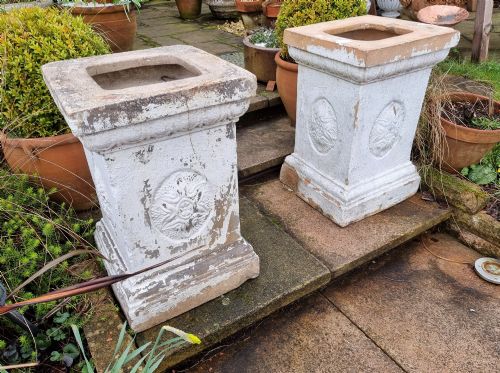
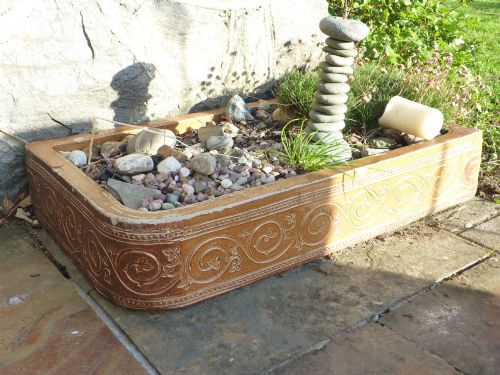
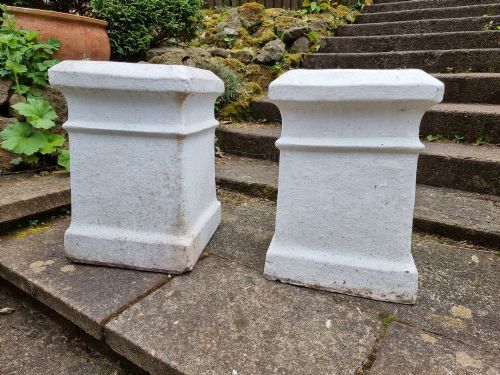
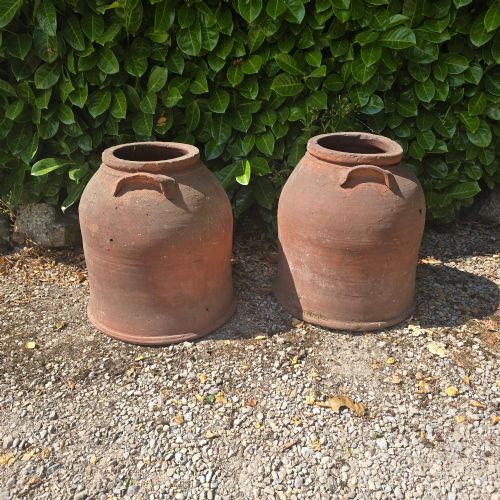
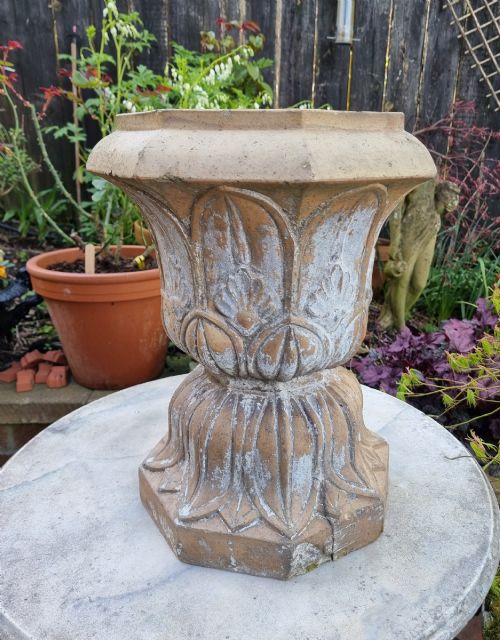
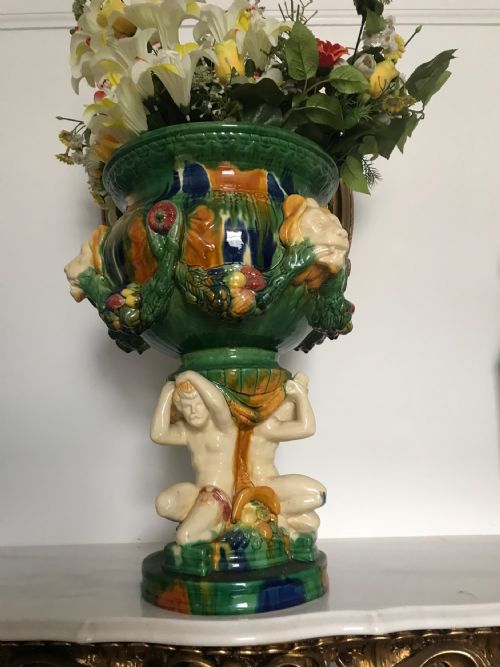
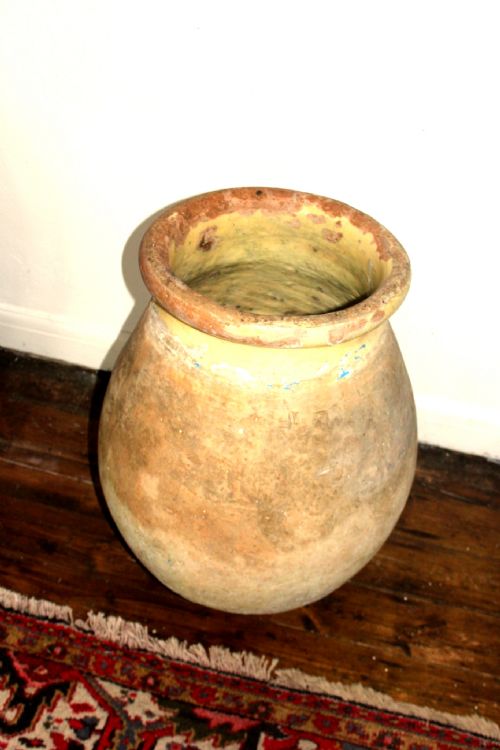
A vintage terracotta planter is a horticultural vessel shaped from fired clay, appearing in forms from oil jars and olive pots to campana urns and strawberry planters. These items span the nineteenth and twentieth centuries, originating from English, French, Italian, Spanish, and Portuguese workshops. Gardeners and collectors encounter everything from simple garden pots and chimney pot pedestals to grand majolica ceramic planters and salt-glazed troughs.
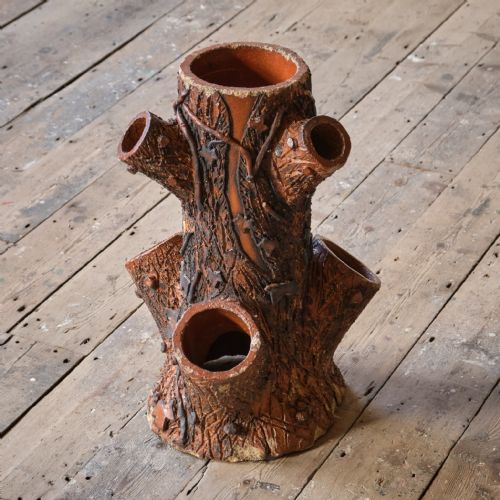
The selection includes utilitarian farm vessels like confit jars, dairy salting crocks, and pancheons adapted for modern garden use. French Biot jars and Castelnaudary planters sit alongside Victorian rhubarb forcers and faux bois strawberry pots. Buyers find single vessels, near pairs, and larger groupings suited for patios, orangeries, and garden lawns.
Materials and Construction
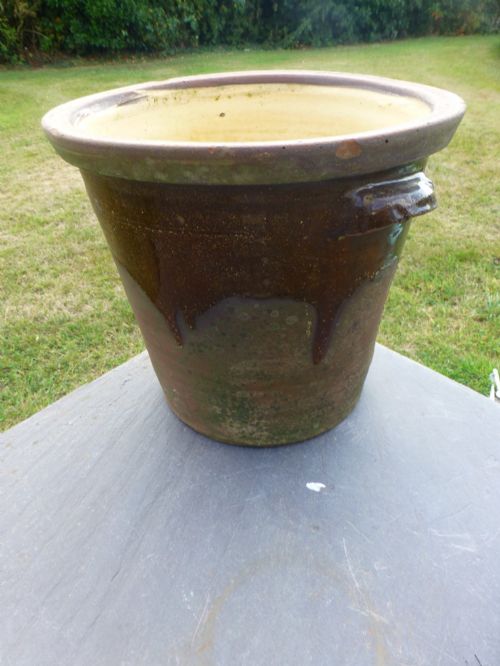
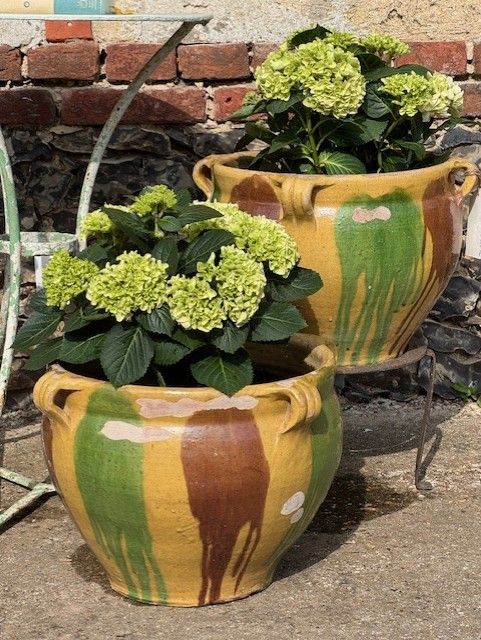
Potters shaped these vessels primarily from local terracotta, earthenware, clay, and ceramic, utilising traditional throwing and moulding techniques. Salt-glazed stoneware and glazed earthenware additions introduced protective vitreous surfaces to specific troughs and jars. Some pieces received surface treatments including paint, drip glazes, and naturalistic green or green-brown lead glazes.
Makers often incorporated hand-carved details, figural base stands, and lion head decorations directly into the wet clay before firing in kilns. Faux bois designs imitated natural tree bark textures through careful modelling of the earthenware surface. Iron oxides within the clay bodies produced the characteristic warm buff, orange, and red tones upon firing.
Several vintage planters were once busy keeping dairy milk fresh or hiding Victorian rhubarb in the dark.
Defining Quality and Character
Quality rests in the crispness of the modelling, the balance of proportions, and the authenticity of the material. Superior examples display confident hand-thrown walls and deeply carved ornamentation, such as handles with carved heads or crisp scroll motifs, rather than soft or indistinct details.
Patina dictates much of the desirability, with natural mineral encrustations, moss growth, and historic lime washes outperforming uniform or artificially aged surfaces. The weight and wall thickness of the ceramic body reflect the vessel's original function and intended durability against frost.
Dunfermline Clay Company·Guichard Carriès·Compton Pottery·Lipscombe and Co
The Vintage Terracotta Planter Glossary
- Campana urn
- A bell-shaped garden vessel with an everted rim and a pedestal foot, frequently seen in classical Italian and Victorian designs.
- Faux bois
- A decorative technique where ceramic or concrete is modelled to imitate wood, popular on nineteenth-century strawberry planters.
- Biot jar
- A traditional heavy terracotta storage vessel originating from the Provençal town of Biot, often featuring an aged patina.
- Confit jar
- A glazed earthenware pot originally utilised in France for preserving meat, distinguished by loop handles and glazed upper sections.
- Majolica
- Pottery covered with an opaque tin-glaze and painted with brightly coloured metal oxides before firing.
- Pancheon
- A broad, shallow earthenware vessel traditionally used in dairies for setting milk or in domestic mixing.
Vintage Terracotta Planter: Frequently Asked Questions
Can vintage terracotta planters stay outside in winter?
Most high-fired nineteenth and twentieth-century terracotta can withstand winter conditions if drainage holes remain clear and the pots sit elevated on feet.
Porosity varies by clay type, so porous earthenware vessels risk frost damage if saturated and subjected to hard freezes.
How do I clean a weathered terracotta pot?
Gentle brushing with water removes loose soil and debris while preserving the accumulated surface patina and moss.
Avoid harsh chemical cleaners and high-pressure washers, which strip away the aged ceramic surface.
How do I identify a French Biot jar?
Biot jars exhibit heavy, thick terracotta bodies with distinctive pale surfaces and historical markings from Provençal olive oil production.
Many display incised maker stamps or characteristic ribbed texturing along the shoulder.