




Large Clay Planter
A large clay planter grounds a garden scheme with architectural weight, offering structural form and honest utility.
Large Clay Planter
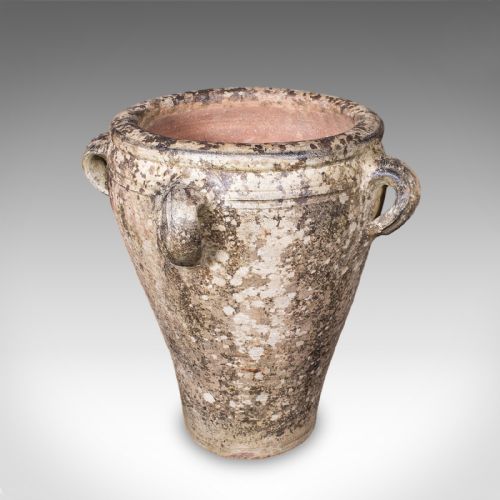
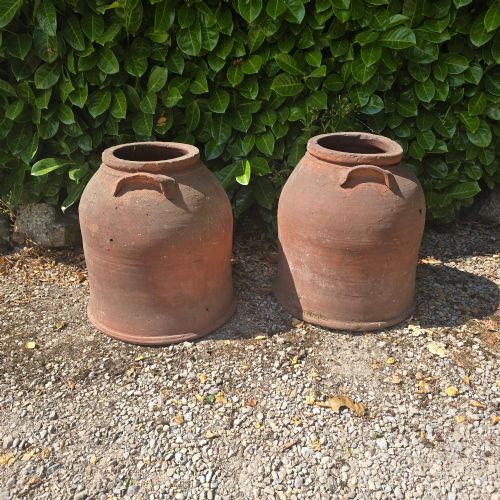
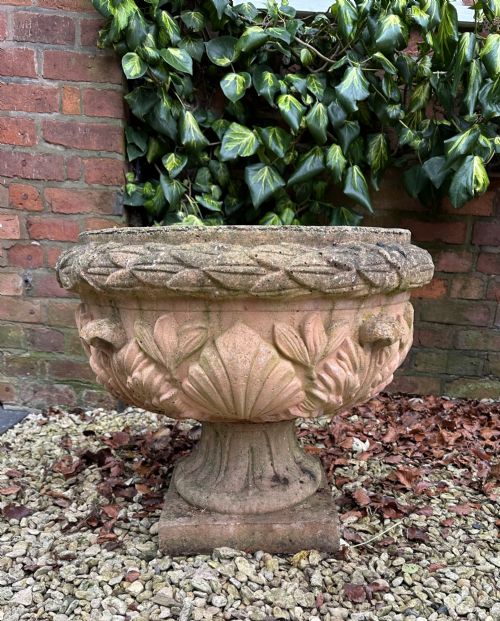
A large clay planter is a substantial vessel designed for horticulture and garden ornament, taking forms such as oil jars, rhubarb forcers, urns, and pedestals. These pieces originate across the nineteenth and early twentieth centuries, spanning periods from eighteen eighty to nineteen thirty.
The selections available here range from rustic Mediterranean olive jars and Portuguese vessels to Victorian garden planters and French pots. Buyers encounter earthenware clay, terracotta, and buff terracotta, often shaped in styles including rustic Mediterranean, arts and crafts, and Victorian country house.
Vessels on this page serve distinct historical garden functions, from utility jars used for storage to decorative garden pedestals and chimney pots repurposed for planting. The forms reflect both utilitarian agricultural origins and deliberate nineteenth-century garden landscaping traditions.
How they were made
Makers shaped these large clay planters using earthenware clay and terracotta, utilising traditional throwing and moulding techniques suited to substantial dimensions. The material properties of terracotta and buff terracotta allow for porous vessels that breathe, benefiting plant roots in garden settings.
Certain pieces incorporate applied surface treatments, featuring paint or glazed ceramic finishes over the base clay body. Structural reinforcement occasionally includes wrought iron elements, pairing metalwork with heavy ceramic forms to support pedestals and garden ornaments.
Large Clay Planter Retail Price Guide 2026
Typical asking prices for large clay planter among the pieces listed under this phrase on Sellingantiques today, from the lower quarter to the upper quarter. They describe what is for sale here now, not the wider market.
Agricultural chimney pots and rhubarb forcers cross over from farm utility to become some of the most sought-after architectural garden ornaments.
What varies in quality
Quality in a large clay planter rests in the balance of its proportions and the character imparted by its manufacturing period. Pieces from the nineteenth century show distinct handling of the clay body compared to later twentieth-century examples.
The distinction between standard utility vessels and finer garden pots lies in the crispness of moulded details, such as scroll work or poppy motifs. Surface weathering, original paint layers, and regional potting traditions further define the individuality of each piece.
Dunfermline Clay Company·Compton Pottery
The Large Clay Planter Glossary
- Terracotta
- A fired clay earthenware used extensively for garden planters and pots. It is typically unglazed, allowing the reddish-brown ceramic to weather naturally outdoors.
- Rhubarb forcer
- A specialised agricultural vessel placed over rhubarb crowns to exclude light and encourage early, tender growth. These tall, cylindrical pots are prized as distinctive garden planters.
- Oil jar
- A large ceramic storage vessel originally used in Mediterranean regions for olive oil. Their generous proportions and sturdy walls make them prominent focal points in contemporary gardens.
- Chimney pot
- A ceramic flue terminal designed to sit atop a roof, occasionally repurposed as a garden ornament. Their vertical forms introduce height and sculptural interest to planting schemes.
- Buff terracotta
- A lighter, yellowish-cream variety of terracotta clay. This material alters the visual tone of garden urns and planters away from traditional reddish hues.
Large Clay Planter: Frequently Asked Questions
Can large clay planters stay outside in winter?
Most nineteenth-century and early twentieth-century terracotta and earthenware pots withstand outdoor conditions well due to the robust nature of fired clay. However, severe frost can affect saturated porous ceramics if water freezes within the body.
Protecting sensitive pots involves raising them off the ground on pot feet to ensure proper drainage and preventing standing water from accumulating inside during freezing temperatures.
How do I date a terracotta olive jar?
Dating relies on observing manufacturing marks, surface characteristics, and stylistic traits associated with periods from the nineteenth century through to nineteen thirty. Hand-thrown potting rings, tool marks, and historical surface wear offer clues to age.
Context from known regional forms, such as Portuguese or Mediterranean traditions, also helps establish the likely production era of an earthenware jar.
What is a rhubarb forcer used for?
A rhubarb forcer is a specialised nineteenth-century agricultural pot designed to cover rhubarb plants in early spring. The lack of light forces the plant to shoot upward rapidly in search of sunshine, producing pale, tender stalks.
In modern settings, these heavy ceramic cylinders are repurposed as striking garden planters or architectural ornaments on terraces and lawns.
How should I clean an old clay pot?
Cleaning historic terracotta and earthenware requires a gentle approach to preserve the surface patina and accumulated weathering gathered over decades. Using soft brushes and water removes loose dirt without damaging the fragile outer layer of the clay.
Harsh chemical treatments and pressure washers should be avoided because they strip away the aged character and erode the historic ceramic surface.