

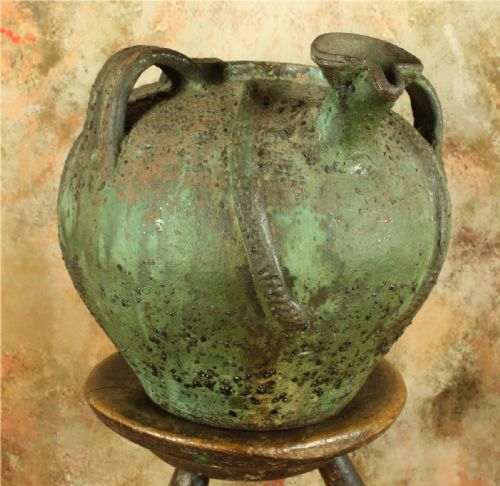


Antique Amphora Pot
An antique amphora pot is a vessel of ancient lineage, shaped from terracotta, earthenware, and clay for holding oil, water, or olives.
Antique Amphora Pot
When you search for an antique amphora pot, you encounter vessels shaped from terracotta, earthenware, and clay. These pieces span the eighteenth and nineteenth centuries, alongside earlier examples from the pre-sixteenth century, originating from regions such as France, Turkey, Portugal, and Greece.
The forms appear as large olive jugs, water pots, and garden planters, often fitted with multiple handles or mounted on wrought iron stands. Mediterranean rustic and folk art styles dominate the selection, showing the utilitarian roots of these containers.
You are most likely to meet nineteenth-century terracotta jars and glazed amphora vessels on this page. These functional items transitioned from agricultural storage into decorative vessels for homes and gardens.
How they were made
Potters shaped these vessels from local clay and terracotta, throwing or building the bodies by hand to achieve thick, durable walls suitable for agricultural storage. Surfaces were often left raw or treated with glaze, ceramic paint, and earthy pigments.
Many utilitarian jars incorporated multiple handles for lifting heavy loads of oil or water. Some vessels now rest within custom wrought iron stands, which were forged separately to support the heavy rounded bases of the jars.
Antique Amphora Pot Retail Price Guide 2026
Typical asking prices for amphora pot among the pieces listed under this phrase on Sellingantiques today, from the lower quarter to the upper quarter. They describe what is for sale here now, not the wider market.
Terracotta and earthenware dominate the materials on this site, alongside decorative applications of glaze, paint, and wrought iron.
What varies in quality
The quality of an antique amphora pot rests in the harmony of its proportions and the integrity of the original terracotta or earthenware body. Vessels that retain their structural balance without excessive modern intervention command greater interest.
Surface character defines the upper tier of these pieces, where natural weathering, old painted finishes, and historic glazes tell a clear story of use. Examples that display careful forming and distinct regional stylistic traits stand apart from standard utilitarian ware.
Ernst Wahliss
The Antique Amphora Pot Glossary
- Terracotta
- A porous, unglazed or glazed fired earthenware clay of a brownish-red colour. It forms the primary material for the majority of Mediterranean storage vessels.
- Amphora
- A two-handled ancient storage vessel with a narrow neck, historically used for wine, oil, or olives. Later nineteenth-century makers adapted this classical form for decorative use.
- Earthenware
- Pottery fired at relatively low temperatures that remains porous unless glazed. This traditional ceramic body absorbs moisture and develops a characteristic patina over time.
- Glaze
- A glassy coating fused to the ceramic body through firing to render the vessel waterproof. Glazes on these pieces range from simple earthy sheens to decorative finishes.
- Folk Art
- Utilitarian objects created by rural artisans using traditional local methods rather than academic design. This style encompasses the rustic Mediterranean olive jars and painted vessels found here.
Antique Amphora Pot: Frequently Asked Questions
What were antique amphora pots used for?
These vessels served primarily as utilitarian containers for storing and transporting essential commodities such as olive oil, water, and wine across the Mediterranean.
Over time, many of these robust agricultural jars transitioned into decorative elements for homes, courtyards, and gardens.
How do I tell different periods apart?
Differentiating periods relies on observing the handling of the clay, the presence of applied glaze, and regional stylistic markers. Earlier pre-sixteenth century antiquities show distinct archaic forms compared to nineteenth-century utilitarian production.
Surface treatments such as ceramic paint or specific potting techniques help anchor pieces within the eighteenth, nineteenth, or early twentieth centuries.
Are these pots waterproof?
Many traditional terracotta and earthenware pots remain porous because the original clay was fired without an internal glaze. This porous nature allowed contents like water to stay cool through evaporation.
If you plan to use unglazed vessels for holding fresh flowers or water indoors, line the interior carefully to protect surfaces.
How should I display an amphora pot?
These sculptural vessels suit both interior spaces and garden settings, depending on their size and material. Large olive jars often make striking focal points when placed directly on the floor or mounted in wrought iron stands.
Allowing natural light to fall across the textured terracotta surface highlights the historical weathering and hand-formed contours of the clay.