

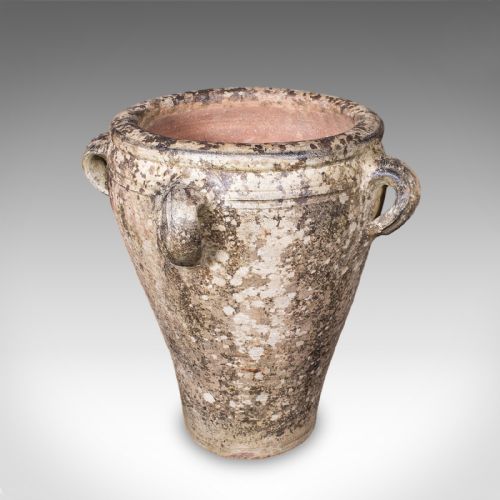


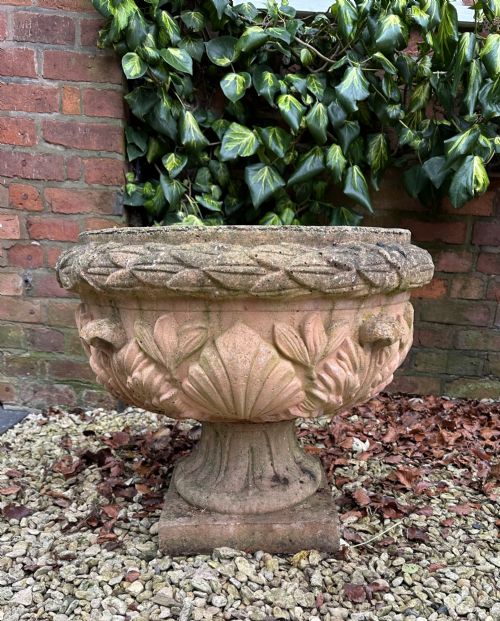
Weathered Terracotta Vessel
These weathered terracotta vessel pieces bring rustic character to interiors and gardens alike, prized for their aged surfaces and traditional forms.
Weathered Terracotta Vessel
A weathered terracotta vessel serves primarily as a decorative or functional garden and interior piece, taking forms such as oil jars, amphorae, urns, and pots. These items trace their origins through the nineteenth and early twentieth centuries, spanning periods from eighteen eighty to nineteen thirty.
The varieties most commonly met on this page include large olive jars and garden pots. Styles lean heavily toward Mediterranean rustic, farmhouse, and provincial aesthetics, alongside occasional Arts and Crafts and neoclassical examples.
Geographical origins represented in the selection include Portugal and Turkey, alongside British pieces like the Compton poppy pot. Buyers encounter items fashioned for agricultural storage as well as ornamental garden use.
How they were made
Construction relies upon clay, terracotta, and buff terracotta shaped into substantial jars, urns, and pots. Many pieces incorporate iron elements, specifically wrought iron stands that support the heavy ceramic bodies.
Surface treatments play a defining role in the appearance of these pieces. Makers applied lime wash, paint, and occasional glazes to the exterior surfaces, creating the distinctive weathered patinas seen across the selection.
Weathered Terracotta Vessel Retail Price Guide 2026
Typical asking prices for weathered terracotta vessel among the pieces listed under this phrase on Sellingantiques today, from the lower quarter to the upper quarter. They describe what is for sale here now, not the wider market.
Several olive jars spent their youth holding oil before retiring to a life of quiet contemplation in nineteenth-century gardens.
What varies in quality
Quality separates through the integrity of the ceramic body and the character of the surface age. Pieces retaining original paint or lime wash layers exhibit a depth of finish that distinguishes them from simpler surfaces.
Form and proportion dictate the visual strength of each piece. Well-balanced proportions in large olive jars and pots create a more commanding presence in a space.
The Weathered Terracotta Vessel Glossary
- Terracotta
- A porous fired clay used widely for utilitarian jars, pots, and garden urns. Its reddish-brown tone softens over time when exposed to the elements.
- Amphora
- A two-handled jar with a narrow neck, historically utilised for the transport and storage of oil or wine. These forms anchor the Mediterranean rustic aesthetic.
- Lime Wash
- A traditional coating made from slaked lime applied to exterior surfaces. It weathers distinctively to create a chalky, patinated finish on older pots.
- Buff Terracotta
- A specific variety of fired clay that yields a pale yellow or light tan colour rather than the standard red hue. This material appears in Arts and Crafts pieces.
- Olive Jar
- A large, bulbous storage vessel designed in the Mediterranean for agricultural use. Their substantial scale makes them prominent focal points in gardens.
Weathered Terracotta Vessel: Frequently Asked Questions
How were these vessels originally used?
Many of these pieces served practical agricultural purposes in Mediterranean regions, functioning as storage containers for olive oil, grain, or wine. Their thick clay walls helped maintain a stable internal temperature for the goods stored within.
Over time, utility gave way to ornamentation as these large jars found homes in gardens and courtyards. Today, buyers repurpose them as architectural focal points and statement planters.
How do I care for a weathered terracotta vessel?
Terracotta is inherently porous and absorbs moisture from the soil and atmosphere. During freezing winter conditions, trapped water can expand and cause the clay to crack.
Protecting older pieces indoors or providing adequate drainage during colder months preserves the material. Allowing the natural lime wash and paint to age gracefully maintains the historic character of the surface.
How do I date a terracotta jar?
Dating relies heavily on observing the forming techniques, material composition, and surface patination. Pieces from the nineteenth century often display hand-thrown irregularities and deep wear from agricultural use.
Later examples from the early twentieth century may incorporate specific regional clays, such as buff terracotta, or distinct stylistic influences like Arts and Crafts design.
Can these pots stay outside year round?
While designed for garden and outdoor use, the survival of older terracotta depends on local weather extremes. Fired earthenware handles mild conditions well, but sustained frost poses a risk to historic clay bodies.
Many collectors choose to house larger jars in sheltered courtyards or Orangeries during harsh winter months to protect the aged finish and structural integrity.