
Vintage Tabletop Dressing Mirror
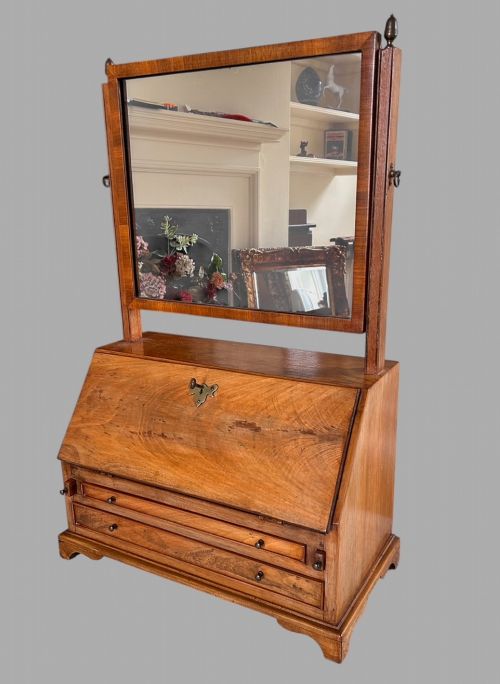
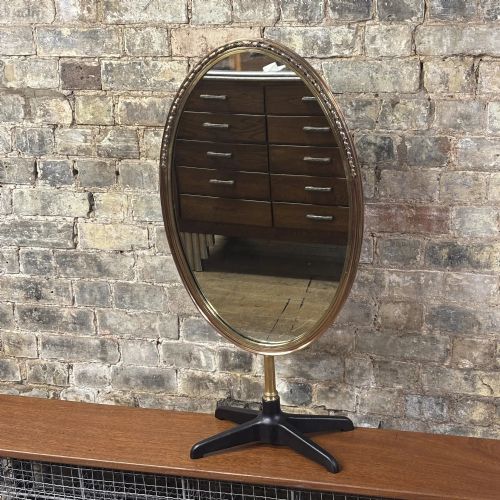
A vintage tabletop dressing mirror sits comfortably on a chest or bureau, offering a close reflection and housing small trinkets in its fitted base.
Vintage Tabletop Dressing Mirror
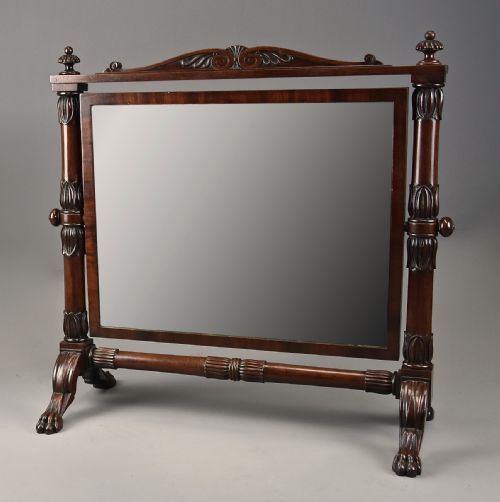
A vintage tabletop dressing mirror is a portable looking glass designed to rest upon furniture, allowing personal grooming and dressing in domestic spaces. These pieces emerge across several centuries, spanning Georgian, Victorian, and Edwardian periods.
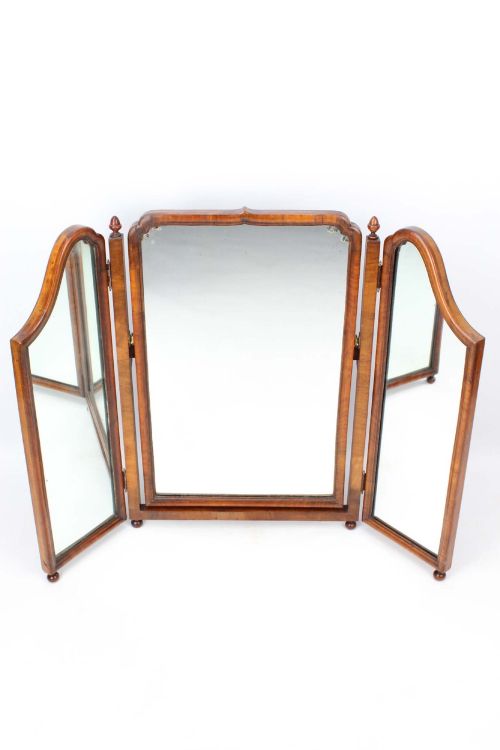
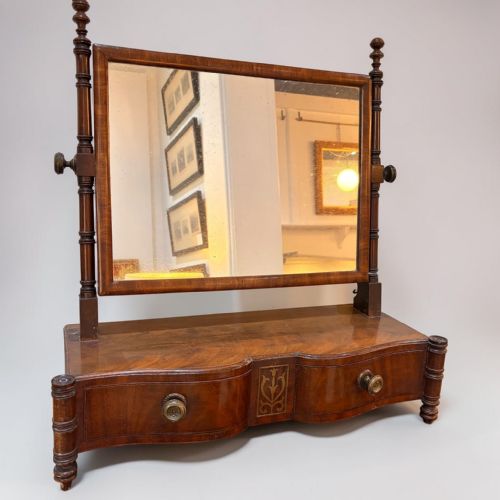
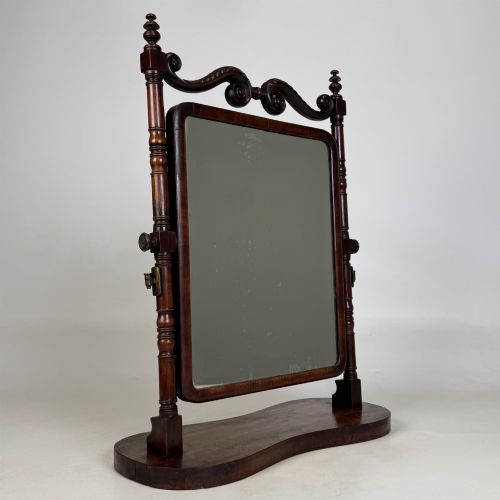
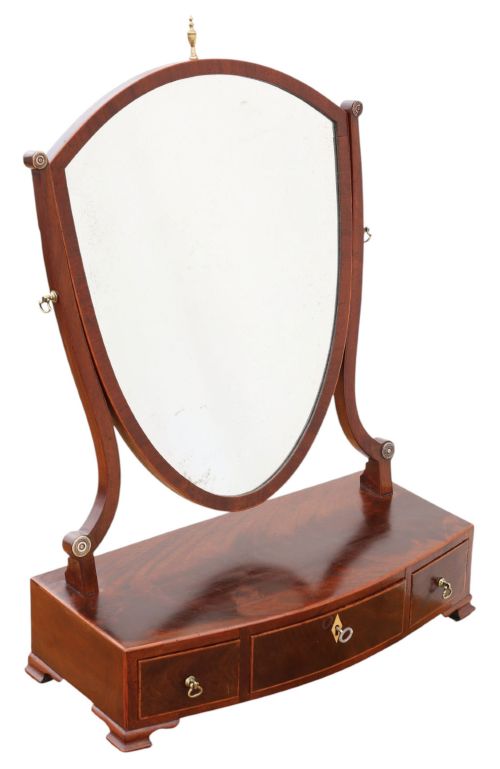
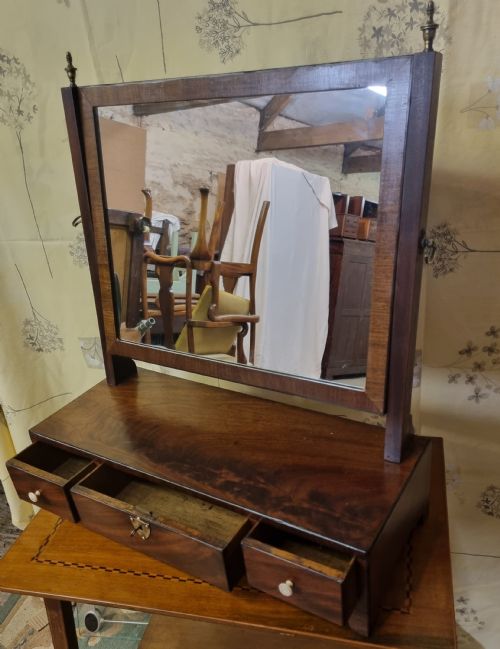
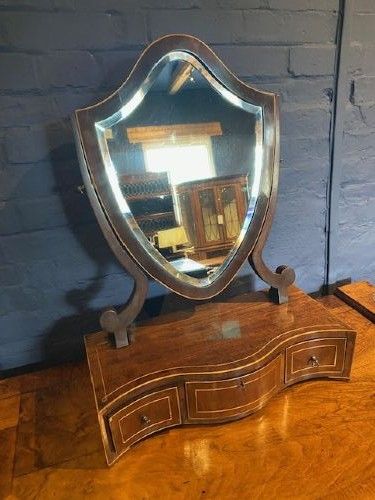
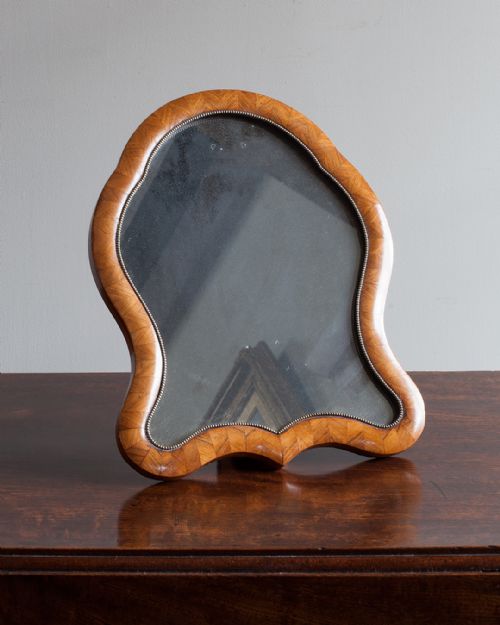
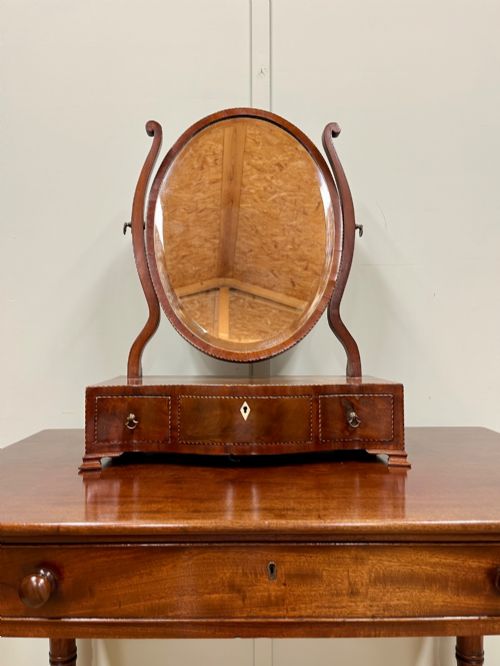
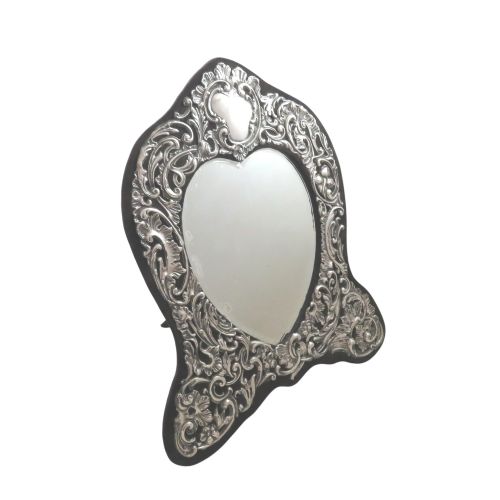
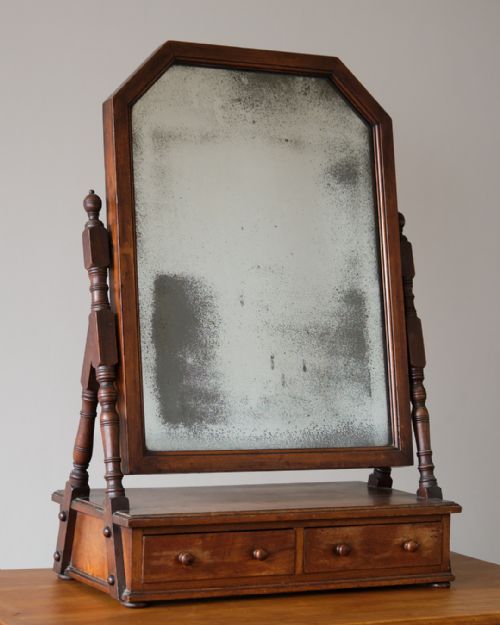
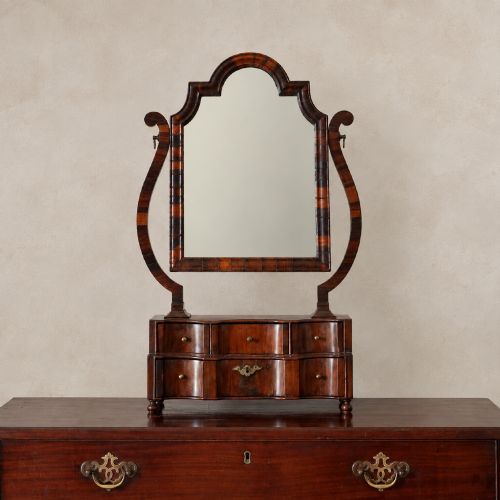
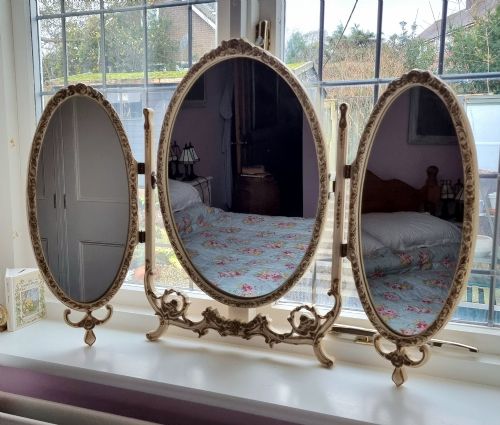
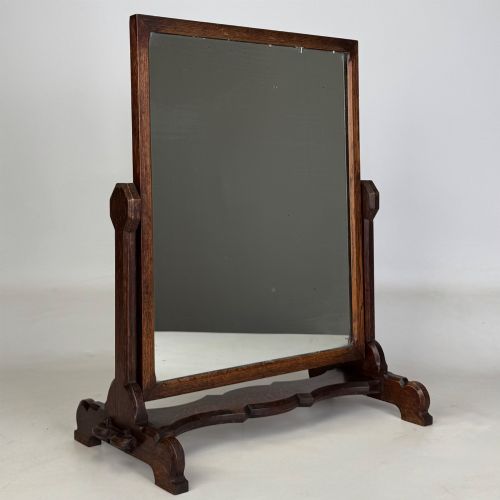
The versions most common here are mahogany swing mirrors resting on shaped uprights above small drawer bases, alongside brass, walnut, and silver tabletop examples. They take various forms, from shield and oval plates to triple-plate arrangements and easel stands.
How they were made
Cabinetmakers constructed these frames primarily in timbers such as mahogany, walnut, satinwood, and oak, frequently employing crossbanding and fine veneers to decorate the surrounds. Metal elements incorporate cast bronze, brass, sterling silver, and silver gilt.
Mirrors utilise traditional glass plates secured within pivoting swing frames or supported by hinged easel backs and structural struts. More elaborate examples integrate small drawer compartments within the base structure using dovetail joinery.
Listings feature tabletop mirrors spanning from the 18th century through to the 1930s, constructed in mahogany, walnut, brass, and sterling silver.
What varies in quality
Quality rests upon the selection of timber figures, such as Cuban mahogany or figured walnut, and the precision of the cabinetwork in the base drawers. Finer examples display subtle mouldings, crossbanded borders, and well-executed brass work rather than plain construction.
The preservation of the original mirror plate and the smoothness of the pivoting mechanism influence the standing of the piece. Superior mirrors maintain their original proportions and retain patination gained through long use.
P & MA Nicholson·Heal & Sons
The Vintage Tabletop Dressing Mirror Glossary
- Swing mirror
- A looking glass mounted on vertical pivots between two upright posts, allowing the angle of reflection to alter. This mechanical arrangement remains standard on traditional dressing table models.
- Cheval mirror
- A full-length standing mirror, though smaller tabletop variants occasionally adopt the terminology for swiveling frames. These pivot fully within a stable floor or table-standing frame.
- Crossbanding
- A decorative border of veneer laid with the grain running perpendicular to the surrounding wood. Cabinetmakers utilised this technique on Georgian and Regency dressing mirror bases to create visual contrast.
- Strut mirror
- A looking glass supported at the rear by a hinged prop or leg for tabletop display. These appear frequently in Edwardian silver and metal designs.
- Toilet mirror
- A historical term for a tabletop dressing glass used during morning routines. Examples date from the eighteenth century onwards in walnut and mahogany.
Vintage Tabletop Dressing Mirror: Frequently Asked Questions
How do I date a dressing mirror?
Dating relies upon timber choice, plate construction, and stylistic cues such as shield shapes or bracket feet. Earlier pieces from the eighteenth century often display walnut or fine mahogany with hand-beveled glass.
Later Victorian and Edwardian examples introduce machine-rolled glass, brass detailing, and alternative woods like oak or satinwood. Examining the construction of the base drawers provides further chronological clues.
Were these mirrors fixed to tables?
Tabletop dressing mirrors are portable objects designed to rest freely upon a chest of drawers, dressing table, or bureau. Their own base often incorporates small drawers for storage.
Because they are unattached, they move easily around the room to catch the best light. Some variants include locking mechanisms or campaign folding kits.
How do I care for silver dressing mirrors?
Sterling silver and plated metal frames require gentle cleaning with a soft cloth to preserve the surface without removing historic patination. Avoid abrasive polishes that damage delicate chased or embossed decoration.
Keep the glass clean using standard window cleaner applied to a cloth rather than sprayed directly, preventing moisture from seeping behind the plate edge.