
Mahogany Toilet Glass Mirror
These mahogany toilet glass mirror pieces offer classic utility and warm timber tones, making them essential additions to a traditional dressing area.
Mahogany Toilet Glass Mirror
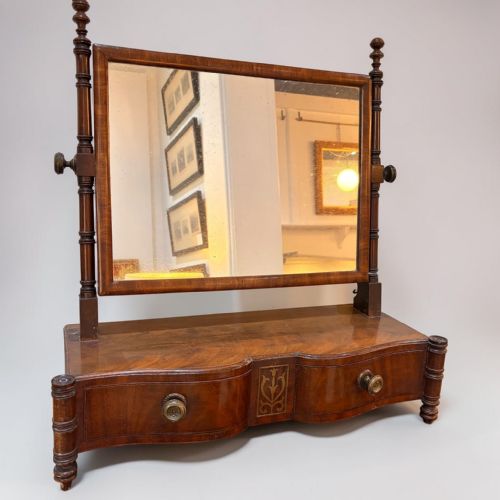
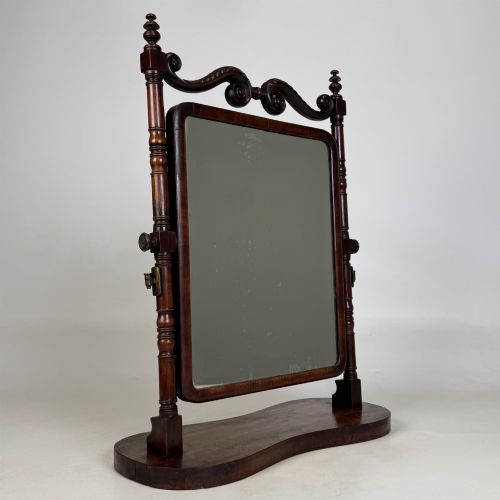
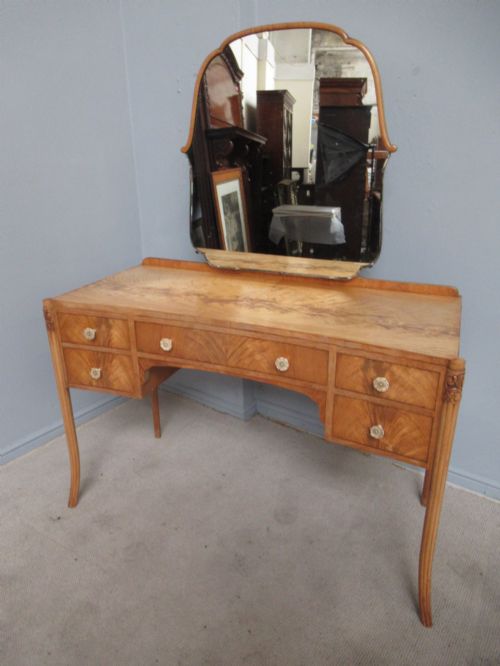
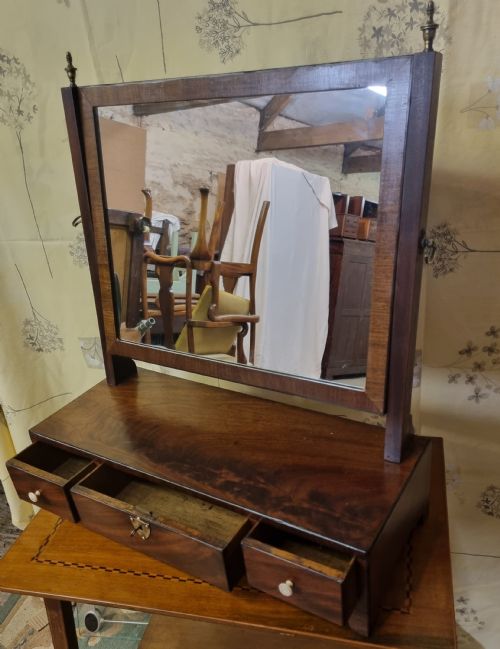
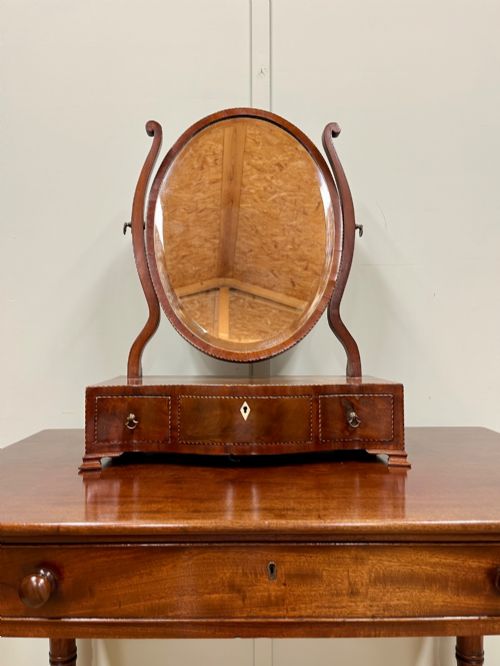
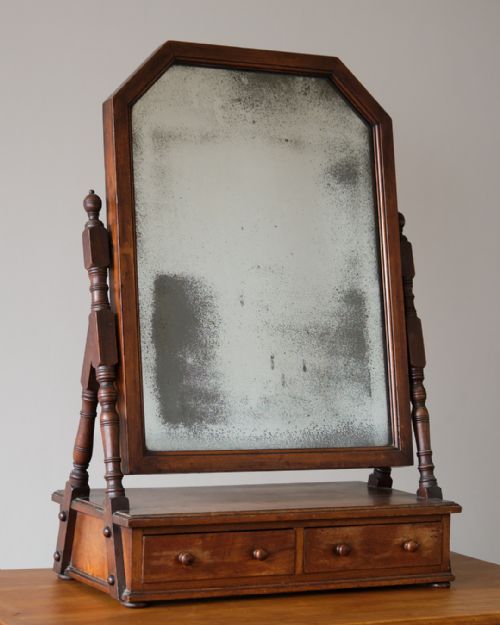
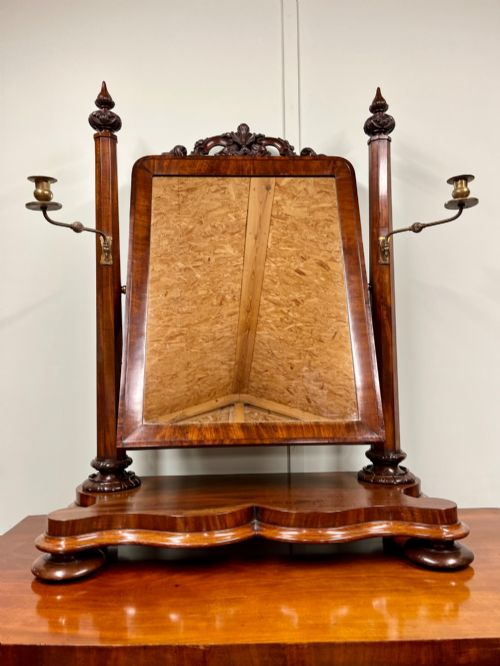
When you search for a mahogany toilet glass mirror, you encounter table-top dressing pieces designed to sit upon a chest or table for personal grooming. The pieces on this page span the 18th century, the Georgian period, the Regency era, and the Victorian epoch, reflecting a long tradition of cabinet making.
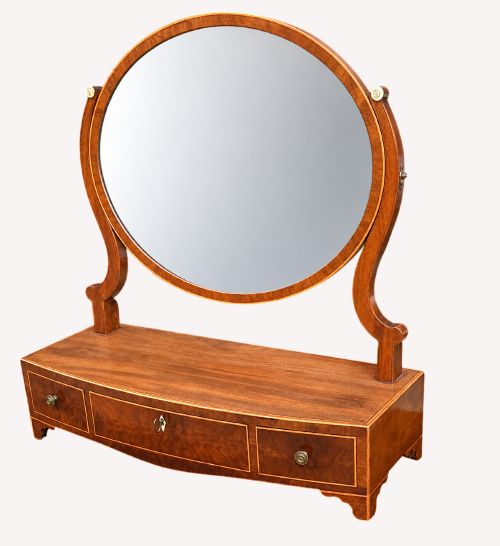
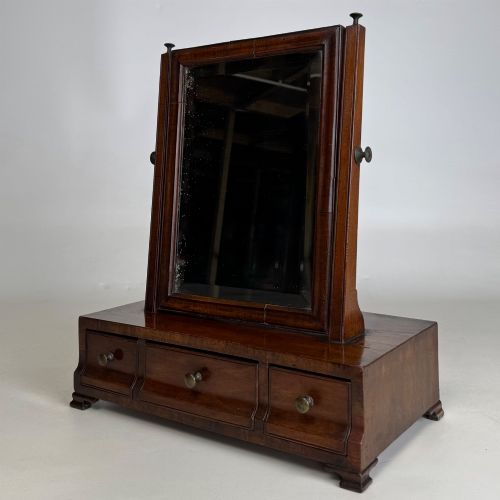
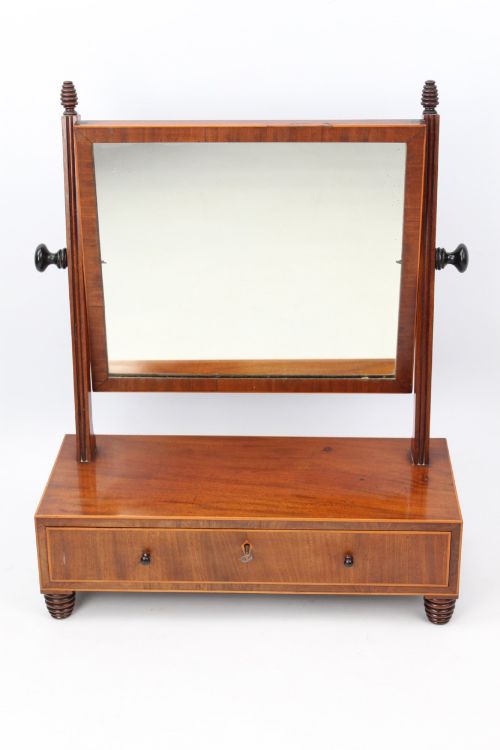
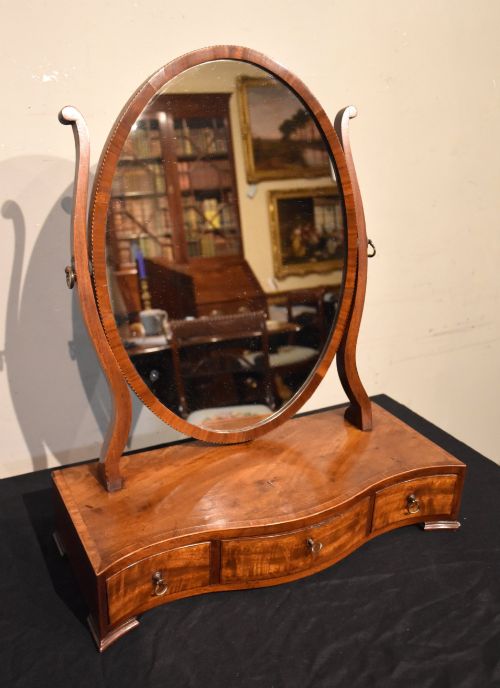
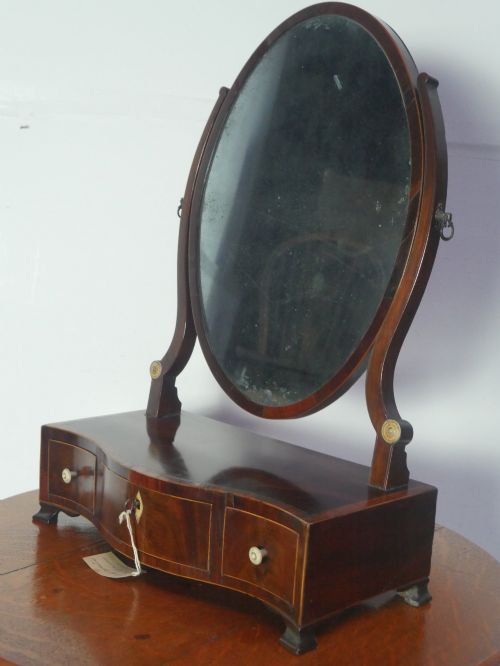
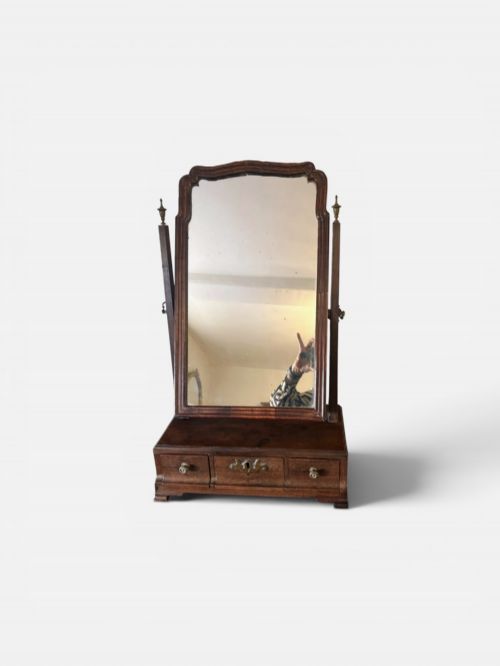
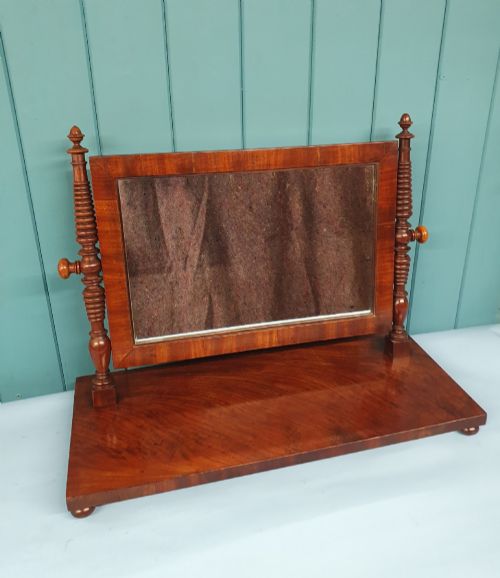
You will most frequently meet rectangular or oval swing plates mounted between upright supports, often above a small base fitted with drawers. These items served a practical domestic purpose in bedrooms before full-length dressing mirrors became common household fixtures.
What varies in quality
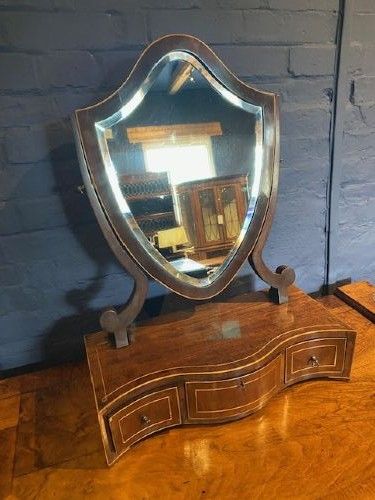
The distinction between ordinary and superior pieces rests upon the choice of timber and the refinement of the cabinet work. Finely figured mahogany grain, crisp crossbanding, and well-executed serpentine fronts elevate an example above standard production.
Hardware retention also plays a role, as original brass fittings and intact bone escutcheons preserve the integrity of the piece. The proportion between the mirror frame and the supporting base dictates the visual balance of the whole item.
Listings feature mahogany, glass, brass, bone, and satinwood across pieces dated from the 18th to the 20th century.
Heal & Sons
The Mahogany Toilet Glass Mirror Glossary
- Toilet mirror
- A small table-top dressing mirror designed for use on a toilet table or chest of drawers. These items gained popularity during the Georgian period for daily grooming.
- Swing mirror
- A glass plate hung on pivots between two upright arms, allowing it to tilt back and forth. This mechanism sits atop a small box base.
- Crossbanding
- A strip of veneer applied across the grain of the primary timber to form a decorative border along the edges of a drawer or top. It often utilises a contrasting wood such as satinwood.
- Serpentine front
- A furniture front characterised by a curving contour that swells outward in the centre and recesses at the sides. This shape requires considerable skill in woodworking.
- Cheval mirror
- A full-length framed glass that stands independently on four feet or a stable floor frame, though smaller table-top variants also exist.
Mahogany Toilet Glass Mirror: Frequently Asked Questions
How do I date a mahogany toilet mirror?
Dating relies on observing the secondary timbers, the shape of the mirror plate, and the construction methods used in the base drawers. Earlier 18th-century examples often feature boxier proportions and simpler candle slides or thumb-moulded edges.
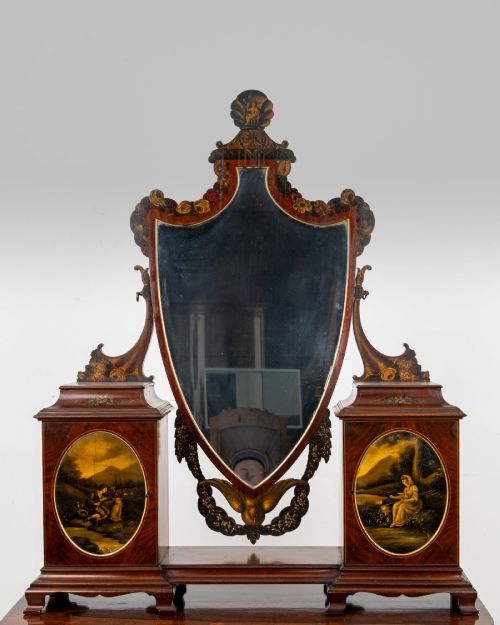
Later Victorian and Edwardian pieces frequently incorporate serpentine shapes, shield plates, or inlaid marquetry details that distinguish them from earlier Georgian work.
Were these mirrors always made for bedrooms?
These dressing glasses sat upon tables in private chambers, dressing rooms, and boudoirs where personal grooming took place. They provided a movable reflection surface before fitted wardrobes and wall mirrors became standard.
Their compact size allowed homeowners to move them between rooms depending on where the best light fell during daylight hours.
How do I maintain the mirror plate?
Maintenance requires gentle dusting of the wooden frame using a dry cloth and avoiding harsh chemical sprays near the glass or brass pivots. The timber benefits from occasional application of appropriate furniture wax to nourish the mahogany grain.
Avoid placing the mirror in direct sunlight to prevent the timber finish from fading unevenly over time.
What is the difference between a toilet mirror and a cheval mirror?
A toilet mirror is a table-top piece designed to sit upon a separate chest, table, or dressing surface. A cheval mirror stands on its own base directly from the floor.
Whilst both utilise pivoting glass frames, their scale and intended placement within a room differ significantly.