


Sheraton Dressing Table Mirror
These sheraton dressing table mirror pieces combine refined timber and pivoting glass to bring classical symmetry to a bedroom.
Sheraton Dressing Table Mirror
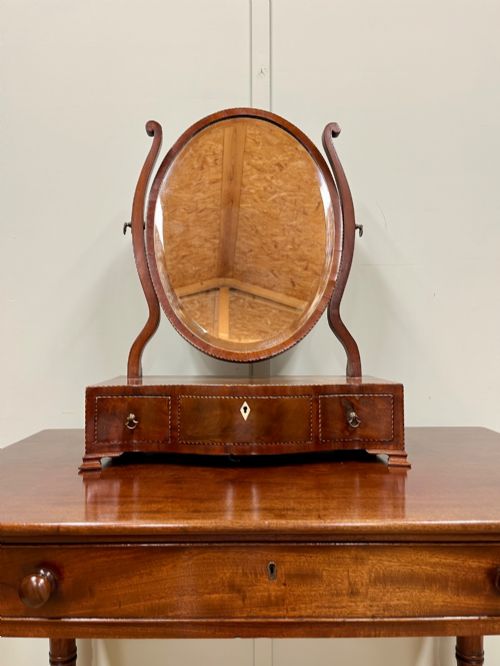
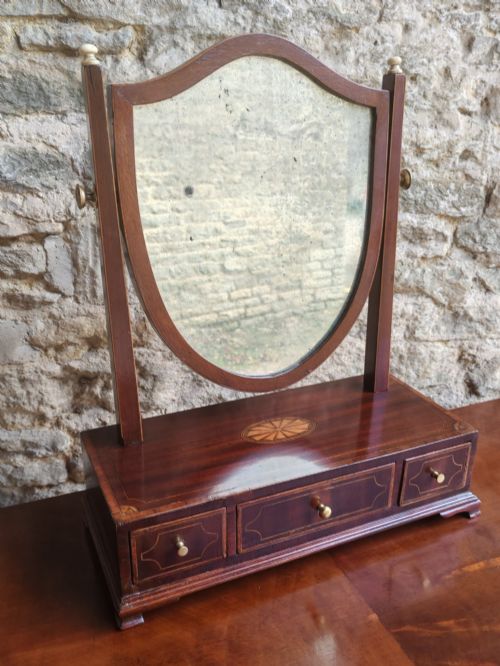
A sheraton dressing table mirror sits upon a small box base or chest, designed to adjust the angle of the glass for grooming. Most examples encountered here date from the Georgian and Edwardian periods, appearing in forms such as shield, oval, or rectangular plates.
Makers shaped the supporting frames in mahogany, satinwood, and harewood, often mounting them above serpentine or bowfront drawers. These pieces range from simple table-top mirrors to larger Sheraton Revival dressing tables fitted with mirrors.
The style follows classical lines with delicate proportions, sometimes incorporating crossbanding and boxwood inlay. Buyers select them to anchor a period interior or to provide a functional tabletop glass with integrated storage.
What varies in quality
The refinement of the timber selection largely determines the standing of a piece, particularly the depth of flame mahogany figure or the precision of satinwood and boxwood stringing. Finer examples display meticulous attention to the proportions of the mirror plate relative to the base box.
The quality of the joinery in the small drawers and the subtlety of the shaped brackets supporting the frame reveal the hand of a skilled workshop. Original brass hardware and undisturbed mirror glass further distinguish exceptional survivals.
Secret rising compartments hide away letters and trinkets, reminding us that eighteenth-century vanity required a measure of discretion.
Gillows
The Sheraton Dressing Table Mirror Glossary
- Shield plate
- A mirror glass cut into the curved outline of a heraldic shield. This shape gained popularity during the late eighteenth century.
- Serpentine
- A front line that curves outward at the centre and inward at the sides. It adds visual movement to the base drawers of a mirror.
- Crossbanding
- A narrow strip of veneer laid across the grain of the primary wood to form a border. It highlights the edges of tabletops and drawer fronts.
- Bonheur du jour
- A light ladies writing desk usually featuring a small superstructure of drawers and a mirror. These pieces combine writing surfaces with dressing functions.
- Triplate
- A mirror assembly comprising three distinct panels, typically with a larger central glass flanked by two smaller adjustable wings.
Sheraton Dressing Table Mirror: Frequently Asked Questions
How do I date a dressing mirror?
Dating relies on timber choice, plate shape, and construction methods. Earlier Georgian examples often feature hand-beveled glass and distinct secondary woods inside the drawers.
Later Edwardian Sheraton Revival pieces display machine-sawn elements and lighter satinwood finishes while imitating eighteenth-century forms.
Were these mirrors fixed or adjustable?
The glass frame pivots between two vertical upright posts using threaded brass screws or pins. This allows the user to tilt the mirror plate to the desired angle.
Wingnuts or friction washers secured inside the arms hold the glass in position during use.
What is the difference between a toilet mirror and a dressing mirror?
The terms are largely interchangeable in period terminology, though toilet mirrors traditionally sat on chests or dedicated stands. They functioned as portable units before freestanding dressing tables became widespread.
Both types provided adjustable glass and small compartments for cosmetics and jewellery.
Where should I place a table mirror?
These pieces sit comfortably on top of chests of drawers, sideboards, or dedicated dressing tables. They require a stable surface that supports the depth of the base box.
Positioning them near natural light enhances their primary function as grooming aids.